2026-09-14
Numbness After Facial Contouring Surgery: Is It Nerve Damage?
Understand why numbness and drooling can occur after facial contouring surgery, which nerves are involved, and how surgeons protect nerve function for safe recovery.

Hello. This is 345 Plastic Surgery.
When researching facial contouring surgery, you have likely come across discussions about "nerve damage" at least once.
Because sensory nerves run near and through the jawbone, many people worry whether sensation will decrease after surgery or if such changes might become permanent.
Today, we will take a detailed look at which nerves require caution during facial contouring surgery, and how postoperative numbness and drooling are related to nerve function.
Q. Can nerves be damaged during contouring surgery?
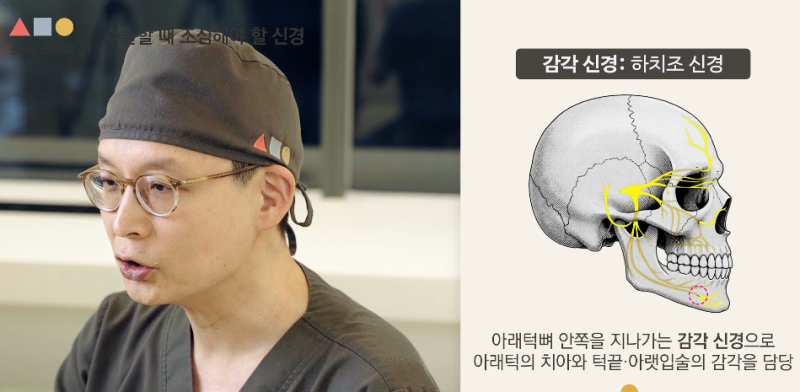
The inferior alveolar nerve runs inside the lower jawbone (mandible).
The inferior alveolar nerve originates from the base of the brain, enters the inner aspect of the lower jaw, travels inside the jawbone, and exits through a hole (mental foramen) toward the front.
Nerves can broadly be categorized into sensory nerves responsible for sensation, motor nerves responsible for muscle movement, and mixed nerves that perform both functions.
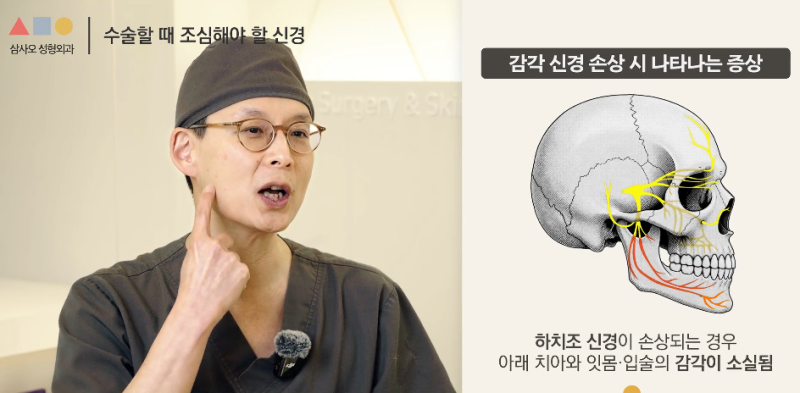
Among these, the inferior alveolar nerve is a sensory nerve.
Therefore, if an issue occurs with the inferior alveolar nerve, sensation in the teeth, gums, and areas around the lip on the affected side may diminish depending on the location and extent of the damage.
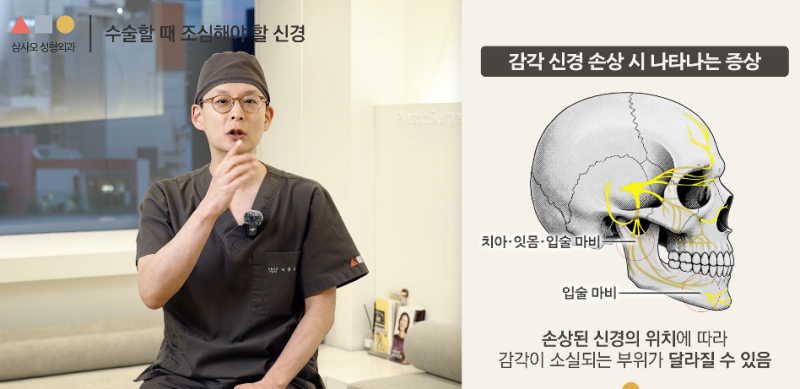
The range of sensory changes can also differ based on where the nerve was affected.
If the nerve is affected inside the jawbone, it can impact a relatively broad area of sensation ranging from the teeth and gums to the lower lip; if it is affected after exiting the jawbone, sensation primarily around the lip area may decrease.
For this reason, one of the most critical nerves to identify and protect when performing jaw surgery is the inferior alveolar nerve.
Q. Are there other nerves besides sensory nerves that require caution?

In addition to the inferior alveolar nerve responsible for sensation, the facial nerve—which oversees motor function—also requires careful attention.
The facial nerve controls the movements of various muscles that create facial expressions.
It emerges behind the ear and divides into several branches as it passes through the parotid gland (salivary gland).

One branch requiring particular caution during jaw surgery is the marginal mandibular branch.
Because this nerve is involved in the movement of muscles that pull down the corners of the mouth, any impact to it can weaken those muscle movements.
As a result, the lips or the corners of the mouth may temporarily appear asymmetrical when smiling or making facial expressions.
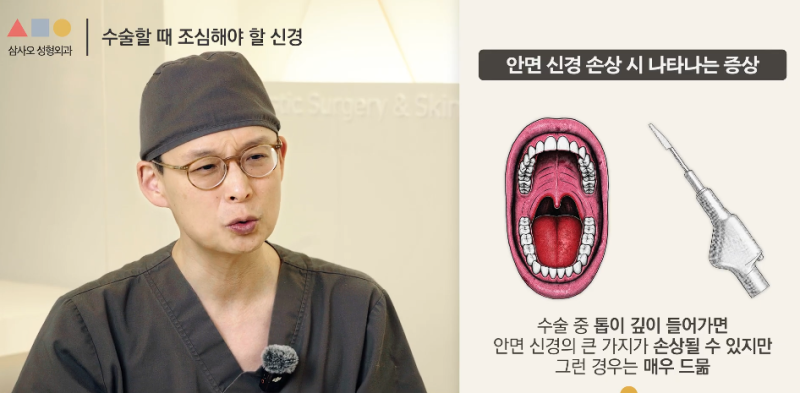
During intraoral procedures, if an incision is placed inappropriately or surgical instruments penetrate excessively deep, larger branches of the facial nerve could theoretically be affected.
However, such occurrences are practically very rare.
Q. If sensation decreases after surgery, does it mean the nerve was damaged?
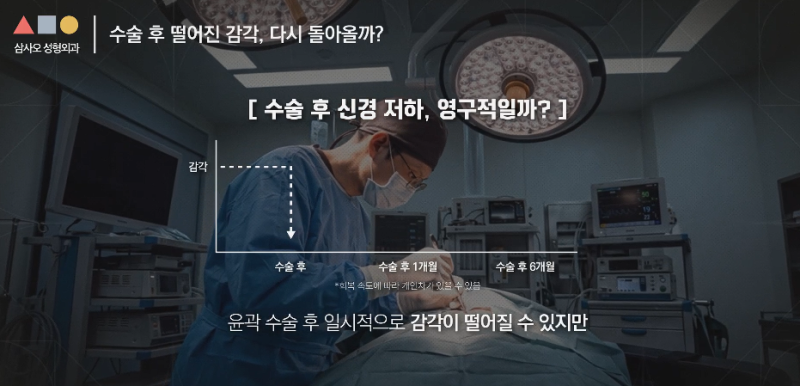
A decrease in sensation immediately after surgery does not necessarily mean the nerve has sustained permanent damage.
Because nerves are extremely delicate tissues, even without any direct injury, nerve function can temporarily decline simply from being gently stretched while dissecting surrounding tissues or checking nerve position during surgery.
In fact, to safeguard nerves during surgery, surgeons accurately identify the nerve's location, perform the procedure while avoiding the nerve, and verify its integrity once more before concluding the surgery.

Even during this process of visual confirmation and active protection, the nerve may experience minor traction, which can lead to a dull or numb sensation immediately post-op.
However, as long as there is no direct structural injury to the nerve itself, this temporary sensory dullness typically recovers gradually over time.
Therefore, there is no need to assume that immediate postoperative numbness directly translates to nerve damage.
Q. Is drooling after facial contouring surgery related to nerves as well?

Some patients worry when they notice saliva or water involuntarily dripping after contouring surgery.
This unintentional leakage of saliva or fluids is known as drooling.
There are two primary mechanisms that normally prevent us from drooling fluids or saliva.

The first is the muscular function that tightly seals the lips together to keep contents from escaping.
The second is the sensory function that detects saliva or fluids beginning to seep around the lips, prompting you to draw the fluid back into the mouth and tighten the lips.

However, if sensory awareness is reduced, you may not properly detect fluid trickling past the lips.
Conversely, if the facial nerve branch governing the muscles around the lips is temporarily affected, the lips may lack the strength to close completely, leading to drooling.
In other words, drooling following contouring surgery can be linked either to temporary sensory nerve depression or changes related to motor nerve control.
Q. How can nerve damage be minimized during contouring surgery?
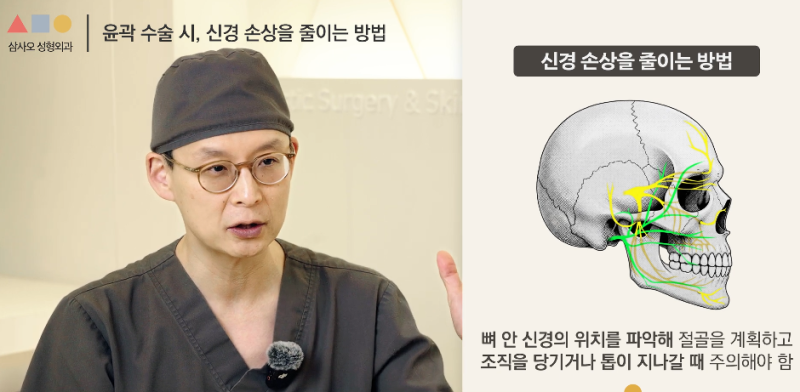
Preventing nerve injury is an essential cornerstone of facial contouring surgery.
First, for nerves traversing the interior of the jawbone, a thorough preoperative evaluation is essential to identify the precise canal and path of the nerve within the bone.
Based on this assessment, surgical bone resection margins and angles must be meticulously planned to ensure the osteotomy does not encroach on the nerve canal.
For nerve segments exiting the jawbone, extreme care must be taken to prevent excessive traction or trauma from surgical instrumentation during the operation.
To achieve this, surgeons must visually identify the nerve pathway during surgery, proceed while keeping instruments clear of it, and repeatedly verify that the nerve remains intact before closing.
Immediately after facial contouring surgery, temporary sensory blunting may occur due to gentle nerve traction or swelling of adjacent tissues.
As long as there is no direct transection or severe damage to the nerve, sensation will gradually return over time, so giving it adequate healing time is important.
If you have any further questions regarding facial contouring surgery,
please feel free to reach out to 345 Plastic Surgery 💙
Thank you 😉



Frequently Asked Questions
Does numbness after facial contouring mean nerve damage?
Not necessarily. Nerves are extremely delicate, and even without direct injury, minor stretching during tissue dissection or nerve protection can lead to temporary functional decline. Without structural damage, sensation typically recovers gradually over time.
Which sensory nerve requires the most caution during jaw contouring surgery?
The inferior alveolar nerve running inside the lower jawbone. It is a key sensory nerve, and any impairment can reduce sensation in the teeth, gums, and lower lip on that side, making precise identification and protection critical.
Can facial expressions look asymmetrical after facial contouring?
Yes, temporary asymmetry can occur. If the marginal mandibular branch of the facial nerve is temporarily affected, muscles pulling down the mouth corner may weaken, causing an asymmetrical look when smiling or speaking.
Why do some patients drool or leak water after contouring surgery?
It is caused by reduced sensation or temporary weakness in the lip muscles. If sensation is blunted, you may not feel fluid escaping, or if the muscles around the lips lack closure strength, temporary drooling can occur.
How can surgeons minimize nerve risks during contouring surgery?
Through thorough preoperative imaging to map the exact nerve canal, precise osteotomy planning that avoids nerve pathways, intraoperative direct visualization of the nerve, and gentle handling to avoid excessive traction.