2026-10-15
Same Square Jaw, Different Surgery? A Bone Expert Explains
Explains how square jaws differ in shape, flared or inward-curved, and why surgical plans must account for jawbone direction, nerve line position, and frontal width.
Hello, this is Samsaeo Plastic Surgery Clinic.
When people hear the term “square jaw,” they often picture a face that looks boxy because the jaw angles are well developed. In reality, however, the angles may stand out when viewed from the front, and in other cases the square shape may be more noticeable from the side. Because square jaws vary from person to person, surgery also requires an approach that takes each patient’s jawbone structure into account. Today, we’ll look at how square jaws differ by shape and why surgical methods vary from person to person.
Q. Do square jaws also look different from person to person?
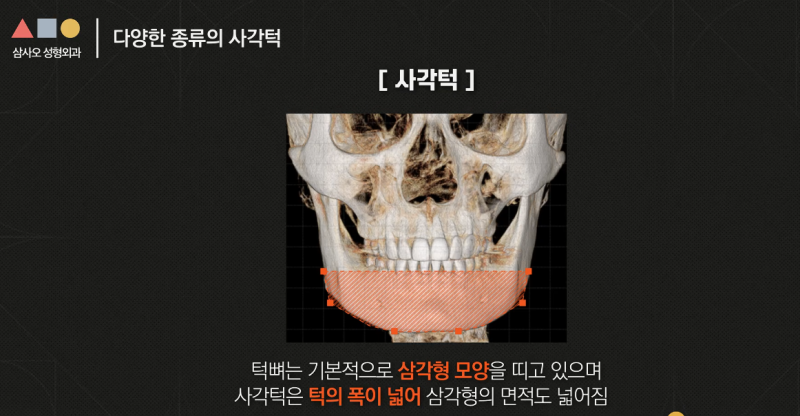
A square jaw doesn’t simply refer to a jaw with well-developed angles. It can be divided into cases where the face looks wide from the front and cases where the jaw angles are pronounced from the side, and sometimes both traits appear together.
These differences are basically caused by the structure and direction in which the jawbone has formed.
The jawbone forms a three-dimensional, triangular shape. A square jaw looks prominent from the front because the jawbone is wide from left to right.
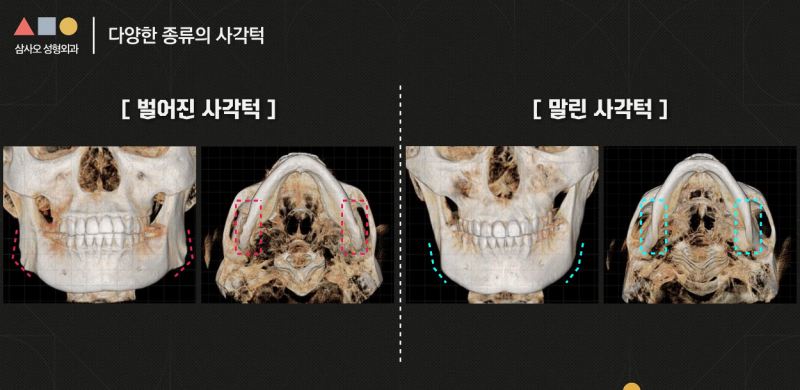
Even with the same width, the rear part of the jawbone may flare outward in some cases, while in others it curves inward.
These are commonly referred to as a “flared square jaw” and an “inward-curved square jaw.”
As such, the degree of reduction achievable through surgery varies depending on the direction and shape in which the jawbone has developed, and the surgical plan changes accordingly.
Q. Does the surgical method change depending on the shape of the square jaw?
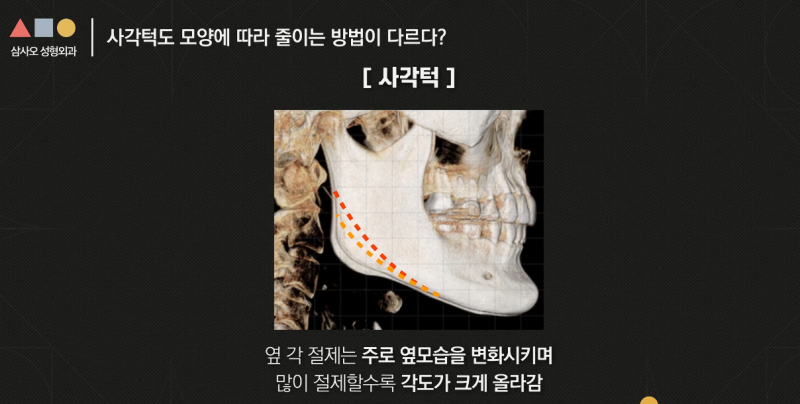
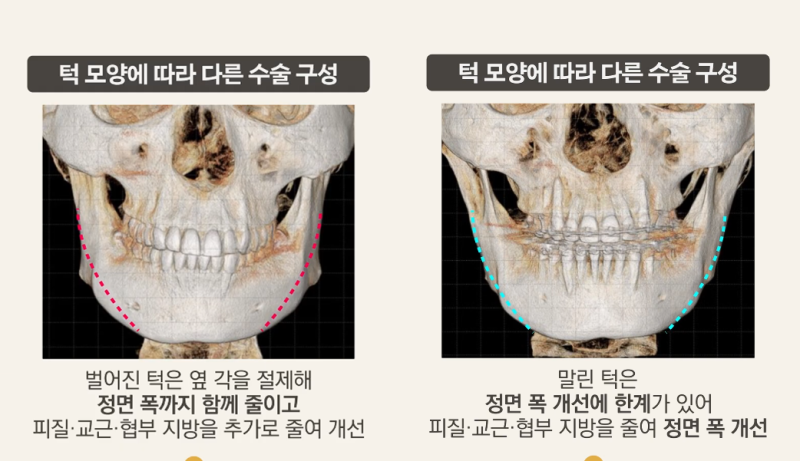
Square jaw reduction surgery is basically performed by combining removal of the jaw angle with narrowing of the frontal width. Removing the jaw angle mainly changes the side profile, but the effect seen from the front depends on the direction in which the jawbone has developed.
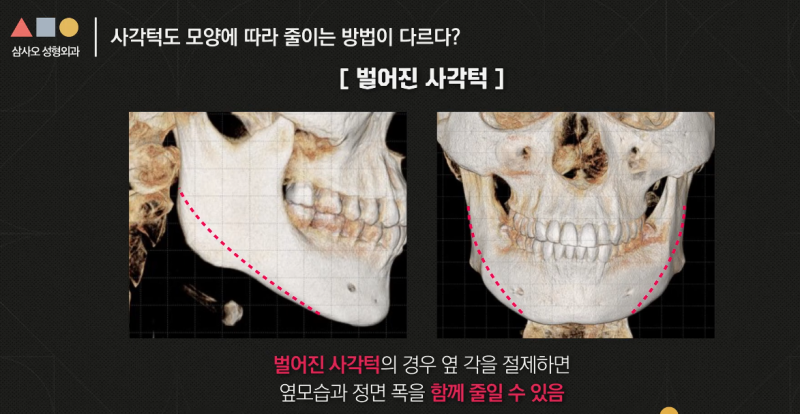
① Flared square jaw
When the jawbone flares outward, removing the angle reduces not only the side jawline but also part of the frontal width.
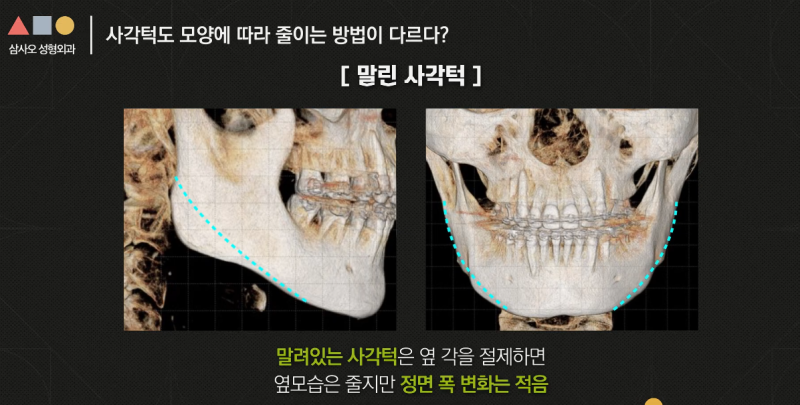
② Inward-curved square jaw
In contrast, when the jawbone curves inward, removing the angle mainly changes the side view, and the reduction in frontal width is relatively limited. In the past, the focus was on removing the jaw angle, so inward-curved square jaws were sometimes considered to have limited surgical results.
Today, however, by combining various reduction techniques based on the shape of the jawbone, it is possible to improve both the height of the side profile and the width of the frontal view in inward-curved square jaws as well.
Q. Why does square jaw surgery need to be tailored to each person?
In square jaw surgery, you need to consider separately how much the side jawline will change and how much the frontal width can be reduced.
In particular, with an inward-curved square jaw, the changes seen from the side and from the front differ after removing the angle, so the surgical plan must clearly distinguish between these two directions.
With a flared square jaw, on the other hand, it’s important to keep in mind that some frontal width may also be reduced when the angle is removed.
In addition, the position and height of the nerve line, which differ from person to person, also play an important role.
For example, if the position of the nerve line limits how much of the jaw angle can be removed, cortical bone resection may be more actively considered to further reduce the frontal width.
In this way, square jaw surgery is not simply a matter of deciding how much jawbone to remove. It requires a comprehensive assessment of each patient’s jawbone shape, the position of the nerve line, and the amount of change needed from both the front and the side in order to determine the appropriate amounts of resection and shaving.
In the past, it was believed that the more the jaw angle was removed, the smaller the jaw would look, so some surgeries increased the amount of resection. However, excessive resection can create an unnatural jawline. Recently, the approach has shifted toward combining various reduction methods while considering the height and width of the jaw separately.
At Samsaeo Plastic Surgery Clinic, we plan the most suitable surgical direction by considering each patient’s jawbone structure and contour characteristics. If you are curious about the changes you can expect after square jaw surgery, we recommend reviewing them during a thorough consultation.
Thank you 💙



Frequently Asked Questions
Do square jaws also look different from person to person?
Yes, they do. A square jaw may look wide from the front, have prominent angles from the side, or show both characteristics at once.
What is the difference between a flared square jaw and an inward-curved square jaw?
A flared square jaw has a rear jawbone that spreads outward, while an inward-curved square jaw has a rear jawbone that curves inward. With a flared square jaw, removing the jaw angle can reduce both the side jawline and part of the frontal width. With an inward-curved square jaw, changes mainly appear from the side, and the reduction in frontal width is relatively limited.
Why does the surgical method for a square jaw differ from person to person?
Because the plan takes into account the individual’s jawbone structure, the position and height of the nerve line, and the amount of change needed from the front and the side. The side jawline and frontal width should be planned separately. If the nerve line position limits how much of the jaw angle can be removed, cortical bone resection may be considered to further reduce the frontal width.
Is more jawbone resection always better in square jaw surgery?
No. Excessive resection can create an unnatural jawline. In recent years, the approach has shifted toward combining several reduction techniques while considering the height and width of the jaw separately.
What should I do if I want to know about the changes after square jaw surgery?
Review the expected changes after surgery during a thorough consultation. The clinic plans the surgical direction by considering each patient’s jawbone structure and contour characteristics.