2026-09-10
Tailored Breast Augmentation for Active Lifestyles: 345 Subfascial Breast Augmentation
Subfascial breast augmentation places implants beneath the pectoral fascia without cutting the muscle, making it ideal for fitness enthusiasts seeking natural movement and quick recovery.
Hello, this is 345 Plastic Surgery.
When considering breast augmentation,
the placement plane of the implant is just as crucial
as its size and shape.
Especially for those who exercise regularly—such as weight training or Pilates—
or frequently engage their chest muscles,
it is essential to choose a surgical method
that takes post-operative movement and the recovery process into careful consideration.
Today, let's explore subfascial breast augmentation,
a technique where implants are positioned
with the movement of the pectoralis major muscle in mind.
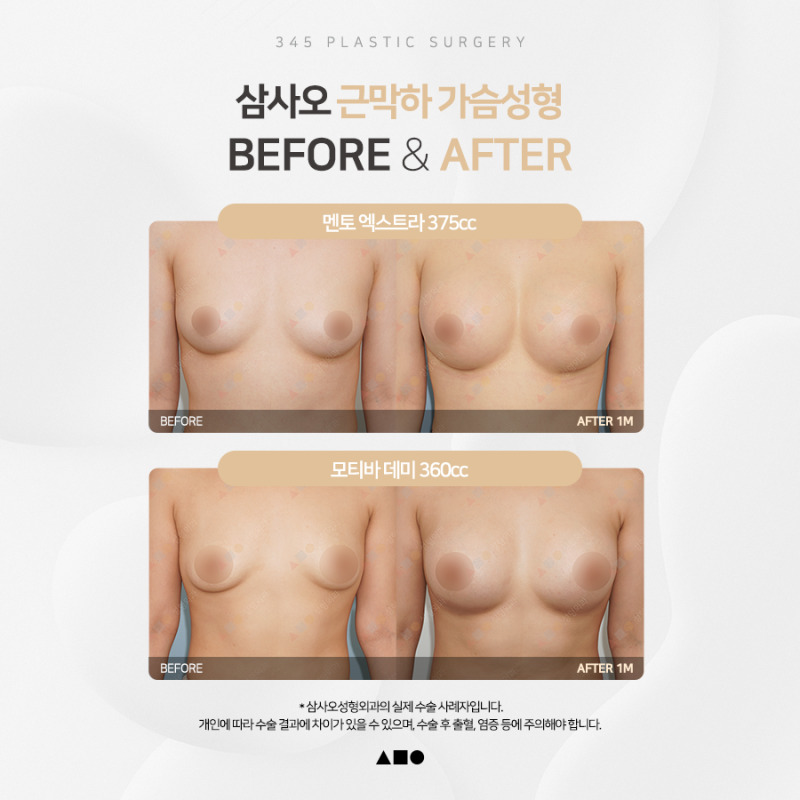
First, looking at the before-and-after photos,
you can see how post-operative volume and silhouettes differ
depending on individual body proportions, initial breast conditions,
as well as the implant type and volume.
Therefore, rather than simply picking a cup size,
it is critical to design a surgical plan
that harmonizes your anatomical conditions with your aesthetic goals.
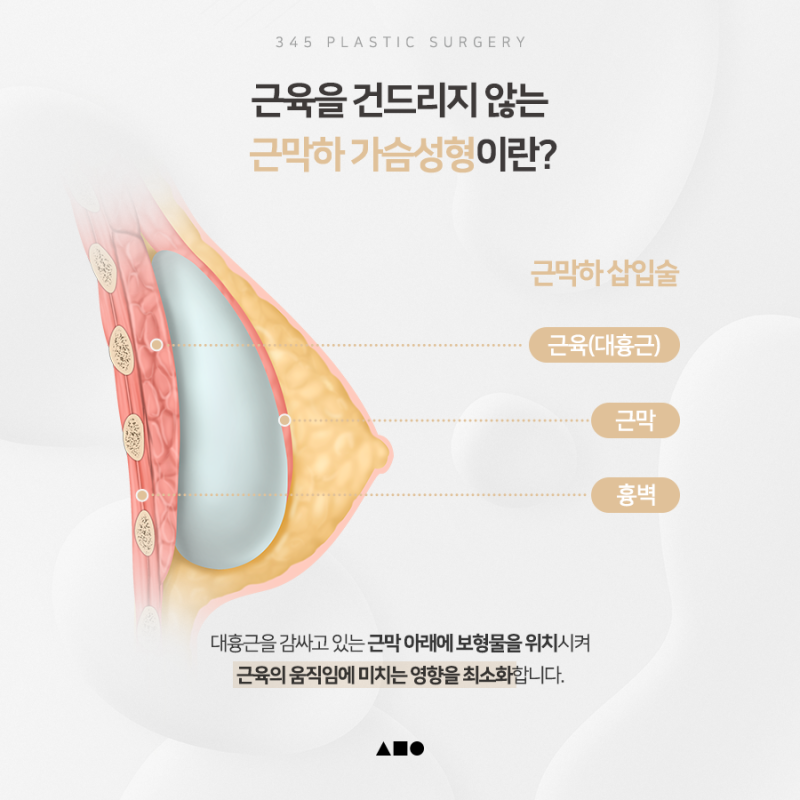
What is muscle-sparing subfascial breast augmentation?
The breast consists of multiple tissue layers, including skin, subcutaneous fat,
glandular tissue, pectoral fascia, and the pectoralis major muscle.
Subfascial breast augmentation is a technique that places the implant
beneath the fascia covering the pectoralis major muscle.
Unlike the submuscular approach where the pectoralis major itself is dissected to insert the implant,
it does not directly disrupt the muscle tissue.
This helps minimize the impact of pectoral muscle contractions on the implant
during arm or upper-body movements.
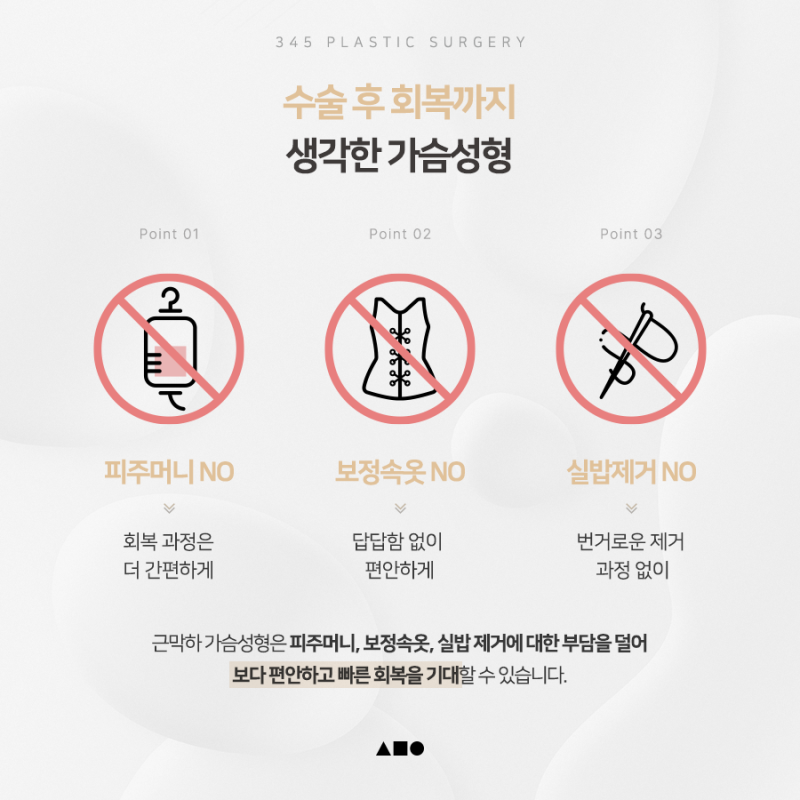
After breast augmentation, the journey of returning to daily life
is just as important as the surgical outcome itself.
Because subfascial breast augmentation
minimizes trauma to the pectoralis major muscle,
it can help reduce the burdens of surgical drains, compressive garments,
or suture removals depending on the individual case,
allowing for a relatively smoother and more comfortable recovery.
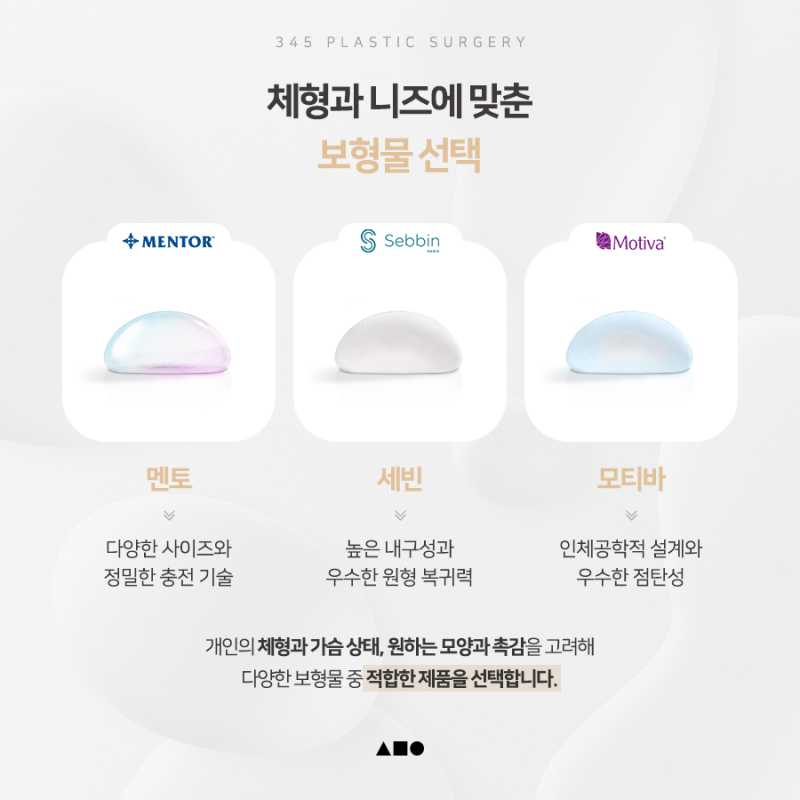
Additionally, no single implant product or volume fits every patient.
At 345 Plastic Surgery,
we offer a wide selection of premium implants including Mentor, Sebbin, and Motiva,
carefully selecting the ideal implant
by comprehensively evaluating each patient's body frame, baseline breast tissue,
and desired shape and texture.
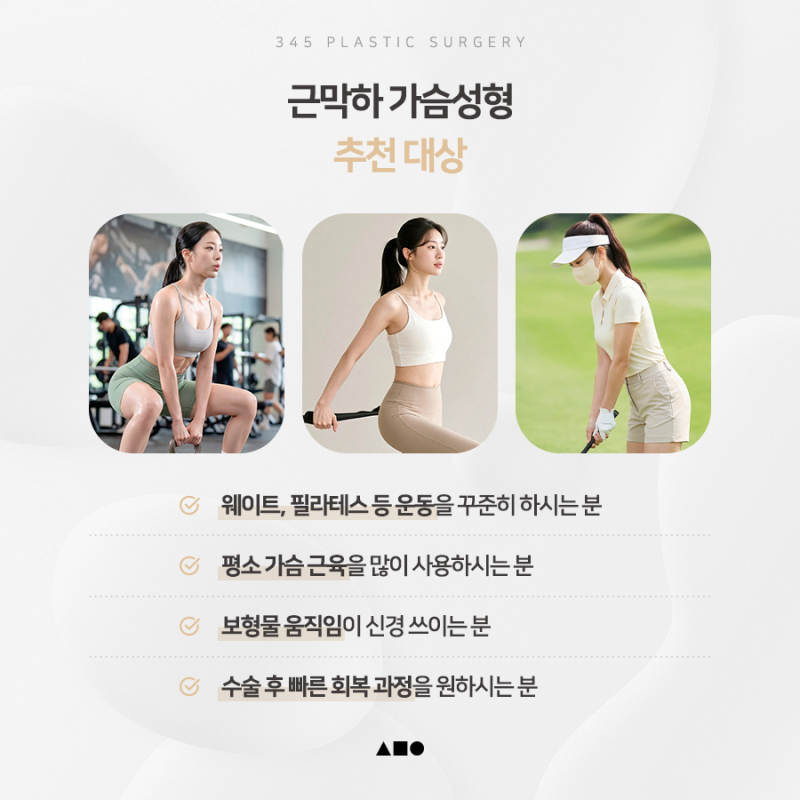
Subfascial breast augmentation may be ideal for you if:
✔️ You regularly engage in fitness activities like weight lifting or Pilates
✔️ You frequently use your chest muscles in daily routines
✔️ You are concerned about implant distortion or displacement during movement
✔️ You desire a faster, more seamless recovery process
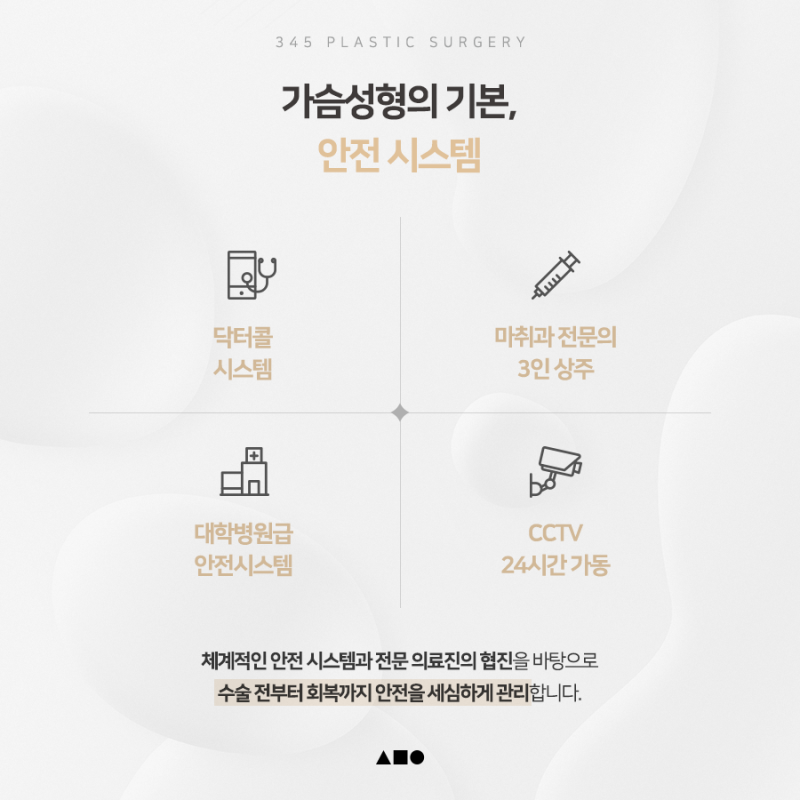
Since breast augmentation requires general anesthesia,
ensuring a secure surgical environment is just as vital
as selecting the right method and implants.
345 Plastic Surgery operates a Doctor Call system,
has three board-certified anesthesiologists on-site at all times,
and features university-hospital-grade safety protocols
along with 24-hour continuous CCTV monitoring.

Dr. Kyu-nam Han, Chief Director of 345 Plastic Surgery,
draws upon 21 years of surgical experience
to tailor breast augmentation to each individual,
taking into account overall body shape, ribcage structure, skin, and tissue characteristics.
If you enjoy regular workouts and have been concerned about
muscle movement or recovery after breast augmentation,
we encourage you to schedule a comprehensive consultation
reflecting your current anatomy and lifestyle patterns to find the optimal surgical approach. 🤎
Thank you. 😊



Frequently Asked Questions
How is subfascial breast augmentation performed?
The procedure involves placing the implant directly beneath the deep fascia enveloping the pectoralis major muscle. Because the muscle itself is not detached or dissected, it significantly helps reduce the influence of pectoral muscle contractions on the implant during upper-body or arm movements.
Is this procedure suitable for people who exercise frequently?
Yes, it is highly suitable for individuals who regularly engage their chest muscles through activities such as weight training or Pilates. The subfascial approach minimizes pectoral muscle trauma and reduces unnatural implant movement during exercise, making it an excellent choice for an active lifestyle.
What post-operative burdens can be minimized during recovery?
It can reduce the need for surgical blood drains, compressive post-op garments, and suture removals. Since subfascial breast augmentation aims to minimize trauma to the pectoralis major, patients can often expect fewer aftercare burdens and a smoother, more convenient recovery depending on their condition.
What types of breast implants are available for this surgery?
A variety of trusted implants can be utilized, including Mentor, Sebbin, and Motiva. Rather than taking a one-size-fits-all approach, the optimal implant is determined by thoroughly considering the patient's chest anatomy, baseline breast tissue characteristics, and desired aesthetic outcome in terms of shape and feel.