2026-06-04
Comprehensive Guide to Facial Contouring Pin Removal Timing and Methods: Is It Necessary?
We provide a professional guide for those considering the removal of plates and screws (pins) used to fixate bones after facial contouring surgery. From the necessity of pin removal to the appropriate timing, surgery duration, anesthesia methods, and recovery period, we have detailed everything from a plastic surgeon's perspective.
What is Facial Contouring Pin Removal? (Role and Material of Fixation Devices)
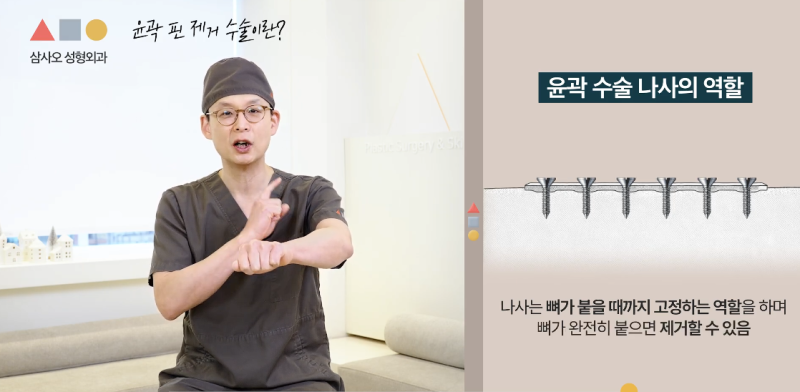
During facial contouring surgery (such as cheekbone reduction or genioplasty), the devices used to hold the osteotomized bones in place until they stably unite (bone healing) are plates and screws, commonly referred to as 'pins'. This works on a similar principle to wearing an external cast for a fracture, serving to firmly hold the bones together from the inside.
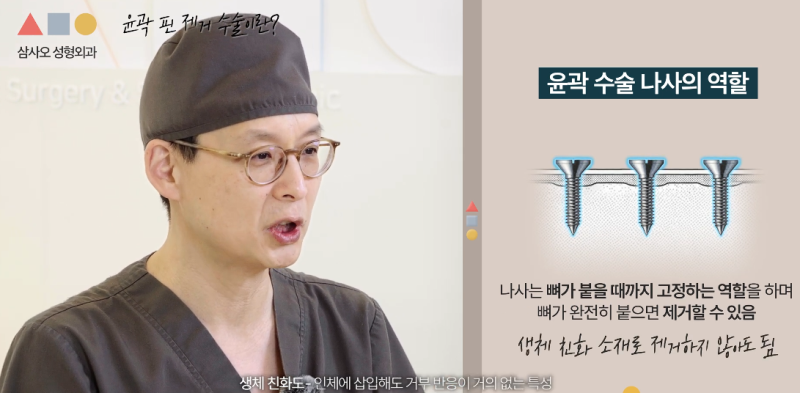
The pins used are made of titanium, a material that is harmless to the human body and highly biocompatible. Therefore, medically speaking, it is perfectly safe to leave them in the body for a lifetime, and it is extremely rare for them to cause any issues.
Is Pin Removal Surgery Absolutely Necessary?
To give you the conclusion first, it is not absolutely necessary to remove them. However, many patients decide to have them removed for the following reasons:
- Feeling burdened by the pins showing up on X-rays during dental treatments or health check-ups
- Psychological discomfort from knowing a foreign substance remains in the face
- In rare cases, being able to feel the pins due to thin skin, or experiencing a foreign body sensation depending on weather changes
Timing and Surgical Process for Facial Contouring Pin Removal
The appropriate time for pin removal is after the bones have sufficiently united. Generally, it is recommended around one year after the surgery.
One thing to note is that if too much time passes, new bone may grow over the screws. In this case, the overgrown bone must be partially shaved down to unscrew them, which can complicate the surgical process. Therefore, if you wish to have them removed, it is best to consult with your medical team so as not to miss the optimal timing.
Surgery Duration
On average, it takes around 1 hour. However, if the screws are covered by bone or if there are many pins to remove, the time may be slightly extended.
Anesthesia Methods and Recovery Period Guide
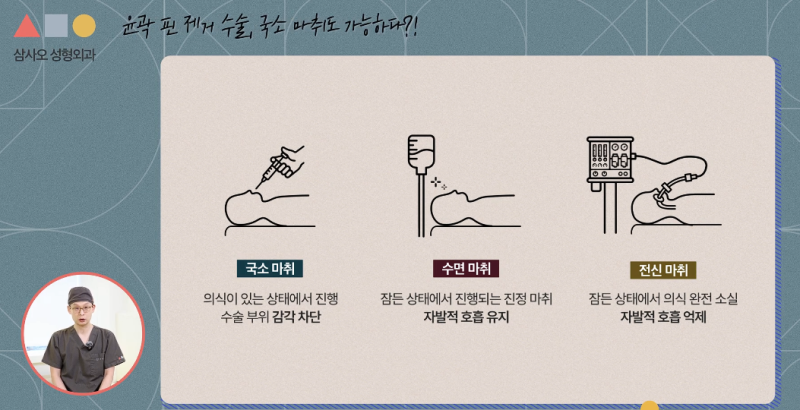
Theoretically, it is possible to perform the surgery under local anesthesia, but the vibrations, sounds, and pressure during the procedure can cause significant anxiety for the patient. Especially since instruments like drills or osteotomes may be used, we recommend proceeding under sedation or general anesthesia to ensure a comfortable state.
Recovery and Care
Pin removal utilizes the same incision lines used during the initial contouring surgery. Since there is no process of shaving the bone again, the pain and swelling are significantly less than the initial surgery.
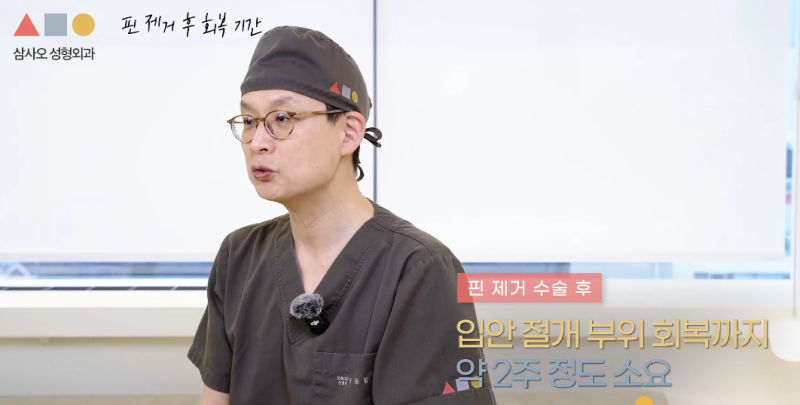
- Stitch Removal: Stitches in the intraoral incision area are usually removed after 2 weeks.
- Recovery Period: A return to daily life is possible in about 2 weeks, and maintaining oral hygiene through gargling is crucial during this time.
Considerations When Choosing a Clinic for Surgery
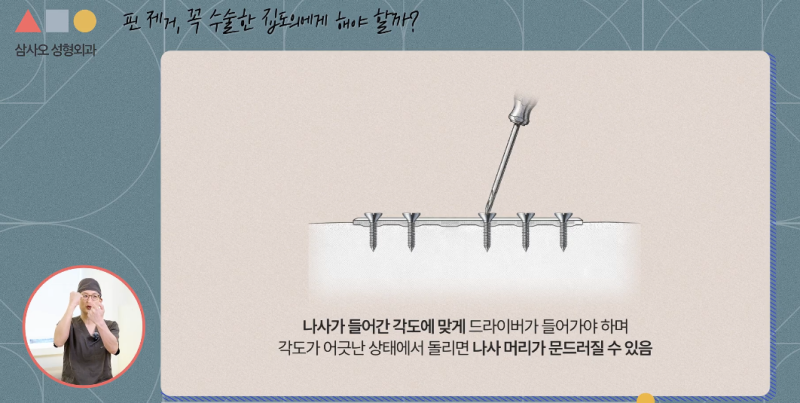
If possible, it is most advantageous to have the pin removal performed by the medical team who performed the initial surgery. This is because the original surgeon knows the exact location and angle of the inserted screws better than anyone else. The difficulty of removing screws can vary depending on minute differences in angle, and precise access is necessary to minimize damage to surrounding tissues.
Of course, even if you had the surgery at another clinic, removal is entirely possible through comprehensive examinations, so please make your decision after consulting with an experienced specialist.
Frequently Asked Questions
Do I have to remove the pins after facial contouring surgery?
No, it is not mandatory to remove them. The pins used in surgery are made of titanium, which is harmless to the human body and highly biocompatible, so it is medically acceptable to keep them in the body for life. However, if you are uncomfortable with their exposure during X-rays or feel a foreign body sensation, you can choose to have them removed.
When is the best time to undergo pin removal surgery?
Approximately one year after the initial surgery is the most appropriate time. It is best to remove them after the osteotomized bone has stably fused, and it is important not to miss the appropriate time, as new bone may cover the screws if too much time passes, complicating the surgical process.
How is anesthesia administered during pin removal surgery?
Sedation anesthesia or general anesthesia is recommended. Theoretically, local anesthesia is possible, but the vibrations, sounds, and pressure during surgery can cause significant anxiety to the patient, so it is better to perform the surgery under sedation or general anesthesia to ensure comfort.
How long is the recovery period after pin removal surgery?
Normal recovery is possible in about 2 weeks. Since the same incision line used in the initial contouring surgery is utilized again and there is no bone削り process, pain and swelling are significantly less than with the initial surgery. Stitches in the intraoral incision site are usually removed after 2 weeks, and consistent gargling care is necessary.
Can pins from surgeries performed at other hospitals also be removed?
Yes, pins from surgeries performed at other hospitals can be removed after a precise examination. However, it is most advantageous to have the removal performed by the original surgeon who knows the exact location and angle of screw insertion to minimize damage to surrounding tissues, so it is recommended to visit the original hospital if possible.