2026-06-04
Real Case of 3-Type Facial Contouring in a Patient in Her 20s: A Smooth V-Line Achieved Through the Harmony of the Square Jaw, Cheekbones, and Chin
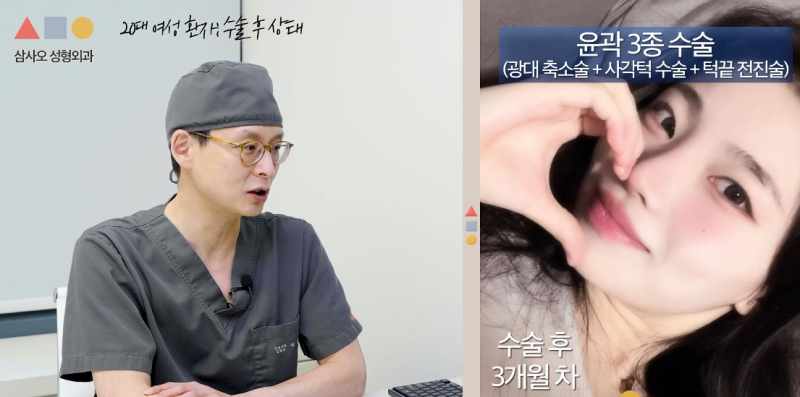
We explore the complex facial line improvement process through a 3-type facial contouring (square jaw, cheekbones, and chin) surgery case of a 21-year-old female patient. We share detailed 6-month progress and CT analysis data, showing how correcting a developed square jaw, prominent cheekbones, and a short chin enhanced both functional harmony and aesthetic satisfaction.
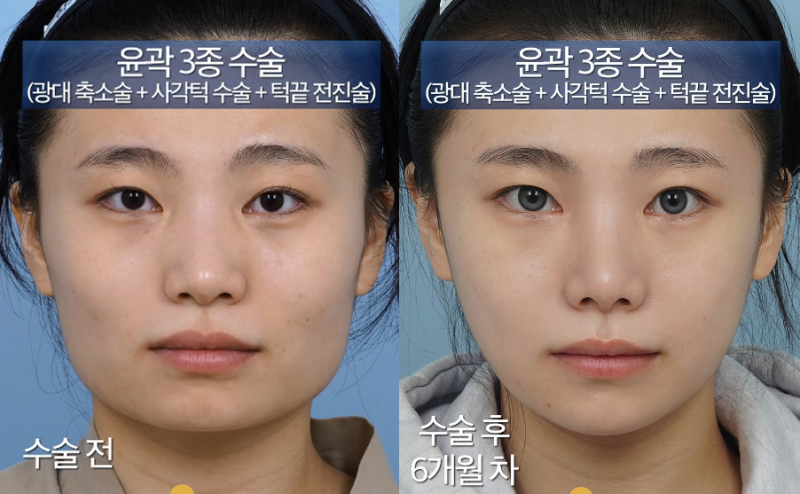
Facial Contouring Concerns of a Woman in Her 20s: A Complex Solution for a Square Jaw, Cheekbones, and Short Chin
Women in their 20s, entering early adulthood, often appear to have a strong impression due to prominent facial bone structure, or they spend a lot of time editing their selfies. The case we are introducing today is a 21-year-old female patient who visited our clinic with two main concerns.
- Wide and angular square jaw: The mandibular angle (the angular part of the jawbone) was developed, making the lower face look wide when viewed from the front.
- Bumpy cheekbone line: Due to the protrusion of the side cheekbones, the area below the cheekbones appeared sunken, resulting in an uneven facial line.
In particular, when viewed from the side, this patient had a receding chin where the tip of the chin was pushed back, along with a short chin length, creating a structure where the overall facial proportions were concentrated at the bottom. A precise approach that went beyond simply shaving the bone to rearranging the proportions was necessary.
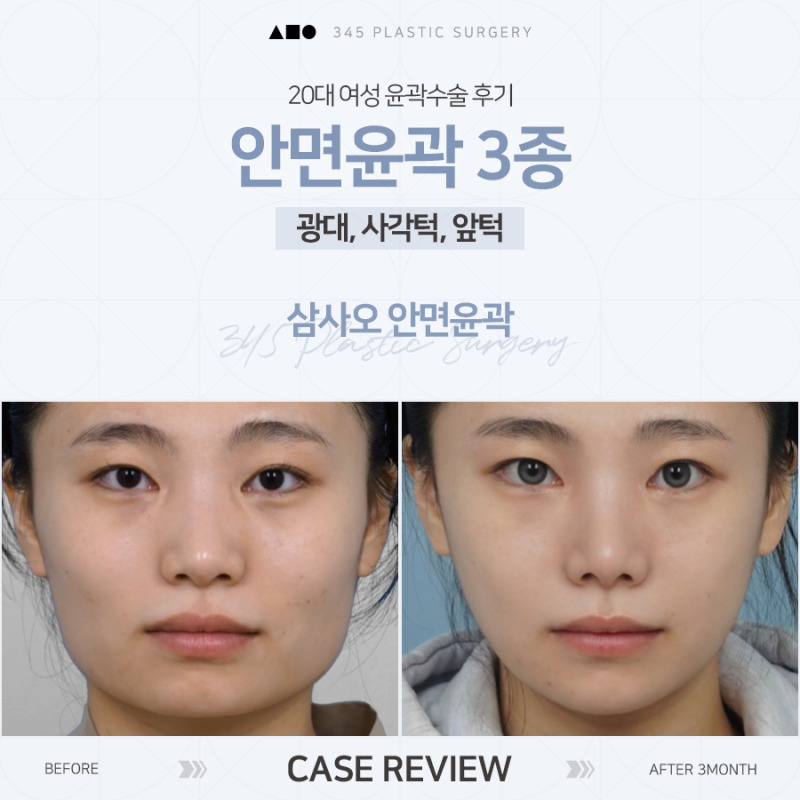
Personalized 3-Type Facial Contouring Surgical Plan and Design
Just as each patient's facial structure is different, the surgical plan cannot be uniform. At 345 Plastic Surgery, we prioritized the patient's main concerns while proceeding with a design that did not disrupt the overall balance of the face.
| Surgical Area | Detailed Surgical Method | Expected Effect |
|---|---|---|
| Square Jaw | Masseter Muscle Reduction + Cortical Osteotomy | Reduces jaw thickness and smoothly improves angular areas |
| Cheekbones | Zygoma Reduction | Reduces the width of the side cheekbones to restore volume in the mid-face |
| Front Chin | Advancement and Length Extension (including bone graft) | Adjusts the position of the short and receding chin to perfect the lower face proportions |
The core of 3-type Facial Contouring is to create a natural line from any angle through the organic transformation of these three areas.
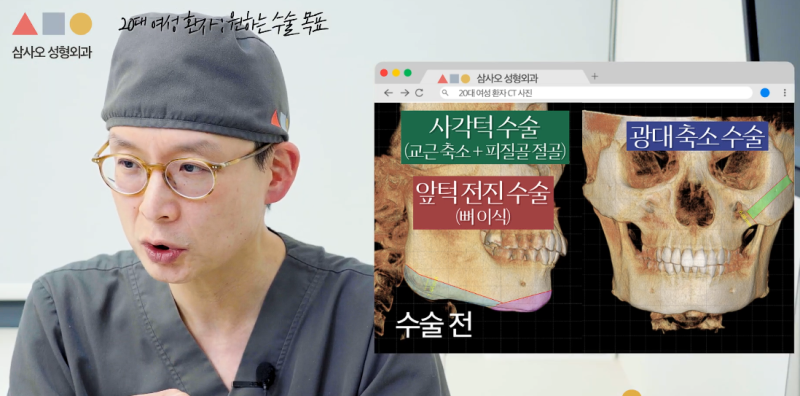
Confirming Changes in Bone Structure Before and After Surgery Through CT Analysis
Just as important as the visible changes is the stable settlement of the internal bone structure. Through a comparison of pre- and post-operative 3D CT scans, we can confirm how the bones have been repositioned.
In the frontal CT, you can see that the width of the cheekbones has noticeably decreased, and the mandibular angle of the square jaw has been refined to form a smooth curve. In the lateral CT, the chin bone, which was previously pushed back, has been advanced forward, securing airway space while simultaneously forming a distinct jawline. This goes beyond the simple concept of 'reduction' by excising bone; it is closer to a process of 'reconstruction' that adjusts position and angle.
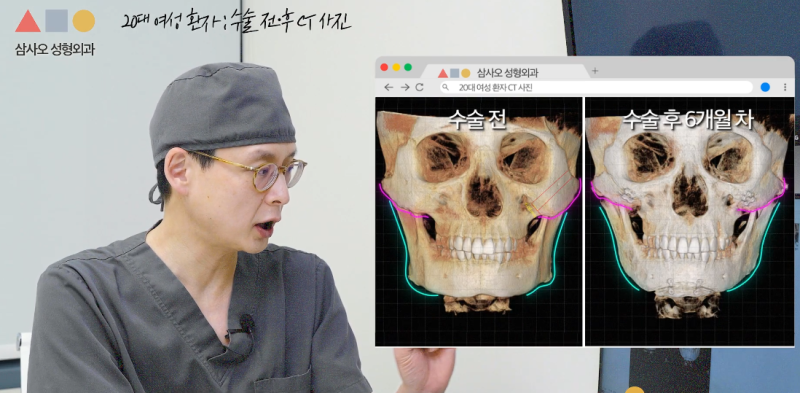
Progress and Recovery Management 6 Months After Facial Contouring Surgery
Six months post-surgery is the period when residual swelling has mostly subsided, and the bones and soft tissues settle into place. In the case of this patient in her 20s, her good skin elasticity led to excellent recovery, resulting in high post-operative satisfaction.
- Frontal Changes: The bumpy lines were refined into a smooth V-line.
- 45-Degree/Lateral Changes: The protrusion of the cheekbones was alleviated while maintaining the face's dimensional volume, and the advancement of the chin gives a sophisticated impression.
- Psychological Changes: The patient gained confidence when taking selfies after the surgery and received comments from people around her that her impression had brightened.
Considerations for Successful Facial Contouring
As facial contouring is a highly difficult surgery that deals with bones, sufficient consultation with experienced medical staff is essential. Rather than simply following trendy face shapes, it is important to find a line that harmonizes with your own facial features. In addition, you can expect favorable results only by meticulously checking whether a post-operative care system is well-established and whether a board-certified anesthesiologist is a resident at the clinic.
Frequently Asked Questions
How is the square jaw improved during a 3-point facial contouring surgery?
It is improved by combining cortical osteotomy and masseter reduction. By reducing the thickness of the jawbone and smoothly refining the angular mandibular angle, you can expect the effect of a narrower lower face width when viewed from the front and a smooth line.
Can a short and recessed chin also be resolved with facial contouring?
Yes, it can be resolved with genioplasty (chin advancement and lengthening). It's not just about shaving the bone; it involves bone grafting to adjust the position of the recessed chin forward, thereby balancing the proportions of the lower face and creating a defined jawline.
How do you confirm that the bones have settled well after surgery?
We precisely confirm this by comparing 3D CT scans taken before and after the surgery. Through CT analysis, we can visually ascertain whether the internal bone structures, such as the reduction in cheekbone width, the change in the curve of the square jaw's mandibular angle, and the forward placement of the chin bone, have stably settled.
How long does it take for the residual swelling to subside after facial contouring surgery?
Typically, most of the residual swelling subsides about 6 months after the surgery. By this time, the bones and soft tissues have stably settled, and especially for those in their 20s, with good skin elasticity, recovery is faster, and a smooth V-line result can be observed.
What should be checked for successful facial contouring surgery?
Thorough consultation with experienced medical staff and verification of the safety system are essential. Rather than a trendy face shape, you should find a design that harmonizes with your own features, and you must carefully check for the presence of an anesthesiologist and a systematic post-operative care system.