2026-06-04
Long-Curve Square Jaw Surgery: Differences from Standard Square Jaw Reduction and Frontal Effects
Discover the features of long-curve square jaw surgery designed to resolve concerns about a prominent square jaw that creates a harsh impression. We detail the differences from standard square jaw surgery, concurrent procedures like cortical bone resection and masseter reduction that enhance the frontal effect, and essential safety systems.

A smooth facial contour is just as important as distinct features when it comes to first impressions. In particular, an overdeveloped square jaw skeleton or musculature can create a harsh impression and make the face appear larger. As a result, many individuals consider square jaw surgery (Mandibular Angle Reduction) to improve this.
Recently, rather than simple resection, the long-curve square jaw surgery method has been gaining attention for creating a natural, slender jawline. Let's explore how it differs from standard surgical methods and what factors you should check to ensure satisfactory results.
Standard Square Jaw Surgery vs. Long-Curve Square Jaw Surgery: What is the Difference?
There is a significant difference in results between simply shaving down the angular areas and refining the bone into a long, continuous curve.
- Standard Square Jaw Surgery: Primarily involves osteotomy of the protruding angular area below the ear (mandibular angle). While it improves the side profile, the visible change from the frontal view may be relatively minimal.
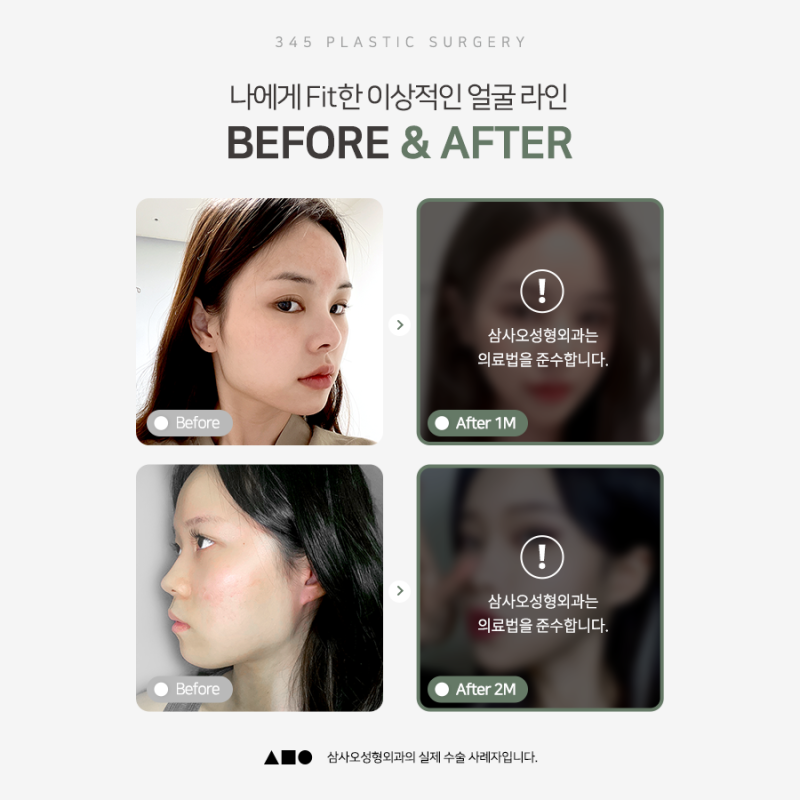
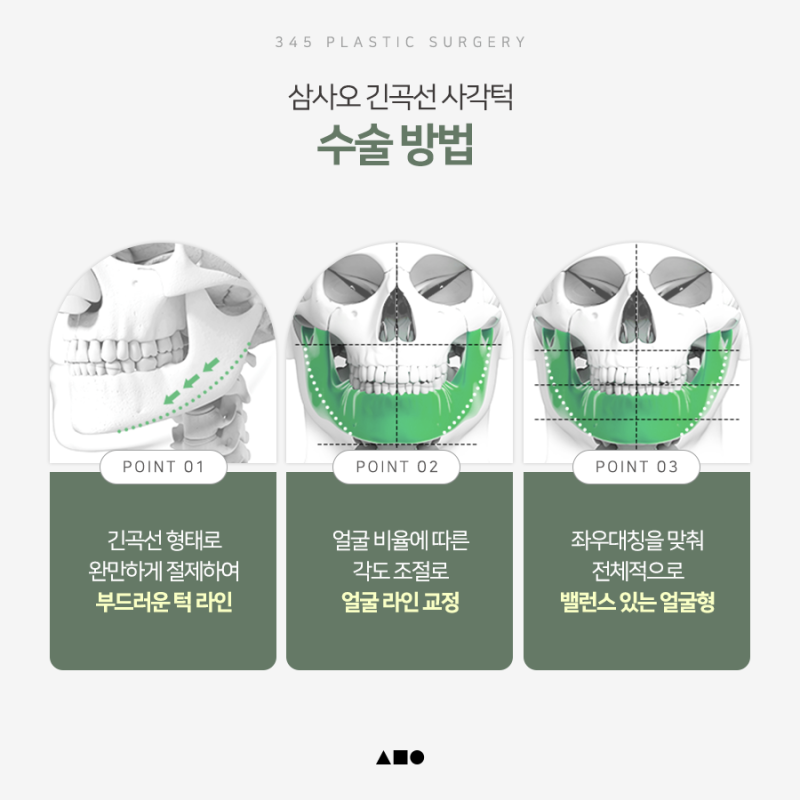
- Long-Curve Square Jaw Surgery: Smoothly resects the bone in a long, continuous curve from below the ear to the side of the chin. By improving the overall flow of the jawline, you can expect a slimming effect that makes the face look smaller from both the side and the front.
The long-curve resection method creates a smooth jawline without the 'staircase effect' (secondary angles) that can occur with additional osteotomies. It also offers the advantage of restoring overall facial balance by adjusting the scope of the osteotomy to correct left-to-right asymmetry.
3 Concurrent Solutions to Maximize the Frontal Effect
To achieve a slimmer facial contour, it is essential to consider not only the length of the bone but also its thickness, as well as the surrounding muscle and fat layers.
| Category | Features and Effects |
|---|---|
| Cortical Bone Resection | Thinly shaves off the cortical bone, the outermost layer of the jawbone, to reduce the actual width of the face. |
| Masseter Reduction | If the masseter muscle (chewing muscle) is hypertrophied, a portion is reduced to further slim the jawline. |
| Buccal Fat & Fat Removal | If there is bulging next to the mouth or sagging cheeks, removing the buccal fat pad helps enhance facial dimensionality. |
Safety Systems You Must Check Before Facial Contouring Surgery
Because surgeries involving facial bones are highly complex, the expertise of the medical staff and the clinic's safety facilities are of utmost importance. 345 Plastic Surgery operates the following systems to ensure patient safety:
- Dedicated Anesthesia System: Three board-certified anesthesiologists are on-site to monitor the entire surgical process.
- Emergency Equipment: Equipped with university hospital-grade facilities, including defibrillators, positive/negative pressure ventilation systems, and an uninterrupted emergency power supply.
- Dantrolene Stocked: We always stock 'Dantrolene,' the only antidote for malignant hyperthermia, a rare complication that can occur during general anesthesia.
- Post-operative Care: We meticulously manage the recovery process through our 'Doctor Call' system, where the head surgeon personally checks on your progress after surgery.

For facial contouring surgery, it is crucial to find the optimal design tailored to your facial proportions through thorough consultation with specialized medical professionals who possess over 26 years of extensive clinical experience. Rather than simply shaving off as much bone as possible, striving for harmonious beauty will yield the most satisfying results.
Frequently Asked Questions
What is the biggest difference between general square jaw surgery and long curve square jaw surgery?
Yes, there is a big difference in the scope of osteotomy and the frontal effect. General surgery only resects the mandibular angle below the ear, which only improves the side profile, but long curve square jaw surgery resects from below the ear to the jawline, allowing for a smaller face effect even from the front.
Does long curve square jaw surgery prevent secondary angles (step deformity)?
Yes, the risk of secondary angle occurrence is low. Since the jawline is smoothly resected in a long, curved shape from below the ear to the jawline, the advantage of this surgical method is that it can create a smooth jawline without the step deformity that can often occur with additional osteotomy.
Is there a way to further enhance the frontal effect of square jaw surgery?
Yes, methods that reduce bone thickness, muscle, and fat layers together can be combined. By performing cortical osteotomy to thin the outer layer of the jawbone, masseter reduction to reduce hypertrophied chewing muscles, and deep buccal fat removal, a more slender face shape can be achieved when viewed from the front.
Is general anesthesia safely performed during facial contouring surgery?
Yes, safety can be enhanced if there is an anesthesiologist on site and emergency equipment is available. This clinic has three anesthesiologists on staff, possesses dantrolene, a treatment for malignant hyperthermia, and has university hospital-level emergency equipment to safely monitor the entire surgical process.