2026-10-01
Key Considerations Before Facial Contouring Revision: 345 Plastic Surgery
Essential guide to facial contouring revision: causes, optimal timing (6–12 months), 3D-CT diagnostics, and safety protocols at 345 Plastic Surgery.

Hello, this is 345 Plastic Surgery.
Because facial contouring surgery directly reshapes facial bones,
a single procedure can bring dramatic changes
to your overall facial impression and silhouette.
However, some individuals consider revision surgery
if the results do not meet their expectations
or if unexpected issues become noticeable
during the recovery process.
When approaching revision surgery,
it must not be handled with the same criteria as the initial operation.
Instead, a thorough evaluation is required,
including the current condition of the bones and soft tissues,
as well as the scope and technique of the previous surgery.
Today, let us explore the critical factors
to consider if you are thinking about facial contouring revision.
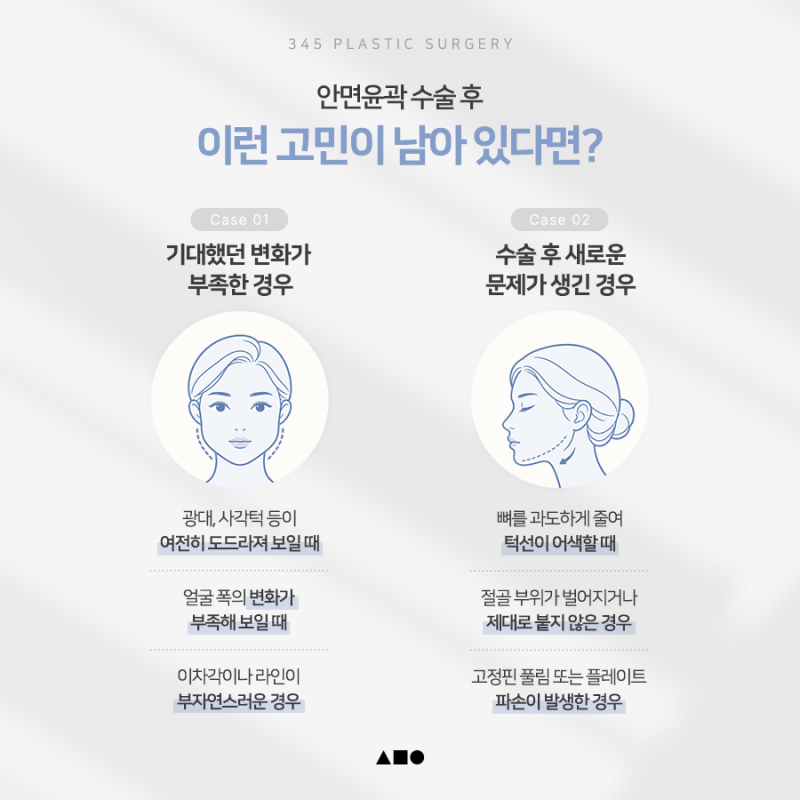
The main reasons patients seek contouring revision surgery
generally fall into two categories: insufficient change
or new post-operative complications.
Common concerns include cheekbones or a square jaw that still appear prominent,
secondary angles remaining along the jawline,
an unnatural jawline caused by excessive bone resection,
or visible asymmetry between the left and right sides.
Additionally, structural issues such as the displacement or breakage
of fixation pins or plates
may necessitate corrective surgery depending on the condition.
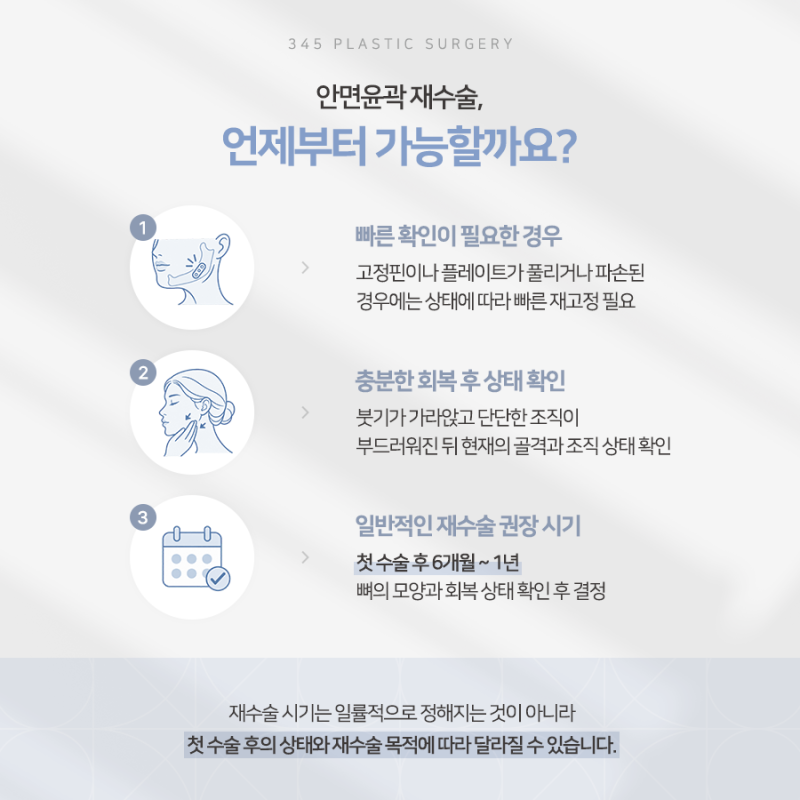
When can facial contouring revision surgery be performed?
Even if you are dissatisfied with your primary surgery results,
it is crucial to allow an adequate recovery period
rather than rushing into revision immediately.
In the early recovery stages, swelling and tissue changes
make it difficult to accurately evaluate
the true facial contours.
Generally, revision surgery is considered
around 6 months to 1 year after the initial procedure,
once the bones have properly healed and surrounding tissues have stabilized.
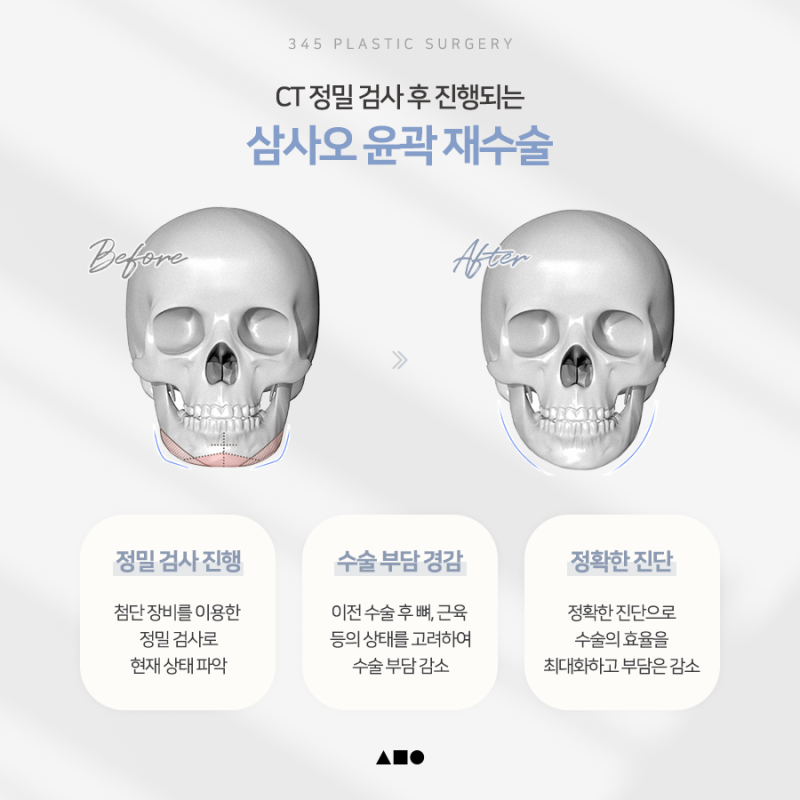
In facial contouring revision,
it is vital to examine not only the visible facial lines
but also the structural shape and condition of the remaining bone.
A precise assessment must be made to determine
where and how much bone was osteotomized during the first surgery,
whether the bones have united securely,
and how much further adjustment can be safely achieved.
At 345 Plastic Surgery, we utilize high-precision 3D-CT scans
to examine the current skeletal structure and the traces of prior surgeries
before establishing a customized revision plan.
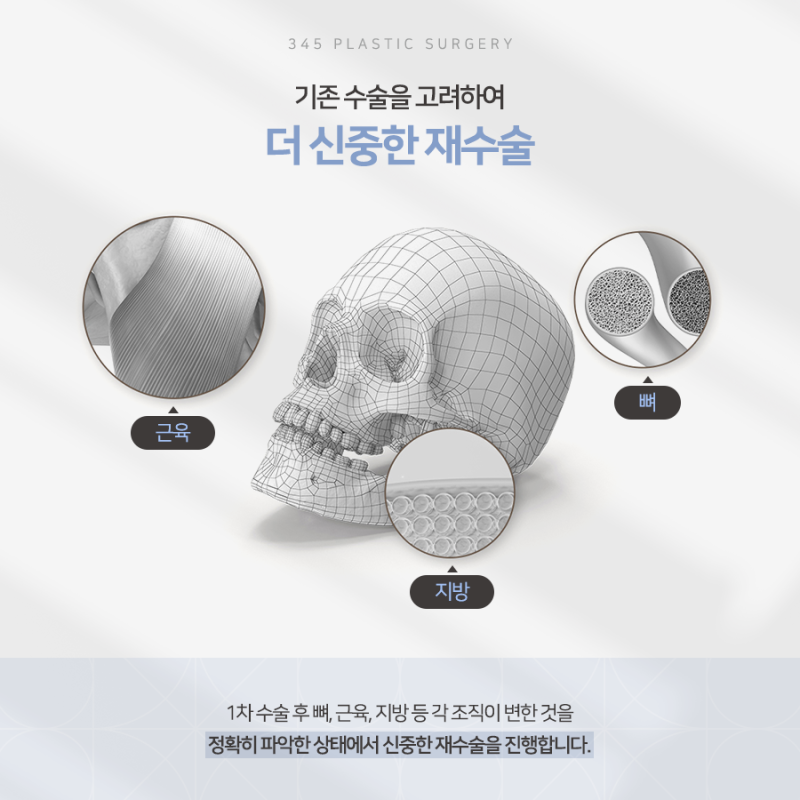
Furthermore, the revision is conducted with extra caution,
taking into account structural shifts in surrounding tissues
such as muscles and fat caused by the previous procedure.
By comprehensively evaluating the remaining bone volume and shape,
as well as its relationship with adjacent soft tissues,
we design an optimal surgical plan
tailored to each individual's unique condition.

Facial contouring revision is recommended for:
✔️ Long Face: Unnatural facial proportions
✔️ Prominent Cheekbones: Minimal change compared to pre-surgery
✔️ Jaw Secondary Angle: An unnatural stepped angle along the jawline after surgery
✔️ Chin Position: Dissatisfaction with the position, projection, or size of the chin tip
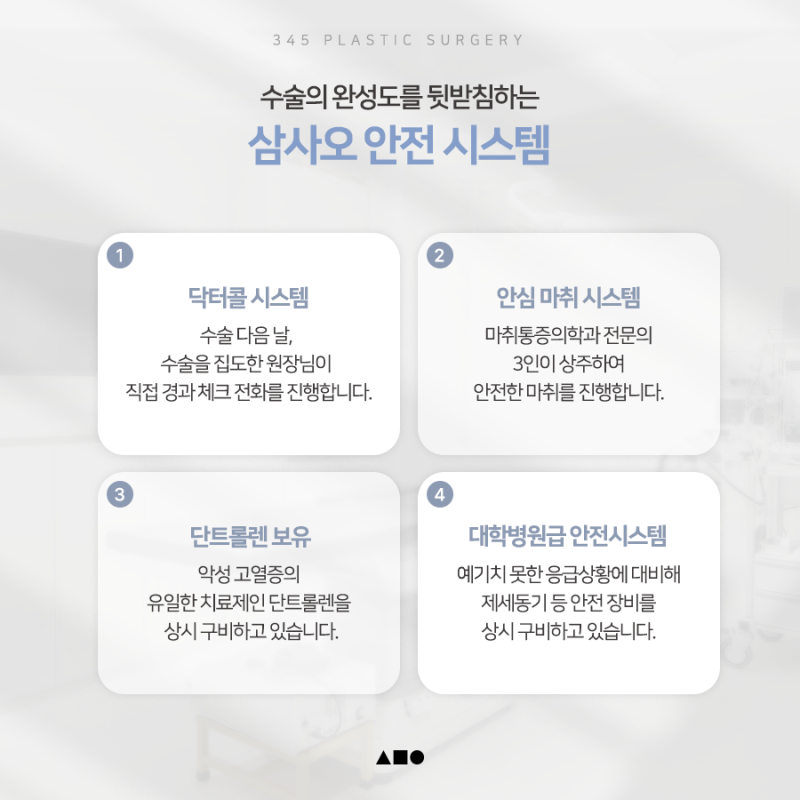
Because revision surgery involves altering
an already modified anatomical structure,
it is essential to evaluate not only the surgical technique
but also the clinic's comprehensive safety management system.
345 Plastic Surgery operates the "Doctor Call System,"
where the operating surgeon directly checks your recovery progress the day after surgery.
Additionally, three board-certified anesthesiologists are permanently on-site
to oversee patient safety and vital signs throughout the entire procedure.

Facial contouring revision must never be approached
simply as a procedure to "shave off a little more bone."
It requires a comprehensive evaluation of how the bones
were cut and repositioned during the primary surgery,
as well as how surrounding soft tissues, such as muscles and fat,
have adapted to those changes.
If unresolved concerns from your first surgery are troubling you,
we encourage you to receive an accurate diagnosis
to discover the safest and most effective path toward improvement 💜
Thank you. 😊



Frequently Asked Questions
When can facial contouring revision surgery be performed?
Generally, revision surgery is possible 6 months to 1 year after the initial procedure. In the early stages, post-operative swelling and ongoing tissue remodeling make it difficult to evaluate the final contour accurately. It is critical to wait until the bones have properly healed and surrounding soft tissues have fully stabilized before deciding on revision.
What are the primary reasons for facial contouring revision?
Revision is usually considered when surgical results are insufficient or when new aesthetic and functional issues arise. Typical reasons include remaining prominence in the cheekbones or jaw, secondary angles on the jawline, an unnatural shape due to excessive bone resection, asymmetry, or hardware complications like loosened or broken fixation plates and pins.
What pre-operative examinations are required for contouring revision?
A comprehensive 3D-CT scan is performed to examine the skeletal anatomy. This allows surgeons to assess where and how much bone was previously resected, the stability of bone fusion, and the safe margin for further correction, along with the condition of adjacent soft tissues like muscle and fat.
Who is a good candidate for facial contouring revision?
Revision surgery is recommended for those with unbalanced facial proportions or persistent dissatisfaction with their jawline. Ideal candidates include individuals with an elongated lower face, minimal cheekbone reduction, secondary stepped angles on the mandible, or issues with chin tip projection and size.
What safety standards should be verified before contouring revision?
It is important to check the clinic's post-operative monitoring protocols and the presence of dedicated anesthesiologists. Verify whether the operating surgeon personally conducts post-operative checkups and whether board-certified anesthesiologists reside full-time to monitor the patient's condition throughout anesthesia and surgery.