2026-06-04
Customized Solutions for Nasolabial Folds by Cause: A Comprehensive Guide from Lifting to Noble Surgery
Nasolabial folds cannot be resolved simply by filling in the sunken areas. Depending on the cause—such as the relaxation of retention ligaments due to aging, sagging of surrounding fat, or excessive fat grafting—the appropriate solution must vary, ranging from lifting and buccal fat removal to noble surgery. Discover key insights on improving nasolabial folds from Dr. Han Kyu-nam of Gangnam 345 Plastic Surgery.
Will Simply Filling Nasolabial Folds Solve the Problem?
Nasolabial folds (smile lines) are a common aesthetic concern across all age groups, from young professionals in their 20s to our parents' generation. Many people think that 'nasolabial folds can just be filled with fillers,' but in reality, the solution must vary completely depending on the cause. If a procedure is performed while overlooking the underlying cause, the face may look unnatural, or the wrinkles may appear even more prominent.
3 Major Causes of Nasolabial Folds
Dr. Han Kyu-nam of Gangnam 345 Plastic Surgery analyzes the causes of nasolabial folds into three main categories.
1. Weakening of Retention Ligaments Due to Aging
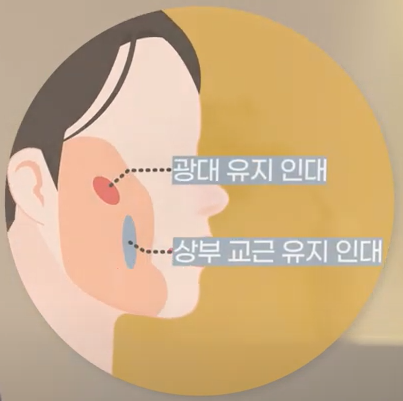
The muscles around the mouth are the facial muscles we use the most in our daily lives. When repetitive movements are combined with aging, the retention ligaments that support the skin become loose, causing the skin to sag downward and form deep shadows, which are the nasolabial folds.
2. Migration and Sagging of Facial Fat
As we age, the overall volume of the face decreases. During this process, fat is lost in certain areas, and the remaining skin sags under the influence of gravity. The boundary lines where this skin folds over are precisely the nasolabial folds and mid-cheek grooves.
3. Excessive Volume in Surrounding Areas
Ironically, having too much fat around the nasolabial folds can also make the wrinkles look deeper. In particular, if there is excessive fat in the cheekbone or cheek areas, the nasolabial area appears relatively sunken, further emphasizing the depth of the folds.
A Case Where Excessive Fat Grafting Caused Nasolabial Folds
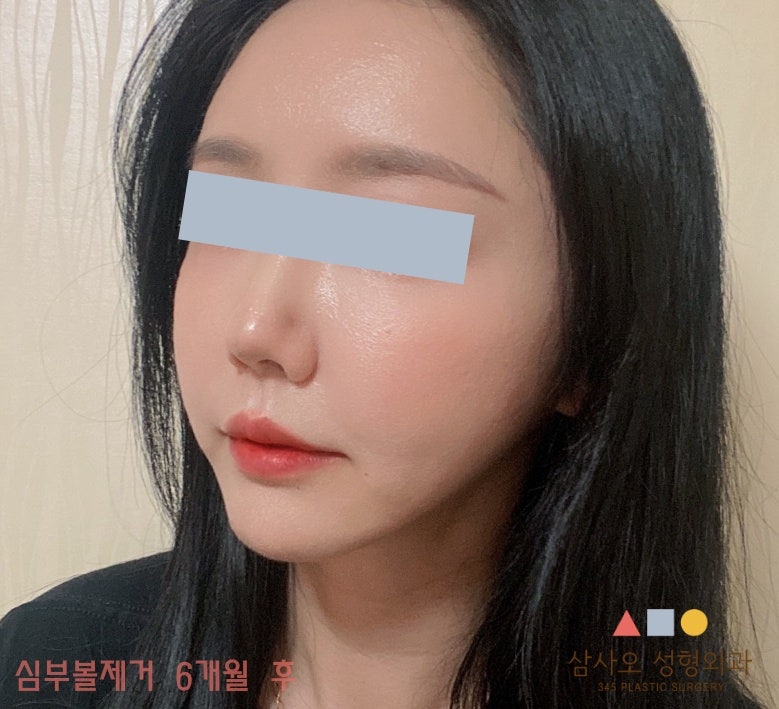
Generally, fat grafting is chosen to achieve a more youthful appearance, but as the saying goes, 'too much of a good thing is bad.' Excessive grafting can actually create new concerns. In a past case, a patient underwent fat grafting to make her face look smaller, but the over-injected fat could not support its own weight and sagged, severely worsening her nasolabial folds.
Because the fat injected during a fat graft settles across multiple layers, it is not easy to remove simply through liposuction. In such cases, buccal fat removal can help by reducing the excessive volume in the surrounding areas, thereby softening the nasolabial folds and improving the facial line to be more slender.
Customized Solutions by Cause: Which Procedure Do I Need?
At 345 Plastic Surgery, we propose personalized solutions through precise diagnosis.
- When skin sagging is the main cause: A lifting procedure is used to pull the sagging tissues back to their original position, improving the wrinkles.
- When lack of volume is the issue: The sunken areas are appropriately filled with fillers or fat grafting to create a smooth surface.
- When surrounding volume is excessive: Unnecessary fat is cleared away through procedures like buccal fat removal to soften the boundary lines.
- When fundamental skeletal supplementation is needed: Implant insertion or bone grafting, commonly known as 'noble surgery' (paranasal augmentation), can be considered.
'Noble Surgery' (Bone Grafting) for More Precise Improvement
If the roots of the nasolabial folds are deep, noble surgery involving the insertion of implants can be effective. In particular, Dr. Park Jong-lim of 345 Plastic Surgery performs 'bone graft noble surgery,' which involves delicately refining the bone excised during facial contouring surgery and inserting it into the nasolabial fold area. This is a method that reduces the aversion to artificial implants while expecting natural volume improvement.
Conclusion: Accurate Diagnosis Comes First
The key to resolving nasolabial folds is not simply 'filling them in,' but understanding 'why they formed.' Establishing the most suitable plan for your facial structure through thorough consultation with a specialist who has diverse clinical experience is the path to achieving safe and satisfactory results.
Frequently Asked Questions
Do nasolabial folds always need to be filled with fillers?
No, the solution varies depending on the cause. If the cause is a lack of volume, fillers or fat grafting can help. However, if skin sagging is the cause, lifting procedures are needed, and if there is excessive surrounding volume, buccal fat removal should be performed to achieve natural results.
Can excessive fat grafting worsen nasolabial folds?
Yes, that's correct. If too much fat is injected into the face, the injected fat may not withstand the weight and sag downwards, making the nasolabial folds appear deeper. In this case, buccal fat removal can reduce the surrounding volume and alleviate the wrinkles.
How are nasolabial folds caused by skin sagging treated?
They can be improved with lifting procedures. If wrinkles have formed due to loosened retaining ligaments and sagging skin from aging, lifting procedures that pull the sagging tissue back to its original position are the most effective solution.
What are the advantages of a '귀족수술' (aristocrat surgery) using bone grafting?
A major advantage is reducing rejection of artificial implants. Since your own bone, resected during contouring surgery, is meticulously shaped and inserted into the nasolabial fold area, you can expect a more natural volume improvement effect.