2026-06-04
Zygoma Reduction to Prevent Facial Sagging: The Effects of 345 Plastic Surgery's Double Adhesion Zygoma Lifting
Learn about 345 Plastic Surgery's 'Double Adhesion Zygoma Lifting,' designed to prevent cheek and facial sagging that can occur after zygoma reduction. We explain in detail the principles and safety systems behind reducing bone while simultaneously boosting skin elasticity to create a three-dimensional facial contour.

Why Facial Sagging Occurs After Zygoma Reduction
Many people consider zygoma reduction to achieve a small, three-dimensional facial contour. However, due to the nature of surgeries that reduce bone volume, the remaining skin tissue corresponding to the reduced bone may sag downward under the influence of gravity.
In particular, those in their 20s recover quickly due to good skin elasticity, but from the 30s and 40s when aging begins, there is a high possibility of noticeable facial sagging after surgery, such as nasolabial folds or sagging cheeks. To prevent this, it is necessary to consider the changes in the soft tissue along with the simple bone surgery.
What is 'Double Adhesion Zygoma Lifting' That Addresses Both Bone and Soft Tissue?
345 Plastic Surgery's 'Double Adhesion Zygoma Lifting' is a surgical method that simultaneously performs cheekbone reduction and lifting to increase the adhesion between the bone and skin. Rather than simply shaving the bone, it improves areas where sagging is a concern or has already occurred, allowing you to expect a smooth contour line.
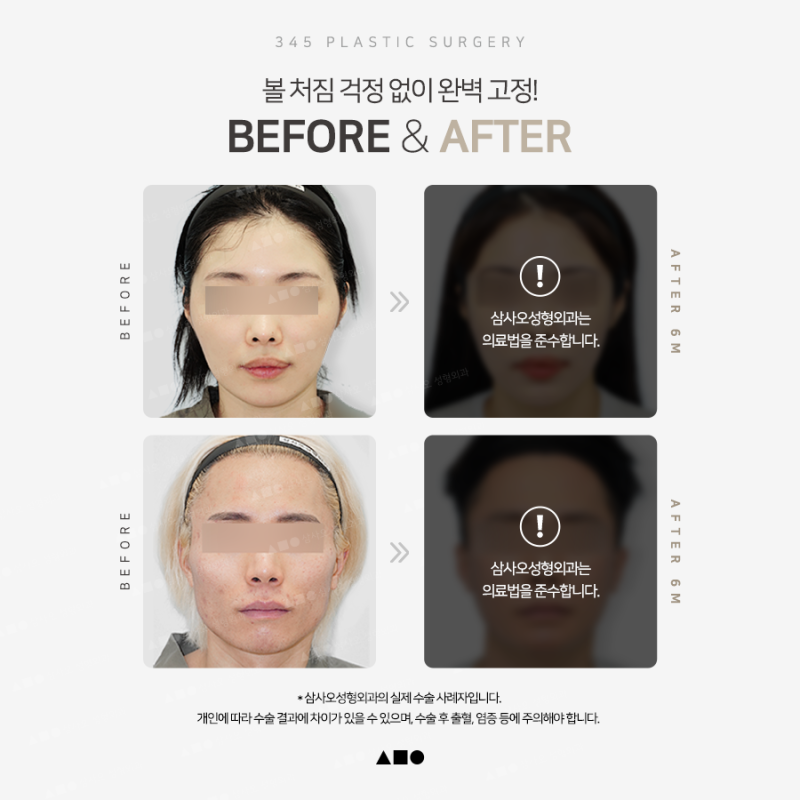
Especially in cases where cheek hollowness under the side cheekbones is prominent or the upper part of the nasolabial folds appears saggy, Zygoma Lifting has the advantage of simultaneously improving wrinkles and the shape of the cheekbones.
The 2-Step Core Process of Double Adhesion Zygoma Lifting
STEP 01. Triple Fixation Zygoma Reduction
The first step is the tight fixation zygoma reduction, which simultaneously improves the front, side, and 45-degree cheekbones. By precisely measuring left-right symmetry and size, only the necessary amount is resected, which can also help improve asymmetry. In particular, to prevent non-union (a phenomenon where bones do not fuse), a 'triple fixation method' is used to securely fix the bones.
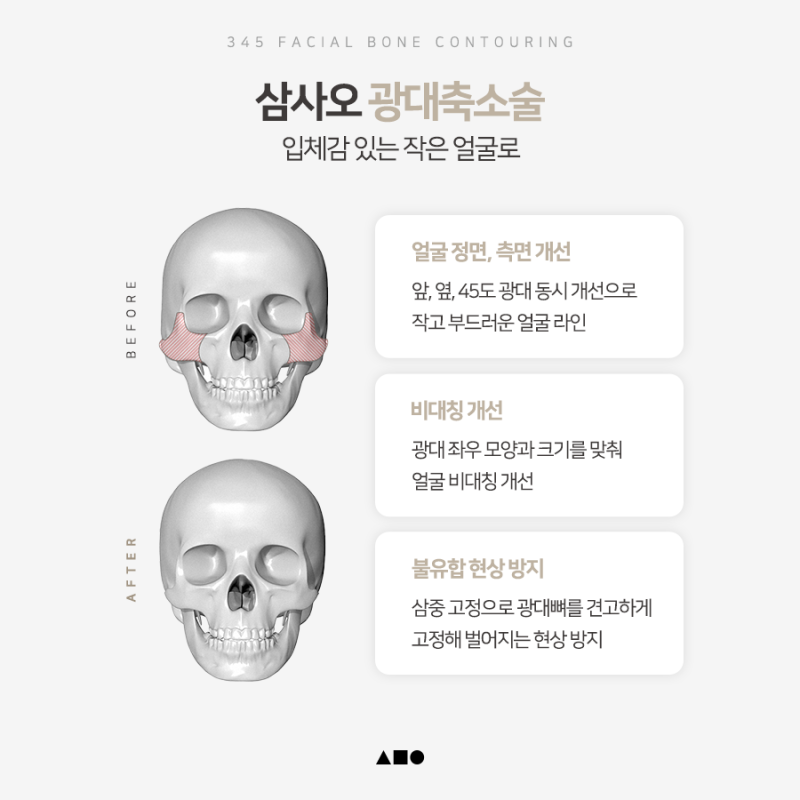
STEP 02. Personalized Customized Lifting
The second step is a customized lifting based on the degree of the patient's skin sagging. If the sagging is not severe, thread lifting is performed in parallel, and if the loss of elasticity is noticeable, a mini lifting or minimal incision lifting is selected. We propose the most suitable method through a 1:1 diagnosis.
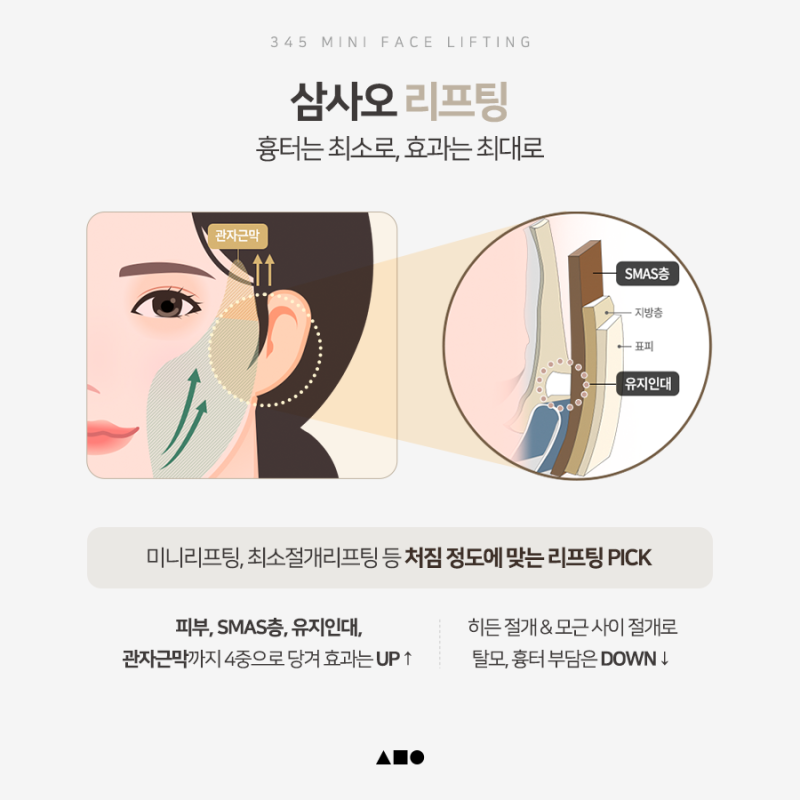
Why Should Zygoma Reduction and Lifting Be Done Simultaneously?
The biggest differentiator of Zygoma Lifting is that the dissection (the process of separating the tissue under the skin) location for both the cheekbone surgery and the lifting is the same. During surgery, tissue that acts as an artificial retaining ligament is created to strengthen the skin's support structure.
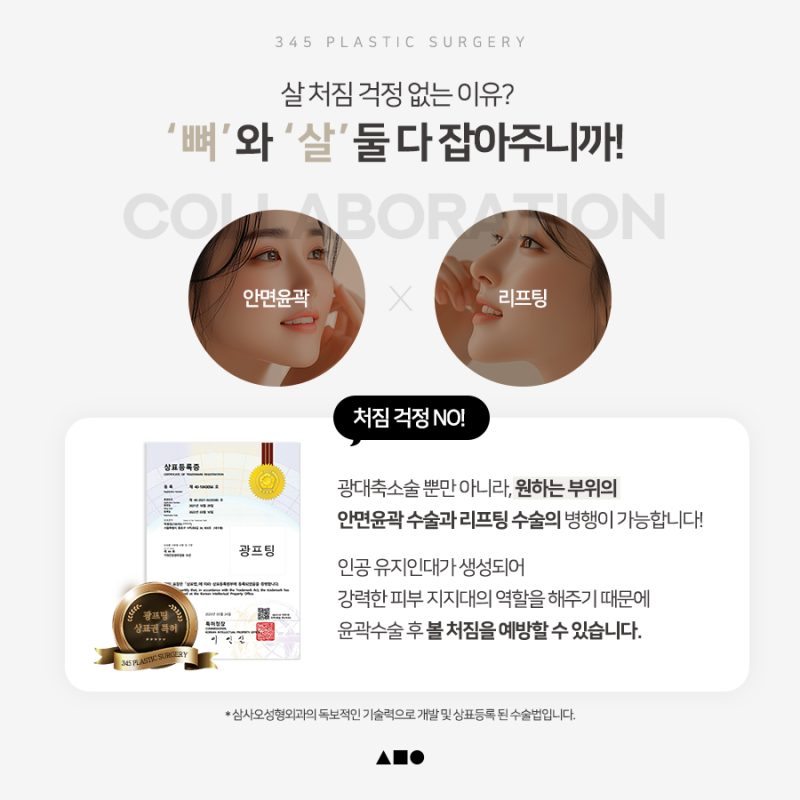
Rather than performing a separate lifting later after the soft tissue has sagged, manipulating and fixing the entire soft tissue immediately after bone surgery increases adhesion and allows for much more effective changes in preventing facial sagging.
345 Plastic Surgery's Safe Surgical System
At 345 Plastic Surgery, where patient safety is our top priority, we operate the following safety systems.
- Dantrolene Stocked: We always stock Dantrolene, the only treatment for malignant hyperthermia, which rarely occurs during general anesthesia.
- CCTV Operation: CCTVs are installed in all operating rooms to ensure a transparent surgical process.
- Direct Care by the Surgeon: Within 24 hours after surgery, the operating surgeon personally checks the progress via phone call to relieve the patient's anxiety.
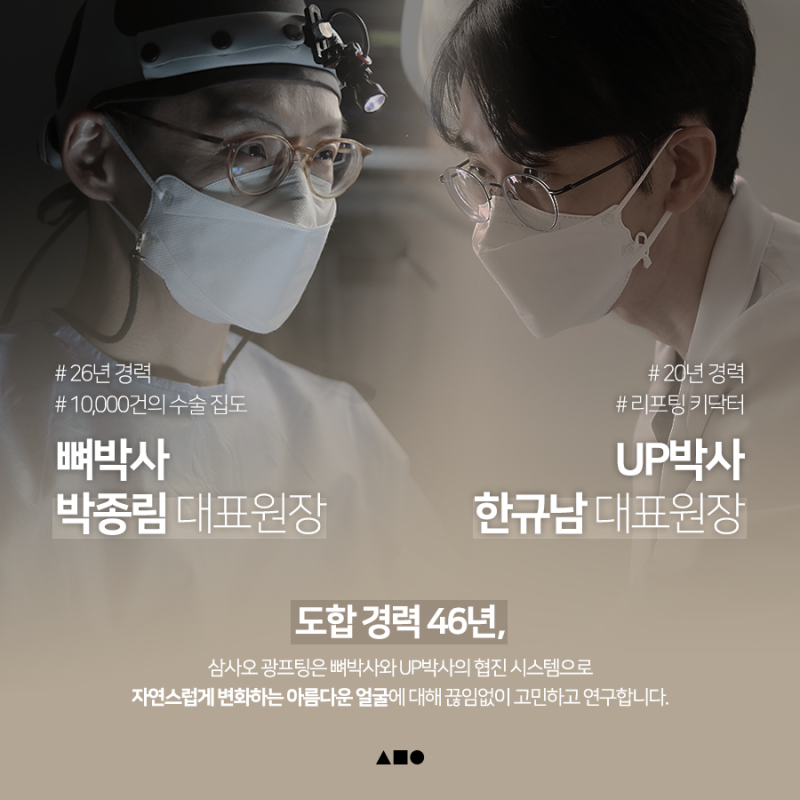
Through Zygoma Lifting, perfected by the collaborative treatment of a bone specialist and a lifting specialist with a combined 46 years of experience, we hope you achieve a smooth facial contour line without worrying about sagging.
Frequently Asked Questions
Why does facial sagging occur after zygoma reduction surgery?
The remaining skin tissue sags downwards due to gravity, corresponding to the reduced bone volume. Especially from the ages of 30-40, when aging begins, skin elasticity decreases, making phenomena like nasolabial folds and cheek sagging more pronounced.
What kind of surgery is Double-Tightening Kwang-Pting?
It is a surgical method that simultaneously performs cheekbone reduction and lifting to enhance the adhesion between bone and skin. It uses a triple fixation method to reduce the front, side, and 45-degree cheekbones, and depending on the patient's degree of skin sagging, it combines thread lifting or mini-lifting to improve the facial contour line.
What are the advantages of simultaneous cheekbone reduction and lifting?
By manipulating and fixing the entire skin immediately after surgery, it is effective in increasing adhesion and preventing sagging. A major advantage is that since the dissection locations for cheekbone surgery and lifting are the same, tissue that acts as an artificial retaining ligament can be created to further strengthen the skin's support.
Can non-union, a side effect where bones don't fuse, be prevented?
Yes, non-union can be prevented by using a triple fixation method. Triple fixation zygoma reduction surgery is performed to firmly fix the bone, and by precisely measuring left-right symmetry and size, only the necessary amount is resected, which helps improve asymmetry and ensure safety.
Is there a system in place for patient safety during surgery?
Yes, we operate a systematic safety system, including the provision of dantrolene, a treatment for malignant hyperthermia, and the operation of CCTV in the operating room. Furthermore, within 24 hours after surgery, the surgeon personally calls to check on the patient's progress, alleviating anxiety and aiding a safe recovery.