2026-06-04
Worried About Cheek Sagging After Zygoma Reduction? The Effects of 345's 'Gwang-fting' Combined with Lifting
We explore 'Gwang-fting', a procedure that combines zygoma reduction with lifting to prevent the cheek sagging often worried about during cheekbone reduction. With a dual-adhesion fixation method that considers bone resection volume and skin elasticity, you can expect a natural and firm facial line.

What Causes Cheek Sagging After Zygoma Reduction?
Facial shape is a crucial factor in determining first impressions. In particular, prominent cheekbones can give off a strong and harsh image, leading many to consider Zygoma Reduction. However, one of the biggest concerns before surgery is the phenomenon of 'cheek sagging'.
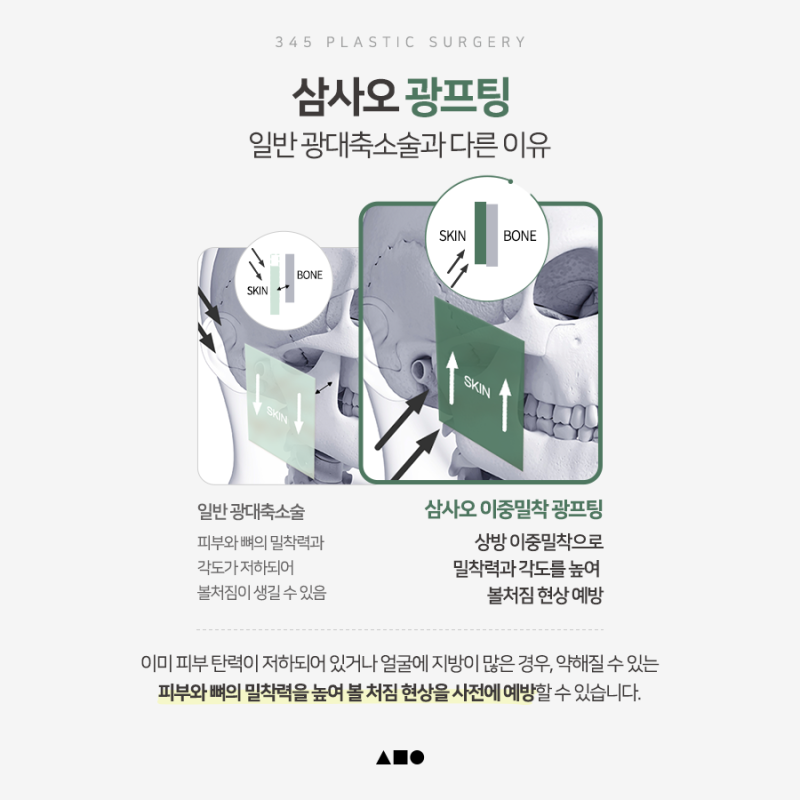
The cheekbones act as a pillar supporting the soft tissues of the face. When the volume of the bone is reduced through facial contouring surgery, the skin and tissues that once covered it are left behind and can sag downwards. This possibility increases significantly if skin elasticity is already compromised or if a large amount of bone is resected.
345 'Gwang-fting': The Dual-Adhesion Synergy of Zygoma Reduction and Lifting
345 Plastic Surgery's 'Gwang-fting' is a procedure that simultaneously performs a lifting to pull the sagging tissues upward to match the reduced bone size. Rather than simply reducing the bone, it focuses on preventing cheek sagging in advance by closely adhering the flesh to the altered skeletal structure.
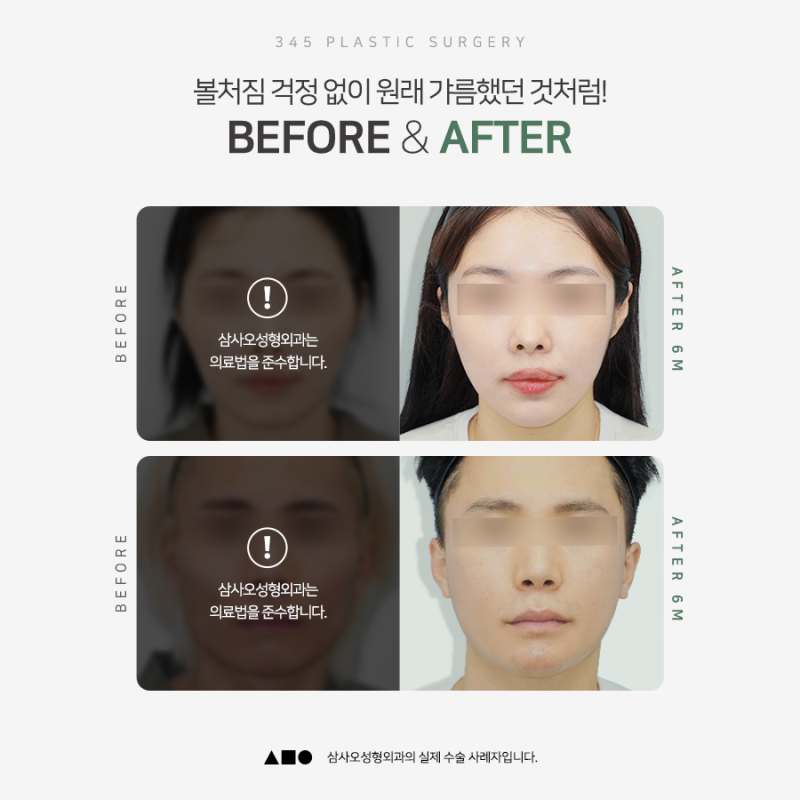
Looking at the 6-month progress of an actual patient, you can see that the zygoma line is smoothly refined while maintaining a firm facial shape without any skin sagging. This result is possible because the organic changes in both bone and flesh were considered simultaneously.
Who Needs Gwang-fting Surgery?
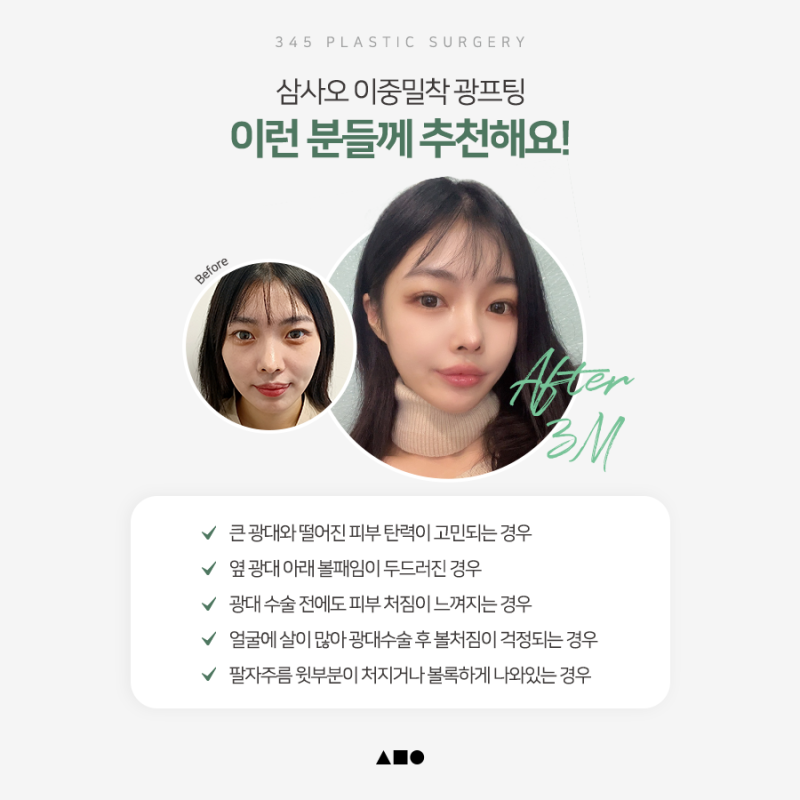
Cheek sagging does not occur in all zygoma surgeries. However, in the following cases, Gwang-fting, which combines facial contouring and lifting, can be an excellent alternative.
- Those with prominent cheek hollowness below the side cheekbones
- Those who already show signs of sagging due to decreased skin elasticity before surgery
- Those expected to have excess skin due to a large amount of cheekbone resection
- Those who want a more definitive line improvement by increasing the adhesion between bone and skin
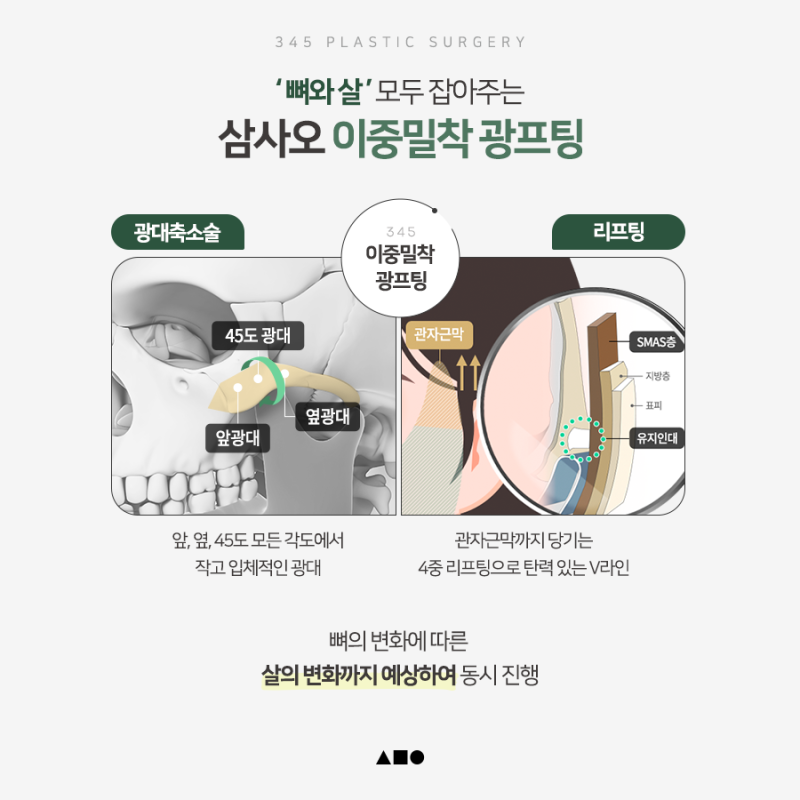
Sophisticated Surgical Process: Retaining Ligament Dissection and Dual-Adhesion Fixation
345's Dual-Adhesion Gwang-fting does not stop at simply pulling the skin; it meticulously addresses the anatomical structure.
1. Precise Osteotomy and Adhesion Fixation
After fracturing the protruding cheekbone and moving it to the optimal position, the contact surfaces between the bones are accurately checked and firmly fixed. This is a core process to prevent nonunion, where the bones fail to heal together properly.
2. Retaining Ligament Dissection and Upward Fixation
The Retaining Ligament, which supports the skin tissues, is appropriately dissected and fixed upward. Through this process, the bone and flesh are tightly adhered without separating, helping to simultaneously improve cheek sagging and hollowness.
345 Plastic Surgery's Differentiated Safety and Aftercare
Just as important as the surgical results are safety and trust. 345 Plastic Surgery has established a system where patients can undergo surgery with peace of mind.
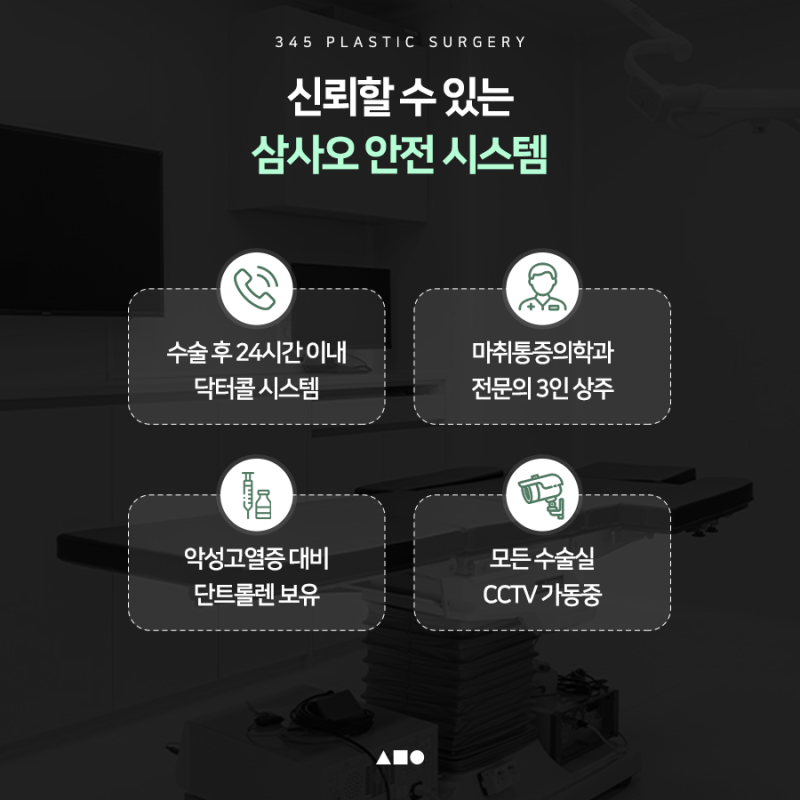
- CCTV Operation in All Operating Rooms: We dispel concerns about ghost surgeries and provide a transparent surgical environment.
- Direct Progress Checks by the Operating Surgeon: After surgery, the operating surgeon personally contacts the patient to check their condition and alleviate any anxiety.
- Surgery by Experienced Specialists: Medical professionals with a combined 45 years of extensive experience in facial contouring and lifting take full responsibility for the surgery.
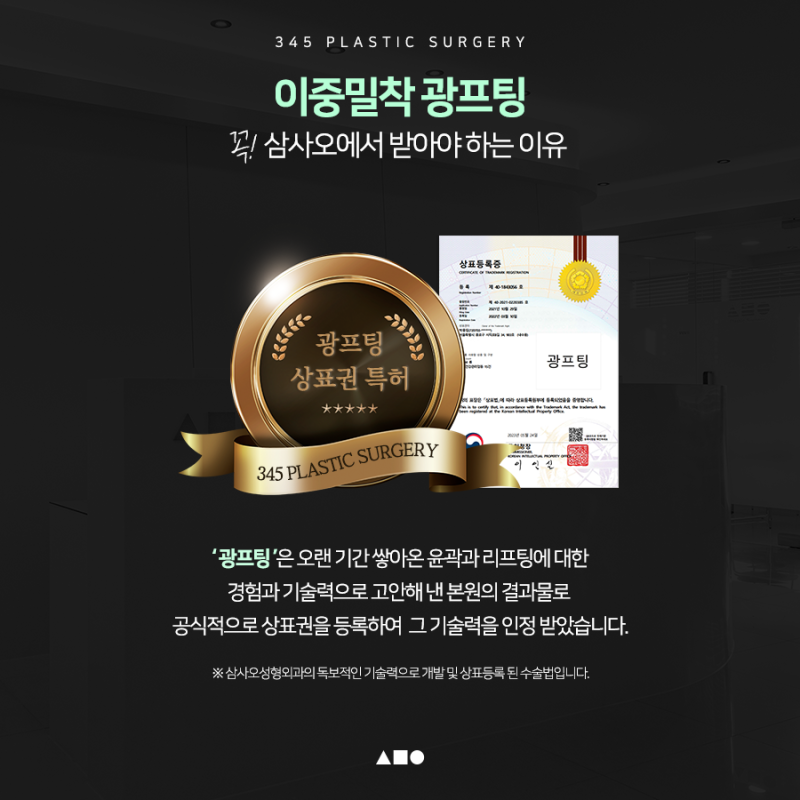
The key to success in zygoma reduction lies not only in the changes to the bone but also in how the overlying flesh settles. We invite you to plan for a smooth facial line without worrying about sagging through 'Gwang-fting', a procedure backed by skilled expertise and even registered as a trademark.




Frequently Asked Questions
What causes cheek sagging after zygoma reduction surgery?
Cheek sagging occurs because the volume of the bone is reduced by contouring surgery, causing the remaining skin and tissue to sag downwards. The cheekbones support the soft tissues of the face, so the possibility of cheek sagging increases if a large amount of bone is resected or if skin elasticity is already reduced.
What kind of surgery is Kwangfting surgery?
Yes, Kwangfting surgery is a procedure that performs zygoma reduction and lifting simultaneously. It focuses on preventing potential cheek sagging after surgery by pulling the sagging tissue upwards to match the reduced bone size and adhering the flesh closely to the changed bone structure.
Who is Kwangfting surgery absolutely necessary for?
It is suitable for those whose skin elasticity is reduced or who are expected to have excess skin due to a large amount of zygoma bone resection. It is also a good alternative for those with prominent cheek hollowing below the lateral cheekbones or who want to improve their facial line more definitively by increasing the adhesion between the bone and skin.
I'm worried that the bones might not heal properly after surgery.
You don't need to worry. The protruding cheekbone is osteotomized and moved to the optimal position, then the contact surfaces between the bones are precisely confirmed and fixed tightly. This thoroughly prevents non-union, where the bones do not heal properly.
How do you address concerns about ghost surgery?
We dispel concerns about ghost surgery by operating CCTV in all operating rooms to provide a transparent surgical environment. Furthermore, a skilled specialist with extensive experience in facial contouring and lifting personally performs the surgery, so you can undergo the procedure with peace of mind.