2026-06-04
Types of Under-Eye Fat Removal Surgery and Selection Criteria: What is the Difference Between Repositioning and Lower Blepharoplasty?
Bulging under-eye fat and deepening wrinkles that occur with age create a tired-looking impression. In this article, we take a detailed look at the differences between the two core under-eye fat removal surgeries—under-eye fat repositioning and lower blepharoplasty—as well as a self-diagnosis checklist, the recovery process, and precautions.
As interest in anti-aging grows among the middle-aged and elderly, an increasing number of people are inquiring about under-eye fat removal surgery as a filial gift for their parents. As aging progresses, the under-eye area can bulge or the skin can sag, making you look older than your actual age and giving a tired impression. We have summarized the types of under-eye surgeries that help restore a vibrant impression and how to find the method that is right for you.
Checklist to Review Before Under-Eye Fat Removal Surgery
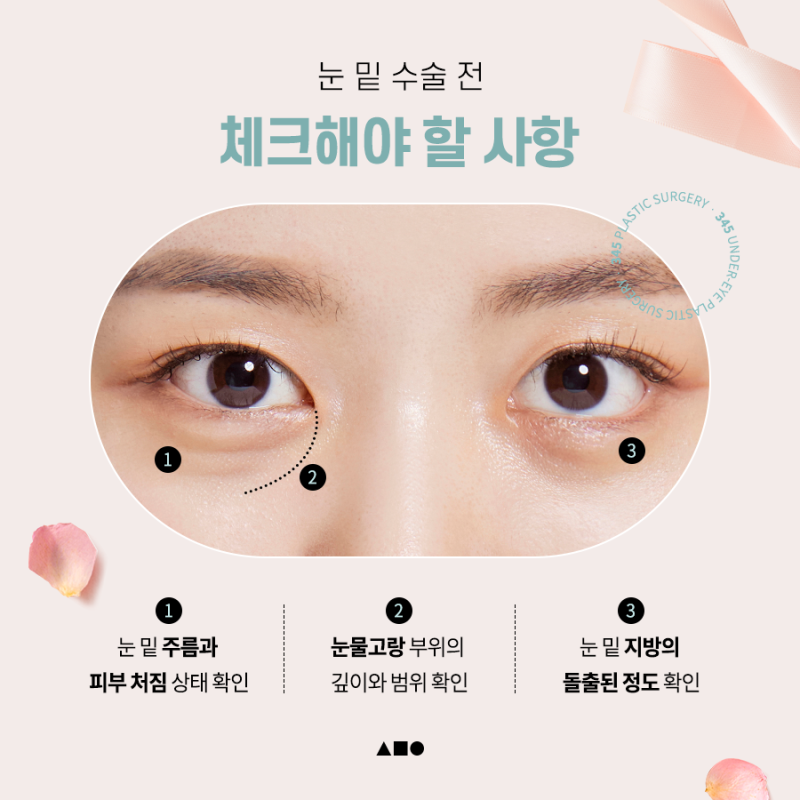
For successful surgical results, it is a priority to accurately assess the current condition of your under-eye area. Before deciding on a surgical method, you should focus on the following three factors.
- Skin sagging and wrinkles: Has the elasticity of the under-eye skin decreased, causing sagging?
- Depth of the tear trough: What is the extent of the deep groove (tear trough) hollowed out below the under-eye fat?
- Degree of fat protrusion: How much fat is protruding due to a weakened orbital septum?

Under-Eye Fat Repositioning vs. Lower Blepharoplasty: Which Surgery is Right for Me?
Under-eye fat removal surgery is broadly divided into two types. The appropriate surgical method varies depending on the individual's age group and skin condition.
1. Under-Eye Fat Repositioning: Younger Demographics and Early Stages of Aging
Under-eye fat repositioning is primarily recommended for those concerned about protruding under-eye fat and the resulting dark circles. Because it is accessed through the conjunctiva (the inner mucous membrane of the eye), there are almost no visible incision lines on the outside, and it has the advantage of a relatively quick recovery.
- Key Point: Going beyond simple fat removal, it strengthens the weakened orbital septum (the membrane supporting the fat) and firmly fixes it so that the fat does not push out again. This helps lower the possibility of recurrence.
2. Lower Blepharoplasty: Middle-Aged and Elderly with Skin Sagging
When accompanied by skin sagging and deep wrinkles, lower blepharoplasty is more suitable. An incision is made in the skin under the eye to directly correct sagging muscles, fat, and excess skin tissue.
- Key Point: By pulling the sagging muscles and performing a lateral canthopexy (fixing them to the periosteum of the outer eye bone) simultaneously, it prevents ectropion (outward turning of the eyelid) in advance and enhances elasticity.

Post-Operative Recovery and Safety System
Safety and aftercare are just as important as the surgical results. To reduce concerns about ghost surgeries, it is advisable to check whether 24-hour CCTV is in operation and to see if there is a system in place where the operating surgeon directly checks your progress. Sufficient communication with medical staff who have over 19 years of rich clinical experience is the key to achieving stable results tailored to each individual's skin thickness and structure.

Since under-eye aging occurs due to various causes, it is necessary to consider the overall harmony of the eyes rather than simply removing fat. We recommend having your recovery process meticulously monitored through an attending physician care system.
Frequently Asked Questions
Why is lower eyelid fat removal surgery necessary?
Yes, it may be necessary. As aging progresses, the area under the eyes can become puffy or the skin can sag, making one look older than their actual age and giving a tired impression. Therefore, it can be considered for a more vibrant appearance.
What is the difference between lower eyelid fat repositioning and lower blepharoplasty?
The main difference lies in the target and method. Lower eyelid fat repositioning is primarily suitable for younger individuals or those in the early stages of aging to improve protruding fat and dark circles, while lower blepharoplasty is suitable for middle-aged and older individuals with skin sagging and deep wrinkles.
In what cases is lower eyelid fat repositioning suitable?
Lower eyelid fat repositioning is primarily recommended for younger individuals or those in the early stages of aging who are concerned about protruding under-eye fat and the resulting dark circles. It has the advantage of accessing through the conjunctiva, leaving almost no visible incision lines, and having a fast recovery.
Who would benefit from lower blepharoplasty?
Lower blepharoplasty is more suitable for middle-aged and older individuals with skin sagging and deep wrinkles. It involves incising the skin below the eye to directly correct loose muscles, fat, and excess skin tissue, thereby enhancing elasticity and preventing ectropion.
How should I check the condition of my lower eyelids before surgery?
Before surgery, it is important to accurately assess the current condition of your lower eyelids. You should focus on three key factors: the degree of skin sagging and wrinkles, the depth of the tear trough, and the extent of fat protrusion.
What methods can reduce the possibility of recurrence after lower eyelid fat removal surgery?
When performing lower eyelid fat repositioning, strengthening the weakened orbital septum to firmly fix the fat so it does not push out again is key to reducing the possibility of recurrence. This can prevent the fat from protruding again.