2026-06-04
Types of Sagging Cheek Lifts and Effective Improvement Methods (Customized for 20s-30s & 30s-40s)
Sagging cheeks and a collapsed jawline are primary factors that make you look older. Recently, not only middle-aged individuals but also those in their 20s and 30s are increasingly preferring lifts as a preventive measure. This article explores customized solutions tailored to age-specific skin conditions—from mini lifts to 4-layer fixation minimal incision lifts—along with the professional approach of 345 Plastic Surgery.

Age-Specific Concerns for Sagging Cheeks and Customized Lifting
Lifting surgery was once considered exclusive to middle-aged and older individuals, but recently, there has been an increasing demand among younger generations who want to refine sagging cheeks and a blurred jawline to improve facial contours and slow down the aging process. Since the degree of skin sagging and elasticity varies by age, it is crucial to choose a surgical method that is right for you.
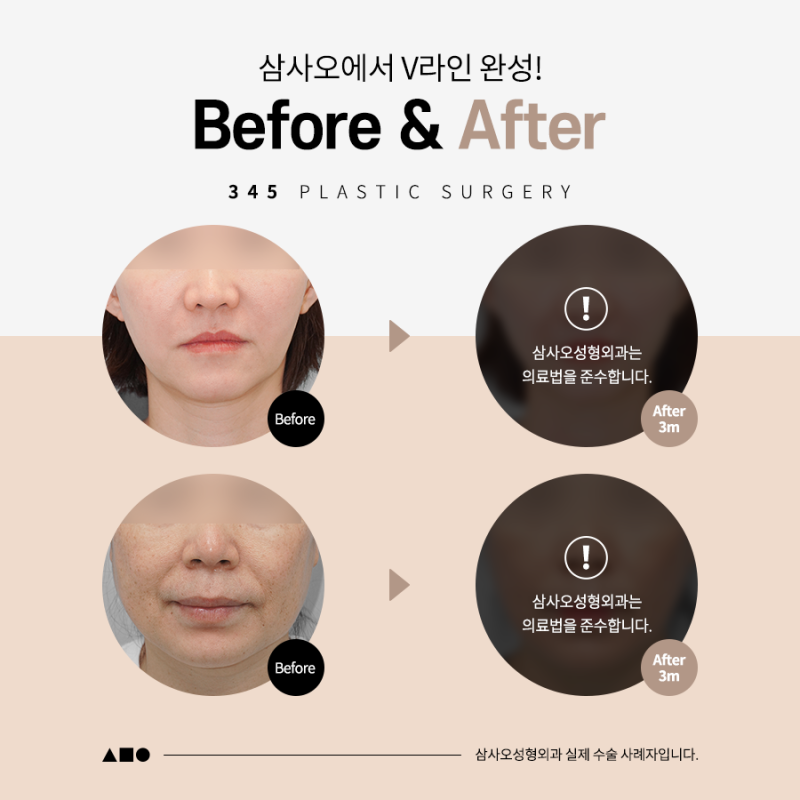
- 20s and 30s (Mini Lift): This is the stage where skin sagging begins. It is suitable for those who want a quick return to daily life and need light contour correction.
- 30s and 40s (Minimal Incision Lift): Recommended for those who find a full face lift burdensome but want to strongly improve noticeable sagging, such as nasolabial folds or jowls.
The Principle of 4-Layer Lifting That Pulls From Deep Within the Skin
If only the skin surface is pulled, the effect may be minimal, or the skin may quickly sag again. The 345 Minimal Incision Lift uses a method that pulls and fixes four layers: not only the epidermis but also the SMAS (Superficial Musculoaponeurotic System), retaining ligaments, and temporal fascia.
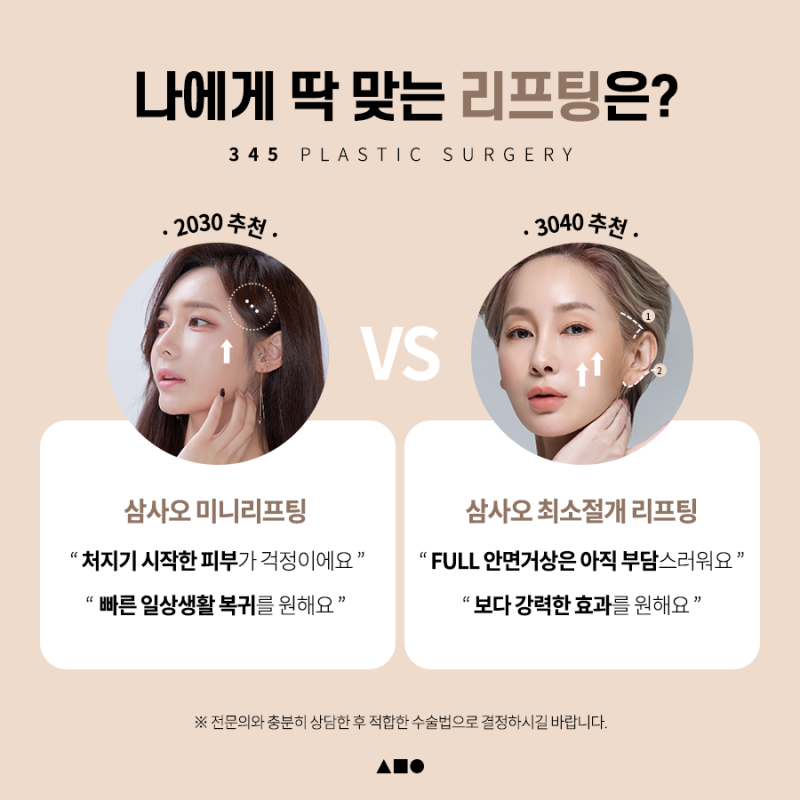
This multi-layered approach allows for the expected improvement of deep wrinkles in the muscle layer and helps create a smooth V-line contour without bone-contouring surgery. To achieve natural results, the fixation points and tension must be precisely adjusted according to the individual's skin thickness and tissue characteristics.
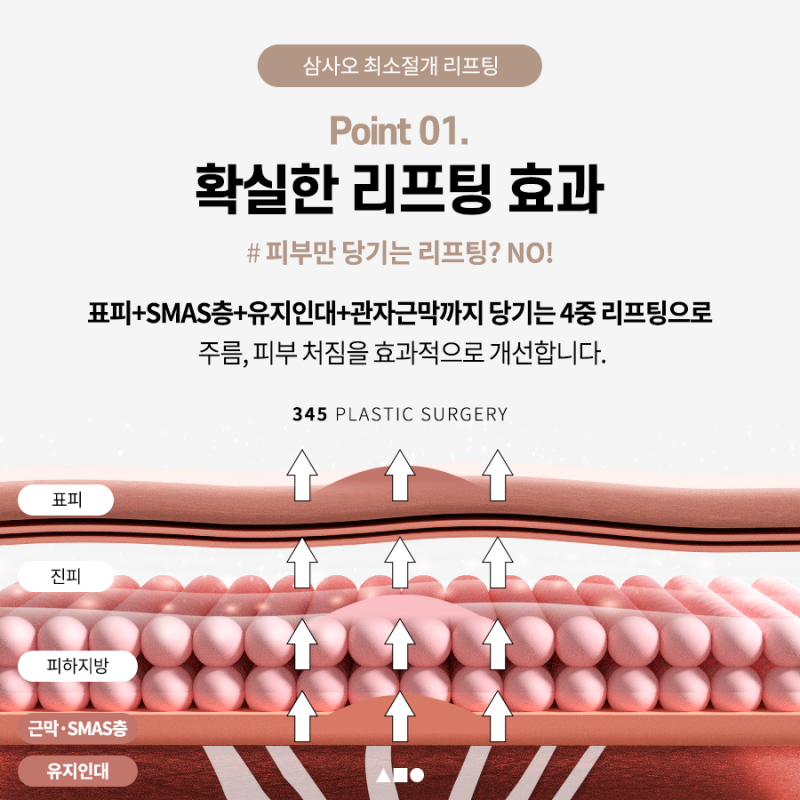
'Hidden Incision' Know-How to Reduce the Burden of Scars
A major concern for many people considering lifting surgery is scarring and hair loss. To prevent this, we apply a 'hidden incision' method that makes incisions between the fine wrinkles inside the hairline.
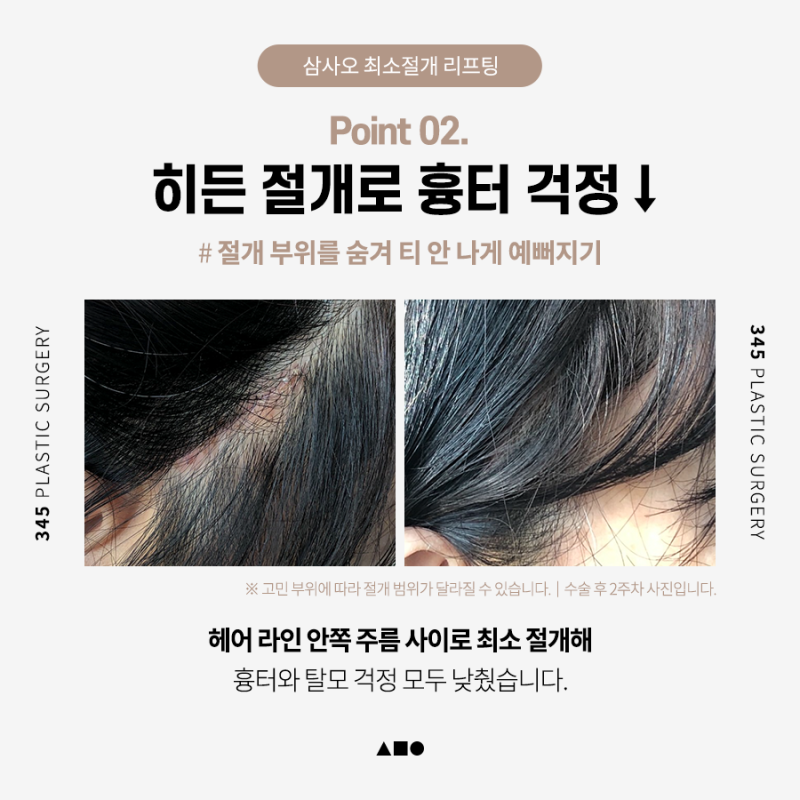
Through minimal incisions, the burden of exposed scars is lowered, and precise suturing is performed to reduce hair follicle damage, taking hair loss concerns into consideration. Thanks to this, the area is sufficiently covered by hair after surgery, allowing for a smooth return to daily life even during the recovery period.
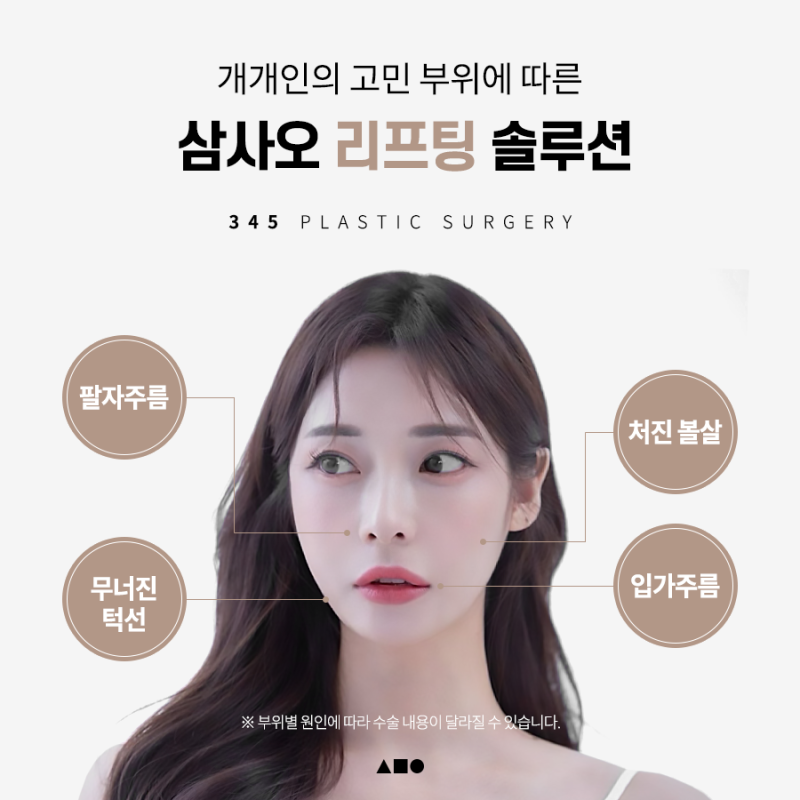
Medical Staff Proficiency and Safety Systems for a Successful Lift
Lifting is a delicate procedure that deals with areas where facial nerves pass. It is essential to have a thorough consultation with an experienced specialist, such as Chief Surgeon Dr. Han Kyu-nam, who has over 19 years of experience and has performed more than 3,000 surgeries.
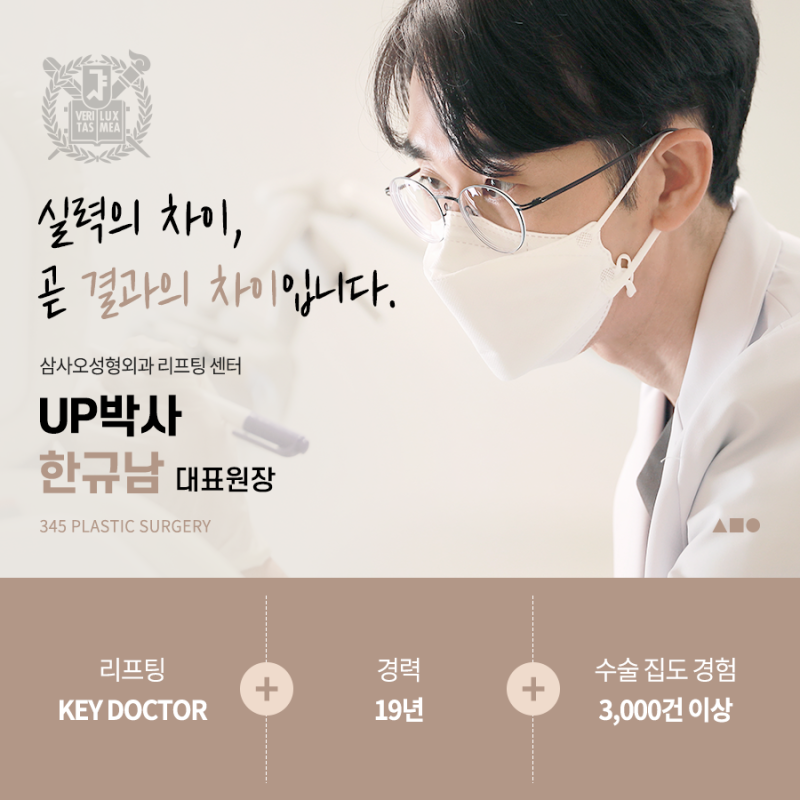
The difference in skill makes the difference in results.
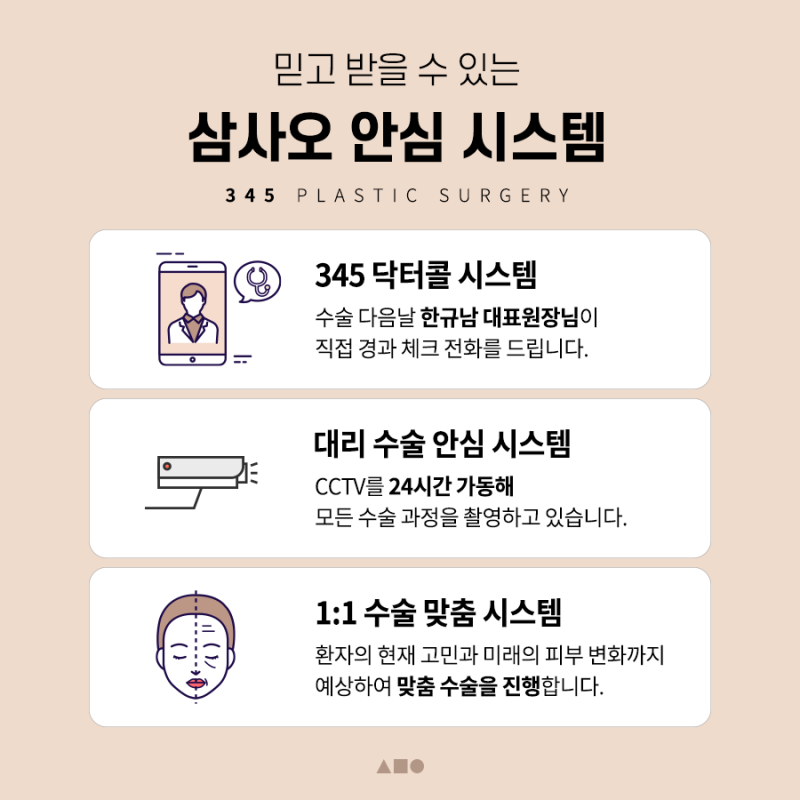
Additionally, checking whether the clinic is equipped with a 'Doctor Call System' to directly monitor the patient's condition after surgery and a 'CCTV Safety System' to transparently disclose the surgical process serves as a criterion for selecting a reliable hospital. It is important to establish a 1:1 customized plan that not only resolves current concerns but also predicts the future direction of aging.
Temporary swelling or bruising may occur after surgery, but these mostly disappear naturally. By combining aftercare according to a specialist's prescription, you can maintain even more satisfying results.



Frequently Asked Questions
What is a suitable lifting method for sagging cheeks for people in their 20s and 30s?
Mini-lifting is suitable for people in their 20s and 30s. As skin sagging is just beginning, it is an effective surgical method for those who want quick recovery to daily life through light line correction.
What is a good surgery to improve nasolabial folds and jowls for people in their 30s and 40s?
We recommend minimally invasive lifting. It is suitable for people in their 30s and 40s who find a full facelift burdensome but want to strongly improve noticeable sagging, and it can effectively alleviate nasolabial folds and jowls.
How is 4-layer lifting different from general lifting?
It differs in that it pulls not only the skin surface but also deep layers of the skin. It pulls and fixes the epidermis, SMAS (subcutaneous fascial layer), retaining ligaments, and temporal fascia in a total of four layers, helping to improve deep wrinkles in the muscle layer and form a smooth V-line contour.
Are there any side effects like scars or hair loss during lifting surgery?
The hidden incision method, which involves incising inside the hairline, can significantly reduce the burden of scars and hair loss. Minimal incisions are made between fine wrinkles, and precise suturing is performed to minimize hair follicle damage, allowing scars to be covered by hair after surgery.
What hospital systems should be checked for safe lifting surgery?
You should check if there is a doctor call system to check the patient's condition after surgery and a CCTV safety system. Lifting is a delicate surgery that deals with facial nerves, so it is important to check these safety systems along with the medical staff's rich anatomical knowledge and surgical experience.