2026-06-04
Types of Lifting and How to Choose: A Complete Guide from Thread Lifting to Facelifts
Lifting procedures and surgeries vary widely, making it important to choose one that suits your degree of skin sagging and volume. From RF and ultrasound lasers to thread lifting and facelifts, 345 Plastic Surgery Clinic explains the characteristics, maintenance periods, and age-specific recommendations for each method in detail.

How Should I Choose the Right Lifting Method for Me?
Hello, this is 345 Plastic Surgery Clinic. Recently, many people are considering lifting procedures to achieve a firm facial contour. However, lifting methods range widely from non-surgical treatments to highly complex surgical procedures, making it difficult to determine which approach is right for you. Today, we will systematically categorize the types of lifting and explore the criteria for choosing a customized lifting method for each individual.

1. Main Types of Lifting: From Non-Surgical to Surgical
Lifting can be broadly divided into four stages based on the method and whether an incision is made.
- Energy-Based Lifting: These are laser treatments that use radiofrequency (RF) or high-intensity focused ultrasound (HIFU) to improve skin elasticity.
- Thread Lifting: A non-surgical procedure that involves inserting medical-grade threads to directly pull up sagging tissues.
- Facelift: The most fundamental surgical method, which involves making incisions around the ears to directly pull and secure the skin and SMAS layer.
- Minimal Incision/Mini Facelift: A surgery that reduces the dissection area and incision length of a traditional facelift to lower the burden of recovery.
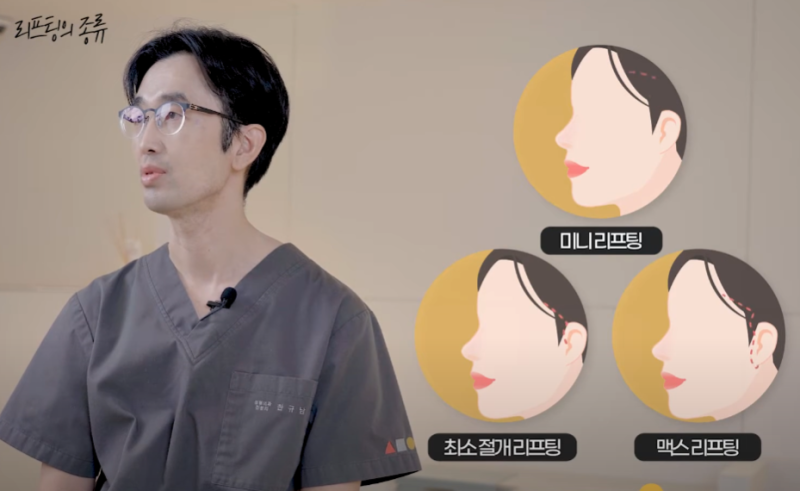
Generally, the wider the incision and the deeper the dissection (the process of separating the tissues beneath the skin), the more pronounced the improvement you can expect. However, this also requires careful consideration of the recovery period and aftercare.

2. Differences in Lifting Maintenance Periods
The maintenance period, which many people are curious about, varies depending on the method.
- Thread Lifting: PDO (dissolvable threads), which are commonly used, take about 6 months to be absorbed into the body. Considering the period they actively pull the tissues, you can expect the results to last for about 6 months to 1 year.
- Incisional Lifting: Surgical methods with a wide dissection area show a much longer duration compared to thread lifting.
However, no lifting procedure can stop aging itself. Since gravity and the natural aging process continue, it is a more reliable approach to understand it as a 'process of turning back the clock on aging and managing it' rather than expecting permanent effects.

3. Is It Simple Sagging or a Volume Issue?
Among the phenomena that patients perceive as 'sagging,' there are many cases where it is not actual skin sagging.
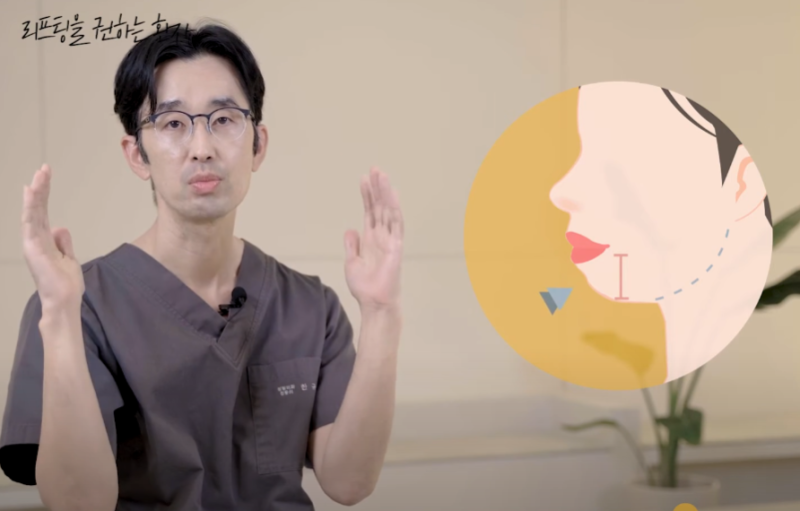
- Lack of Volume: Sudden weight loss or aging can cause a loss of volume, leaving excess skin that may appear to sag.
- Skeletal Characteristics: Koreans often have a short lower jaw (mandible) and a wide lateral facial structure, making 'jowls' easily noticeable even with minimal sagging.
If there is a lot of excess skin itself, an incisional lift is advantageous. If it is a volume issue, simply adjusting the contour by combining liposuction or fat grafting can provide a sufficiently improved impression.
4. Recommended Lifting Guide by Age Group
Although there are individual differences, the general recommendations by age are as follows:
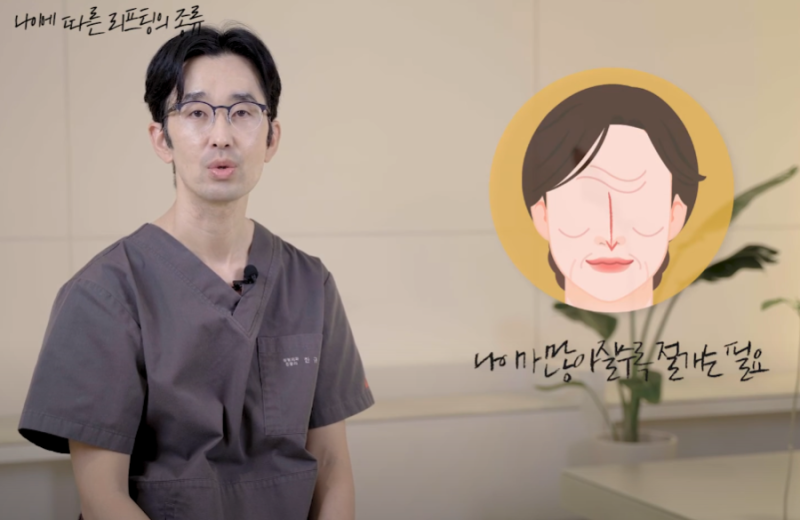
- 30s to 40s: If skin elasticity is relatively good, you can expect sufficient changes with thread lifting or laser lifting without any incisions.
- 50s and Older: Since skin sagging and volume loss progress simultaneously, an incisional method like a facelift may be more effective.
Lifting is not simply a plastic surgery that changes your face, but a process of rediscovering the natural appearance you once had. Rather than being overly ambitious, it is important to find the method most suitable for your current condition.

Frequently Asked Questions
What types of lifting procedures are there?
Lifting procedures can be broadly categorized into energy-based laser treatments, thread lifts using medical threads, and facelifts that involve incisions to pull the skin and SMAS layer, as well as mini-facelifts with reduced incision areas. Each method differs in effectiveness and recovery time depending on whether an incision is made and how it is performed.
How long do thread lift results last?
Thread lift results can typically be expected to last for about 6 months to 1 year. The PDO threads commonly used are absorbed by the body over approximately 6 months, and considering the period they actively pull the tissue, this duration of maintenance is possible.
In what cases is a facelift suitable?
A facelift may be more effective for individuals aged 50 and above who experience both skin sagging and volume loss, or in cases where there is significant excess skin, making an incisional lift more advantageous. It is the most fundamental surgical method that involves incising around the ears to directly pull and fix the skin and SMAS layer.
Can younger people also receive lifting procedures?
Yes, it is possible. If skin elasticity is relatively good, such as in people in their 30s and 40s, sufficient improvement can be expected with non-incisional laser lifting using high-frequency or ultrasound, or with thread lifting alone. It is important to choose the appropriate procedure based on individual condition.
How do you distinguish between sagging and lack of volume?
What appears to be skin sagging might actually be due to a lack of volume. When volume is lost due to sudden weight loss or aging, excess skin can make it look saggy, and in such cases, improvement can be achieved by combining liposuction or fat grafting. If there is a lot of excess skin, an incisional lift is more suitable.
Are lifting effects permanent?
No, lifting effects are not permanent. No lifting method can stop the aging process itself, and gravity and natural aging continue. It is more reliable to understand lifting as 'a process of turning back the clock on aging and managing it'.