2026-06-04
The Secret to Facial Contouring Swelling and Recovery: The 1mm Difference in Incision Suturing
In facial contouring surgery, precise suturing of the intraoral incision is just as important as the bone-shaving technique. Dr. Park Jong-lim of 345 Plastic Surgery explains the difference a refined finish makes, using a 1mm micro-design and pre-marking technique to reduce scarring and foreign body sensation while accelerating recovery.
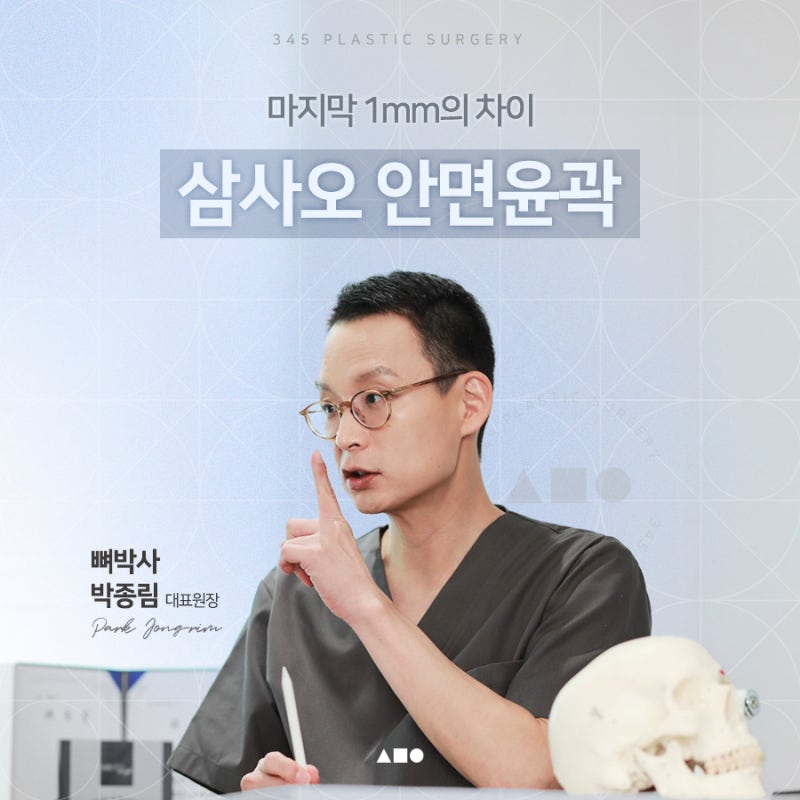
Facial Contouring Surgery: Why is the 'Finish' More Important Than the 'Bone'?
Many people considering facial contouring surgery tend to focus on 'how much bone is shaved off' or 'how dramatic the change will be.' However, the differences in swelling, pain, and recovery speed that patients actually experience post-surgery are often determined by the invisible 'finishing process.'
At 345 Plastic Surgery, we focus on alleviating the post-operative discomfort patients may experience by precisely designing facial contouring surgeries down to a 1mm margin of error. Designing a refined recovery line is both the foundation and the most core technique of facial contouring surgery.
Characteristics of Intraoral Incisions and Changes During Surgery
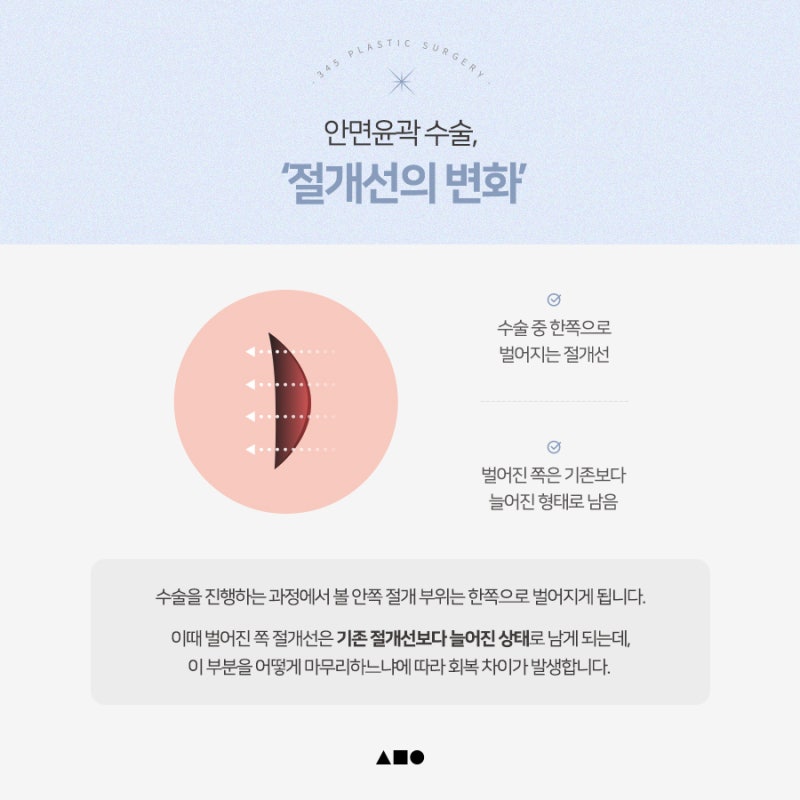
Most facial contouring surgeries (square jaw, cheekbones, front chin, etc.) are performed through an intraoral incision inside the gums or cheeks. While this method has the advantage of leaving no visible external scars, the incision site can stretch and spread to one side during the procedure.

As the skin and muscles are retracted during surgery, the incision line becomes more stretched than its initial state. If it is simply sutured without accounting for this stretching, the following problems may occur:
- Enlargement of the scar size
- Foreign body sensation due to the formation of scar tissue
- Discomfort when moving the mouth area
- Prolonged recovery period
Dr. Park Jong-lim's 'Pre-Marking Surgery' Know-How
To lower the possibility of these side effects, Dr. Park Jong-lim, with 27 years of experience, performs 'pre-marking of the incision site' before the surgery begins. This may seem very simple, but it makes a significant difference in the surgical outcome.
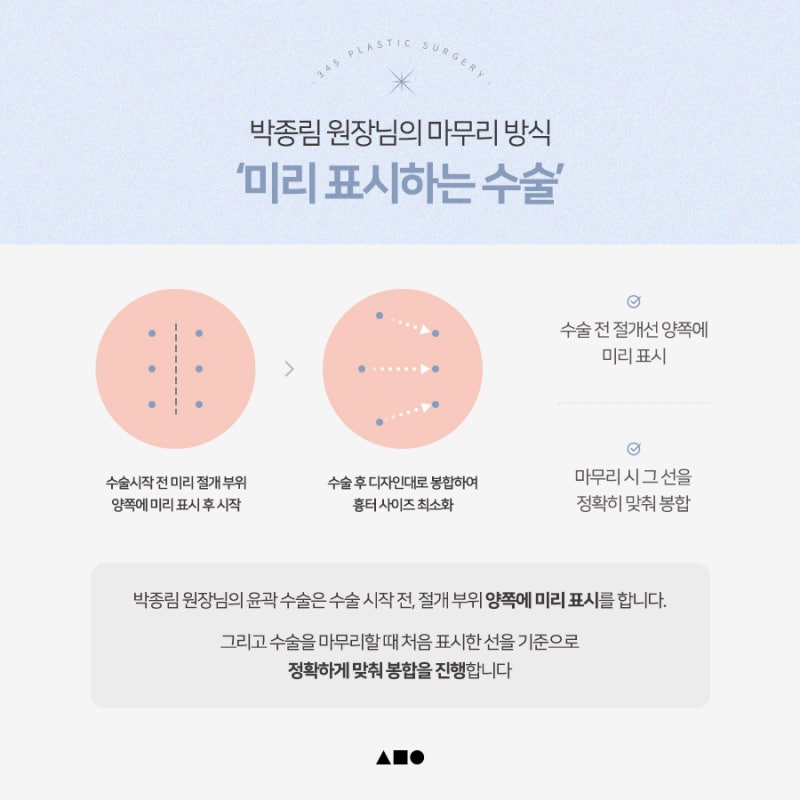
- Before Surgery: Reference points that will serve as the standard for the start, end, and finish of the incision line are marked on the skin in advance.
- After Surgery: Even if the tissue has stretched during the procedure, suturing is performed by accurately aligning with the pre-marked reference points.
Through this process, the incision line is prevented from misaligning, and the tissue is guided back to its proper place, enabling precise suturing that perfectly matches the stretched areas.
The Difference in Recovery Brought by Precise Suturing
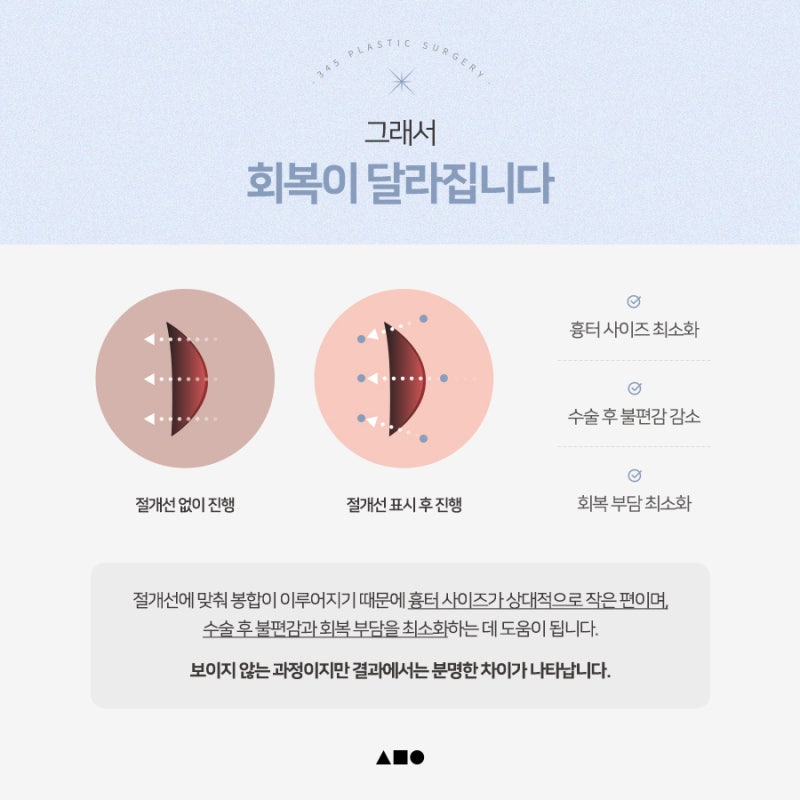
Detailed suturing inside the invisible oral cavity directly impacts the patient's quality of life after surgery. A precision design that reduces even a 1mm margin of error allows you to expect the following positive changes:
- Minimized Scarring: Suturing that considers the tensile strength of the tissue reduces the extent of scarring.
- Reduced Discomfort: Less scar tissue forms at the suture site, decreasing the foreign body sensation.
- Favorable Recovery: Tissue damage is minimized, allowing swelling to subside relatively quickly and lowering the burden of recovery.

In facial contouring surgery, the entire process—from the moment the bone is contoured to the final suture—must flow organically as one continuous sequence. At 345 Plastic Surgery, we believe that minute details ultimately lead to high patient satisfaction, which is why we personally design and perform every step of the procedure.

Frequently Asked Questions
Where are the incisions typically made during facial contouring surgery?
Incisions are primarily made inside the mouth, either on the inner gum line or inside the cheek. This method has the advantage of not leaving visible external scars, but precise suturing is crucial because the incision site can stretch as the skin and muscles are pulled during surgery.
What problems can arise if the intraoral incision site is not properly sutured?
The scar size can increase, and scar tissue may form, leading to a foreign body sensation. Additionally, discomfort may be felt when moving the mouth, and it can prolong the overall post-operative recovery period.
Why is the incision site marked in advance before surgery?
This is to accurately reposition and suture the stretched tissues back to their original place during surgery. Marking reference points beforehand allows for precise suturing without misalignment, even if the tissue deforms, thereby reducing the possibility of side effects.
Does precise suturing help with recovery after facial contouring surgery?
Yes, it greatly aids in recovery. When sutures are made without even a 1mm error, considering the tensile strength of the tissue, tissue damage is minimized, leading to relatively faster reduction of swelling, less scarring and scar tissue, and significantly reduced post-operative discomfort.