2026-06-04
The Difference and Effects of Mini Facelift vs. Mini Lifting: 345 Plastic Surgery's SMAS Lifting Guide
With the growing demand for lifting procedures, many wonder about the difference between a mini facelift and a mini lifting. Based on the professional insights of Dr. Han Kyu-nam at 345 Plastic Surgery, this article provides a detailed explanation of the principles of SMAS layer lifting through minimal incisions, the importance of vertical lifting, and the necessity of personalized lifting plans.
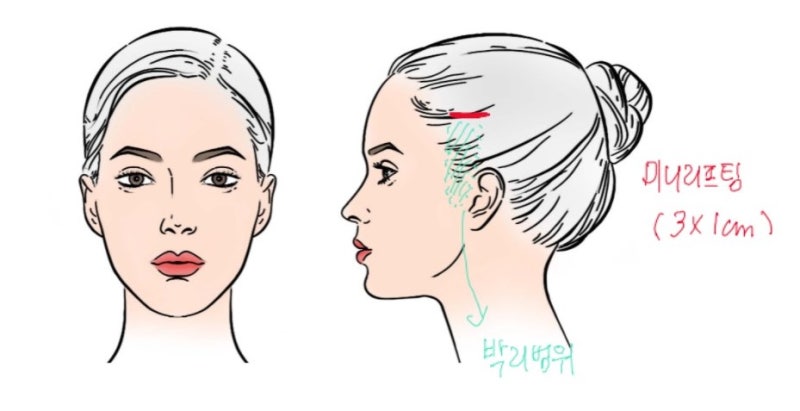
Mini Facelift and Mini Lifting: Terminology Differences and Reality
Many patients ask if a 'mini facelift' and a 'mini lifting' are different surgeries. To get straight to the point, these are terms that share the exact same surgical principles. However, the term 'lifting' often gives a lighter impression, similar to non-invasive procedures using lasers or threads, whereas 'facelift' evokes a more direct surgical image of incising and pulling the skin.
At 345 Plastic Surgery, our mini facelift minimizes the incision line while simultaneously pulling up the skin and the SMAS (Superficial Muscular Aponeurotic System), which is the core of lifting. This allows patients to expect results that combine the advantages of both non-invasive procedures and surgery.
The Core of 345 Plastic Surgery's Mini Facelift: Triple-Fixation SMAS Lifting
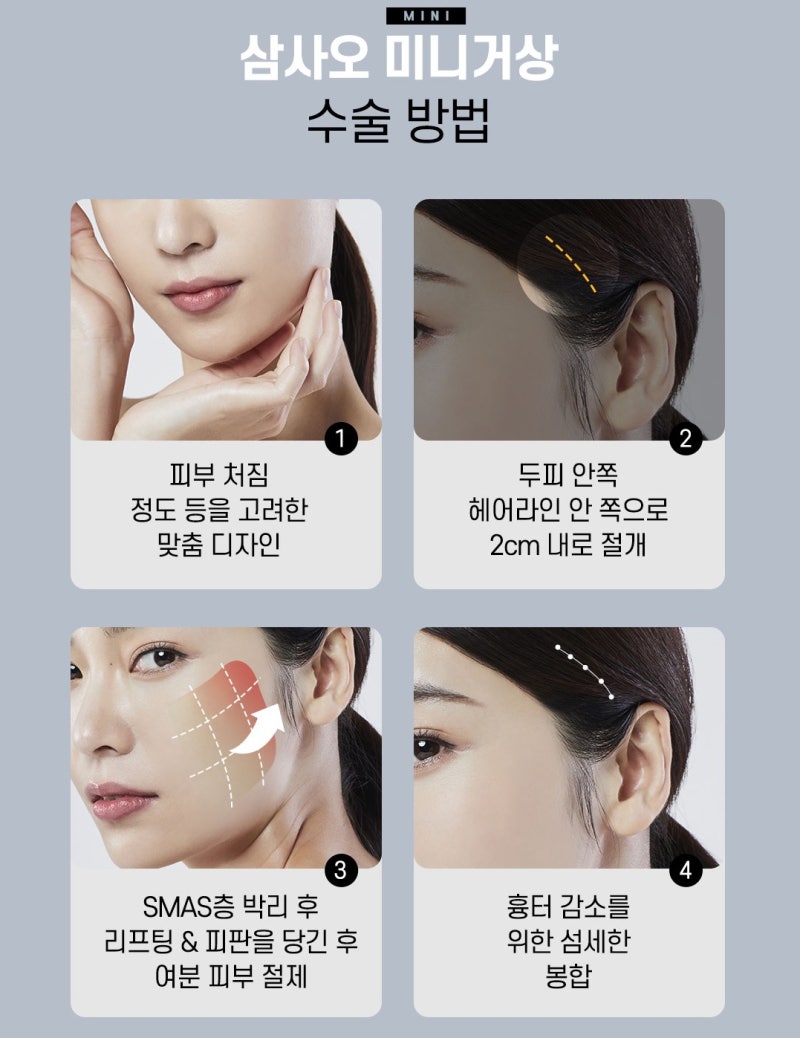
A lifting procedure that merely pulls the outer surface of the skin can have a short duration and look unnatural. For an effective lift, 345 Plastic Surgery follows a systematic process as outlined below:
- Minimal Incision: A micro-incision of about 2 to 3 cm is made inside the hairline to reduce concerns about scarring.
- SMAS Layer Dissection and Elevation: Rather than just pulling the outer skin, we thoroughly dissect and elevate the fascial layer, which is the root cause of sagging.
- Triple Suture Fixation: To enhance the stability of the lifting effect, we tightly secure it through a meticulous three-step suturing process.
'Straight Vertical Lifting' Optimized for Korean Facial Structures
Setting the lifting direction is a crucial factor that determines the satisfaction of the results. For Asians, particularly Koreans with developed cheekbones, pulling the tissues diagonally carries the risk of making the face appear wider horizontally.
To prevent this, 345 Plastic Surgery performs lifting in a straight direction that is as close to vertical as possible. Through this, we aim to create a slender V-line by improving sagging cheeks and the jawline without widening the facial area.
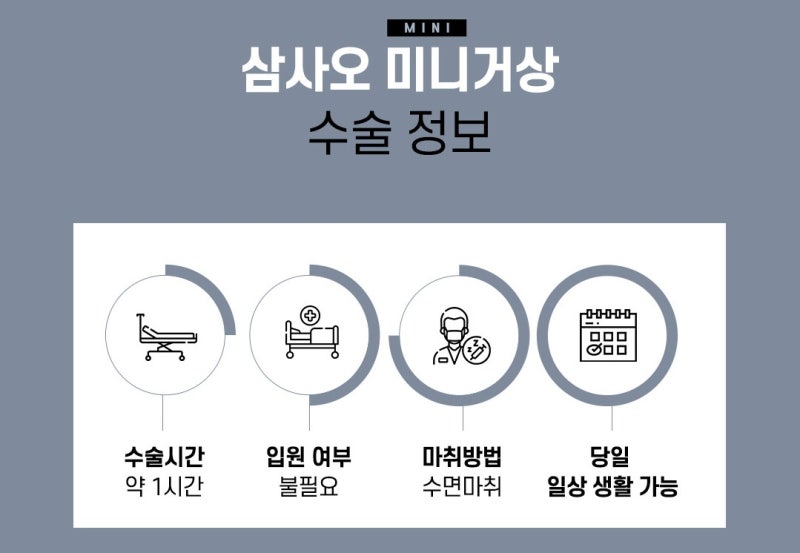
Ideal Candidates and Considerations for a Mini Facelift
Although a mini facelift offers fast recovery and relatively low pain (Mini Recovery), it does not mean it only provides a 'mini' effect in all cases. The appropriate surgical method may vary depending on the individual's skin condition.
Recommended Candidates
- Individuals in their 30s to 50s whose jawlines have become uneven due to the onset of cheek sagging.
- Individuals in their 20s to 30s experiencing cheek sagging after facial contouring surgery.
- Those who feel burdened by the recovery period of a full facelift.
Cases Requiring Additional Consultation
- Cases where skin sagging is very severe, or the skin itself is thin and lacks elasticity.
- Cases where scar tissue has formed in the SMAS layer due to continuous HIFU (High-Intensity Focused Ultrasound) laser treatments.
In such cases, consulting with the medical team to consider combining Mint threads, adjusting the dissection range for a minimal incision lift, or opting for a full facelift is the way to achieve better recovery and results.
345's Promise for a Safe Recovery
345 Plastic Surgery thoroughly conducts post-operative progress management to ensure patients' quick return to their daily lives. Because the incision range is small, swelling and bruising are relatively minimal, and you can experience gradual improvement effects immediately after surgery. We are doing our best to repay our patients' trust, even during holiday seasons.
If you are worried about sagging skin, we recommend consulting with an experienced specialist with abundant clinical experience to establish the optimal lifting plan tailored to your facial structure and degree of sagging.
Frequently Asked Questions
Are mini-facelift and mini-lifting different surgeries?
No, the two terms refer to the same surgical principle. While 'lifting' suggests a lighter procedure and 'facelift' implies a more invasive surgery involving skin incision and pulling, they actually share the same purpose and principle.
Does mini-facelift surgery leave a lot of scars?
No, there is less concern about scarring. Since only a micro-incision of about 2-3cm is made inside the hairline, visible scars can be minimized, and recovery is relatively fast due to less swelling and bruising.
Does lifting make the face look wider?
No, pulling in a vertical direction does not make the face look wider. For Koreans with prominent cheekbones, pulling diagonally can make the face appear wider, so we lift in a direction as close to vertical as possible to create a slender V-line.
What age group or target is suitable for mini-facelift?
It is most suitable for people aged 30-50 whose jawline has become uneven due to sagging cheeks. It can also be a good option for those in their 20s and 30s experiencing cheek sagging after facial contouring surgery, or for those who find the long recovery period of a full facelift burdensome.
Is a mini-facelift alone sufficient even if skin sagging is severe?
No, if skin sagging is very severe or the skin is thin, other methods may be necessary. Through consultation with medical staff, you may need to consider combining with Mint threads, a minimal incision lift with adjusted dissection range, or a full-face facelift.