2026-10-07
Starting to Notice Drooping Eyelids? Upper Blepharoplasty vs. Non-Incisional Blepharoplasty
Compares upper blepharoplasty and non-incisional upper blepharoplasty for drooping eyelids, including who may benefit, how each is performed, and how treatment is planned.
Hello, this is Samsao Plastic Surgery Clinic.
As we age, the skin of our eyelids can loosen and sag. This may make the eyes look heavy or tired, or make it feel more uncomfortable to open the eyes than before.
The two most common ways to correct drooping eyelids are upper blepharoplasty and non-incisional upper blepharoplasty.
Both procedures aim to correct drooping eyelids, but the most suitable option can vary depending on your current eye condition and the degree of sagging.
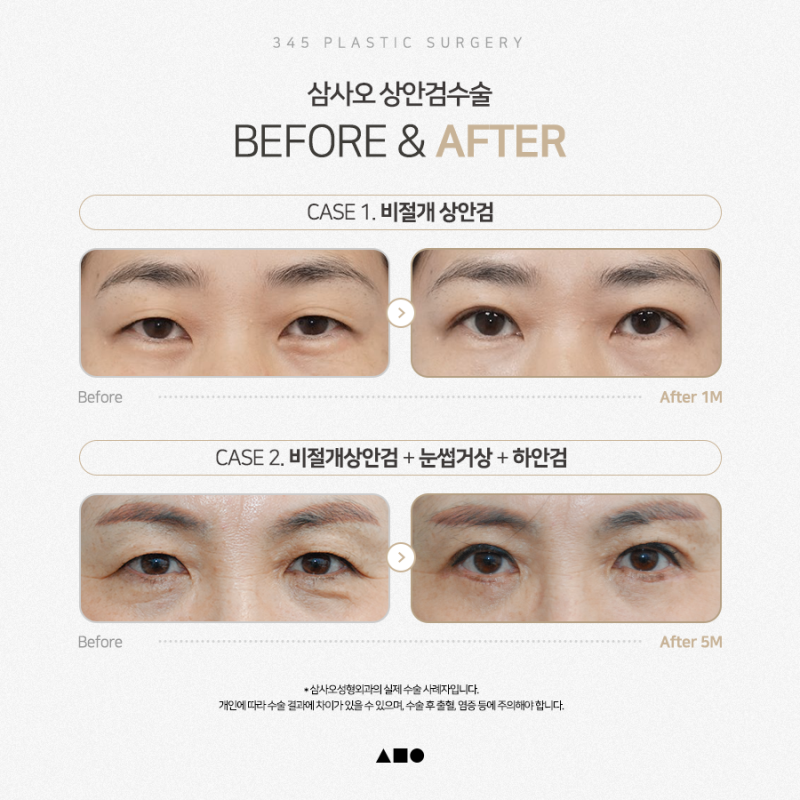
Looking at upper blepharoplasty cases performed at Samsao Plastic Surgery Clinic, you can see that the approach was adapted to the degree of eyelid drooping and the extent of aging around the eyes.
Even when drooping looks similar, it is important to accurately assess each person's eye condition and the area affected by the sagging, and then choose the method that fits best.
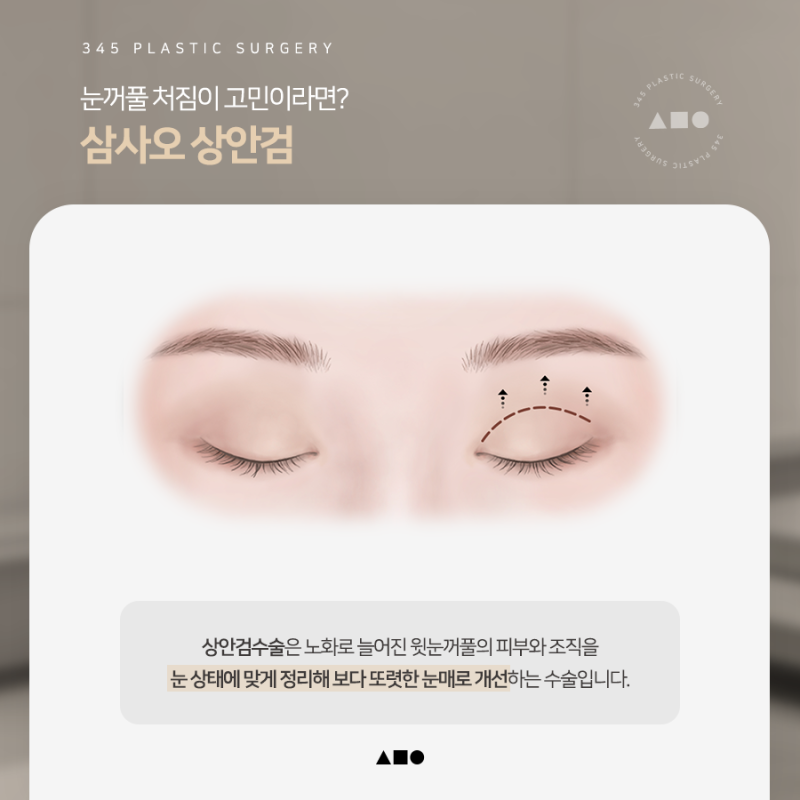
Concerned about drooping eyelids? Upper Blepharoplasty
Upper blepharoplasty improves the look of the eyes by trimming and reshaping the loose skin and tissue of the upper eyelids to suit your eye condition, creating a clearer, more defined eye shape.
It may be worth considering when upper eyelid drooping is fairly noticeable, such as when sagging skin covers the pupils or the skin at the outer corners of the eyes stretches and makes the eyes look heavy.
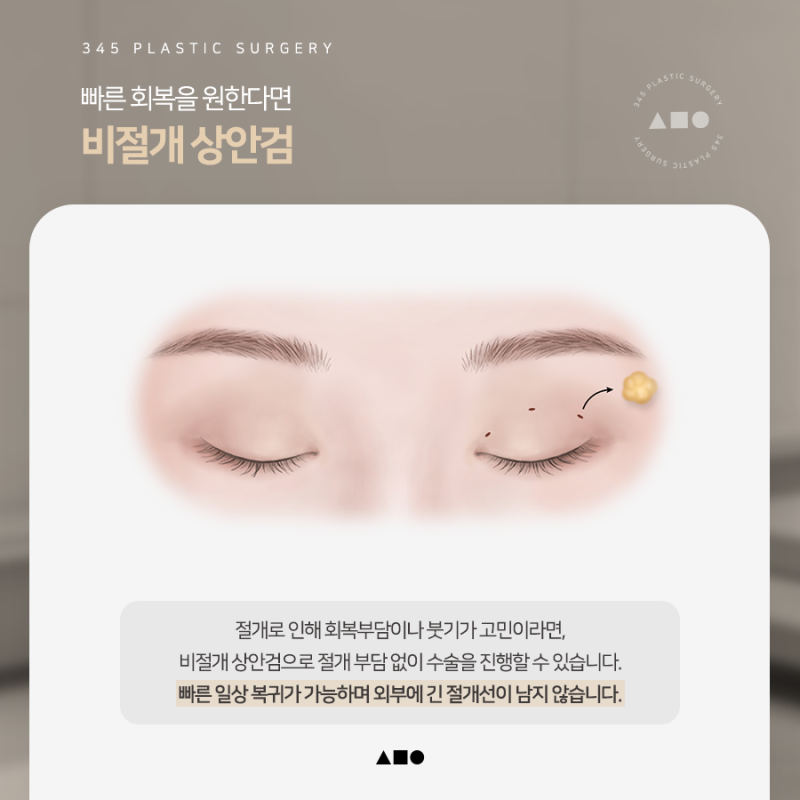
Not keen on incisions? Non-Incisional Blepharoplasty
If the drooping is not severe, a long incision is not always necessary.
Non-incisional upper blepharoplasty secures the sagging tissue in place through a tiny opening. This corrects drooping without leaving a long incision line on the outside.
It may be a good option if you are concerned about the burden of an incision, swelling, or recovery time.
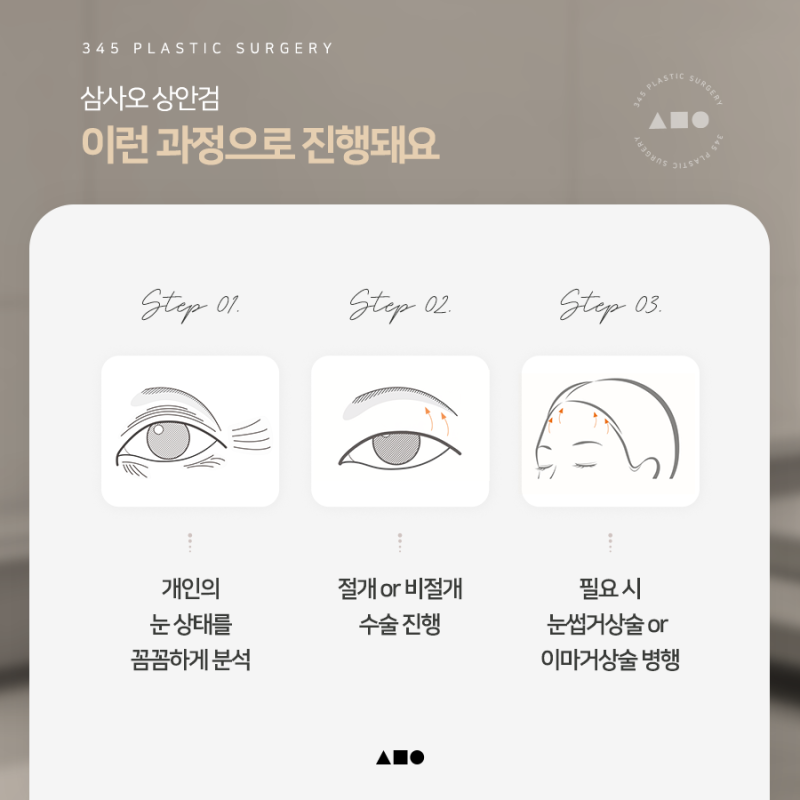
How is upper blepharoplasty performed?
First, we carefully examine your eye condition, including the degree of eyelid skin sagging, eyebrow position, and eye-opening strength (levator function).
Based on the degree of sagging, we then decide whether to use an incision or non-incisional approach. If aging around the eyes is also present, we may consider additional procedures such as a brow lift or forehead lift to address the necessary areas.
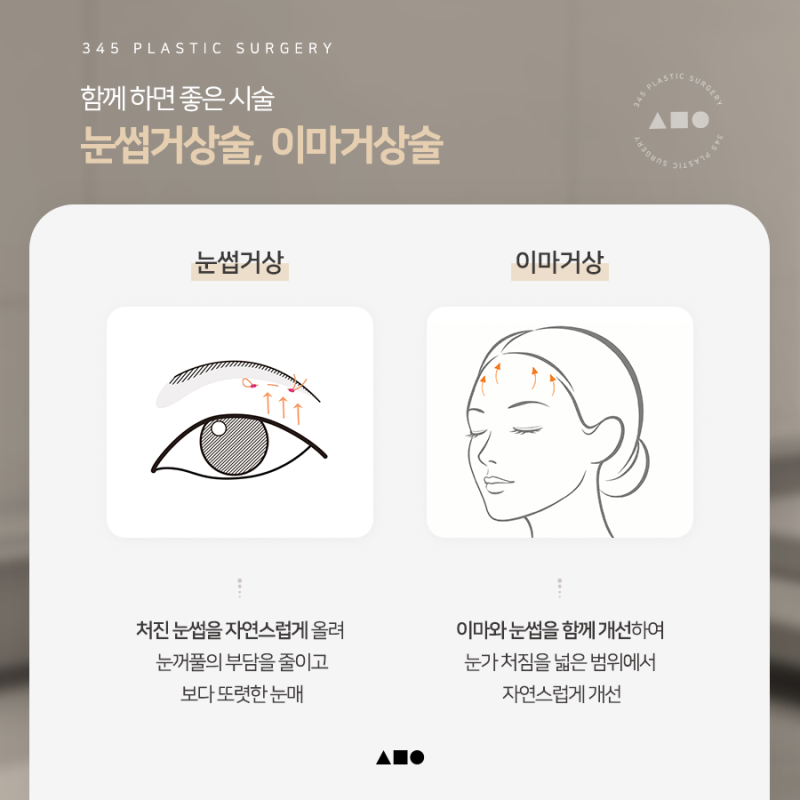
A brow lift lifts drooping eyebrows upward, which reduces the load placed on the eyelids and helps create a clearer, more defined eye shape.
A forehead lift, on the other hand, corrects a broader area of sagging, from the forehead down to the eyebrows. The best choice depends on whether your main concern is the eyebrows or whether the sagging extends across the forehead, so we select the method based on the area that needs improvement.
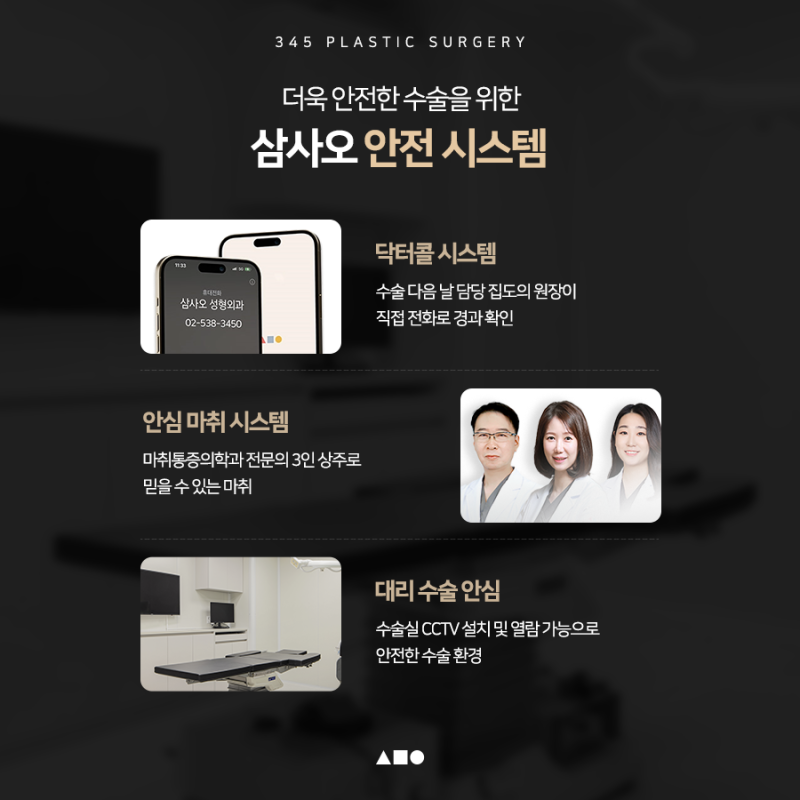
At Samsao Plastic Surgery Clinic, we focus on safety at every stage of treatment. We operate a doctor-on-call system and have three board-certified anesthesiology and pain medicine specialists on site.
Our operating rooms are also equipped with CCTV, and footage is available for review. We provide systematic care from surgery through recovery.
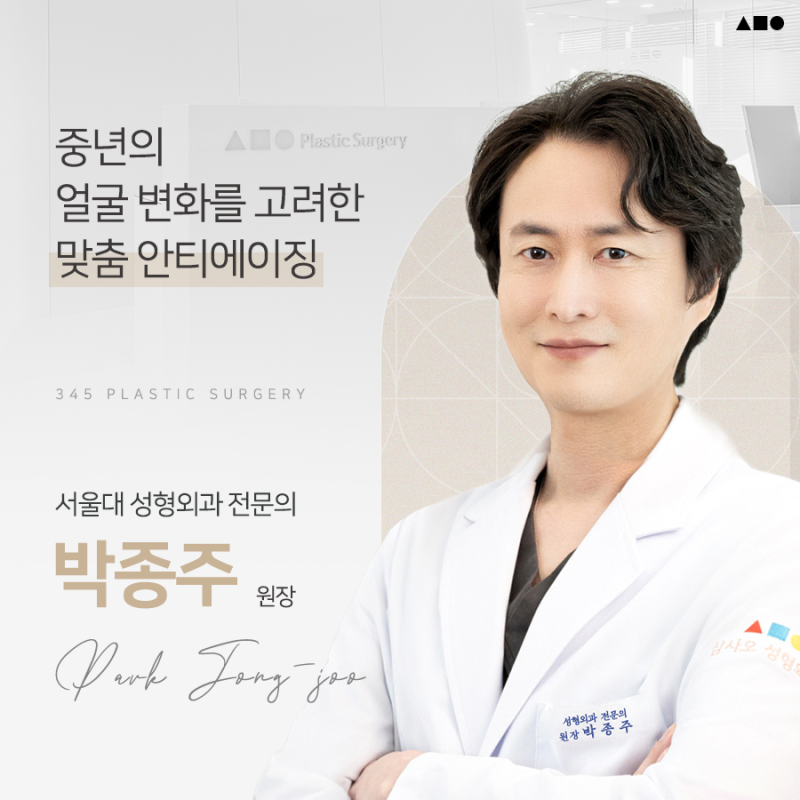
Drooping eyelids in middle age are influenced by more than loose skin alone. The position of the eyebrows and forehead, along with eye-opening strength, can all play a role.
For this reason, it is more important to accurately assess changes in your face and the structures around your eyes, and to correct only what is needed, rather than simply removing sagging skin or trying to make the eyes look dramatically bigger.
If your vision feels restricted by drooping eyelids, or your eyes look heavier and more tired than before, we encourage you to schedule a consultation to find out which approach suits your eye condition 💛
Thank you 😊


Frequently Asked Questions
When might upper blepharoplasty be considered?
It may be considered when upper eyelid drooping is fairly noticeable. This includes cases where sagging skin covers the pupils or the skin at the outer corners of the eyes stretches and makes the eyes look heavy. However, the most suitable method varies depending on each person's eye condition.
What symptoms can drooping eyelids cause?
The eyes may look heavy, or it may feel more uncomfortable to open them than before. If sagging skin covers the pupils, your field of vision may feel restricted.
What is the difference between upper blepharoplasty and non-incisional upper blepharoplasty?
Both procedures aim to correct drooping eyelids, but they differ in whether an incision is made. Non-incisional upper blepharoplasty secures the sagging tissue through a tiny opening and does not leave a long incision line on the outside.
When might non-incisional upper blepharoplasty be considered?
It may be considered if you are concerned about the burden of an incision, swelling, or recovery time. If the drooping is not severe, a long incision is not necessarily required.
How is upper blepharoplasty performed?
We first assess your eye condition, including the degree of eyelid skin sagging, eyebrow position, and eye-opening strength. Then we decide whether to proceed with an incision or non-incisional approach based on the degree of sagging.
How do a brow lift and a forehead lift differ?
A brow lift lifts drooping eyebrows upward to reduce the load on the eyelids. A forehead lift corrects a wider area of sagging, from the forehead to the eyebrows.