2026-10-03
Sagging from Forehead to Jawline? Samsao Facelift Explained
Samsao Plastic Surgery explains its facelift process, from lifting the SMAS layer and retaining ligaments to incision planning, scar considerations, and 24-hour aftercare.
Hello, this is Samsao Plastic Surgery Clinic.
As we age, sagging can appear across the entire face, from the forehead and cheeks to the corners of the mouth and the jawline.

In these cases, a surgical plan that considers not only the skin but also the location and severity of the sagging, as well as the underlying facial structure, is essential.
Today, we'll take a closer look at the facelift procedure at Samsao Plastic Surgery and what sets it apart.
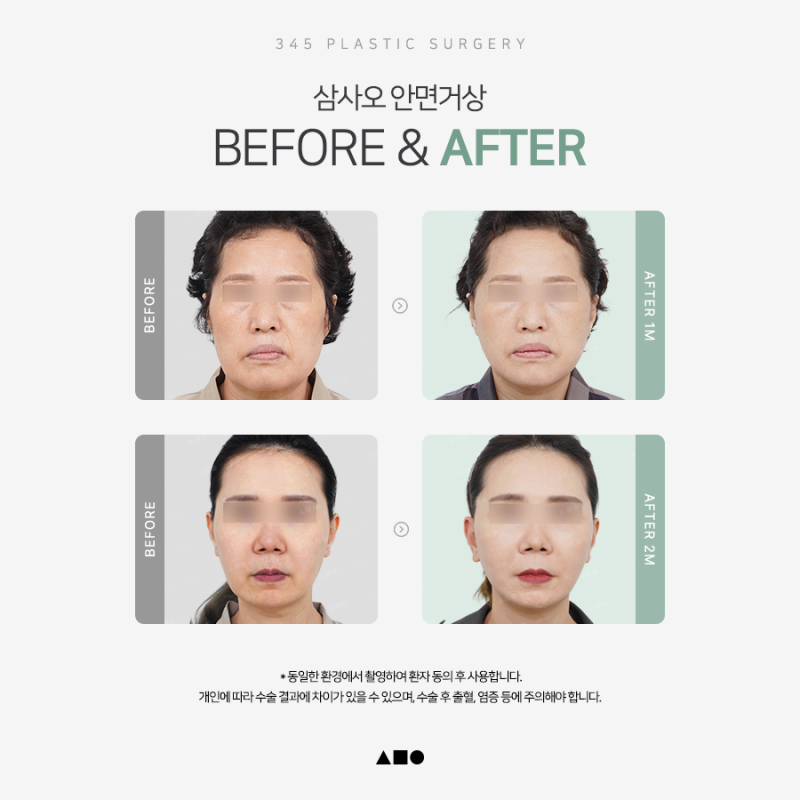
Before we dive in, take a look at a facelift case performed at Samsao Plastic Surgery. Before surgery, the jawline was somewhat blurred; after surgery, it looks more defined, and the skin sagging has been naturally smoothed out.
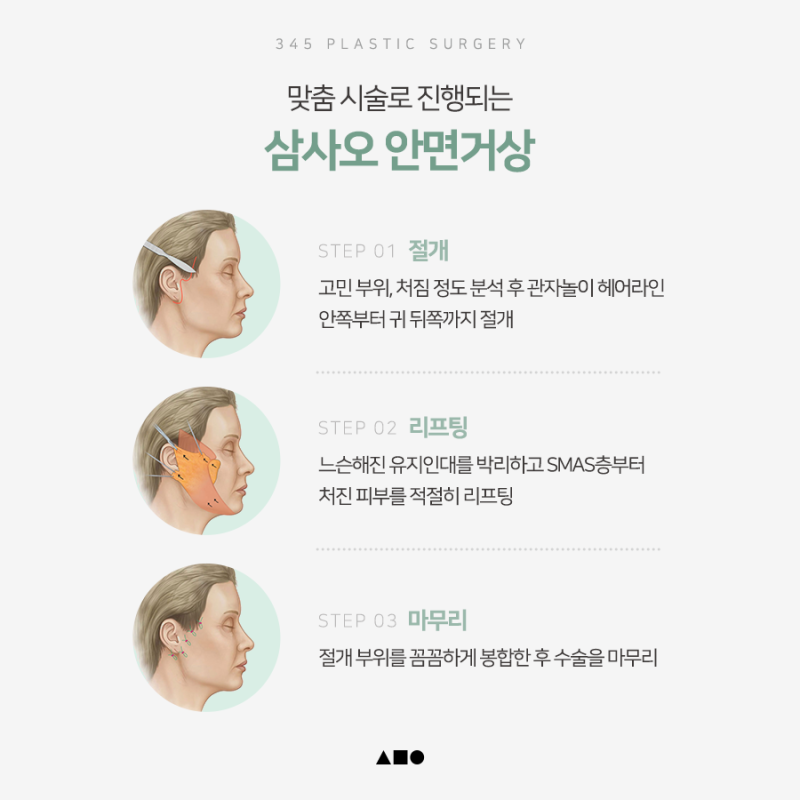
So how is a Samsao facelift performed? First, we assess the degree of sagging and the areas of concern. Next, we make incisions in the necessary range, from inside the temple hairline to behind the ear. We then release the stretched retaining ligaments and lift the sagging tissue in the appropriate direction, starting from the SMAS layer rather than just the skin.
This is not a method that simply pulls the skin surface; it's a process that also examines the sagging structures deeper inside the face.
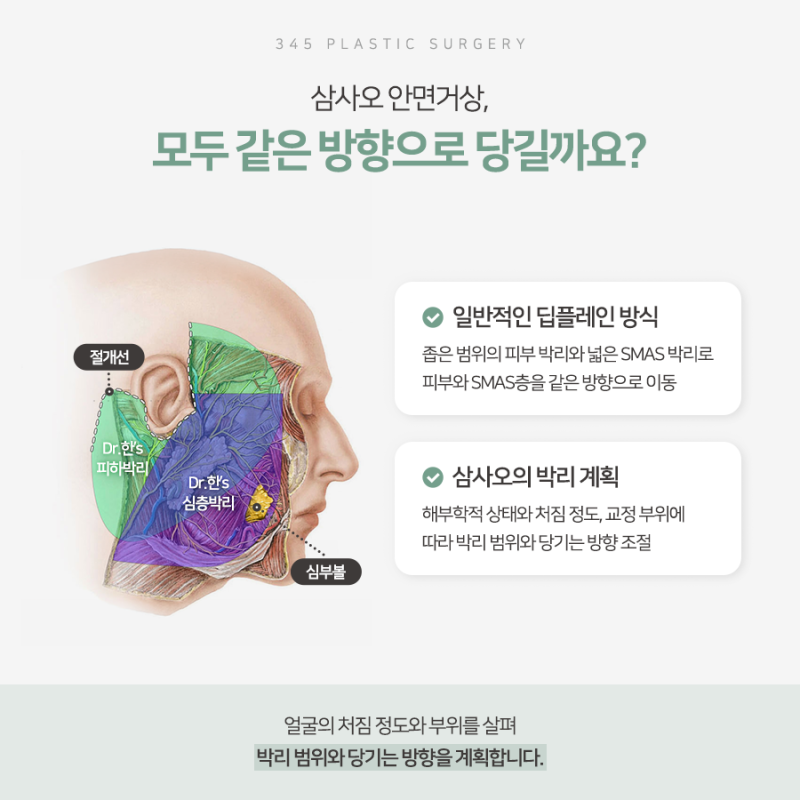
The direction and severity of sagging vary by area of the face, and the anatomy beneath the skin differs from person to person.
A typical deep plane approach dissects the skin and SMAS layer and then moves them together. At Samsao Plastic Surgery, we also evaluate the anatomy of the face, the degree of sagging, and the areas that need correction, and adjust the dissection range and the direction of tissue lifting accordingly.
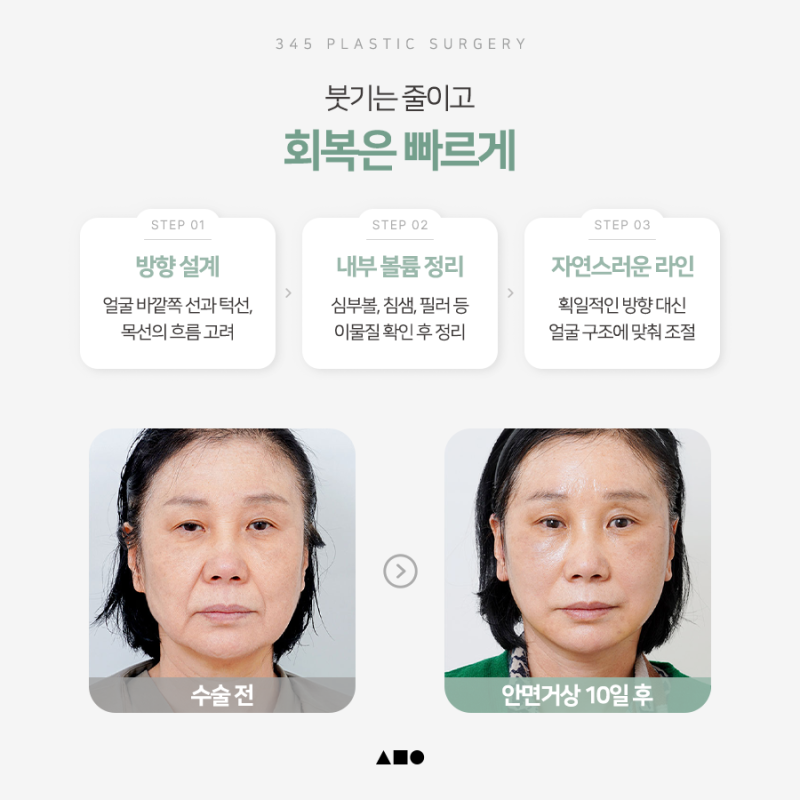
A facelift should be considered not only for the immediate results but also for the recovery process. At Samsao Plastic Surgery, we first examine the flow of the outer facial contour, the jawline, and the neckline to design the lifting direction.
During surgery, we also check the condition of the deeper facial structures, including deep cheek volume, salivary glands, and any existing filler, and can address them together when needed.
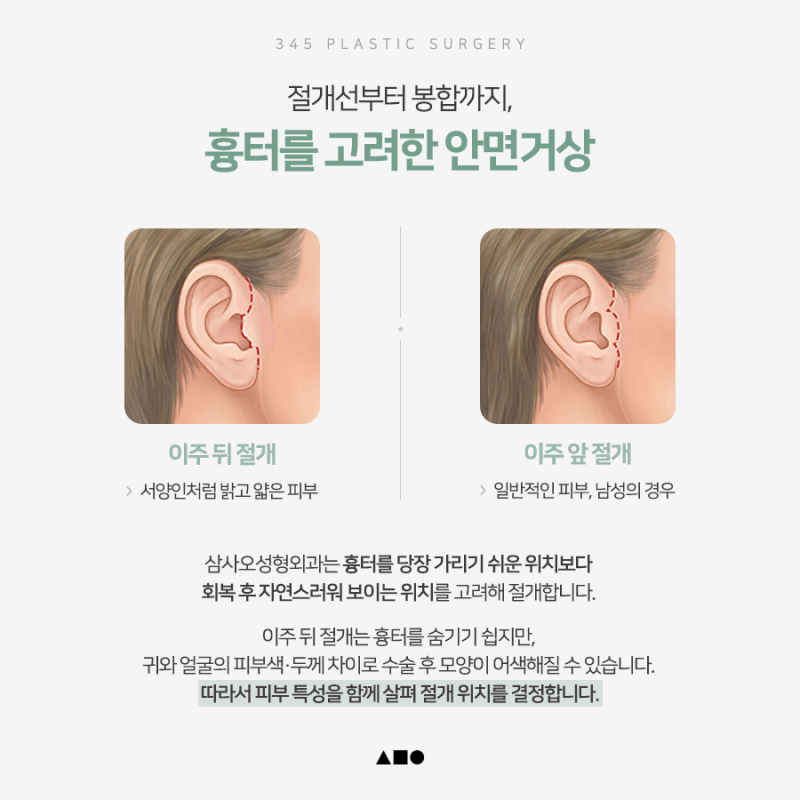
Scarring is one of the most common concerns for people considering a facelift. At Samsao Plastic Surgery, we don't simply choose locations that are easiest to conceal right after surgery. Instead, we plan the incision lines with positions that will look more natural once the scar has healed.
For example, for patients with fair, thin skin, an incision behind the tragus may be considered. For patients with typical skin or for men, incisions can be planned in front of the tragus.
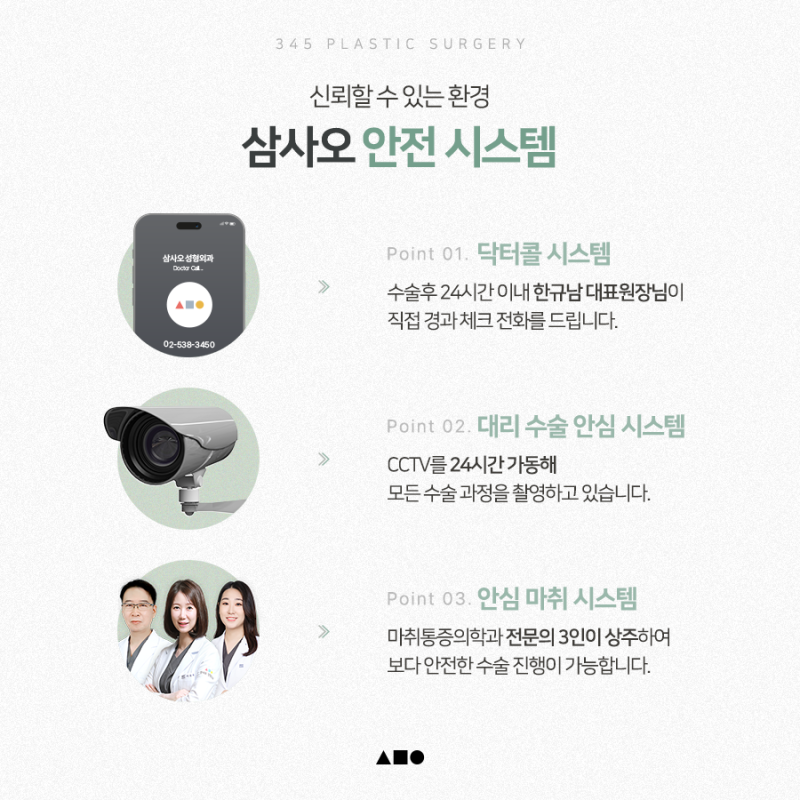
Because a facelift involves incisions and dissection, it's worth checking not only the surgical method but also the environment in which the surgery and recovery take place. At Samsao Plastic Surgery, we run a Doctor Call system in which the clinic's head physician personally checks on your progress within 24 hours after surgery. We also operate 24-hour CCTV in our operating room to record the procedure.
A facelift is not determined simply by lifting sagging skin upward. Many factors must be evaluated together: the degree of facial sagging, skin thickness and characteristics, the condition of the SMAS layer and retaining ligaments, the necessary dissection range and lifting direction, incision placement, and suturing.
If you're concerned about overall facial sagging or a collapsed jawline, we encourage you to schedule a consultation and thorough evaluation to determine which areas of your face could benefit from improvement. 💚
Thank you 😉



Frequently Asked Questions
Does a facelift only pull the skin?
No, it does not only pull the skin. At Samsao Plastic Surgery, our facelift involves releasing the stretched retaining ligaments and lifting the sagging tissue in the direction that suits your facial structure, starting from the SMAS layer rather than only tightening the skin's surface.
How are incision scars managed after a facelift?
Personalized incision lines are planned so that the scars look natural after healing. For patients with fair, thin skin, incisions behind the tragus may be considered, while for typical skin types or men, incisions are planned in front of the tragus to help reduce the visibility of scarring.
Can deep cheek volume and salivary glands also be improved during surgery?
Yes, they can be addressed together when necessary. During the facelift, the condition of deeper facial structures such as deep cheek volume, salivary glands, and previously injected filler can be checked directly, and these can be adjusted and improved as needed.
How is post-operative follow-up and safety managed?
The entire process is monitored for safety. Operating room CCTV runs 24 hours a day to transparently record the procedure, and under the Doctor Call system, the clinic's head physician personally checks on your progress within 24 hours after surgery.