2026-06-04
Safety Standards to Check Before Plastic Surgery: 4 Promises of 345 Plastic Surgery
Satisfactory plastic surgery results are built upon a thorough safety system. 345 Plastic Surgery provides a reliable medical environment by adhering to patient-centered safety principles, including real-time CCTV operation to prevent ghost surgeries, dedicated monitoring by three board-certified anesthesiologists, and a Dr. Call system for direct communication with the operating surgeon.
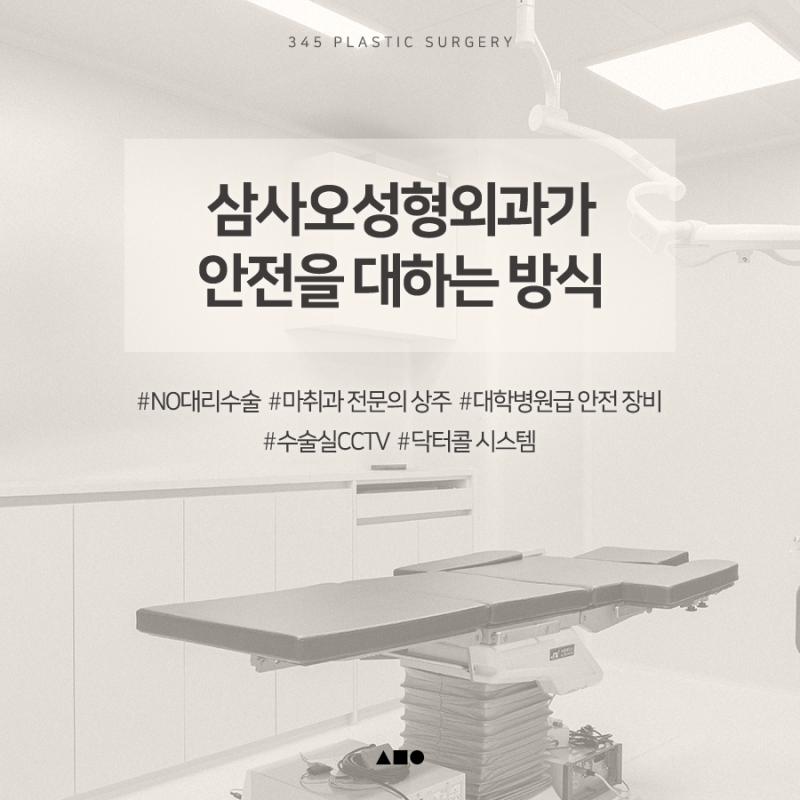
Hello, this is 345 Plastic Surgery, where patient safety is our top priority. When considering plastic surgery, the majority of patients tend to prioritize visible results first. However, satisfactory results can only hold true meaning when built upon the solid foundation of transparency and safety throughout the surgical process.
Before discussing the technical perfection of a surgery, 345 Plastic Surgery considers the systematic and safe management of the surgical environment and the entire process as our core standard. To this end, we would like to introduce the specific safety management principles we practice.
1. Transparent Operation of Operating Room CCTVs with No Worries About Ghost Surgery
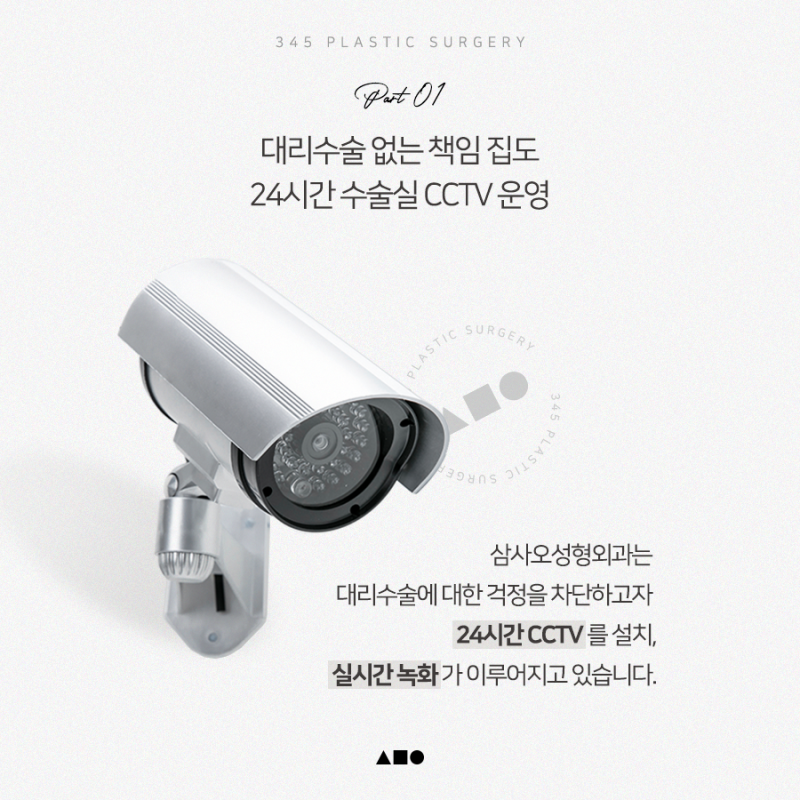
To prevent the issue of 'ghost surgery,' which many people worry about recently when choosing a plastic surgery clinic, 345 Plastic Surgery operates 24-hour CCTVs inside our operating rooms. By transparently recording and managing the entire process from the start to the end of the surgery, we create an environment where patients can undergo surgery with peace of mind. This also serves as a fundamental mechanism to inspire a sense of responsibility in our medical staff during operations.
2. 3 Resident Board-Certified Anesthesiologists and a Dedicated Anesthesia System

One of the core aspects of plastic surgery safety is anesthesia management. At 345 Plastic Surgery, three board-certified anesthesiologists are in residence to precisely evaluate the patient's health condition before surgery. Rather than merely checking mechanical figures, they provide close care tailored to each patient's responses—from real-time monitoring during the surgery to complete recovery of consciousness afterward—helping to ensure a more stable recovery process.
3. Dr. Call System for Direct Communication with the Operating Surgeon
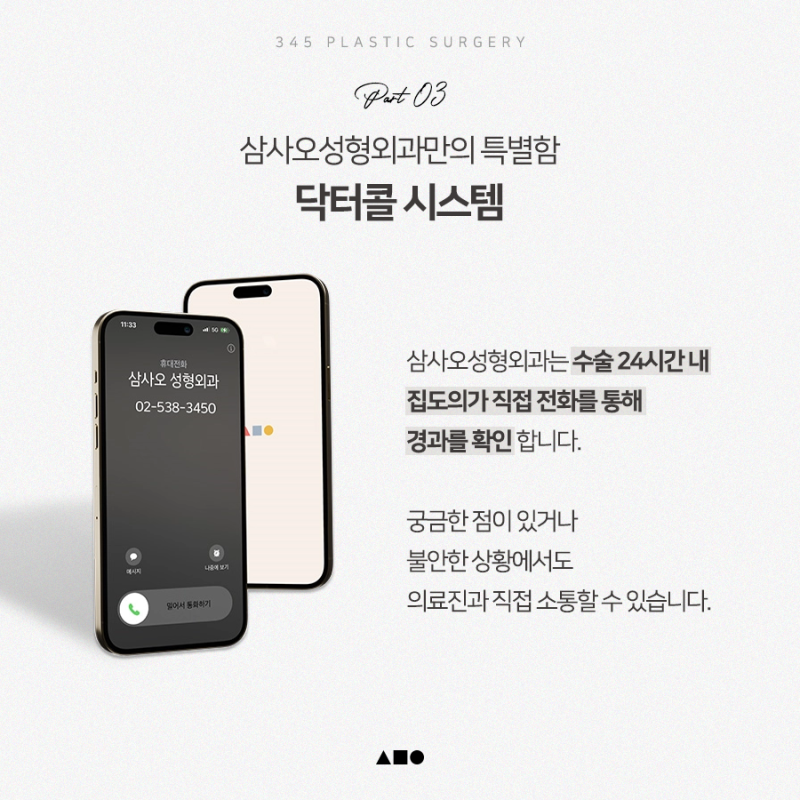
To alleviate the anxiety patients may experience immediately after surgery, we operate the 'Dr. Call' system. Within 24 hours post-surgery, the head surgeon who performed the operation will personally contact the patient to check on their condition and answer any questions. By keeping a direct communication channel open with the medical staff even after the surgery is completed, we can swiftly respond to any abnormal signs that may occur during the recovery period and provide psychological stability.
4. Establishment of a University Hospital-Level Collaborative System for Emergencies

In preparation for any unforeseen emergency, 345 Plastic Surgery is equipped with a university hospital-level collaborative system. In addition to having emergency medical equipment on hand, specialized personnel who are fully versed in rapid response manuals are always present, operating the entire surgical environment with a focus on safety.

While the surgery time is limited, the responsibility for its results and safety must be continuous. 345's principles—spanning a safe environment, transparent operations, and thorough aftercare—will remain unchanged.



Summary of 345 Plastic Surgery's Core Safety Features
- Operating Room CCTV: Transparent recording of the entire process to prevent ghost surgeries
- Resident Anesthesiologists: Real-time monitoring and recovery management by 3 board-certified specialists
- Dr. Call System: Direct reassurance call from the operating surgeon within 24 hours post-surgery
- Emergency Response System: Establishment of a collaborative medical system for rapid action
Frequently Asked Questions
Is there a system to prevent ghost surgery?
Yes, we operate 24-hour CCTV in the operating room to completely prevent ghost surgery. The entire process from the start to the end of the surgery is transparently recorded and managed, so patients can undergo surgery with peace of mind.
Who is responsible for anesthesia and how is it managed?
Three anesthesiology specialists are always on-site to directly manage anesthesia. They precisely evaluate the patient's health condition before surgery, provide real-time monitoring during surgery, and offer close care until the patient fully recovers consciousness after surgery.
Can I communicate directly with the surgeon after the operation?
Yes, direct communication is possible through our Dr. Call system. Within 24 hours after surgery, the surgeon who performed the operation will directly contact the patient to check their condition, answer any questions, and help with psychological stability.
How do you handle emergency situations during surgery?
We respond quickly through a university hospital-level collaborative system and emergency medical equipment. Professional staff trained in emergency manuals are always on-site, allowing for immediate action with patient safety as the top priority in any unforeseen emergency.