2026-06-04
Mini Lift Effects and Duration: Is It Right for Me? A Key Doctor's Detailed Guide
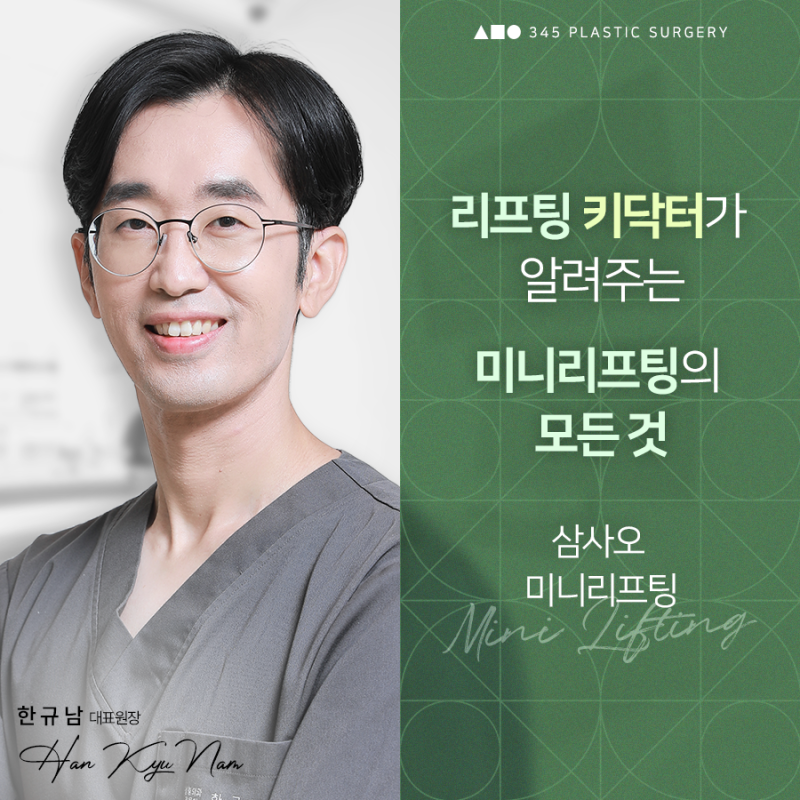
We have summarized everything about the mini lift, which minimizes the incision area to aid in quick recovery. The lifting key doctor at 345 Plastic Surgery directly explains the optimal treatment areas for Asian skin characteristics, the duration of the effects, and whether it can be combined with thread lifting or laser treatments.

What is a 'Mini Lift' that Minimizes Incisions and Dissection?
As interest in anti-aging grows, more people are looking for lifting surgeries that allow a quick return to daily life. Among them, a mini lift is a surgical method that reduces the extent of incisions and dissection (tissue separation).
Unlike a traditional facelift, it features less visible scarring as it involves making fine incisions inside the hair, along the hairline, or around the ears. Narrowing the dissection area also lowers the chances of postoperative swelling and bruising, making it a suitable 'small lift' for modern individuals who want a fast recovery to their daily routines.
Types That Can Maximize Mini Lift Effects
As with all procedures, there are specific types for whom a mini lift works best. Because the incision area is small, it is more advantageous the closer it is to the target area you want to lift.
- Asian Skin Characteristics: Koreans tend to have thicker skin and firmer tissue compared to Westerners. This acts as a positive factor in increasing longevity, as the strength to hold the tissue after lifting is stronger.
- Facial Structure: The Asian facial structure, where the distance from the hairline to the jawline is relatively short, increases the efficiency of a mini lift.
- Recommended Areas: It is more suitable for the jawline or jowls (sagging cheeks), where the improvement effect is distinct when pulled vertically, rather than for nasolabial folds.

One thing to note is that Koreans often have prominent cheekbones. A precise design is essential to prevent the face from looking wider due to soft tissues gathering toward the cheekbones during the lift.
Skin Types Requiring Caution and Limitations
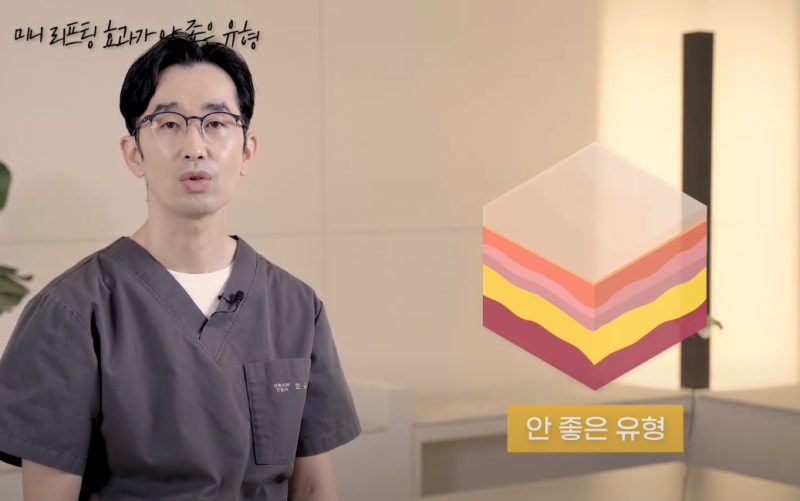
Conversely, there are cases where it is difficult to expect significant changes with a mini lift alone. If the skin is very thin and highly elastic, or if the soft tissue is heavy, the rate of sagging again can be fast, even if it looks improved immediately after surgery.
In such cases, it is advisable to modify the plan by slightly widening the incision area or combining other supplementary procedures to reinforce support.
Mini Lift Duration and Aging Management
While the duration of a typical thread lift is considered to be around one year, a mini lift aims to maintain its effects for at least 2 to 3 years. However, rather than the concept of 'maintenance,' it is more accurate to understand that the surgery turns back the clock to a state 5 to 10 years prior to the present, and aging progresses again from that point.
Although it varies depending on individual skin elasticity and lifestyle habits, aging cannot be completely stopped with a single surgery, so consistent aftercare must be supported.
Possibility of Combining with Other Lifting Procedures
Many people worry about interference with previous procedures or future laser lifting treatments.
- Pre-surgery Procedure Experience: Even if you have received thread lifting, Ultherapy, or Thermage in the past, surgery is possible in most cases. However, if non-absorbable threads were used or if excessive scar tissue (fibrosis) has formed in the SMAS (Superficial Musculoaponeurotic System) layer due to repetitive high-intensity lasers, the dissection process can be tricky.
- Post-surgery Care: You can still receive laser procedures like Ultherapy or Shurink after surgery. By adjusting so that the surgical area (mainly the upper part) and the laser target area (mainly the lower part) do not overlap, you can expect a synergistic effect.
A mini lift may seem relatively simple, but accurately understanding individual anatomical structures is necessary to reduce side effects and achieve favorable results. We recommend establishing a lifting plan that suits you through sufficient consultation with a specialist who has abundant surgical experience.
Frequently Asked Questions
Is the return to daily life quick after mini-lifting surgery?
Yes, a relatively quick return to daily life is possible. Unlike general facelift surgery, mini-lifting minimizes the incision and dissection area, which reduces the likelihood of swelling and bruising after surgery, leading to faster recovery.
Which areas of the face are most effectively treated by mini-lifting?
It is most effective for improving the jawline and jowls (sagging cheeks). The improvement effect is clearly visible when pulled vertically, and it is a more suitable surgical method for restoring elasticity around the jawline rather than for nasolabial folds.
How long do the effects of mini-lifting usually last?
The goal is to maintain the effects for at least 2 to 3 years. This is longer than the maintenance period of general thread lifting, which is about 1 year, and you can consider it as returning to the state of 5 to 10 years ago through surgery, with natural aging progressing again from that point.
Is mini-lifting suitable for people with thin, easily stretched skin?
No, it may be difficult to expect significant changes with a standalone surgery. If the skin is very thin or the soft tissue is heavy, the sagging may recur quickly, so it is recommended to widen the incision area or combine it with auxiliary procedures to reinforce support.
Is surgery possible even if I have previously had Ultherapy or thread lifting?
Yes, in most cases, surgery is possible. However, if non-absorbable threads were used or if excessive scar tissue has formed in the fascial layer due to repeated high-intensity laser treatments, the dissection process can be difficult, so an accurate diagnosis by a specialist is required.