2026-09-15
Male Square Jaw Surgery: Why a Natural Jawline Matters More Than a Slender Face
Explore male square jaw surgery at 345 Plastic Surgery. Discover why a natural, balanced jawline using long-curved resection is essential for men rather than an overly narrow V-line.

Hello, this is 345 Plastic Surgery.
When men consider facial contouring surgery,
one of the most common concerns they discuss
is a square jaw.
A jaw that makes the face look broad from the front
or has a prominent angle from the side
can create an overly harsh and rugged overall impression.
However, approaching male square jaw reduction
by simply shaving off as much bone as possible
to achieve a small, slender face
may not be the ideal solution.
Today, we will examine the reasons
why male square jaws appear prominent
and the key factors to consider during surgery.

Why does a man's jaw look more angular?
A well-developed square jaw is rarely caused
by a single factor alone.
It is crucial to comprehensively examine how prominent
the mandibular angle below the ear is,
the length and thickness of the lower jawbone,
and the mandibular width visible from the front view.
In men, the skeletal framework tends to be larger
and the masseter muscle is often more developed.
Therefore, it is necessary not only to assess the bone shape
but also to evaluate the condition of soft tissues,
including surrounding musculature.
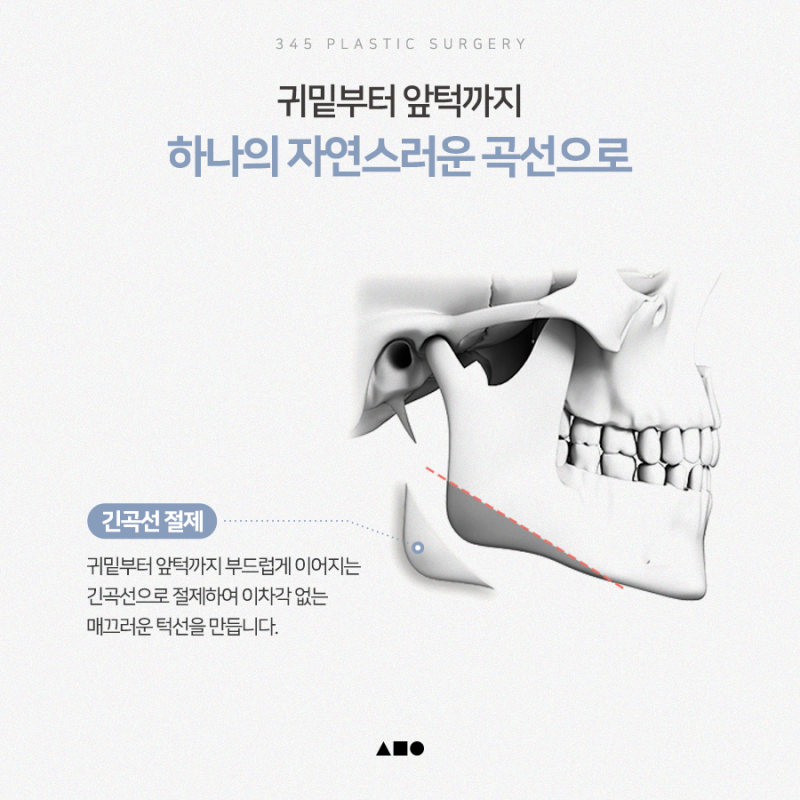
In male square jaw surgery,
rather than merely reducing the localized angle under the ear,
the flow of the entire jawline must be taken into account.
At 345 Plastic Surgery,
we employ a long-curved resection
to ensure a smooth, continuous line from below the ear to the chin.
By resecting the protruding jawline in an elongated, gentle curve,
we refine the mandibular contour
without creating abrupt step-offs or secondary angles
between the mandibular angle and the chin.
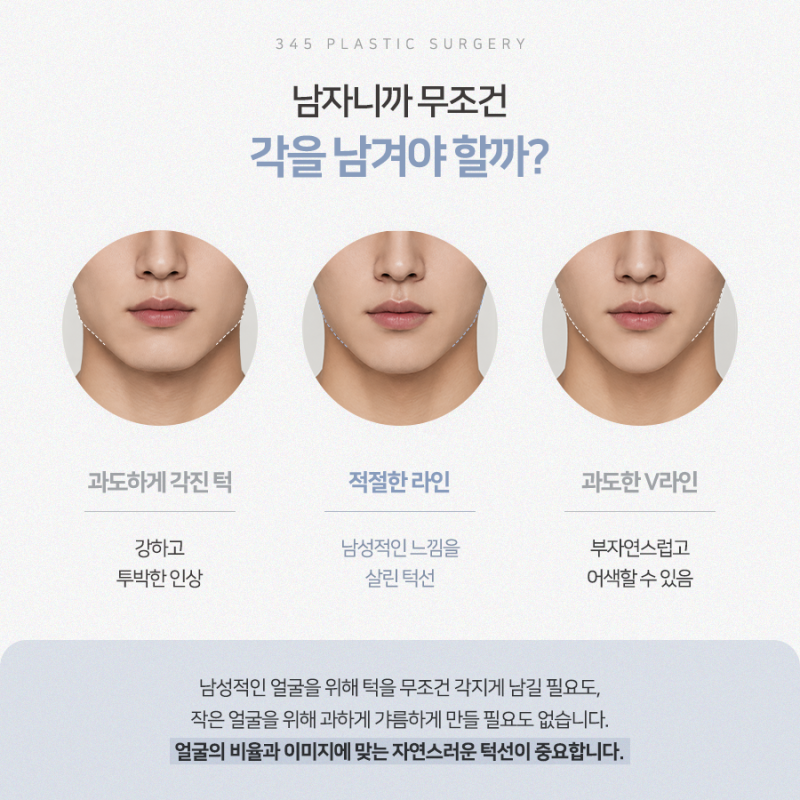
The standard for creating a masculine face
does not depend solely on the sharpness of the jaw angle.
Making the jawline excessively narrow or shaping it into an overt V-line
in pursuit of a smaller face
can appear unnatural and disproportionate.
Therefore, it is essential to plan a naturally flowing jawline
that accounts for facial width and length, the proportions
between cheekbones and chin, and the patient's existing masculine image.
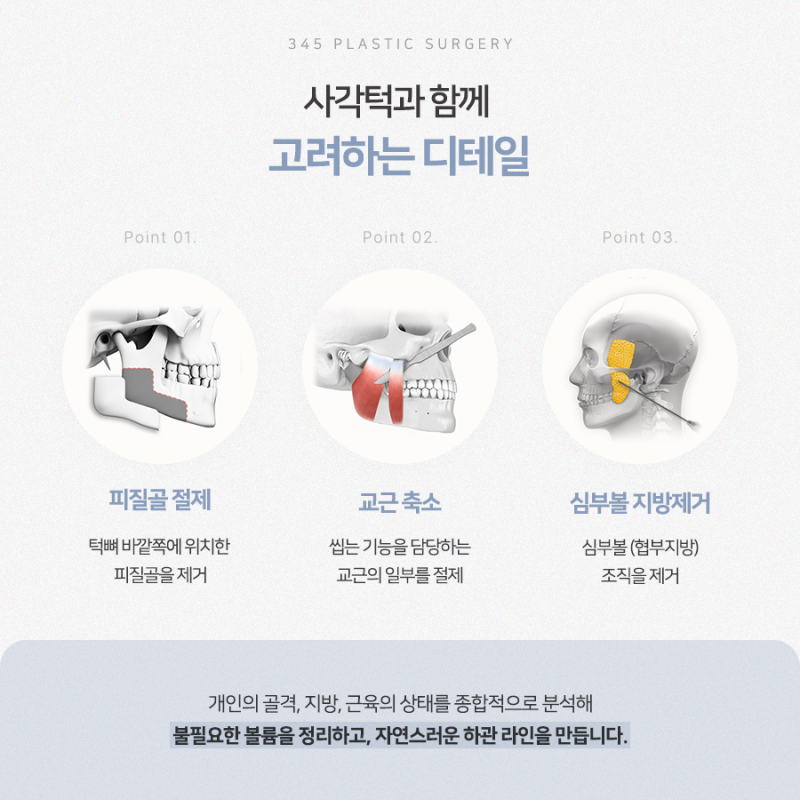
Furthermore, if bone structure is not the only reason
for a broad and angular jaw,
jawbone resection alone may fall short of achieving the desired outcome.
In such cases, cortical bone resection, masseter reduction,
or buccal fat removal can be assessed
depending on individual anatomy.
It is vital to identify which component—skeletal structure,
fat, or muscle—contributes most to the current lower face shape
and select only the necessary corrective procedures.
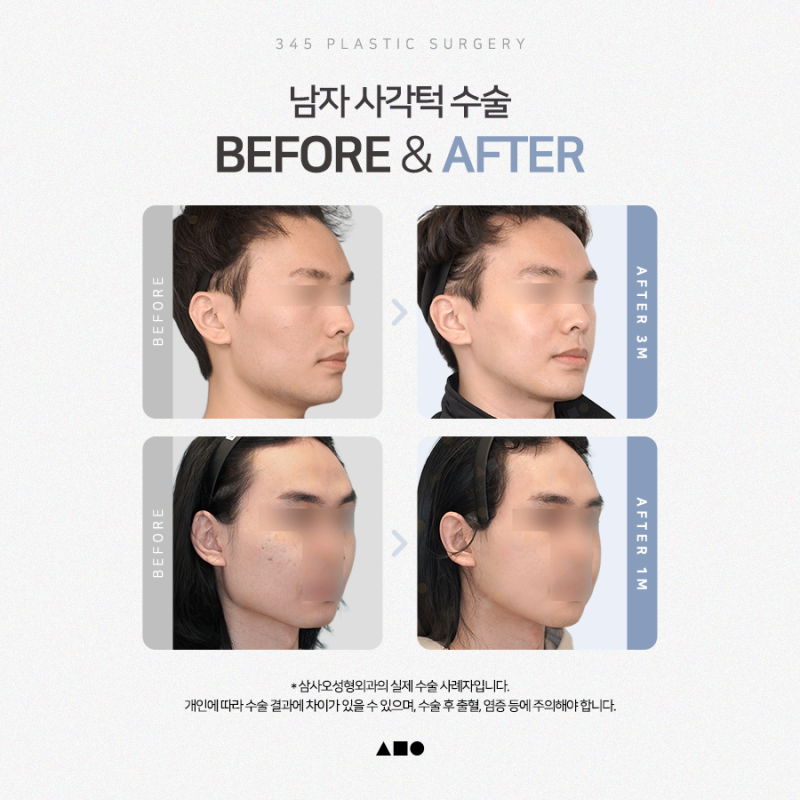
Looking at the before-and-after photos of a male patient
who underwent facial contouring at 345 Plastic Surgery,
you can see a refined, well-defined jawline
achieved by harmonizing the prominent mandibular angle
and reducing the mandibular width.
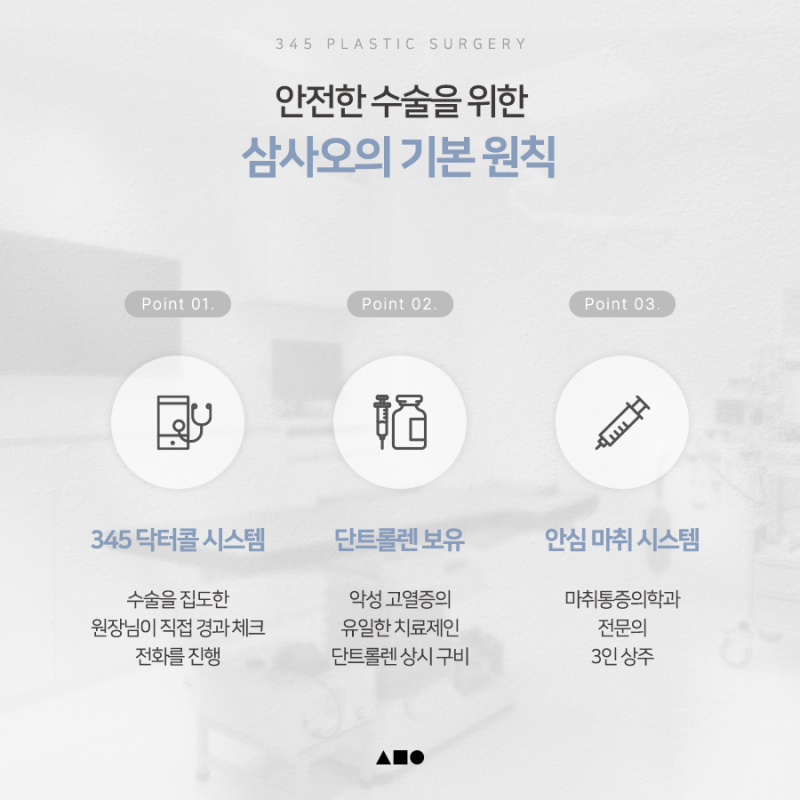
At 345 Plastic Surgery, we operate a Doctor Call system
where the operating surgeon directly checks on your recovery.
We also keep Dantrolene in stock at all times
to safeguard against malignant hyperthermia.
Additionally, three board-certified anesthesiologists are permanently on-site
to oversee anesthesia and manage patient safety
throughout the entire surgical procedure.
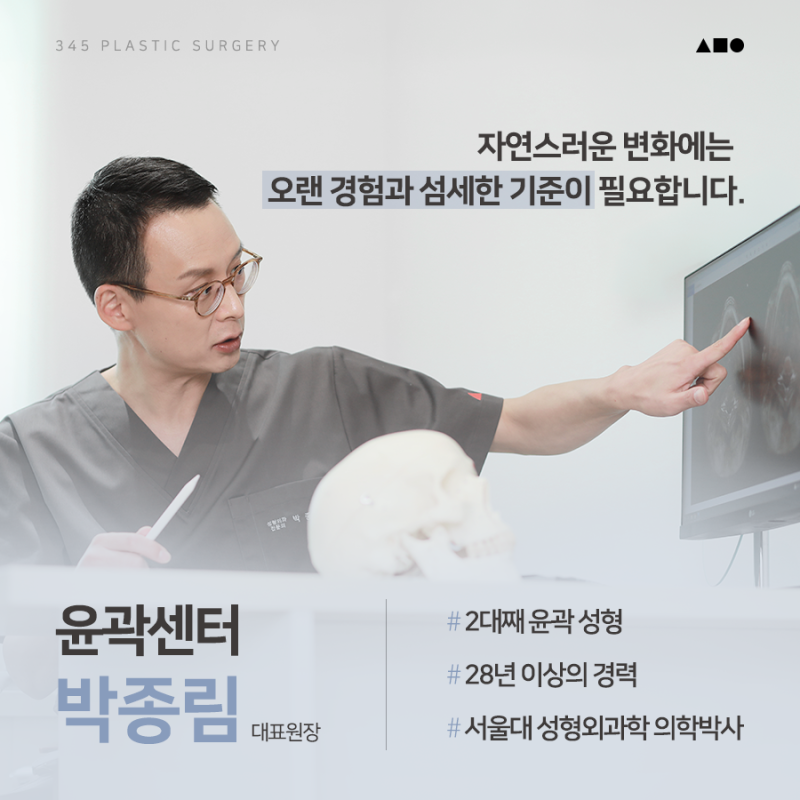
In male square jaw surgery,
the most critical step is determining
which areas need refinement and to what degree
in order to achieve a natural balance.
If you wish to contour a square jaw,
first assess your current skeletal and muscular conditions
and consult to find the degree of change that suits you best 💙
Thank you 😊



Frequently Asked Questions
Should maximum bone resection always be performed in male square jaw surgery?
No, aggressive bone removal is not recommended. Creating an excessively narrow jawline or an exaggerated V-line can diminish masculine definition and look unnatural. Preserving natural facial harmony and structural balance that complements individual facial proportions is essential.
What are the primary causes of a prominent square jaw?
A prominent jaw involves a combination of bone structure and soft tissue development. Beyond the prominence of the mandibular angle, bone thickness, and length, men frequently have well-developed masseter muscles and buccal fat, requiring a comprehensive evaluation.
What is the long-curved resection method used to prevent secondary angles?
It is a surgical technique that resects the jawline in a smooth, continuous curve from below the ear to the anterior chin. Localized reduction of only the mandibular angle can cause abrupt step-offs or secondary angles, whereas an elongated curve creates a seamless, natural contour.
Are procedures other than bone resection ever necessary?
Yes. If soft tissues contribute to a wide or bulky lower face, bone contouring alone may not be enough. Depending on the patient's individual anatomy, cortical ostectomy, masseter muscle reduction, or buccal fat removal may be combined selectively to refine the lower face.