2026-10-08
Male Facial Contouring Duo: 6-Month Results After Cheekbone and Square Jaw Reduction
A 6-month recovery timeline for a male patient in his 20s who had cheekbone and square jaw reduction together, from early swelling to the refined final facial contour.
Hello, this is Samsaoh Plastic Surgery Clinic.
When the face looks wide horizontally, or when both the cheekbones and the square jaw are prominent, it is important to look at the overall facial proportions and contour rather than reducing just one area.

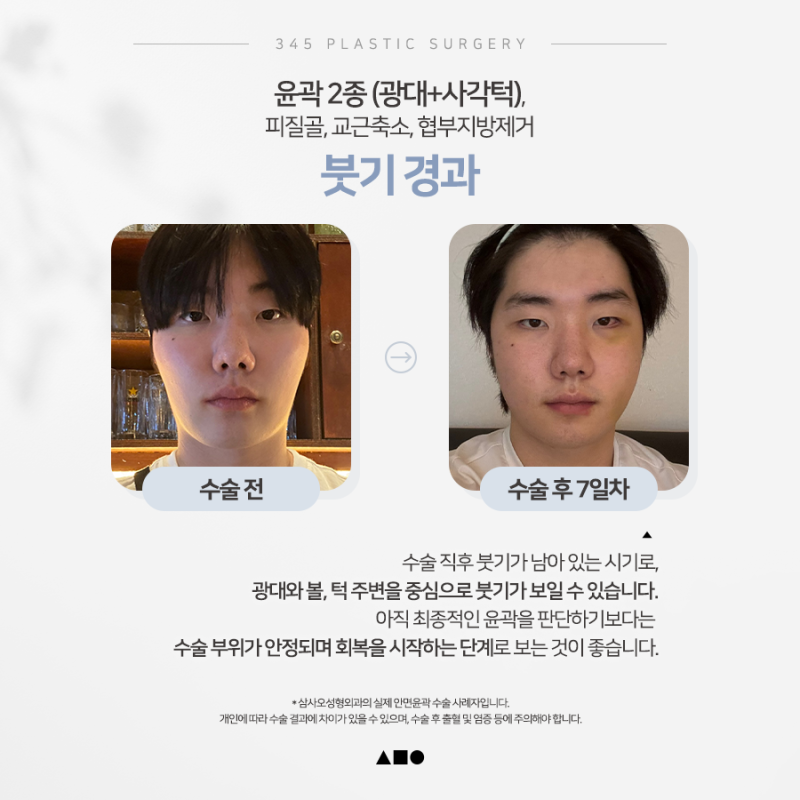
Today, we will look at the changes in a male patient in his 20s who underwent zygomatic reduction and square jaw reduction together, from before surgery through six months after.
On postoperative day 7, the area is still in the early stage of recovery, so swelling remains mainly around the cheekbones, cheeks, and chin. At this stage, it is better to view the face as beginning to stabilize and recover rather than judging its final shape.

From about two weeks after surgery, most of the major swelling begins to subside, and changes in the cheekbone and jawline gradually become visible. Some residual swelling may remain, but compared with before surgery, the outward protrusion of the cheekbones and the angular jawline have softened, and changes in the overall facial contour can be confirmed.

After about one month, swelling decreases further, and the outline running from the cheekbones to the jawline becomes more natural. From the front, the facial width looks more refined, and from the side, the angularity of the square jaw area eases, revealing a softer jawline. However, at this stage, some residual swelling and a firm tissue feel may still remain depending on the individual.

After three months, residual swelling and tissue firmness gradually resolve, and the cheekbone and square jaw lines settle into a more natural shape.
At six months, the surgical area is more stable, and the facial width seen from the front and the angular contour seen from the side appear further refined.
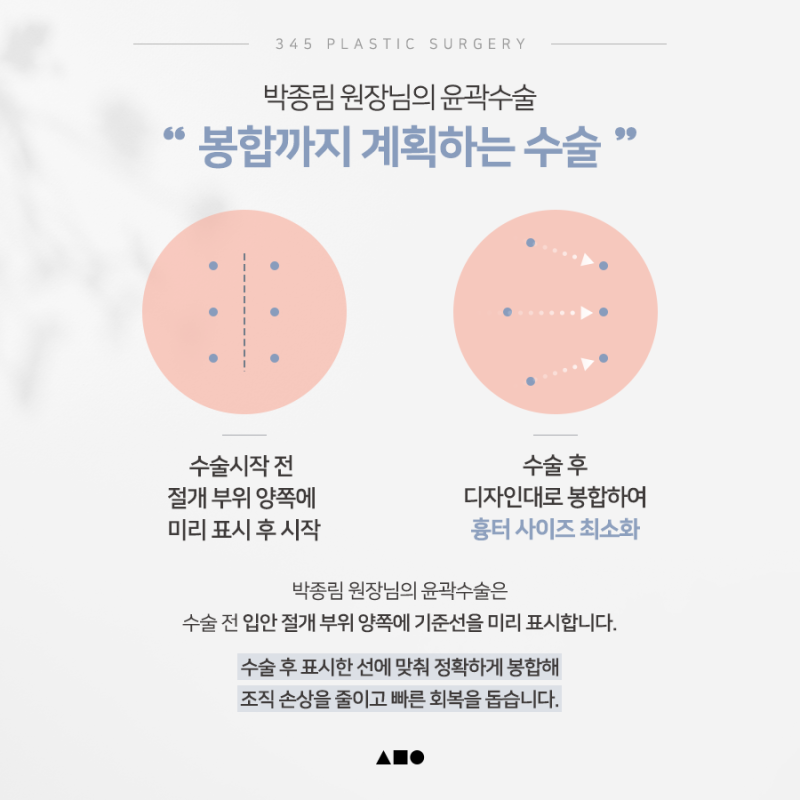
In facial contouring surgery, how the bone is osteotomized and repositioned is important, but so is how the tissue is handled and sutured during the procedure.
In Dr. Park Jong-rim's contouring surgery, reference lines are marked on both sides of the intraoral incision before surgery, and suturing is then performed along those marked lines after surgery. By accurately aligning the incision sites, the surgery minimizes tissue damage and takes recovery and scarring into account.

Samsaoh Plastic Surgery Clinic also maintains systematic safety management throughout the entire process, from before surgery to recovery. This includes a post-operative Doctor Call system, dantrolene kept on hand at all times for emergencies, and three board-certified anesthesiology and pain medicine specialists on-site.
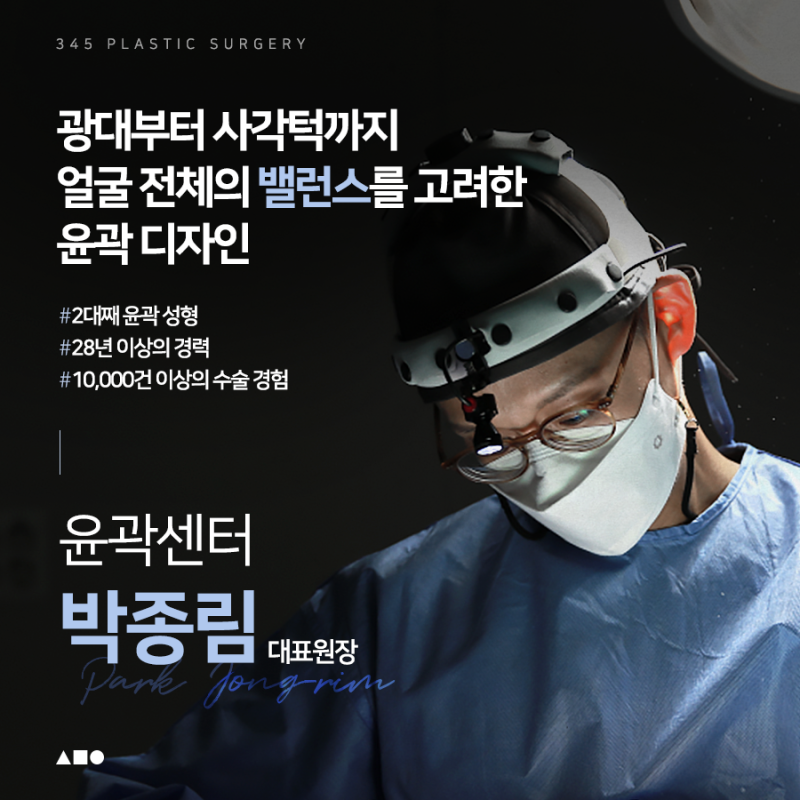
If you are concerned about both your cheekbones and square jaw, or you want to naturally refine angular facial lines while maintaining a masculine impression, we recommend first checking the condition of your facial bone structure and soft tissue, and then planning the surgical approach 💙
Thank you 😊



Frequently Asked Questions
How long does swelling take to subside after cheekbone and square jaw reduction?
Major swelling begins to subside gradually from about two weeks after surgery. After about a month, swelling decreases further, and the outline from the cheekbones to the jawline becomes more natural. However, residual swelling may remain depending on the individual.
Can I judge changes in facial shape on day 7 after surgery?
The article explains that on day 7, it is better to view this stage as the beginning of recovery rather than judging the final changes in facial shape. Swelling remains around the cheekbones, cheeks, and chin, and changes begin to become gradually visible from week 2.
Are there cases where cheekbone reduction and square jaw reduction were performed together?
Yes, the article introduces a case in which a male patient in his 20s underwent zygomatic reduction and square jaw reduction together. It explains that in such cases, it is important to look at the overall facial proportions and contour rather than reducing just one area, and adds that the surgical approach should be planned after checking the condition of the bone structure and soft tissue.
How is suturing performed in facial contouring surgery?
The article describes a method in which reference lines are marked on both sides of the intraoral incision before surgery, and suturing is performed along those marked lines after surgery. It explains that by accurately aligning the incision sites, tissue damage is reduced, with consideration given to recovery and scarring.
How does the facial contour change after six months?
At six months, the surgical area is more stable, and the facial width seen from the front and the angular contour seen from the side appear further refined. However, this describes one case, and results may vary depending on the individual.