2026-11-06
Lower Blepharoplasty: Why Revision Surgery Requires a Closer Look
Explains why under-eye aging involves fat, skin, and support structures, and why revision lower blepharoplasty calls for checking the first surgery's results and the root cause.
Hello, this is Samsaoh Plastic Surgery Clinic.
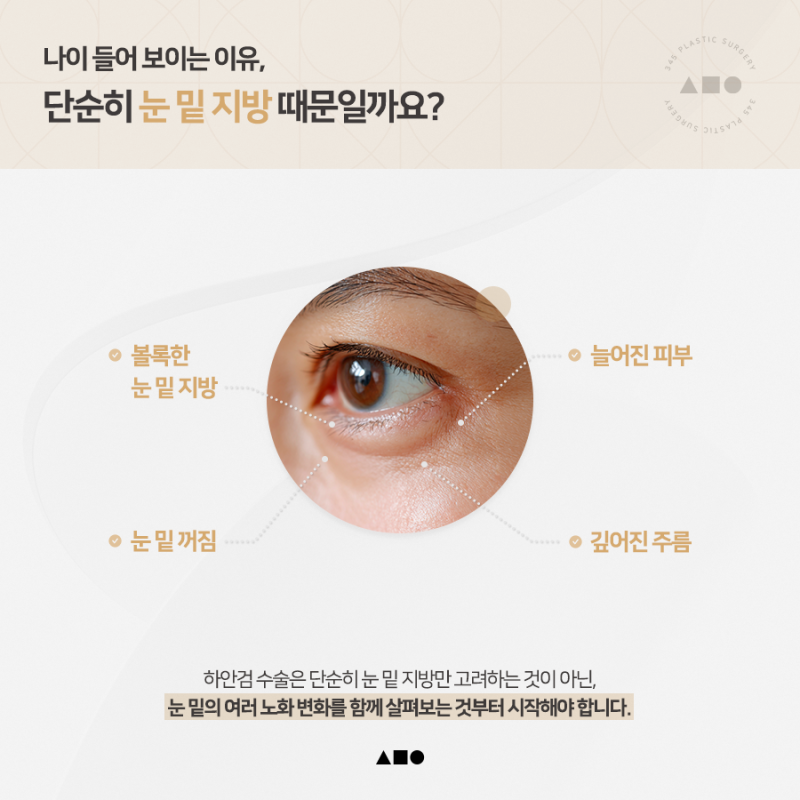
As we age, the area under the eyes can become puffy and the skin may start to sag. This can make you look more tired than before and give an older impression.

It's easy to assume that fat under the eyes is the only issue. In reality, however, many changes often appear together, including fat protrusion, skin sagging, under-eye hollowing, and fine lines or wrinkles.
Today, we'll look at what to check in each situation, from considering lower blepharoplasty for the first time to seeing changes under the eyes again after surgery.
Does an older-looking under-eye area come down to fat alone?
Aging under the eyes doesn't come from just one change. Fat may push forward and make the area look puffy, while reduced skin elasticity can bring fine lines, deeper wrinkles, and sagging. In some cases, the under-eye area may look hollow, creating an overall shadowed appearance.
For this reason, the areas that need correction can differ from person to person, even with the same lower blepharoplasty.
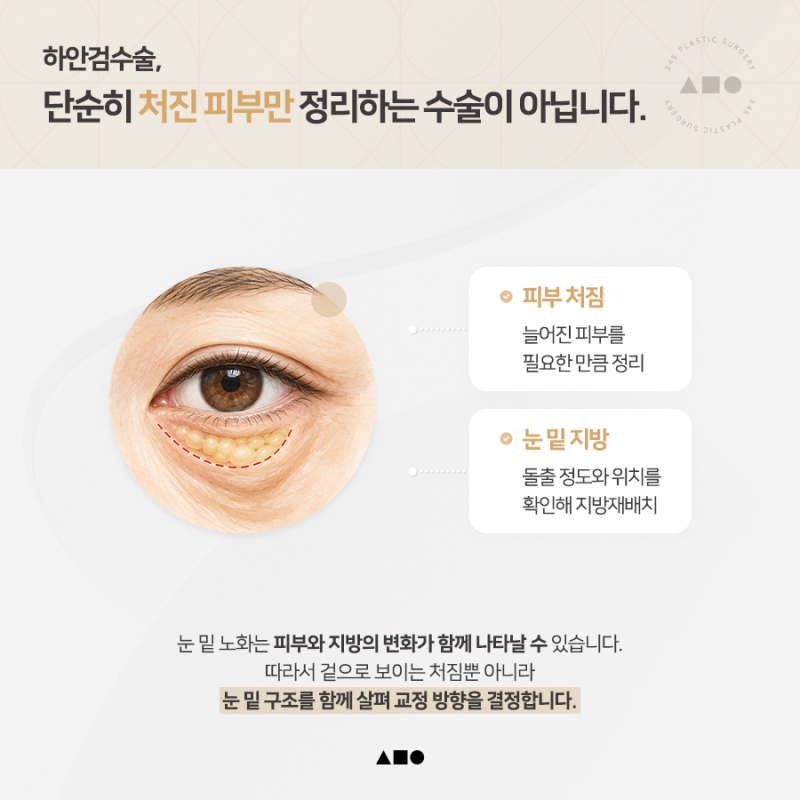
Many people think of lower blepharoplasty as simply cutting away loose skin. However, aging under the eyes involves changes in fat and the structures that support it, not just the skin. Because of this, it's difficult to base the approach only on the sagging you can see from the outside.
When skin sagging is prominent, loose skin is trimmed as needed. If fat is protruding under the eyes, its position and amount are checked, and repositioning may be considered.
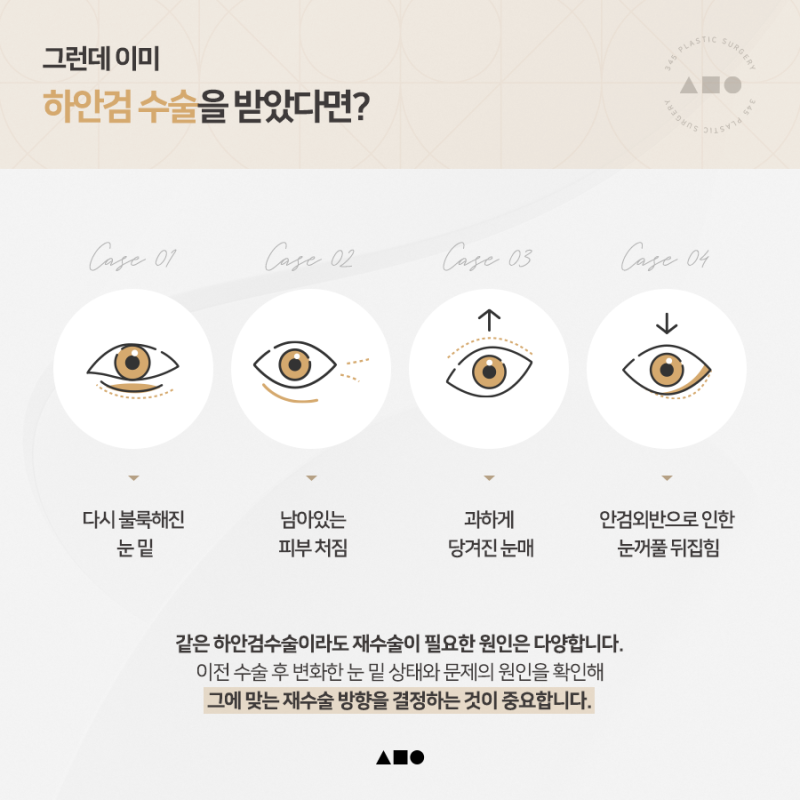
Already had lower blepharoplasty, but the under-eye area is puffy again?
Some people consider revision surgery when the under-eye area becomes puffy again or skin sagging reappears after lower blepharoplasty.
The causes vary, including protrusion of under-eye fat, remaining skin sagging, an overly pulled eye shape, or ectropion. That's why it's important to first identify the condition of the under-eye area after the first surgery and the cause of the problem.
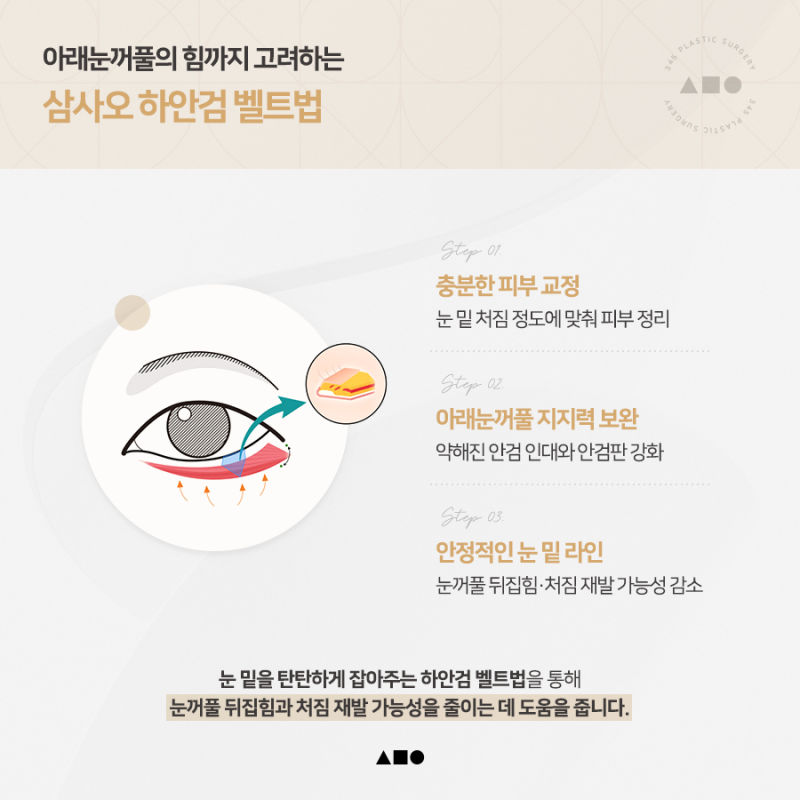
Especially when the support of the lower eyelid has weakened, simply trimming skin and fat may not be enough.
At Samsaoh Plastic Surgery, we trim the skin according to the degree of under-eye sagging and, when needed, use the lower eyelid belt technique, which reinforces the weakened eyelid ligaments and tarsal plate to improve lower eyelid support.
This can help firm up and support the under-eye area, and may help reduce the chance of the lower eyelid dropping excessively or turning outward after surgery, as well as sagging reappearing.
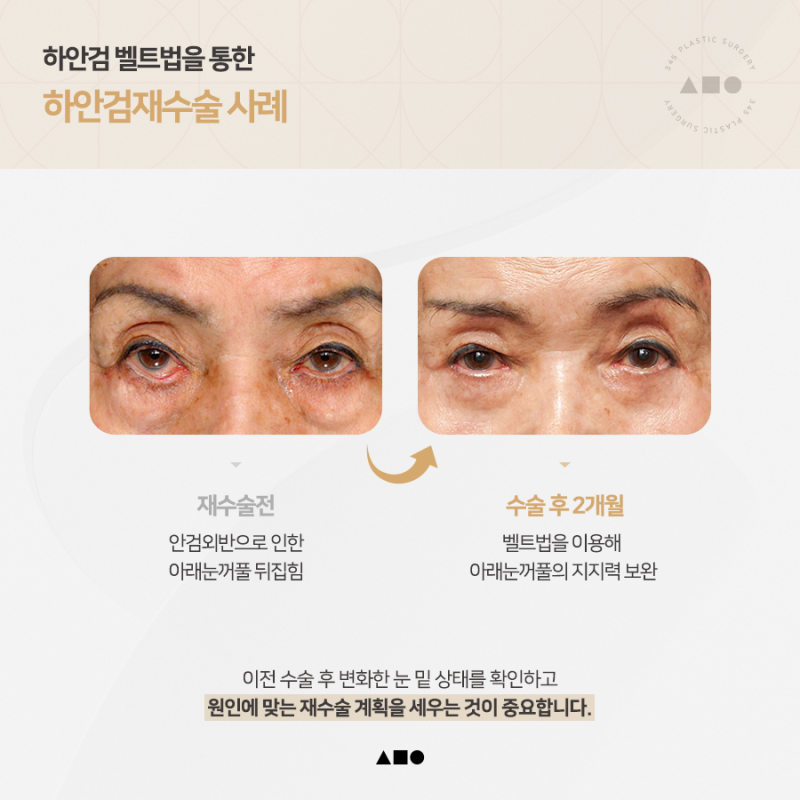
Looking at an actual lower blepharoplasty revision case, before surgery the lower eyelid appeared turned outward due to ectropion.
After reviewing the current condition of the under-eye area and the changes following the previous surgery, revision was performed using the lower eyelid belt technique to address the weakened support of the lower eyelid.
At 2 months after surgery, the lower eyelid position can be seen settling more stably.
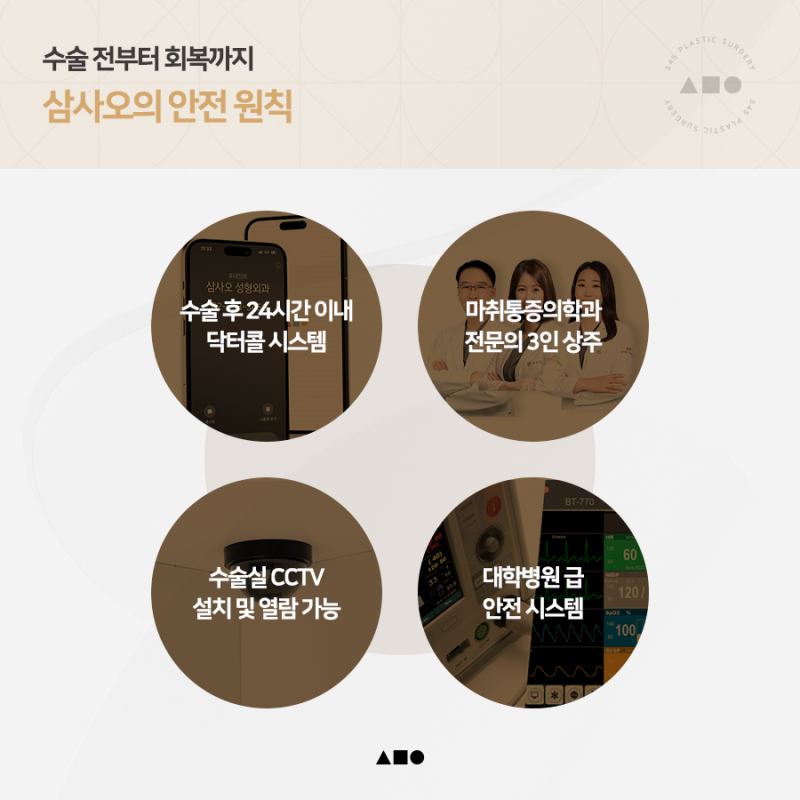
Samsaoh Plastic Surgery has three anesthesiology and pain medicine specialists on staff and checks recovery status through a Doctor Call system within 24 hours after surgery.
We also maintain operating room CCTV installation and viewing systems and safety systems on par with university hospitals, systematically managing patients from before surgery through recovery.
Just because the under-eye area looks puffy or sagging doesn't mean everyone needs the same approach to lower blepharoplasty.
Especially for revision cases, rather than simply pulling the skin again or removing fat, it's important to check the condition of the under-eye area after the first surgery and its cause, and to find the right direction for correction.
If you're curious about which approach suits your current under-eye condition, from your first lower blepharoplasty to a revision, please check with the medical team at Samsaoh Plastic Surgery through a thorough consultation 💛
Thank you 😊



Frequently Asked Questions
Is lower blepharoplasty just a procedure to cut away sagging skin?
No. Fat under the eyes and the structures that support it can also be evaluated. When skin sagging is prominent, loose skin is trimmed, and if fat is protruding, its position and amount are checked and it may be repositioned.
Why does revision surgery require a more careful evaluation?
In revision surgery, it's important to first identify the condition of the under-eye area after the first operation and the cause of the problem. The clinic explains that the focus should be on finding the right direction for correction rather than simply re-pulling the skin or removing fat.
What causes call for lower blepharoplasty revision?
Causes vary, including protrusion of under-eye fat, remaining skin sagging, an overly pulled eye shape, or ectropion. That's why it's important to first identify the condition of the under-eye area after the first surgery and its cause.
When is the lower eyelid belt technique considered?
It may be considered when the support of the lower eyelid has weakened. The clinic describes it as a method that reinforces weakened eyelid ligaments and the tarsal plate to improve support, which may help reduce the chance of the lower eyelid dropping excessively or turning outward after surgery, as well as sagging reappearing.
What should be checked during a revision consultation?
It's important to first check the condition of the under-eye area after the first surgery and the cause of the problem. For the approach that suits your current under-eye condition, please consult thoroughly with the medical team.
If the under-eye area is puffy, does everyone need lower blepharoplasty?
No. Just because the under-eye area looks puffy or sagging doesn't mean everyone needs the same approach. The areas to correct can vary depending on individual changes, such as fat protrusion, skin sagging, or under-eye hollowing.