2026-06-04
Lifting Laser vs. Facelift: Which Lifting Method is Right for Me and How Long Does It Last?
Discover the limitations of lifting lasers, the benefits of thread lifting, and the step-by-step differences in incisional lifting (facelifts). From patients in their 20s to those in their 50s and beyond, we outline the optimal lifting methods, duration of results, and precautions based on age and degree of sagging, all from the perspective of a board-certified plastic surgeon.
The Beginning of Lifting: Characteristics of Laser Lifting and Thread Lifting
When skin elasticity begins to decline, the first option most people consider is laser lifting. Procedures using ultrasound (HIFU) or radiofrequency (RF) provide a tightening effect to the skin tissue, helping to improve overall elasticity. However, these methods may lack the physical force required to pull up noticeably sagging skin, and they typically require regular, repeated treatments to maintain their effects.
Considered as the next step, thread lifting uses medical-grade threads to directly pull and lift sagging areas. Commonly used PDO (Polydioxanone, dissolvable threads) take about 6 months to be absorbed by the body, but the duration of the tissue-holding effect can be expected to last anywhere from 6 months to a year, depending on the individual. Because there is often no significant difference in longevity compared to non-dissolvable threads, PDO threads are widely and popularly used.
A 3-Step Incisional Lifting Strategy Based on the Degree of Sagging
If you desire longer-lasting results and more distinct improvements, you should consider surgical methods that involve incisions and dissection (the process of separating tissues). The wider the dissection area, the more the sagging soft tissues can be lifted; however, the recovery period and the risk of scarring must also be carefully considered. At 345 Plastic Surgery, we proceed in three stages depending on the patient's condition.
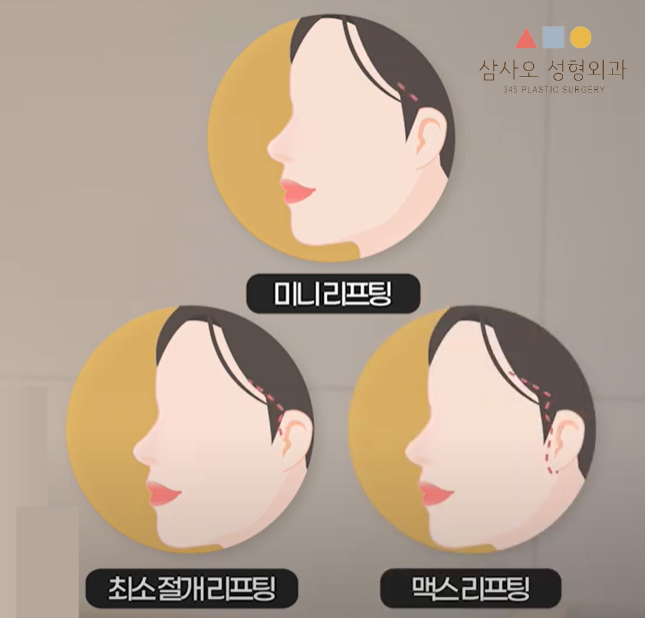
- Step 1 - Mini Facelift: Suitable for those in their 20s to 40s experiencing early signs of sagging. It improves elasticity while minimizing visible scarring through a small 2-3cm incision hidden inside the scalp.
- Step 2 - Minimal Incision Lifting: Recommended for those in their 40s to 50s with a loss of jawline definition and deepened nasolabial folds. The dissection area is expanded to correct even the retaining ligaments, but the incision line is carefully placed along the front of the ear to remain inconspicuous.
- Step 3 - Facelift (Full Face Lifting): Suitable for those in their 50s and older, or those with severe sagging. It helps reverse the signs of aging by pulling both the skin of the entire face and the SMAS (Superficial Musculoaponeurotic System) layer together.
When It's Not Just Simple Sagging: Combining Fat Repositioning and Liposuction
When you look in the mirror, the cause of sagging skin may not necessarily be just skin laxity due to aging. If your skin has lost volume and deflated like a balloon due to rapid weight loss, fat grafting should be combined to restore volume and a three-dimensional contour to the sunken areas. Conversely, if you have excess submental (under-chin) fat that causes the skin to sag under its weight, liposuction must be performed first to reduce the weight in order to expect natural lifting results.
Precautions Before Lifting Surgery and the Recovery Period
Lifting surgeries that involve incisions may cause swelling, bruising, and a temporary loss of sensation immediately after the procedure. While these symptoms will gradually subside during the recovery process, it is crucial to consult with an experienced board-certified surgeon to receive an accurate diagnosis of your skin thickness, tissue characteristics, and viable recovery timeframe. Rather than excessive or overly aggressive surgery, performing only the necessary amount of incision and dissection will yield the healthiest and most natural results.

If lifting lasers feel insufficient but a full facelift feels too burdensome, finding a specialized medical team to scientifically analyze your degree of sagging is the first step.
Frequently Asked Questions
What is the difference between laser lifting and thread lifting?
Laser lifting uses ultrasound or high-frequency waves to improve skin elasticity, while thread lifting directly pulls up sagging areas with medical threads. Laser treatments require regular repeat procedures, and thread lifting effects last about 6 months to 1 year, depending on the individual.
How long does absorbable thread lifting last?
It lasts approximately 6 months to 1 year. It takes about 6 months for the threads to be absorbed by the body, and the tissue-holding effect varies depending on the individual's condition, but there isn't a significant difference in duration compared to non-absorbable threads.
Can people in their 20s and 30s get incisional lifting?
Yes, if there is initial sagging, mini-facelift can be performed. For those in their 20s to 40s who feel initial sagging, a Stage 1 mini-facelift is suitable, which involves a small incision of 2-3cm inside the scalp to minimize scar exposure while improving skin elasticity.
What surgery is good if my jawline is collapsing and nasolabial folds are deepening?
For those in their 40s to 50s, minimally invasive lifting is recommended. By expanding the dissection range to correct the retaining ligaments, and making the incision along the front of the ear to be less noticeable, it can effectively improve a collapsed jawline and deep nasolabial folds.
My skin looks saggy, is a facelift alone enough?
Depending on the cause, it may be necessary to combine it with fat grafting or liposuction. If volume has decreased due to rapid dieting, fat grafting is needed; if sagging is due to excess submental fat, liposuction should be performed first to achieve natural lifting results.