2026-10-13
I Love Working Out—Is Breast Augmentation Still Okay? Samsao Subfascial Breast Augmentation
Samsao Plastic Surgery explains subfascial breast augmentation for active people, covering implant placement options, how muscle movement affects implants, and safety management.
Hello, this is Samsao Plastic Surgery Clinic.
When considering breast augmentation, the first things most people think about are volume and shape.
However, if you enjoy regular exercise or lead a very active lifestyle, you may also wonder how the surgery will affect your movement and recovery.

In particular, people who frequently use their upper body muscles, such as through weight training or Pilates, often ask whether they can keep their existing exercise habits after breast augmentation.
Today, together with Samsao Plastic Surgery, we will look at the factors to consider before breast augmentation, the differences based on implant placement, and the characteristics of subfascial breast augmentation.
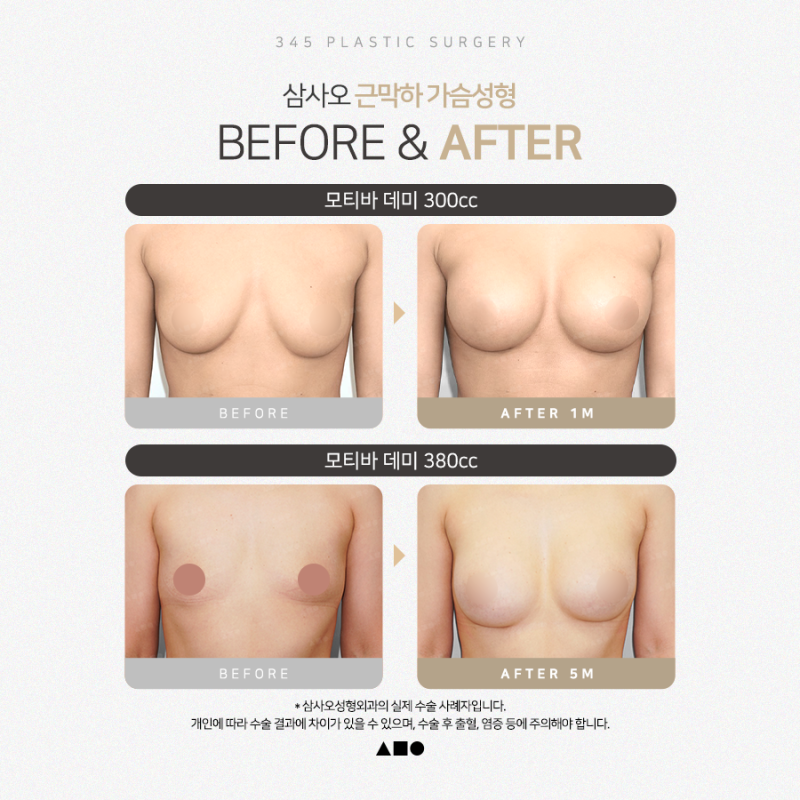
First, let's look at an actual surgical case in which Samsao Plastic Surgery performed subfascial breast augmentation.
In this case, an implant was inserted into a breast that previously lacked volume to add fullness, and the results show a more natural breast contour.
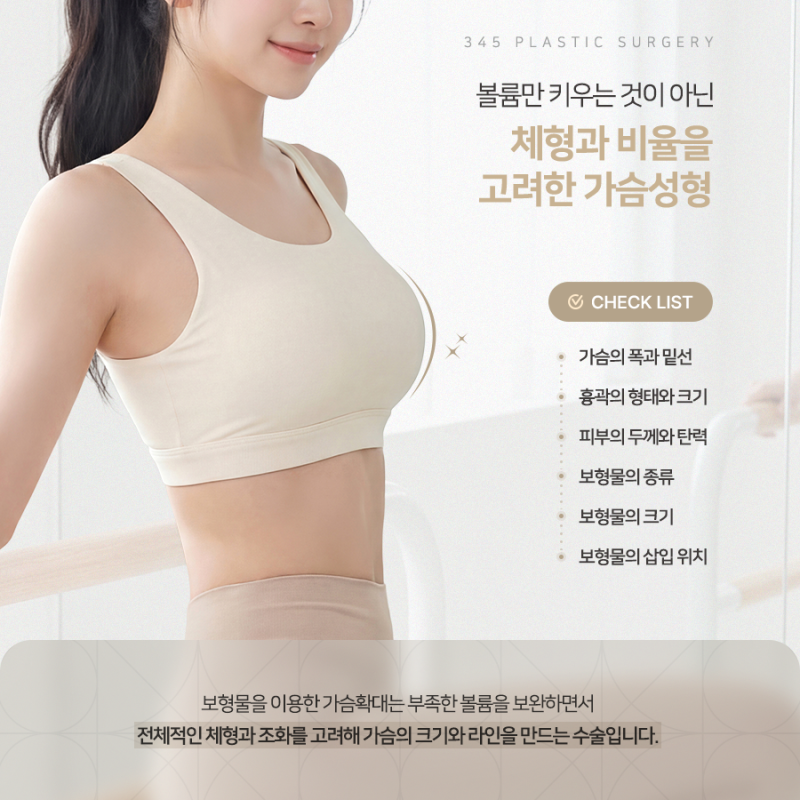
Breast augmentation is not simply about increasing breast size. The process of creating overall harmony based on each person's body shape and proportions is what matters most.
Even when implants of the same size are used, the final result may differ depending on the shape of the rib cage, skin condition, and the amount of existing breast tissue.
Therefore, when planning breast augmentation, it is important to evaluate the comprehensive picture: the width and inframammary fold of the breast, the shape and size of the rib cage, skin thickness and elasticity, the type and size of the implant, and the placement position.
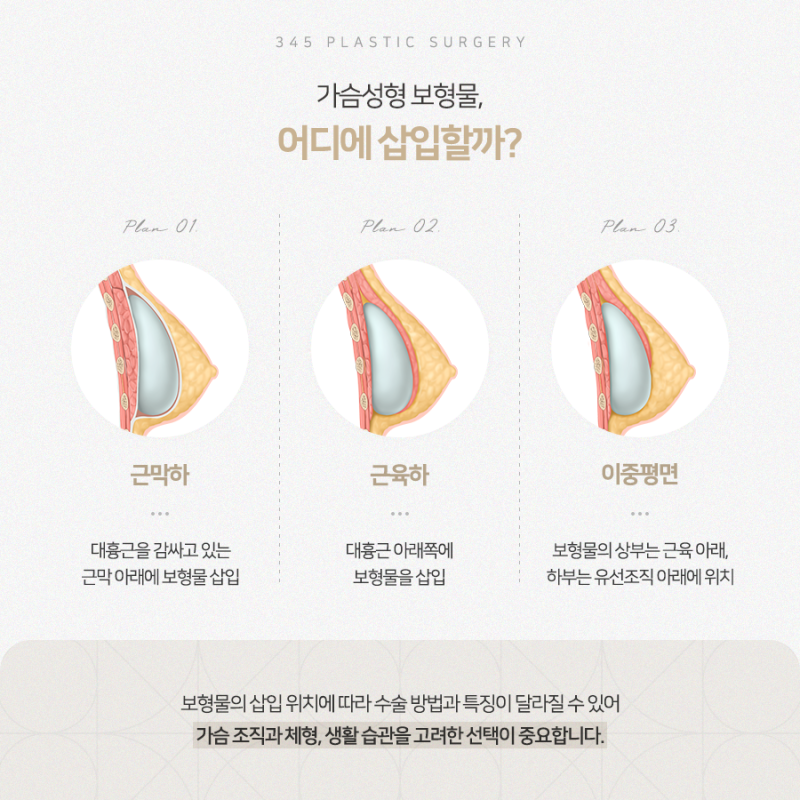
Breast augmentation can be classified by implant placement into subfascial, submuscular, and dual-plane approaches.
The subfascial approach places the implant beneath the fascia that covers the pectoralis major muscle, but above the muscle itself, which helps reduce dissection of the muscle.
The submuscular approach places the implant beneath the pectoralis major muscle.
The dual-plane approach positions the upper part of the implant beneath the muscle and the lower part beneath the breast gland tissue, combining the characteristics of both tissues.
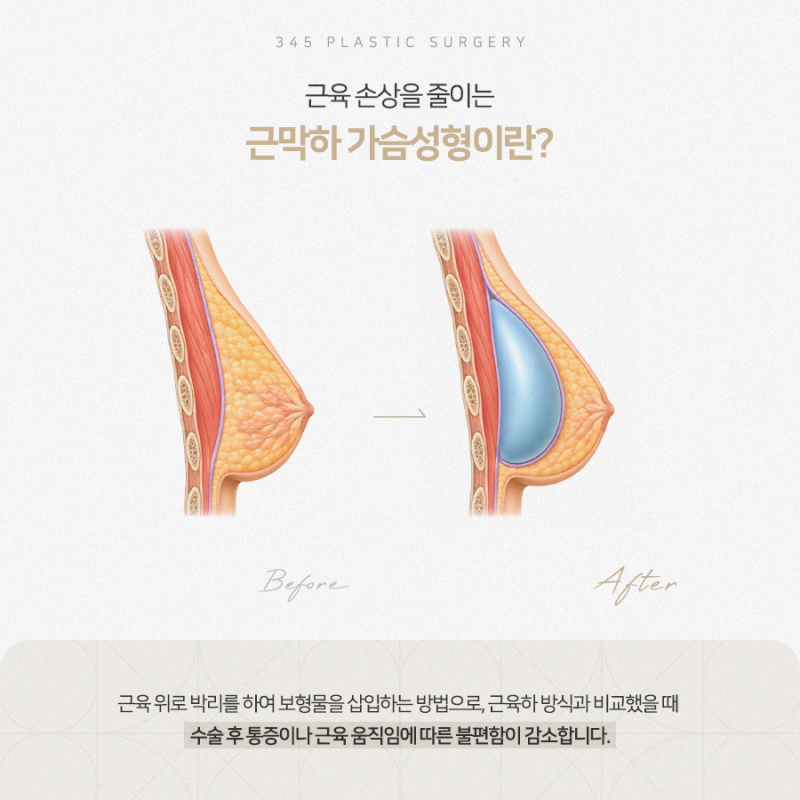
Among these, subfascial breast augmentation is a surgical method in which the implant is inserted beneath the fascia covering the pectoralis major, rather than dissecting the muscle directly.
Because the implant sits above the muscle, this approach is known for reducing direct damage to the pectoralis major compared with the submuscular approach.
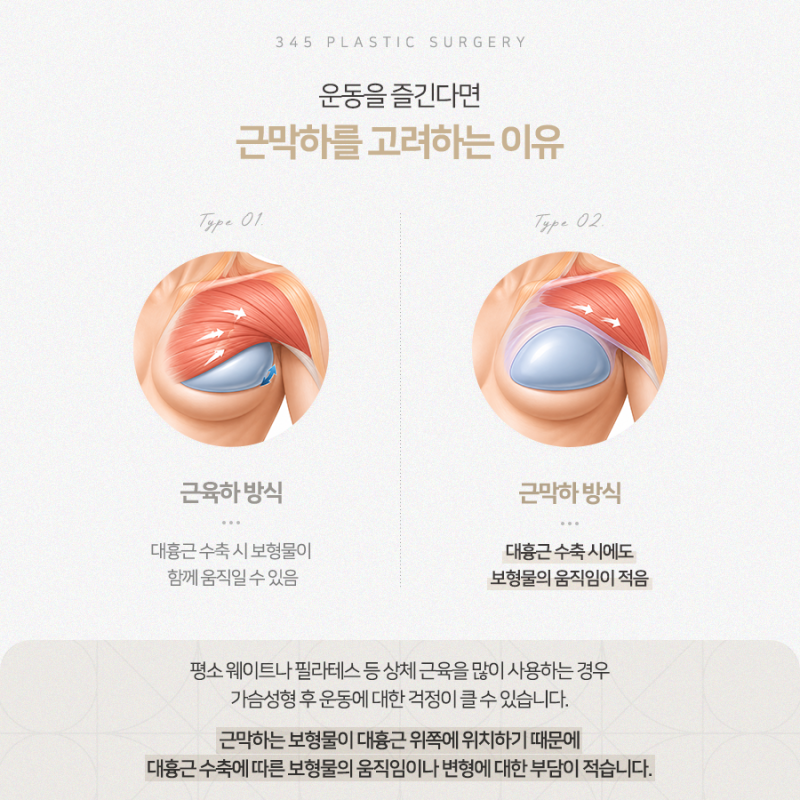
If you enjoy exercises that heavily use your upper body muscles, it is also worth considering how muscle movement interacts with the implant after surgery.
With the submuscular approach, because the implant sits beneath the pectoralis major, it may move along with the muscle when it contracts, or the breast shape may change temporarily.
In contrast, with the subfascial approach, because the implant sits above the pectoralis major, movement or deformation caused by muscle contraction is relatively minimal.
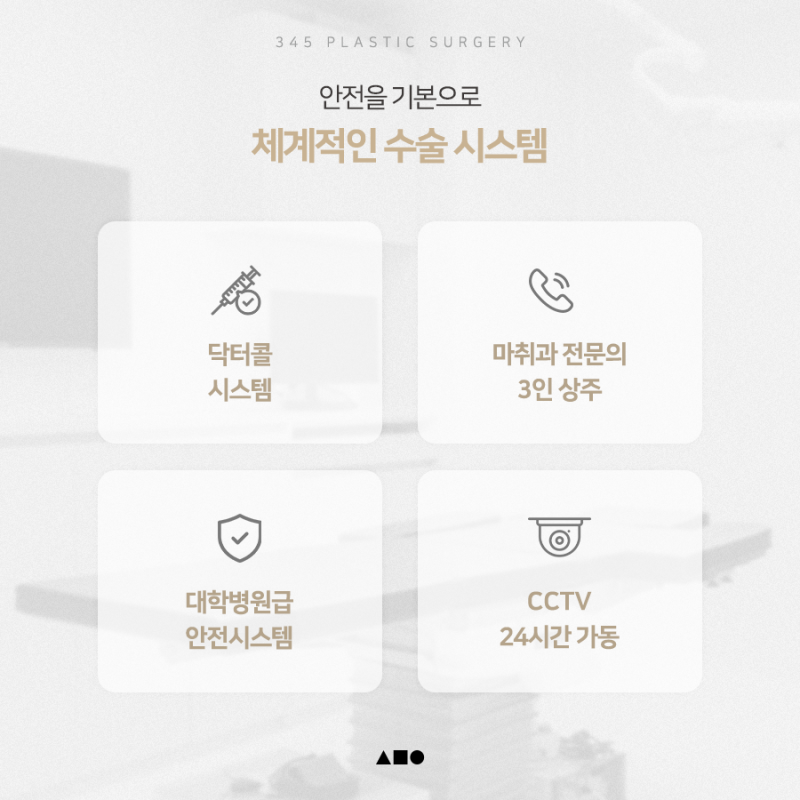
The type and placement of the implant are important, but so is overall safety management, from pre-surgery planning and anesthesia to post-surgery recovery.
Samsao Plastic Surgery operates a range of safety systems to provide a more systematic surgical environment.
To prepare for emergencies during procedures, the clinic has a Dr. Call system and dantrolene on hand, and it operates with three board-certified anesthesiologists on staff.

Chief Director Han Gyu-nam of Samsao Plastic Surgery draws on 21 years of surgical experience to plan each operation around the patient's physical condition and desired direction.
Are you looking for a breast line that goes beyond simply adding volume and harmonizes with your body shape? We encourage you to visit the clinic for a detailed consultation 🤎
Thank you 😊



Frequently Asked Questions
Can I keep working out after breast augmentation if I love exercise?
Whether you can maintain your exercise habits depends on your body type and physical condition, so it is difficult to give a definitive answer. The clinic explains that for those who frequently use their upper body muscles, such as in weight training or Pilates, the relationship between muscle movement and the implant should be considered during the surgical planning stage.
What is subfascial breast augmentation?
This method places the implant beneath the fascia covering the pectoralis major muscle and above the muscle. The clinic explains that, rather than dissecting the pectoralis major directly, placing the implant beneath the fascia can help reduce direct damage to the muscle.
How are implant placement positions classified?
Implant placement can be classified into subfascial, submuscular, and dual-plane approaches. The subfascial approach places the implant beneath the fascia covering the pectoralis major and above the muscle, while the submuscular approach places it beneath the muscle. The dual-plane approach places the upper portion beneath the muscle and the lower portion beneath the breast gland tissue.
Is there a difference between subfascial and submuscular approaches during exercise?
Yes, there may be differences. With the submuscular approach, the implant may move along with the pectoralis major when it contracts, or the breast shape may change temporarily. With the subfascial approach, because the implant sits above the muscle, movement or deformation caused by muscle contraction is said to be relatively minimal.
How is safety managed during breast augmentation?
The article explains that breast augmentation requires comprehensive safety management, from pre-surgery planning and anesthesia to post-surgery recovery. It states that the clinic has a Dr. Call system and dantrolene on hand for emergencies, and that three board-certified anesthesiologists are on staff.