2026-06-04
How to Choose the Right SMAS Lifting for You: Types of Facelifts and Precautions
Are you considering SMAS lifting to resolve skin aging and sagging? Check out this guide filled with professional plastic surgery information, from the differences between a mini facelift and a full facelift, to Botox and filler treatment cycles, neck wrinkle improvement methods, and the best time to diet to enhance lifting effects.

Many people consider SMAS lifting to improve skin sagging and wrinkles that occur with age. However, since there are various types of lifting procedures and the most suitable method varies depending on an individual's skin condition, it is important to plan based on systematic information. Today, we summarize the key points that patients are most curious about, from facelifts to treatment cycles.
1. How Should I Choose the Right Lifting Surgery for Me?
Plastic surgery does not have a single correct answer; rather, it is a process of finding the optimal method based on each patient's areas of concern and desired level of improvement. It can be broadly divided into a mini facelift and a full facelift.

- Mini Facelift: Suitable for those who want to minimize scarring by reducing the incision area, or those who want to improve mild sagging in specific areas.
- Full Facelift: Recommended for those who want to address their overall facial contour and deep wrinkles all at once.
When determining the scope of the surgery, you should carefully consider your sensitivity to scarring and the recovery period. It is best to consult with your surgeon to decide whether to proceed in stages or improve a large area all at once.
2. Proper Treatment Cycles and Resistance Management for Botox and Fillers
Botox and fillers are commonly performed before and after lifting surgeries. However, indiscriminate repeated treatments can lead to a side effect known as 'resistance.'

- Botox: The duration varies depending on the frequency of muscle use, but to prevent resistance, it is recommended to receive treatments at intervals of at least 3 months.
- Filler: The duration varies widely depending on the treatment area and injection depth. You should consult with a specialist to plan a retreatment at an appropriate time before the filler is completely absorbed or its shape deforms.
3. Horizontal vs. Vertical Neck Wrinkles: Customized Solutions by Cause
The method for improving neck wrinkles completely changes depending on the cause. Identifying what type of neck wrinkles you have is the first priority.
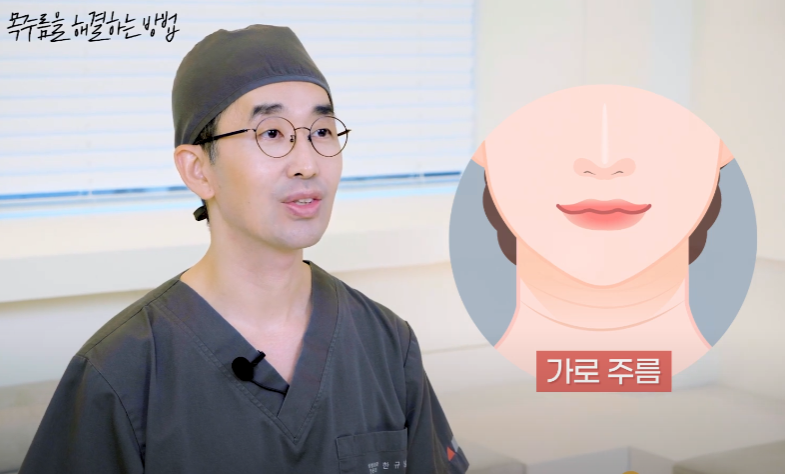
- Horizontal Wrinkles: These are mainly caused by congenital structures or lifestyle habits. They can be difficult to improve with lifting surgery alone, so volume supplementation through fillers is primarily utilized.
- Vertical Wrinkles: Contraction of the platysma muscle or skin sagging is the main cause. Elasticity can be restored by relaxing the muscles with Botox or, in cases of severe sagging, through SMAS lifting surgery.
4. Expected Changes and Concurrent Procedures After a Facelift
A facelift helps improve sagging areas by pulling from the superficial musculoaponeurotic system (SMAS) layer beneath the skin. However, surgery alone may not resolve all fine lines or lost volume.
After the overall contour is refined immediately following surgery, if you still notice fine lines or a lack of volume, you can achieve smoother results by combining adjunctive procedures such as fat grafting, fillers, or Botox.
5. The Best Time to Diet for Successful Lifting
Weight changes directly affect lifting results. If you are planning a diet, when is the best time to do it—before or after surgery?

It is highly recommended to finish your diet first before undergoing surgery. If you lose weight rapidly after surgery, the loss of volume can make your skin look sagging again. Proceeding with the surgery by accurately measuring the excess skin at your most stable weight ensures that satisfactory results are maintained for a long time.
Frequently Asked Questions
What is the difference between a mini facelift and a full facelift?
There are differences in the incision range and the purpose of improvement. A mini facelift is suitable for minimizing scars by reducing the incision range and improving mild sagging in specific areas, while a full facelift is recommended when you want to address the entire facial line and deep wrinkles at once.
How often should I get Botox injections?
It is recommended to receive treatments at intervals of at least 3 months. If treatments are repeated indiscriminately, side effects such as resistance can occur, so it is very important to maintain an appropriate cycle considering the frequency of muscle use and the duration of the effect.
How are horizontal and vertical neck wrinkles treated?
The treatment methods differ completely depending on the cause of the wrinkles. Horizontal wrinkles caused by congenital factors or lifestyle habits are mainly improved by supplementing volume with fillers. On the other hand, vertical wrinkles caused by muscle contraction or sagging are treated by relaxing the muscles with Botox or restoring elasticity through SMAS lifting surgery.
Is it okay to diet after a facelift?
It is recommended to complete all dieting before undergoing surgery. This is because if you lose weight rapidly after surgery, the volume of your face may decrease, causing the tightened skin to appear saggy again. Undergoing surgery at your most stable weight will help maintain satisfactory results for a long time.
Will all wrinkles completely disappear with a facelift alone?
Surgery alone may not completely resolve all fine wrinkles or sunken volume. After improving overall sagging and facial lines with SMAS lifting, if you still feel fine wrinkles or lack of volume, you can achieve smoother results by combining supplementary procedures such as fat grafting, fillers, or Botox.