2026-06-04
'Gwang-fting' (Zygoma Lifting) to Prevent Cheek Sagging After Zygoma Reduction: How to Achieve a 3D Facial Contour
To address concerns about cheek sagging after zygoma surgery, we introduce 'Gwang-fting' (Zygoma Lifting), a procedure that combines zygoma reduction with a lifting treatment. We explain how 345 Plastic Surgery's double-adhesion technology allows you to achieve a slim cheekbone line and firm skin simultaneously, along with customized solutions for different age groups.
Cheek Sagging After Zygoma Surgery: Why Does It Happen and How Can It Be Prevented?
Just as the beauty of a mountain comes from its curves, the natural beauty of a face is emphasized when adequate volume and smooth lines are in harmony. In particular, the cheekbones (zygoma) can change an impression to be sophisticated or rugged with even the slightest difference, which is why many people consider zygoma surgery (zygoma reduction).
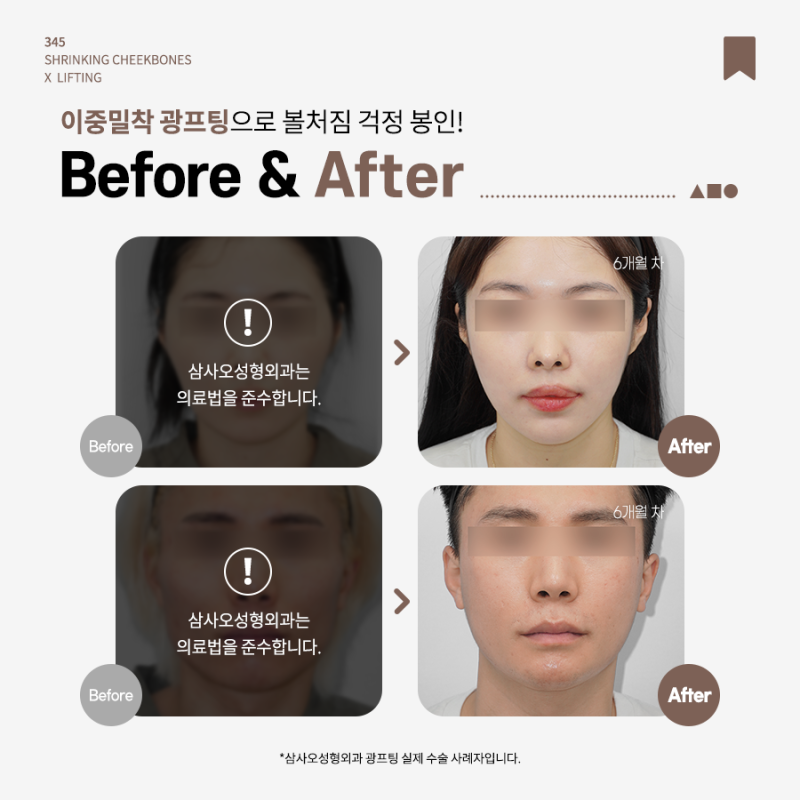
However, when looking at zygoma reduction reviews, you can often find concerns about 'cheek sagging.' This is due to the phenomenon where the remaining soft tissues are pushed downward as the bone volume decreases. To resolve this concern, 345 Plastic Surgery proposes 'Double-Adhesion Gwang-fting', which combines zygoma reduction and lifting.
Core Principles and Effects of 345's 'Double-Adhesion Gwang-fting'
Double-Adhesion Gwang-fting is an exclusive program that goes beyond simply reducing the size of the cheekbones; it manages the skin and fascial layers simultaneously during the surgical process to lower the risk of cheek sagging.
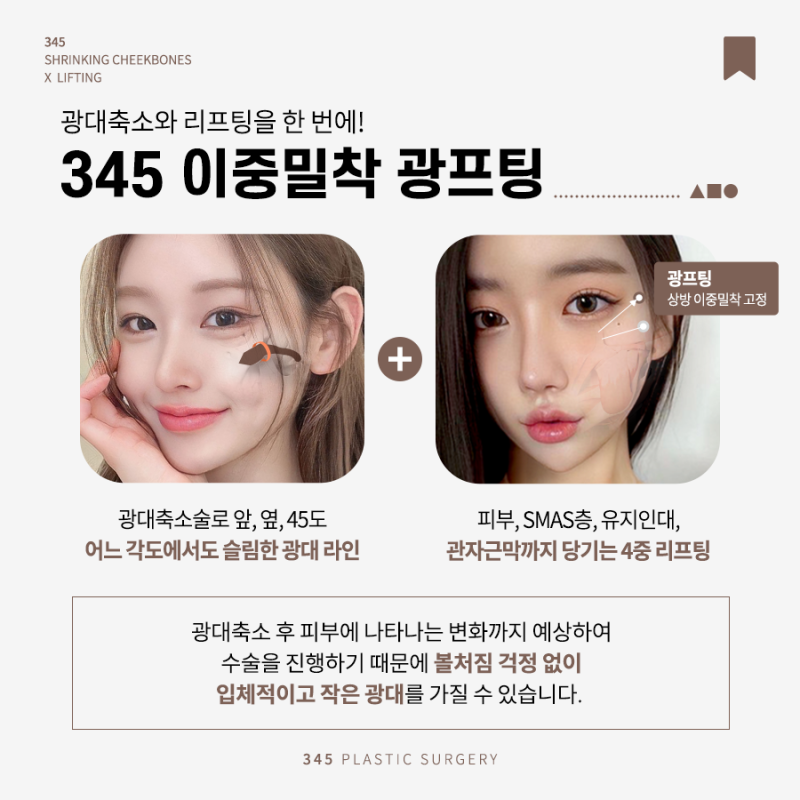
- 4-Stage Lifting System: It precisely pulls in four stages—skin, SMAS (fascia) layer, retaining ligaments, and temporal fascia—to form a three-dimensional facial contour.
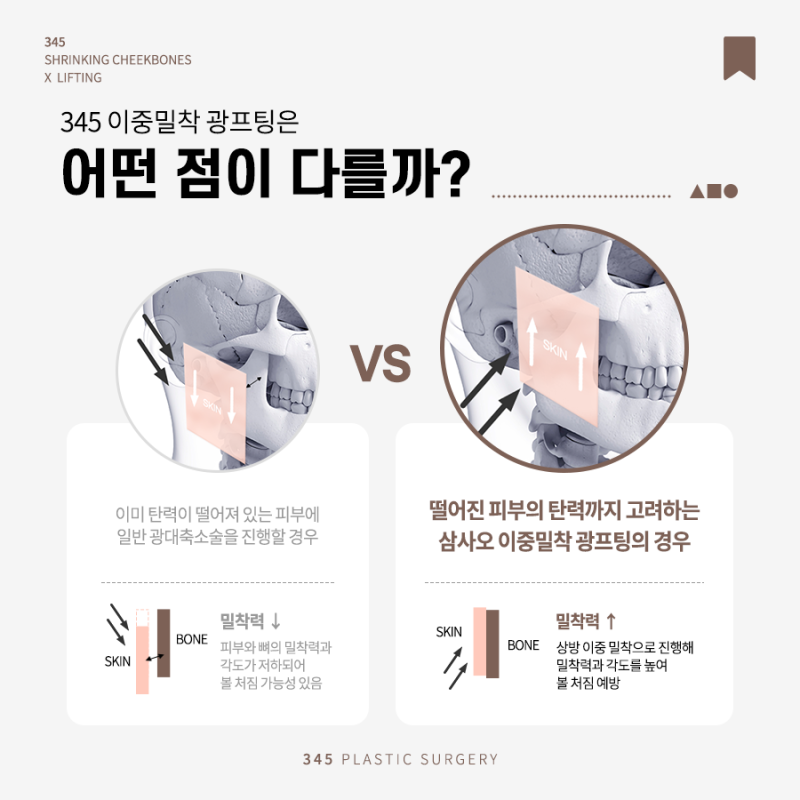
- Upward Double Adhesion: By increasing the adhesion and angle upwards for fixation, it induces the skin to adhere stably to the bone, helping to prevent cheek sagging.
- Creation of Artificial Retaining Ligaments: By matching the dissection range of the zygoma surgery and mini-lifting, it induces natural adhesion, through which an increased adhesion effect between the skin and bone can be expected.
Customized Lifting Program Composition by Age
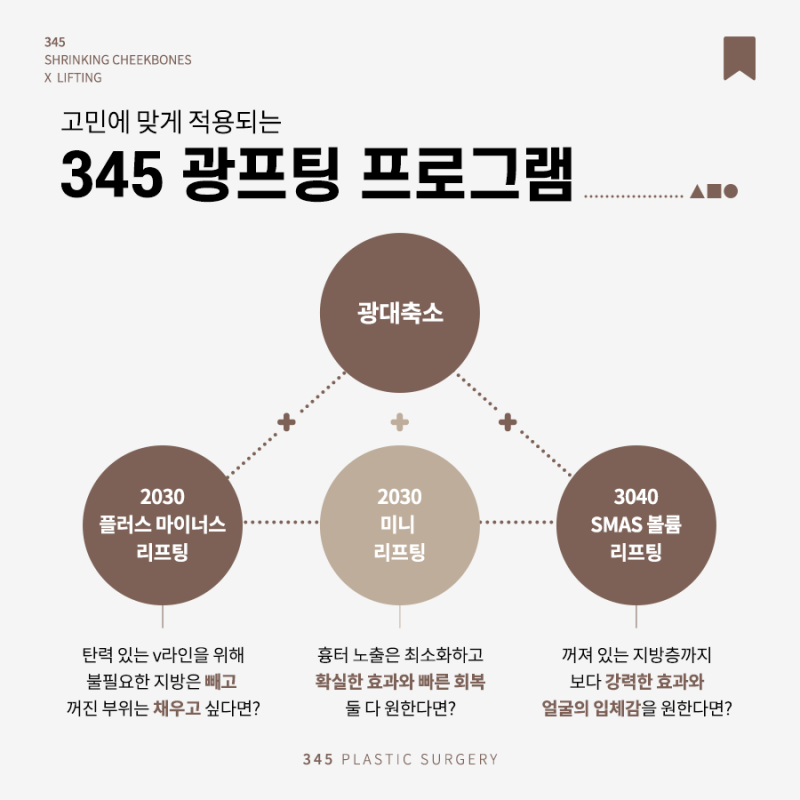
The appropriate lifting method must vary depending on each patient's skin elasticity and aging status. 345 Plastic Surgery provides a segmented, customized program.
- 20s and 30s: 'Plus-Minus Lifting', which removes unnecessary fat and fills sunken areas, or 'Mini Lifting', which reduces concerns about scarring, may be suitable.
- 30s and 40s: SMAS (fascia) Volume Lifting is recommended for a powerful improvement effect and three-dimensionality, and is suitable when a loss of elasticity is noticeable.
Professional Collaborative Practice and Systematic Aftercare
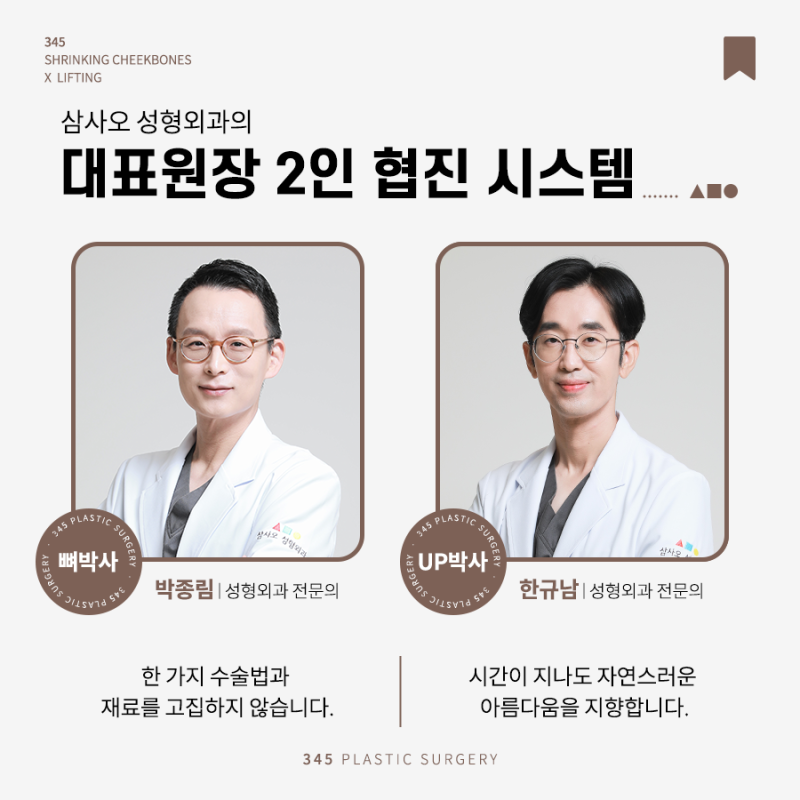
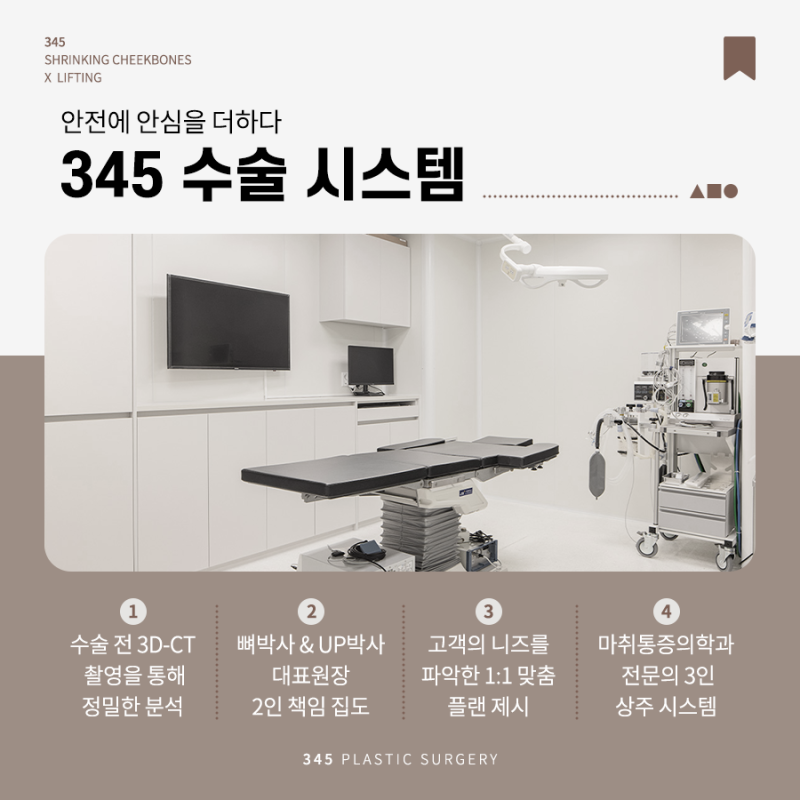
Gwang-fting is conducted through a collaborative system between Chief Director Park Jong-rim, who is well-versed in facial bone structure, and Chief Director Han Kyu-nam, a key doctor in lifting. This is to pursue both functional safety and aesthetic perfection simultaneously.
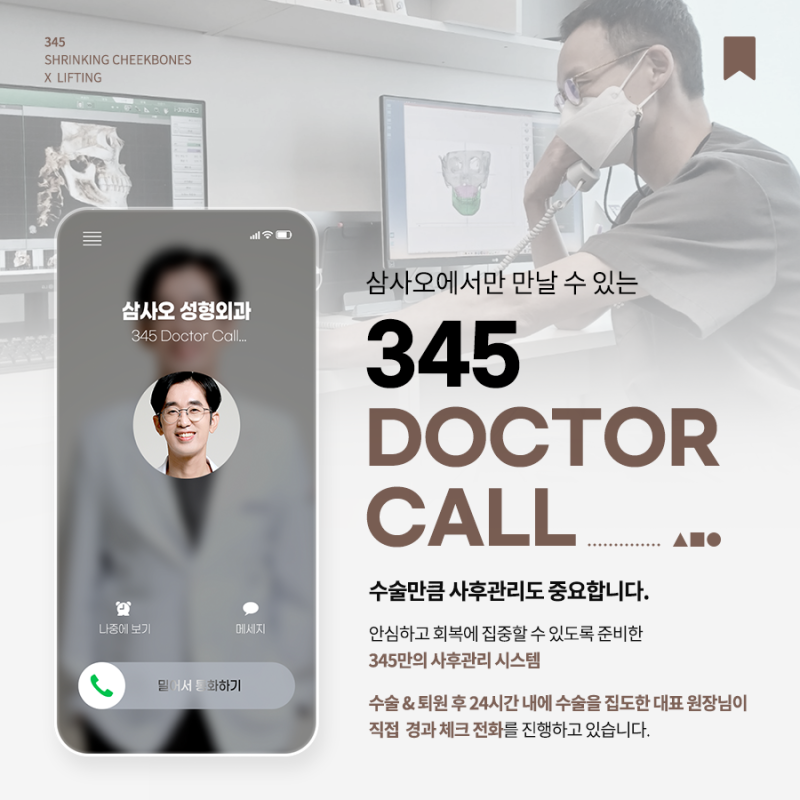
In addition, we operate a dedicated care system where the operating surgeon personally calls within 24 hours after surgery to check the progress and resolve any of the patient's questions. 'Gwang-fting', which has completed trademark registration, is a proven surgical method that can only be found at 345 Plastic Surgery.
If you cannot give up either a slim facial line or elasticity, we hope you experience a positive recovery and transformation through a solution that combines precise zygoma reduction and powerful lifting.



Frequently Asked Questions
Why does cheek sagging occur after zygoma reduction surgery?
Cheek sagging occurs because the remaining soft tissues are pushed downwards as the bone volume decreases. When the size of the cheekbones is reduced, the space for the skin and tissues to be supported decreases, and they can sag due to the effects of gravity.
How is Kwangfting surgery different from general zygoma reduction surgery?
Kwangfting surgery differs in that it performs zygoma reduction and lifting simultaneously to prevent cheek sagging. It meticulously pulls the skin, SMAS layer, retaining ligaments, and temporal fascia in four stages, helping the bone and skin adhere stably.
Are different lifting methods applied for different age groups?
Yes, it is customized according to the patient's skin elasticity and aging status. For those in their 20s and 30s, methods that remove unnecessary fat and fill sunken areas or mini-lifting are recommended, while for those in their 30s and 40s, fascial volume lifting is recommended for powerful improvement.
What kind of post-operative care is provided after surgery?
Within 24 hours after surgery, the surgeon directly calls to check on the progress. We operate a dedicated management system that meticulously checks the patient's condition and resolves any questions, helping with a safe recovery.
Can Kwangfting be performed at any hospital?
No. Kwangfting is a proprietary surgical method for which trademark registration has been completed, and it can only be performed at 345 Plastic Surgery Clinic. It is performed through a collaborative system between a facial bone structure specialist and a lifting specialist.