2026-06-04
Comprehensive Guide to Anterior Chin Surgery Types and Characteristics: Differences from V-Line Osteotomy to Round Cutting
Anterior chin surgery can easily cause confusion due to the various names used by different clinics. From a medical professional's perspective, we provide a detailed overview of the characteristics and differences of each procedure, such as long curve osteotomy, round cutting, and V-line osteotomy, as well as the causes and improvement methods for post-operative skin sagging.
Why Does Anterior Chin Surgery Have Different Names at Every Clinic?
When considering anterior chin surgery (genioplasty) and researching information, it is common to feel confused because the terminology used varies from clinic to clinic. Various names such as 'round cutting', 'V-line osteotomy', and 'long curve osteotomy' actually reflect differences in the scope of the osteotomy and the direction of movement.
To choose the most suitable surgical method for yourself, you must clearly understand the exact surgical technique each term implies and its expected effects. Today, we will take a detailed look at the main types and differences of anterior chin surgery.
Detailed Comparison of 4 Main Anterior Chin Surgery Methods
Surgery to change the shape of the anterior chin goes beyond simply shaving the bone; it is performed considering the position of the nerve line and the overall harmony of the face.
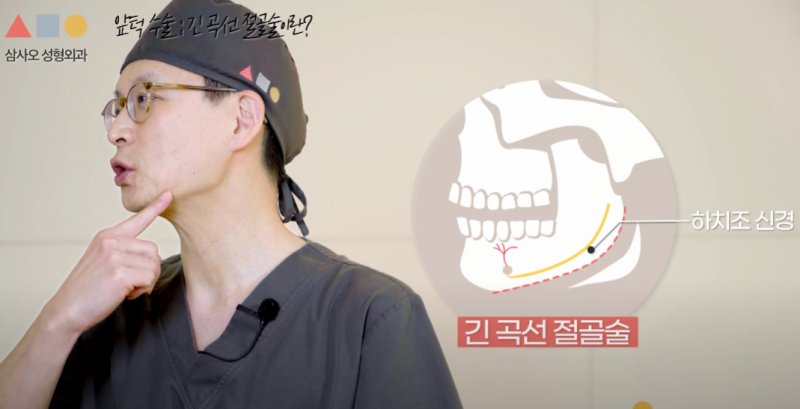
1. Long Curve Osteotomy
Long curve osteotomy is a method of making a long cut up to just before the area where the inferior alveolar nerve (lower alveolar nerve) emerges during square jaw surgery. It smoothly connects the square jaw to the vicinity of the anterior chin, but it does not directly change the width or position of the anterior chin itself. Therefore, it focuses on refining the side jawline rather than changing the shape of the anterior chin.
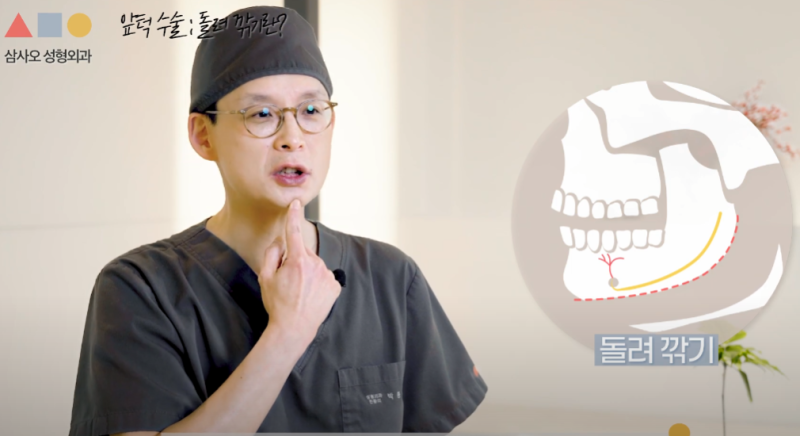
2. Round Cutting
Round cutting is a method of refining the overall jawline by performing an osteotomy up to the front of the opening where the inferior alveolar nerve emerges. It is effective in reducing the width of the anterior chin to create a slimmer look. However, there are limitations in moving the chin forward or backward or adjusting its length, and it is primarily focused on reducing the overall width of the facial contour.
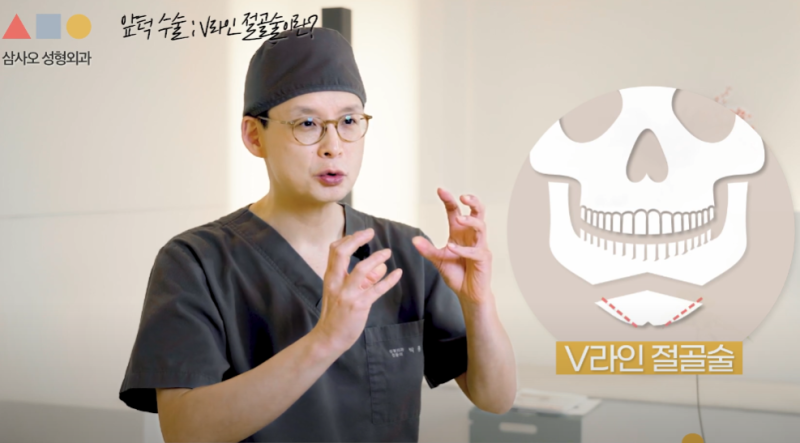
3. V-line Osteotomy
This is the most proactive method that combines anterior chin osteotomy and square jaw osteotomy. Because the anterior chin bone is cut and then repositioned, moving it forward (advancement), moving it backward (setback), correcting left-right asymmetry, and adjusting the length are all possible. Harmonious changes can be expected, but medical screws and plates are used to fix the cut bones in place.
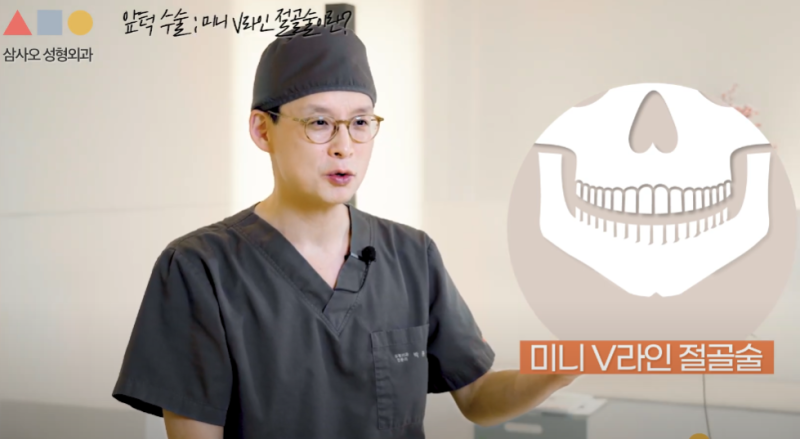
4. Mini V-line Osteotomy
This is suitable when the square jaw is not overly developed, but you only want to improve the shape of the anterior chin. It intensively corrects only the anterior chin area without a square jaw osteotomy, and it is a method that reduces the burden of recovery by combining minimal resection so that it connects naturally with the existing jawline.
Preventing Post-Operative Skin Sagging and 'Witch's Chin'
One of the main concerns for many people after anterior chin surgery is skin sagging. This is a phenomenon that can occur when the muscle and skin tissue covering the bone remain in excess as the bone volume decreases.
- When the amount of bone movement is large: If the chin is excessively set back or its length is reduced, excess skin may remain, leading to a decrease in elasticity.
- Muscle adaptation issues: If the muscles fail to settle into their new positions despite the change in bone placement, movements may become unnatural, or a 'witch's chin' symptom, where the tip of the chin droops, may appear.
In such cases, performing liposuction after surgery to remove the remaining fat layer and improve tissue adhesion, or combining it with lifting procedures like Shurink or Ultherapy to improve skin elasticity, will aid in a favorable recovery.
Conclusion: How to Choose the Right Anterior Chin Surgery for You
In anterior chin surgery, simply shaving off a lot of bone is not the right answer. The optimal osteotomy method must be selected by considering each individual's different nerve line position, skin elasticity, and overall facial proportions. For highly satisfying results, the priority is to accurately understand your own skeletal structure through sufficient consultation with an experienced specialist.
Frequently Asked Questions
What is the difference between contouring osteotomy and V-line osteotomy?
Contouring osteotomy focuses on reducing width, while V-line osteotomy allows for anterior-posterior movement and length adjustment of the jaw. Contouring osteotomy is a method of refining the overall jawline, whereas V-line osteotomy involves cutting and repositioning the chin bone, making it effective for correcting asymmetry and fixed with medical screws.
Does long curve osteotomy change the shape of the chin?
No, it does not directly change the width or position of the chin itself. Long curve osteotomy is a procedure that involves a long incision from the square jaw to near the chin to create a smooth connection, focusing on refining the side jawline rather than changing the chin's shape.
Can I have only chin surgery without touching the square jaw?
Yes, you can have only chin surgery through mini V-line osteotomy. This is suitable for cases where the square jaw is not developed, and only the chin shape needs improvement, allowing for focused correction of the chin area without square jaw osteotomy, thereby reducing recovery burden.
Can skin sagging or a witch's chin occur after chin surgery?
Yes, as bone volume decreases, sagging or a witch's chin can occur due to issues with the adaptation of remaining skin tissue or muscles. To prevent and improve this, it is helpful to combine liposuction to remove remaining fat layers or lifting procedures like Shurink or Ultherapy after surgery.