2026-10-09
Facelift: Why Recovery Time Differs Even for the Same Procedure?
Explains what shapes facelift results and recovery time, including SMAS tightening and retaining ligament release, the typical healing timeline, and personal factors that affect swelling and bruising.

Hello, this is Samsao Plastic Surgery Clinic.
One of the most common questions from people considering a facelift concerns the surgical results and the recovery period.
Since a facelift lifts sagging tissue, both the surgical approach and each patient's condition can affect the recovery process.
Today, I will walk you through the key points we prioritize for good results, the factors to consider when planning a facelift, and the recovery process after surgery, in order.

1. What are the conditions for achieving good surgical results?
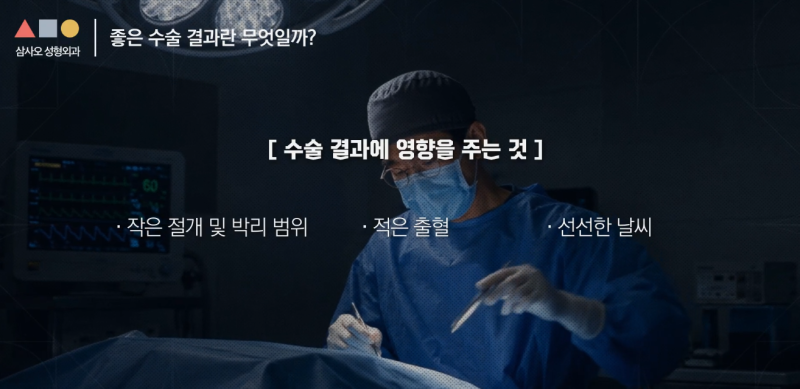
In general, there are several principles to follow in order to achieve good results.
For example, keeping incisions as short as possible, dissecting only as far as necessary, and minimizing variables such as bleeding during the procedure.
During recovery, several other factors can also influence the outcome. For instance, a relatively cool climate is more helpful than extremely hot weather.

But if I had to describe it in one phrase from the surgeon's perspective, I believe it is extremely important for the surgery to proceed smoothly and naturally and to be completed as planned.
This means the procedure moves forward without unnecessary steps, the patient remains comfortable throughout the operation, and the surgery is completed according to the original plan without any particular problems.
2. What are the key points in facelift surgery?
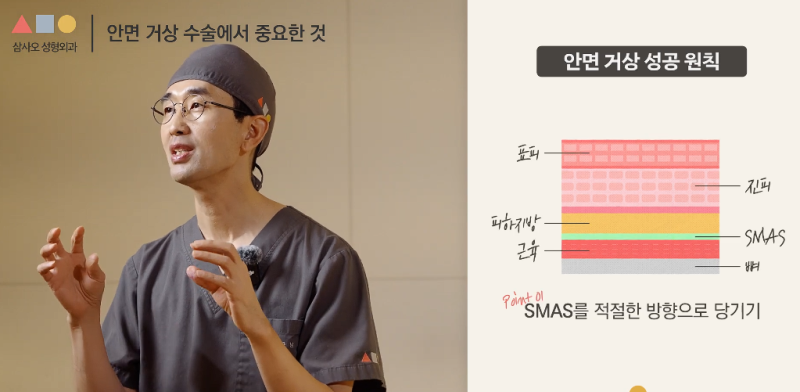
As the name suggests, a facelift is a procedure that lifts and pulls up sagging tissue.
For this reason, good results can only be expected when the tissue moves freely and is pulled smoothly without catching on anything.
To achieve this, one of the key layers we focus on is the SMAS layer.
As is commonly known, it is important to pull the SMAS sufficiently, and alongside it, the retaining ligaments must also be taken into account.
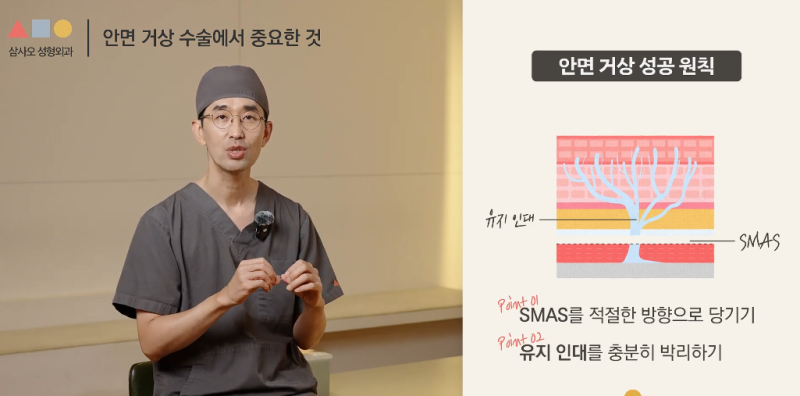
Our face contains structures that anchor tissue to the lower areas and restrict its movement. These are called retaining ligaments.
To pull the SMAS adequately, these anchored areas need to be appropriately released.
When the retaining ligaments are fully dissected and the tissue is then pulled and secured in the required direction, a smoother result can be expected.
Ultimately, in facelift surgery, what matters is applying two principles, pulling the SMAS appropriately and fully dissecting the retaining ligaments, in a way that suits each patient's condition.
3. How long does it take to recover after a facelift?

Even for a relatively simple procedure, the tissue needs about six months to recover and settle stably.
However, the "recovery period" that patients have in mind may mean something slightly different.
For most people, recovery means reaching the point where they can carry on with daily life without major difficulty, much as they did before surgery.

Some bruising or traces of the incision may remain. However, assuming stitches are removed about 10 days after surgery, most people can go out and resume daily activities after about two weeks.
Of course, even at the two-week mark, your face may still look a little unfamiliar because of swelling.
In our experience, it generally takes about a month for the swelling and the awkward feeling to gradually settle into a natural look.
4. Are there cases where recovery is slower?

Even with the same surgery, some people develop a lot of swelling, while others swell comparatively little.
Assuming the surgeon has completed the procedure well under the same conditions, these differences are largely influenced by the patient's individual factors.
In general, people with weaker tissue may experience swelling and bruising more readily.
Tissue that stretches easily may indicate that it is relatively weak, and the blood vessels and surrounding tissue beneath the skin can also be affected.
If you already have a noticeable difference in swelling between morning and evening, or if you tend to swell easily, you may experience more swelling after surgery as well.

There are many other factors that can affect recovery.
These include taking blood pressure medication, smoking, or having diabetes. Those taking medications related to blood circulation may also be affected.
A typical example is aspirin.
People who have been taking these kinds of medications may experience a somewhat longer recovery period.
Also, if surgery happens to coincide with your menstrual cycle, you may swell slightly more than usual.
In this way, recovery after a facelift is shaped by many factors together, including not only the surgery itself but also whether you tend to swell easily, whether you take any medications, whether you smoke or have any underlying conditions, and how your body is doing at the time of surgery.
A facelift is widely known as a relatively major procedure, so many people considering one worry a lot about recovery.
However, it does not necessarily take a long time before you can go out and resume daily life.
What matters most is accurately assessing your current facial condition and determining the appropriate extent of surgery for you.
If you have been concerned about facelift surgery and recovery, first check the current degree of sagging and the condition of your face, then consult with us to confirm which surgical method and extent are right for you 💚
Thank you 😃



Frequently Asked Questions
How long does recovery usually take after a facelift?
Most people can resume daily activities after about two weeks, while about six months are needed for the tissue to recover and settle stably. This assumes stitches are removed around 10 days after surgery, and swelling generally takes about a month to look natural.
Why does recovery speed differ from person to person for the same surgery?
Assuming the procedure was completed well under the same conditions, differences in swelling and bruising are mainly influenced by individual factors. People with weaker tissue or a tendency to swell easily may experience more swelling. Taking blood pressure medication, smoking, having diabetes, or taking medications related to blood circulation can also affect recovery.
What are the key surgical points in a facelift?
The article explains that two principles are important: pulling the SMAS layer sufficiently and fully releasing the retaining ligaments, both applied according to the patient's condition. Retaining ligaments are structures that anchor tissue to the lower areas and restrict its movement, and releasing them appropriately allows the tissue to be pulled smoothly.
Does the weather affect recovery after surgery?
Yes, the weather after surgery can affect recovery. The article notes that a relatively cool climate is more helpful than very hot weather. It also mentions that if surgery coincides with your menstrual cycle, you may swell slightly more than usual.
What should you check first when considering a facelift?
The article recommends first checking your current degree of sagging and the condition of your face. After that, it advises consulting with a clinic to confirm which surgical method and extent are right for you.