2026-06-04
Facelift Review in Your 60s: The Core of Lifting to Restore Sagging Wrinkles and Jawline
We introduce a real 6-month review of a patient in her 60s who underwent a facelift, forehead lift, and fat repositioning at 345 Plastic Surgery. We explore in detail the features, recovery process, and safety systems of the SMAS facelift, which fundamentally improves sagging and deep wrinkles in the mid-to-lower face.
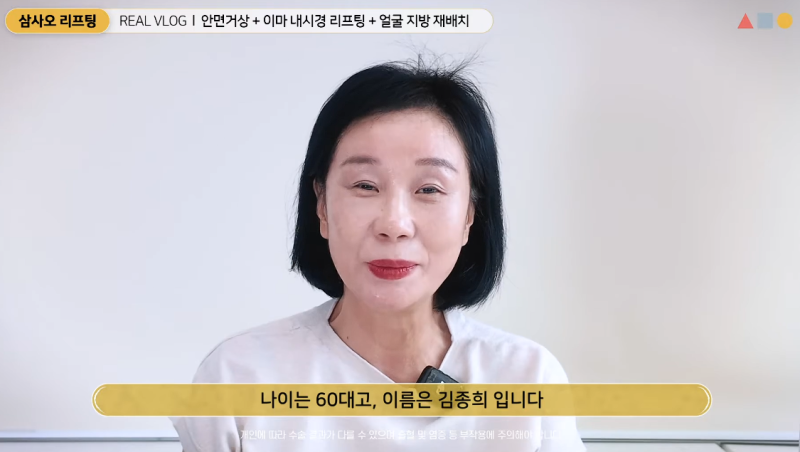
Skin Aging in Your 60s: Why Fundamental Improvement is Needed Over Simple Care
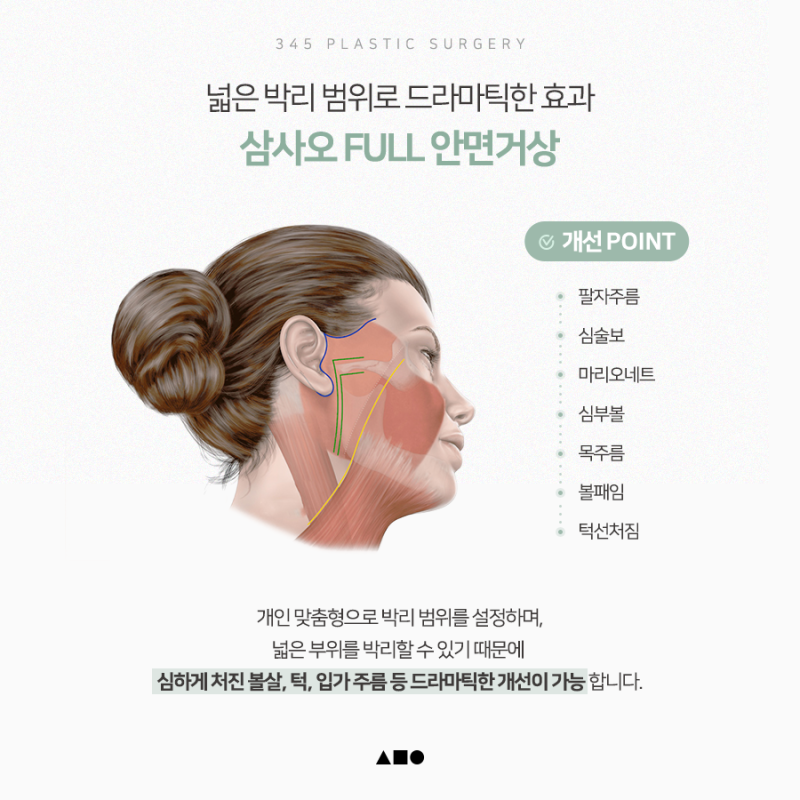
As time passes, the natural sagging of the skin and deepening wrinkles in the mid-to-lower face reach a limit where simple home care or laser lifting alone cannot achieve noticeable improvements. Particularly as you enter your 60s, not only does skin elasticity decrease, but the SMAS (Superficial Musculoaponeurotic System) layer beneath the skin also sags. Therefore, there is a growing interest in facelift surgery that fundamentally lifts these layers.

A facelift does not simply pull the outer surface of the skin; it is a surgery that precisely corrects the deep layers that cause sagging, allowing you to expect natural and long-lasting changes.
Real Case Interview: 6 Months After Facelift and Forehead Lift in Your 60s
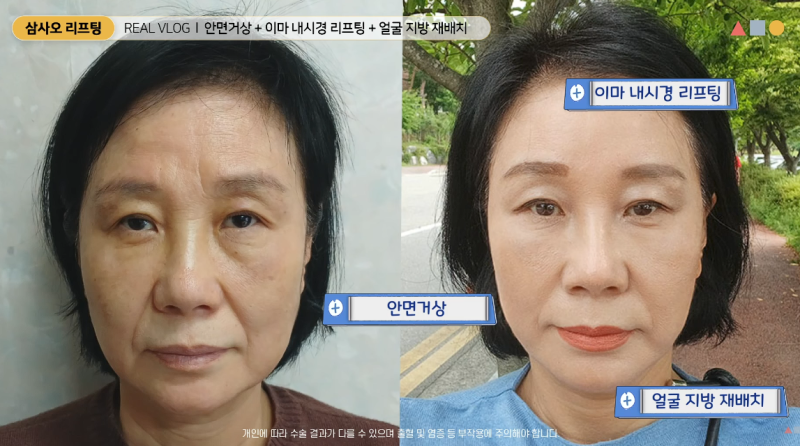
Let's take a look at the actual recovery process and changes through a 6-month progress interview with a patient in her 60s who underwent a facelift, forehead lift, and facial fat repositioning surgery at 345 Plastic Surgery.
Q. What was your main concern that led you to decide on surgery?
Before the surgery, my biggest concerns were my sagging jawline, forehead wrinkles, and under-eye wrinkles. I had been considering a facelift for a long time, and I decided to undergo surgery to regain a vibrant impression before it was too late.
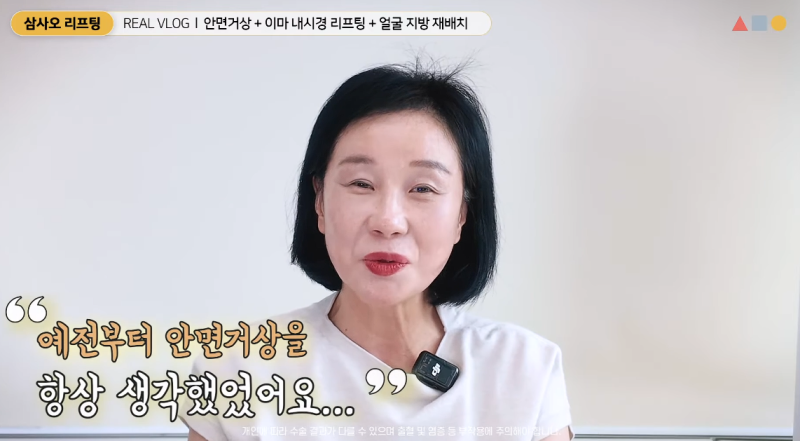
Q. 6 months post-surgery, what changes do you feel?
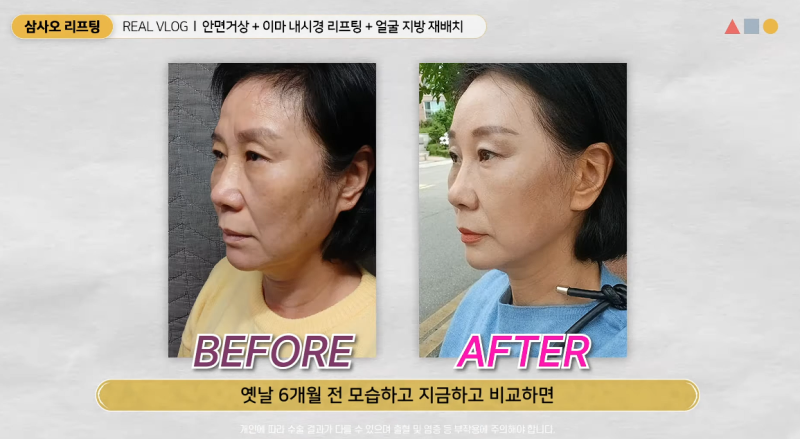
The wrinkles on my forehead, face, and neck have noticeably improved overall. Especially when comparing it to how I looked 6 months ago, I can feel a distinct difference myself. My confidence has been greatly restored as I sometimes hear from people around me that I look like I'm in my late 40s. In the past, I used to wear heavy makeup to hide my wrinkles, but now a natural look is possible with just light makeup, making my daily life much more comfortable.
Facelift Recovery Period and Major Symptoms
Although the recovery period after a facelift varies by individual, it generally goes through the following process:
- 1 Month Post-Surgery: Major swelling gradually begins to subside, and it is a time to adapt to daily life.
- 2-3 Months Post-Surgery: Minor swelling resolves, making your impression much more natural.
- 6 Months Post-Surgery: The surgical area stabilizes, and you can see a refined jawline and smooth skin contours.
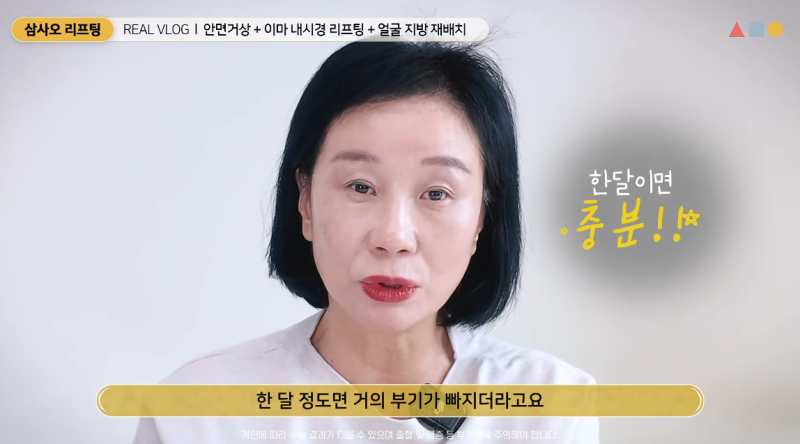
Temporary itching or reduced sensation may occur during the recovery process, but this is one of the symptoms that can appear as the nerves heal. Consistent walks and light massages can help with circulation and have a positive impact on recovery.
Facelift Checklist for Natural Results
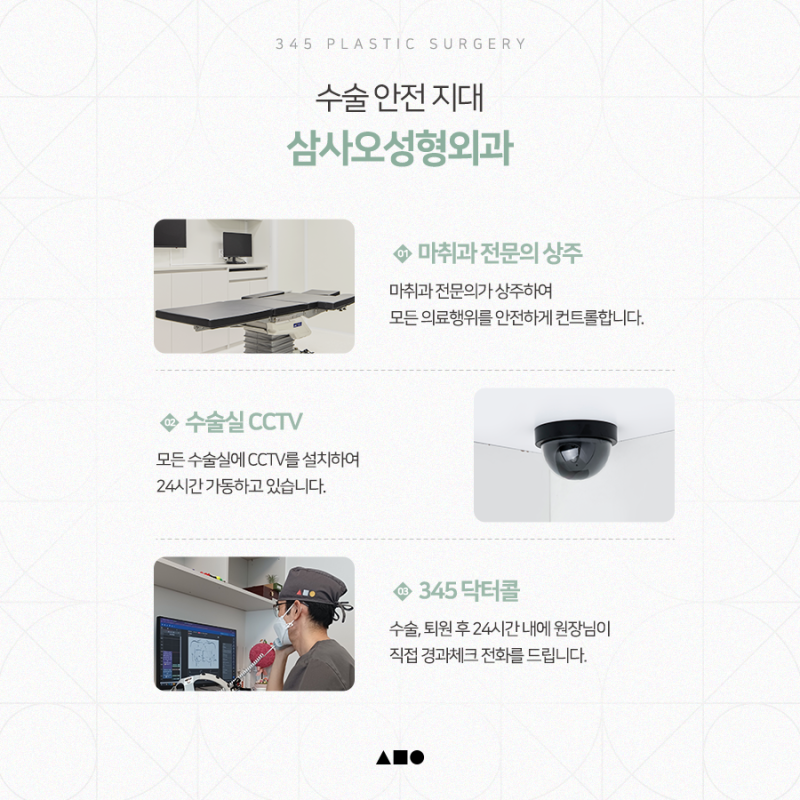
For highly satisfactory facelift results, a systematic safety system is just as important as surgical skill. 345 Plastic Surgery adheres to the following principles:
- In-House Board-Certified Anesthesiologist: We provide a safe surgical environment by monitoring the patient's condition in real-time.
- Operating Room CCTV: We guarantee a transparent surgical process to increase patient trust.
- 24-Hour Doctor Call System: We respond promptly to any questions or emergency situations that may arise after surgery.
A successful facelift is not simply about pulling; it involves precisely analyzing the individual's facial bone structure and degree of sagging to reposition the tissues in the appropriate direction. It is important to establish a surgical plan tailored to you through sufficient consultation with experienced medical staff.
Frequently Asked Questions
How does a 60s facelift differ from general lifting?
Yes, the depth of pulling is different. Unlike general laser lifting, a facelift precisely lifts and corrects not only the outer skin but also the underlying muscle layer (SMAS layer), which is the fundamental cause of sagging, so you can expect a more natural and long-lasting effect.
How long does the recovery period take after a facelift?
It usually takes about 1 to 6 months. Major swelling gradually subsides about 1 month after surgery, and you will adapt to daily life, with residual swelling resolving in 2-3 months. After 6 months, the surgical site will be completely stabilized, and you can see a smooth jawline.
Can I experience itching or decreased sensation after surgery?
Yes, it can occur temporarily. It is one of the natural symptoms that appear as nerves return to normal during the recovery process. Consistent walking and light massage can help blood circulation and positively affect recovery.
What should I check for a safe facelift surgery?
You should check whether an anesthesiologist is present and whether the operating room CCTV is in operation. It is good to check if there is an anesthesiologist who can monitor the patient's condition in real time, and if there is CCTV that ensures a transparent surgical process and a 24-hour doctor call system.