2026-10-21
Does Cheekbone Reduction Surgery Differ by Protrusion Type?
Cheekbone protrusion direction shapes the surgical plan. This post explains three cheekbone types and how double Hyael osteotomy is used in cheekbone reduction surgery.

Hello, this is Samsamo Plastic Surgery.
Facial contour is one of the key factors that shape the overall impression of your face.
The cheekbones, in particular, influence the width and three-dimensional look of the face. If they are well developed or protrude outward, the face may appear wider than it really is or give a stronger impression.
Many people consider cheekbone reduction surgery because of these concerns, but simply reducing the size of the cheekbones is not enough to achieve a natural facial shape. This is because it is important to consider the position and direction of the cheekbone protrusion together with the overall proportions of the face.
Today, we will explore the characteristics of each cheekbone protrusion type and cheekbone reduction surgery using the double Hyael osteotomy.
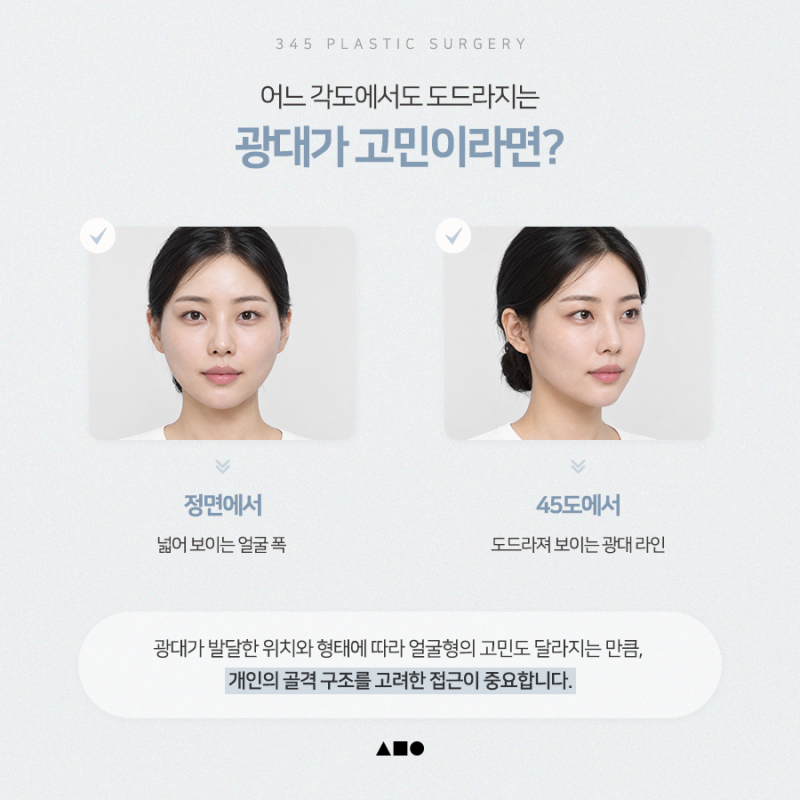
Are you concerned about cheekbones that stand out from every angle?
Cheekbones affect the facial contour in different ways depending on where and in which direction they protrude.
When the cheekbones are prominent from the front, the face looks wider. When they protrude at a 45-degree angle, the contours become more pronounced and can give the face an angular look.
For this reason, cheekbone reduction surgery requires a customized surgical plan that takes into account each person's protrusion pattern and skeletal structure.
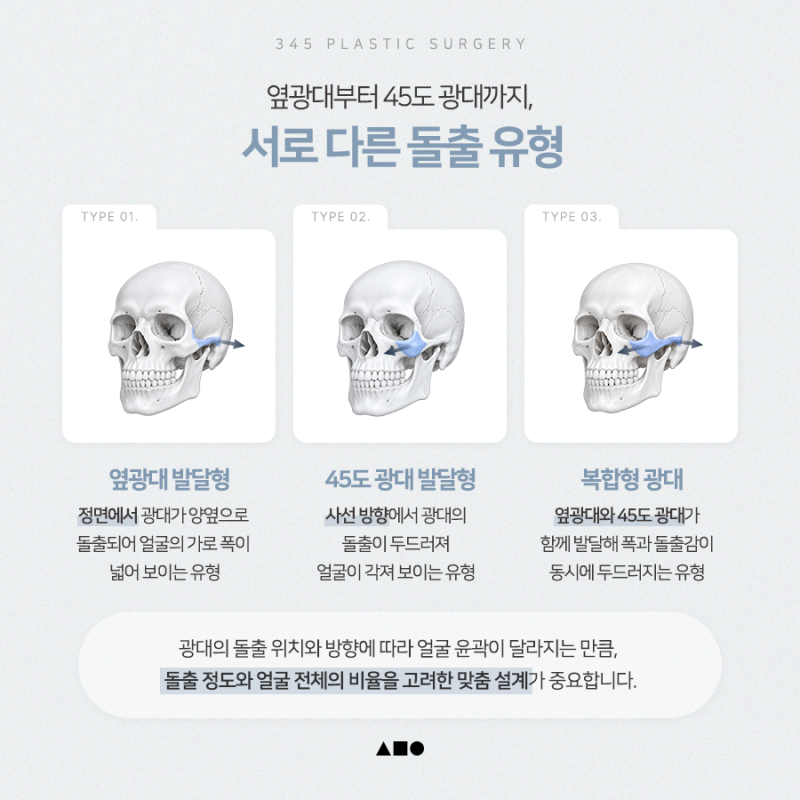
Cheekbones can be broadly divided into three types based on the position and direction of protrusion.
First, lateral cheekbone type
When viewed from the front, the cheekbones protrude to the sides, making the face look wider horizontally.
Second, 45-degree cheekbone type
The cheekbones stand out diagonally, making the face look angular and emphasizing its contours.
Third, combined cheekbone type
Both the lateral and 45-degree cheekbones are well developed together, so both the facial width and the protrusion stand out at the same time.

At Samsamo Plastic Surgery, we perform the double Hyael osteotomy while taking into account each patient's cheekbone protrusion pattern and skeletal structure.
The double Hyael osteotomy is a surgical method that cuts the cheekbone at a more angled direction than conventional techniques, helping to achieve three-dimensional repositioning.
In particular, through a high Hyael osteotomy, we plan a reduction that also accounts for the protrusion of the 45-degree cheekbone.
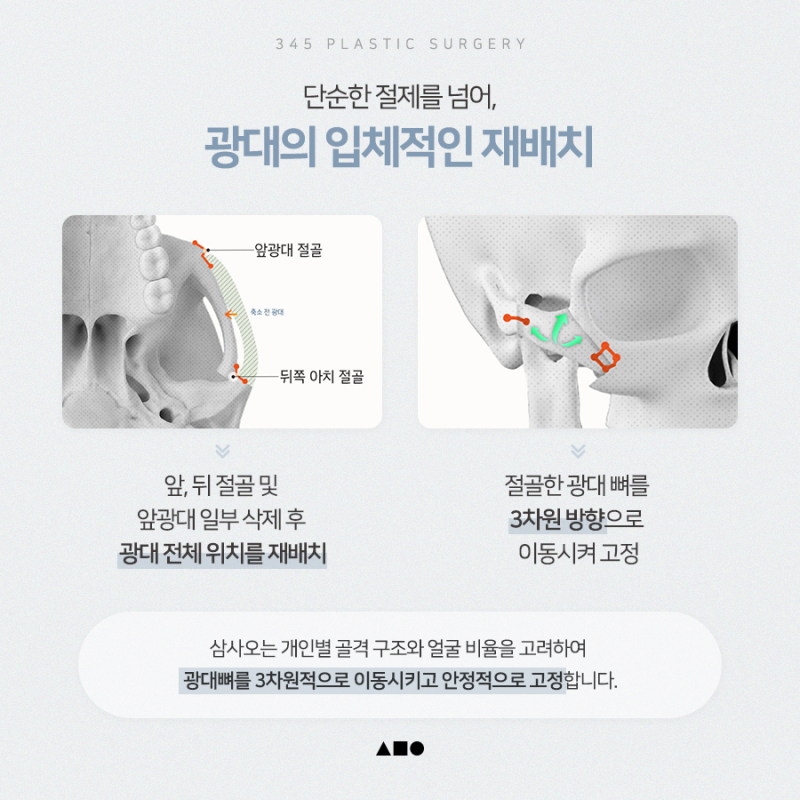
In addition, we osteotomize the front and back portions of the cheekbone and, if necessary, remove part of the front cheekbone before repositioning the entire cheekbone.
During this process, we move the cheekbone three-dimensionally based on each patient's skeletal structure and facial proportions, and secure it firmly in place.
This allows for harmonious contour refinement that addresses both the facial width from the front and the protrusion of the 45-degree cheekbone.
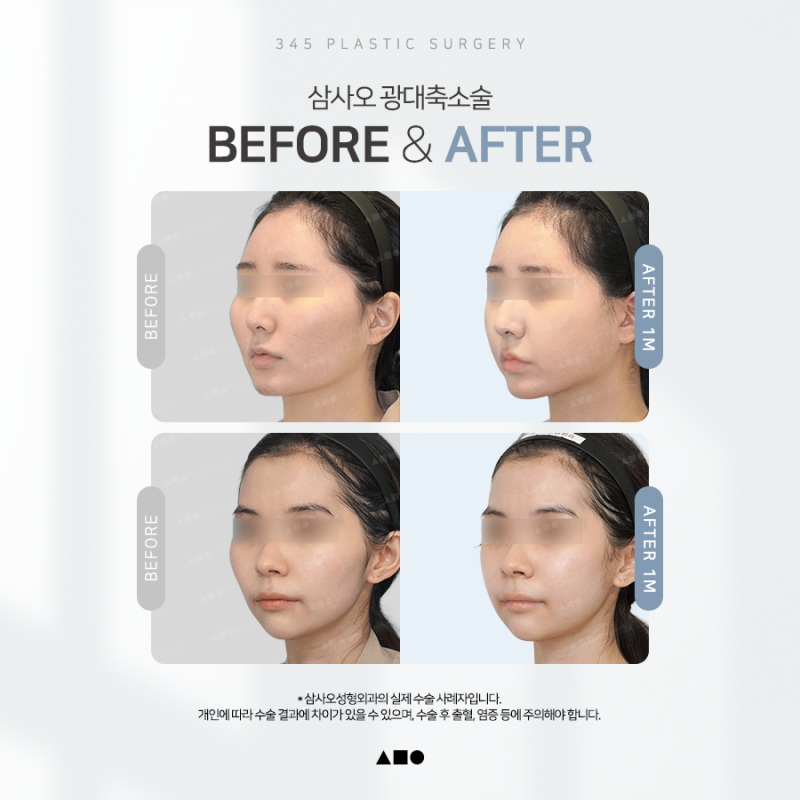
Looking at real cases of cheekbone reduction surgery performed at Samsamo Plastic Surgery, you can see a softer and more natural facial contour, as the prominence of the lateral and 45-degree cheekbones that stood out before surgery has been reduced.
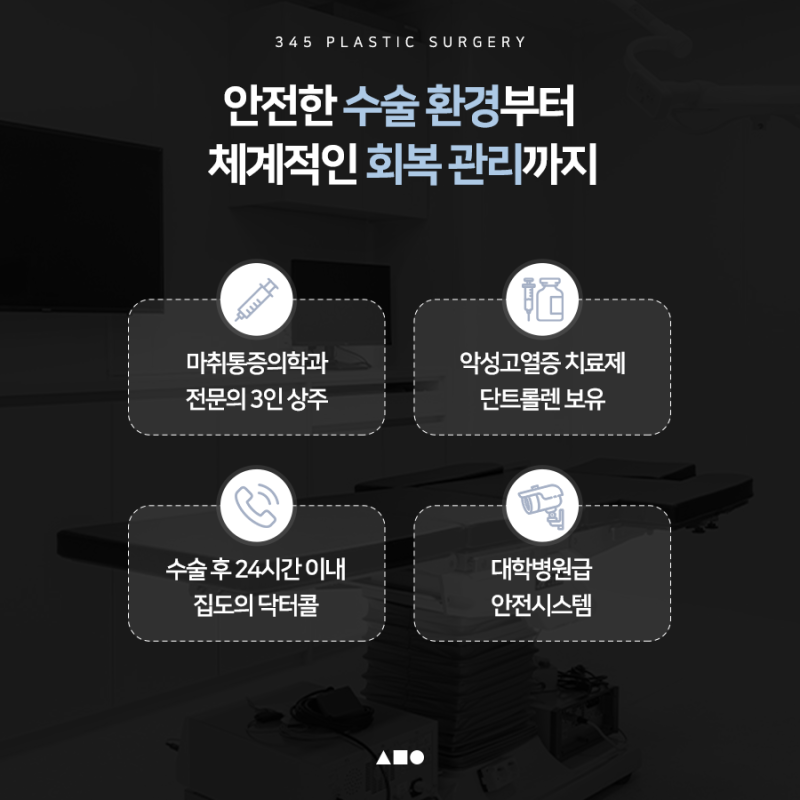
Samsamo Plastic Surgery operates a systematic care system that prioritizes patient safety, from surgery through recovery.
Three specialists in anesthesiology and pain medicine are on site to monitor patients during surgery, and we keep dantrolene on hand, a treatment for malignant hyperthermia.
Through this safe surgical environment and systematic aftercare, we help our patients achieve a stable recovery.

Dr. Park Jong-rim, Director of Samsamo Plastic Surgery, draws on 28 years of experience and expertise in contouring surgery to carefully analyze each patient's skeletal structure and facial proportions and plan a customized procedure.
Rather than simply reducing the protrusion of the cheekbones, the goal is to achieve a harmonious facial contour that considers the front, side, and 45-degree views.
If you are considering cheekbone reduction surgery, we encourage you to consult with us thoroughly to find the surgical approach that suits your facial shape 💙
Thank you 🙂



Frequently Asked Questions
Does the surgical method for cheekbone reduction change depending on the type of cheekbone protrusion?
Yes, the article explains that the surgical plan can differ depending on the position and direction of cheekbone protrusion. Cheekbones are classified into three types: lateral cheekbone type, 45-degree cheekbone type, and combined type. It emphasizes that a customized plan that takes each person's skeletal structure into account is important.
What types are cheekbones classified into?
Cheekbones are broadly classified into three types based on where and in which direction they protrude. The lateral cheekbone type makes the face look wide from the front, the 45-degree cheekbone type protrudes diagonally and gives the face an angular look, and the combined type shows both features at the same time.
What is the double Hyael osteotomy?
The double Hyael osteotomy is a surgical method that cuts the cheekbone at a more angled direction than conventional techniques to help achieve three-dimensional movement. It is planned so that the reduction can also account for the protrusion of the 45-degree cheekbone through a high Hyael osteotomy.
How is the cheekbone repositioned in cheekbone reduction surgery?
The front and back portions of the cheekbone are osteotomized and, if necessary, part of the front cheekbone is removed before the entire cheekbone is repositioned. Taking each patient's skeletal structure and facial proportions into account, the cheekbone is moved three-dimensionally and stably fixed in place.
How is safety managed during cheekbone reduction surgery?
The clinic states that three specialists in anesthesiology and pain medicine are on site to monitor patients during surgery. It also keeps dantrolene on hand in preparation for malignant hyperthermia and operates a systematic management system from surgery through recovery.
What should I check before cheekbone reduction surgery?
The article recommends consulting thoroughly to confirm the surgical approach that suits your facial shape. It explains that the position and direction of cheekbone protrusion should be considered together with the overall proportions of the face, and that simply reducing the size of the cheekbones is not enough to create a natural facial shape.