2026-10-20
Does an Aging Neckline Just Need Skin Tightening? Samsao Jawline Lift
Neck aging involves skin, platysma muscle, and fat together. Samsao's jawline lift plans surgery around both skin and muscle, with 24-hour post-op checks.

Hello, this is Samsao Plastic Surgery Clinic. While we tend to pay close attention to facial wrinkles and loss of firmness, changes in the neck are easy to overlook. However, the changes that come with aging are not limited to the face. As the skin on the neck sags, fat builds up under the chin, or neck lines deepen, the boundary between the face and neck can gradually become blurred.
In particular, when the jawline collapses, the whole face can appear to droop and give an impression of looking older than one's actual age. These changes may not simply be a matter of skin elasticity. Today, we'll take a closer look at the jawline lift from Samsao Plastic Surgery Clinic, which takes everything from the skin to the platysma muscle into account.
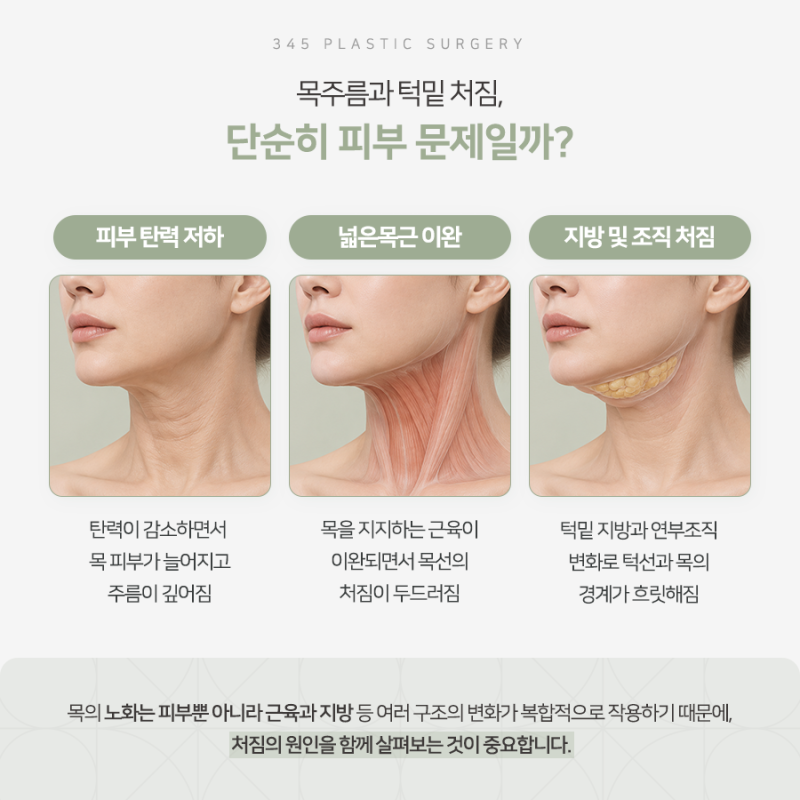
Neck aging occurs through a combination of factors: not only loss of skin elasticity, but also muscle laxity and changes in fat and soft tissue. As the skin sags and neck lines deepen, the platysma muscle loosens and the tissue beneath the chin droops, which can blur the boundary between the jawline and the neck. Because these changes occur together, it is important to plan a surgical approach that suits each person's condition.
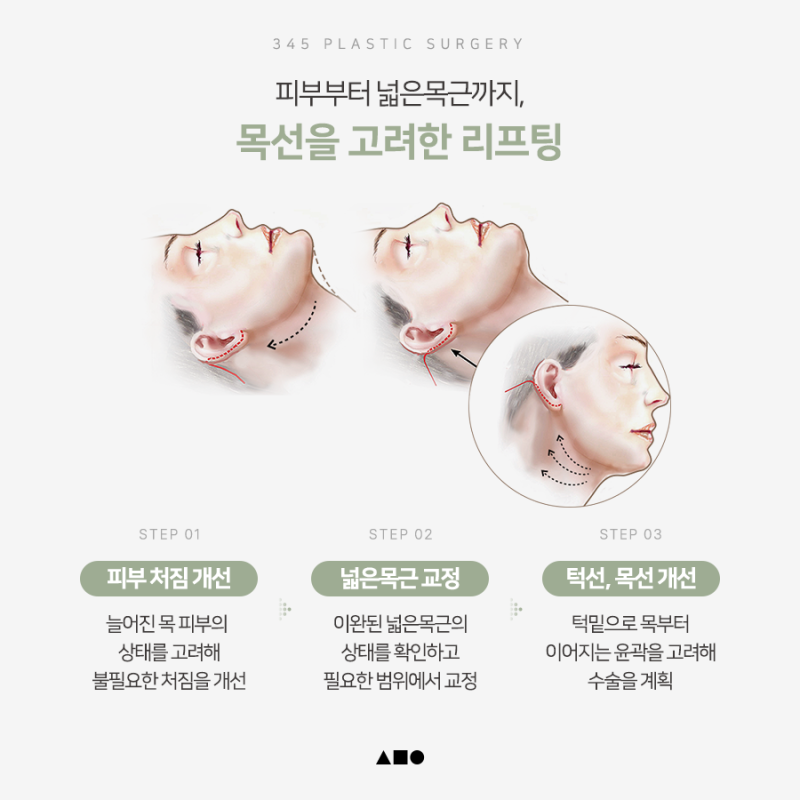
Samsao Plastic Surgery Clinic's jawline lift goes beyond simply pulling up sagging neck skin. Instead, surgery is planned by considering the condition of both the skin and the platysma muscle. We first assess the degree of neck skin sagging, then correct the loosened platysma muscle within the necessary range to guide changes in the neckline. From improving skin sagging and correcting the platysma muscle to refining the jawline and neckline, we comprehensively analyze each patient's tissue condition and degree of sagging to determine the appropriate surgical scope and correction method.
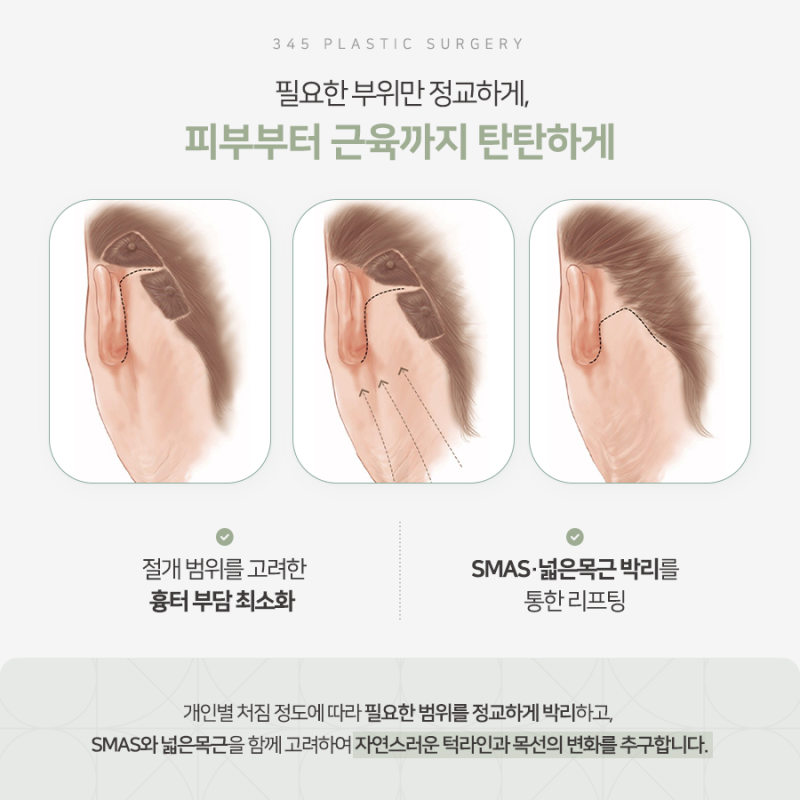
We also plan the appropriate dissection range and incision locations based on the degree of sagging and anatomical structure, with the aim of minimizing unnecessary tissue damage. In particular, by lifting with consideration of both the SMAS and the platysma muscle, we examine sagging not only in the skin but also in deeper tissues, aiming for natural changes in the jawline and neckline. We also pay careful attention to incision placement and suturing to help reduce the burden of scarring.

A neck lift may be worth considering if you are concerned about changes in your neckline due to neck lines and sagging under the chin.
First, deep neck lines: this applies if you are concerned about neck wrinkles and reduced skin elasticity.
Second, sagging neck skin: this applies if the skin of your neck droops downward and the neckline has collapsed.
Third, a blurred jawline: this applies if the boundary between your face and neck is unclear due to sagging under the chin.
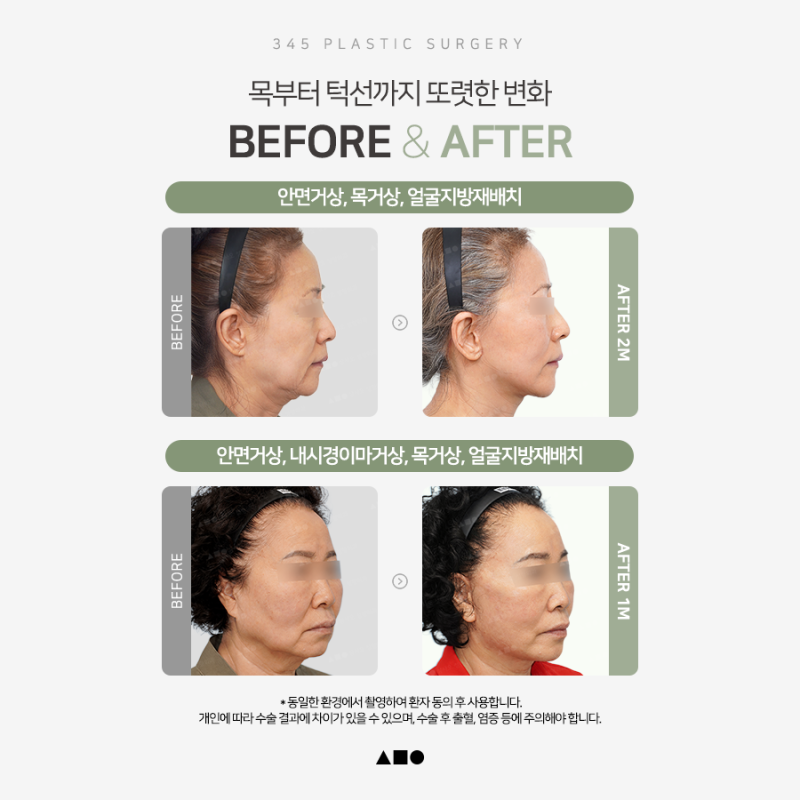
Looking at actual cases in which Samsao Plastic Surgery Clinic performed facelift and neck lift procedures, the jawline appeared blurred before surgery due to skin sagging and loose tissue under the chin. After surgery, however, the improvement in sagging skin revealed a noticeably sharper and smoother jawline and neckline.
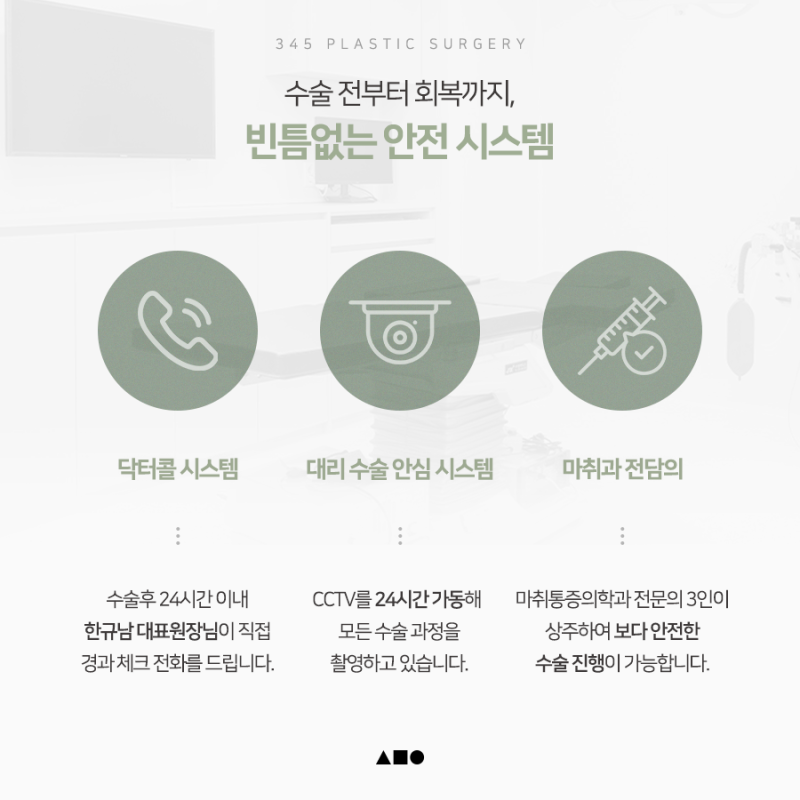
Because a neck lift involves multiple tissues, including skin and muscle, a systematic safety system and recovery management are essential. Samsao Plastic Surgery Clinic has three anesthesia and pain medicine specialists on site at all times to closely monitor each patient's condition during surgery. The clinic also operates 24-hour CCTV in its operating rooms to increase transparency throughout the procedure. In addition, through its Doctor Call system, the clinic checks on recovery progress within 24 hours after surgery and provides aftercare tailored to each patient's condition to support a stable recovery.

Neck aging cannot be explained by skin sagging alone. Because it involves a combination of reduced skin elasticity, platysma muscle laxity, and changes in the tissue under the chin, it is important to fully understand each cause and set an appropriate direction for improvement. If you are concerned about neck lines or sagging under the chin, we recommend getting an accurate assessment of your current neck aging and consulting about the approach that's right for you 💚
Thank you 😉



Frequently Asked Questions
Is an older-looking neckline just a skin issue?
No, loss of skin elasticity may not be the only cause. Neck aging occurs through a combination of reduced skin elasticity, platysma muscle laxity, and changes in fat and soft tissue under the chin.
When should a neck lift be considered?
A neck lift may be considered if you are concerned about changes in your neckline due to neck lines and sagging under the chin. Typical examples include deep neck lines, sagging neck skin, and an unclear boundary between the face and neck due to sagging under the chin.
Is a jawline lift only a procedure to pull up neck skin?
No. It is not just about pulling up sagging neck skin; the procedure is planned by considering the condition of both the skin and the platysma muscle. The degree of neck skin sagging is assessed first, and the loosened platysma muscle is corrected within the necessary range.
How is the scope of surgery determined?
The degree of neck skin sagging is checked first, and the surgical scope and correction method are then determined after a comprehensive analysis of each patient's tissue condition. According to the clinic, the dissection range and incision locations are also planned based on the degree of sagging and anatomical structure.
How is the burden of scarring reduced?
The clinic states that it aims to reduce scarring by paying close attention to incision placement and suturing. It advises that the method suited to each individual be confirmed through a consultation.
How is recovery managed after surgery?
After surgery, the clinic checks recovery progress within 24 hours through its Doctor Call system and provides aftercare tailored to each patient's condition. During surgery, three anesthesia and pain medicine specialists are stationed on site to monitor patients' condition.