2026-06-04
Contour Recovery Period: A Guide to Swelling Changes by Stage and Precautions After Zygoma Reduction
Zygoma reduction requires time for bones and soft tissues to settle, which is more important than right after surgery. From the peak swelling on day 4 to the stabilization phase at 9 months, we explain in detail the facial contour recovery flow by stage and the process of completing a natural line through actual cases.

Why is the Contour Recovery Period Important After Zygoma Reduction?
Zygoma reduction goes beyond simply reducing bone size; it is a surgery that absolutely requires time for the soft tissues and skin to adapt to the new skeletal structure after the procedure. Immediately after surgery, tissue reactions may cause the face to temporarily look wider or feel asymmetrical, but this is a perfectly normal reaction during the recovery process. Today, we will look into the characteristics of swelling after zygoma reduction by stage and how to manage it.
Stage 1: Immediately After Surgery to Day 4, the Period of Most Noticeable Swelling
The initial stage immediately after facial contouring surgery is when the body's tissue reactions are most active. In particular, swelling reaches its peak around 3 to 4 days post-surgery. At this time, the cheekbone area may bulge, and the facial line may feel somewhat unnatural.
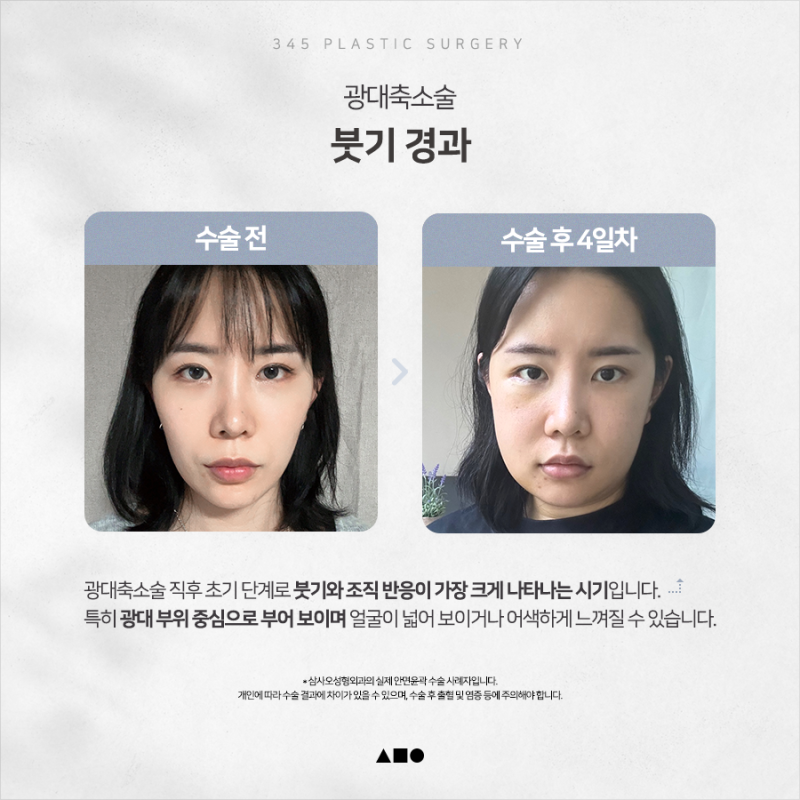
During this period, rather than hastily judging the surgical results, focusing on swelling management through cold compresses and getting plenty of rest will help ensure a smooth recovery. The phenomenon of the face appearing wider is due to tissue edema, so it is important to observe it calmly.
Stage 2: 2 to 4 Weeks Post-Surgery, the Point When Major Swelling Subsides
After about two weeks, the overall major swelling of the face noticeably decreases. From this point on, the hidden contour lines gradually begin to reveal themselves, and you can feel the facial width becoming more refined.

However, minor swelling in the deep tissues around the cheekbones still remains, so the line may look somewhat blunt rather than perfectly smooth. From this period, aiding blood circulation through light walks can have a positive effect on reducing swelling.
Stage 3: 2 to 3 Months Post-Surgery, the Phase Where Lines Become Defined
After 2 to 3 months post-surgery, a significant portion of the minor swelling subsides, and the slimmer cheekbone line becomes clearly visible. The overall facial contour connects naturally, and this is the time when you can feel a distinct change compared to before the surgery.

This is the stage where discomfort in daily life almost disappears, and confidence in interpersonal relationships is restored. However, since the bones are still in the process of complete union, excessive impact must be avoided.
Stage 4: 6 to 9 Months Post-Surgery, the Final Stabilization Phase
After more than half a year post-surgery, even the internal tissues fully settle, and the results stabilize. This is the stage where even the finest residual swelling resolves, completing the overall balance and harmony of the face.

The results seen during this period can be considered a stable state that will be maintained long-term. The bone and skin adhere closely, allowing you to see a smoother and more three-dimensional facial contour.
Professional Aftercare for a Successful Recovery
345 Plastic Surgery operates a Doctor Call system where the operating surgeon directly checks the patient's condition. Through a resident anesthesiologist and a university hospital-level safety system, we meticulously manage all pre- and post-operative processes.
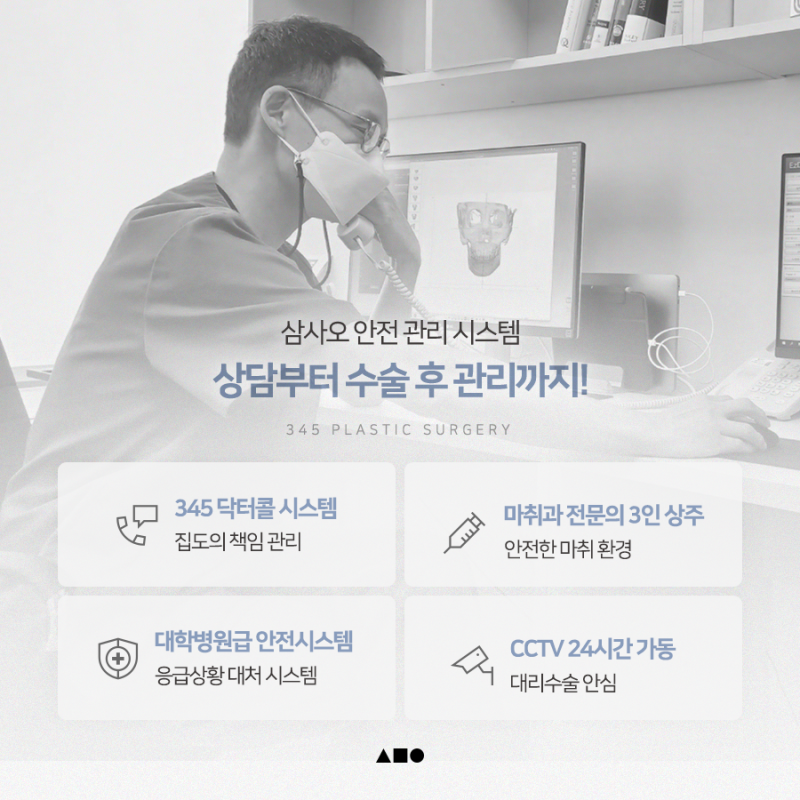
- One-on-One Care by a Dedicated Surgeon: Post-operative progress checks and personalized consultations
- Safety-First System: University hospital-level equipment and thorough monitoring
- Systematic Swelling Management: Aftercare programs to accelerate recovery speed
Zygoma reduction does not stop at simply resecting the bone; it is essential to understand the meticulous changes during the recovery period. If you have any questions during your current recovery process or are concerned about the results, we recommend getting an accurate diagnosis through a consultation with a specialist.



Frequently Asked Questions
When is the swelling most severe after zygoma reduction surgery?
Swelling peaks around 3-4 days after surgery. During this period, due to tissue reaction, the cheekbone area may appear prominently swollen, and the face might temporarily look wider or asymmetrical, so it's important to rest and apply cold compresses.
When does the face line start to look natural after surgery?
After about 2 to 4 weeks, significant swelling noticeably decreases, and the face begins to look more natural. You'll notice the hidden facial contours gradually emerging and the width of your face becoming more refined; light walks can help reduce swelling.
How long does it take for the bones to fully fuse after zygoma reduction surgery?
It takes approximately 6 to 9 months for the bones to fully unite and the results to stabilize. While the lines become clearer around 2-3 months, the bones are still in the process of fusing, so excessive impact should be avoided; it takes over half a year for the internal tissues to fully settle.
Why does my face look wider immediately after surgery?
This is due to edema caused by the body's tissue reaction. It is a perfectly normal reaction that occurs as the soft tissues and skin adapt to the new bone structure after surgery, so it's best to focus calmly on swelling management rather than prematurely judging the results.