2026-06-04
Breast Revision Surgery Timing and Precautions: An Essential Guide for Flawless Results
Are you considering revision surgery due to implant rupture, capsular contracture, or dissatisfaction with the shape after breast augmentation? We explain in detail the appropriate timing for breast revision surgery, coping methods by cause, and a checklist for safety. Discover how to regain a natural breast line with our experienced medical team boasting 20 years of expertise.

Main Reasons for Considering Breast Revision Surgery
Many people choose breast augmentation to restore confidence and improve their body shape, but they may consider breast revision surgery if the initial results fall short of expectations or due to unexpected changes. Revision surgery is not merely a second attempt; it requires a precise process of scientifically analyzing the causes of the previous surgery's failure and correcting them.
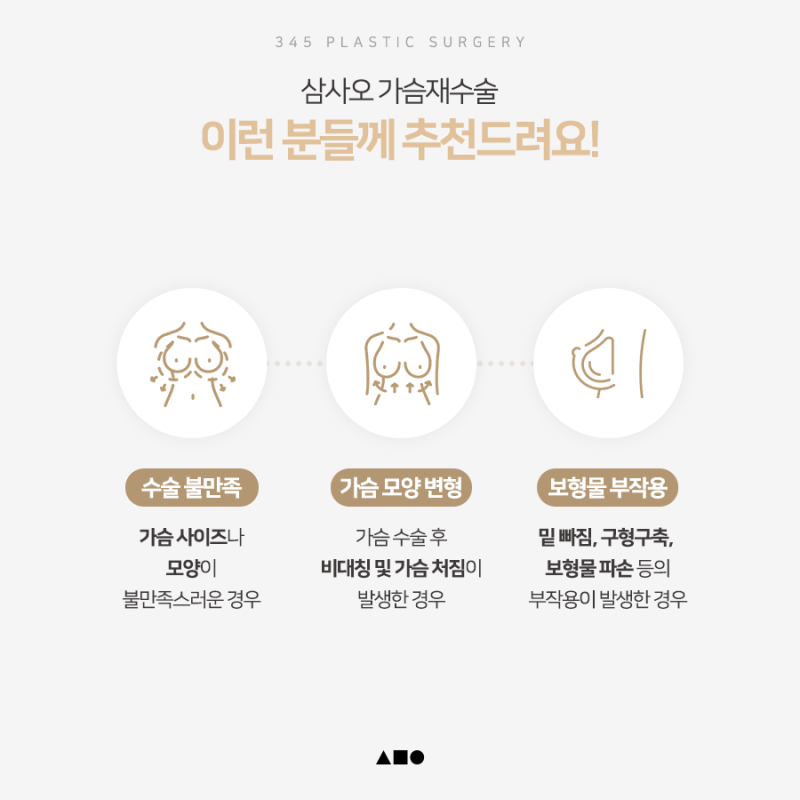
Common Cases for Revision Surgery
- Dissatisfaction with breast shape or size after the first surgery
- Occurrence of capsular contracture, where the tissue around the implant hardens
- Implant rupture or leakage of contents
- Severe asymmetry between the breasts or sagging breasts
- Occurrence of bottoming out, where the implant shifts downward
When is the Best Time for Breast Revision Surgery?
It is generally recommended to decide on the timing of breast revision surgery after a recovery period of at least 6 months to 1 year following the initial surgery. This is the time required for the scar tissue in the surgical area to soften and for the internal state of the breast to stabilize.
However, there are exceptions. If the implant has ruptured or is accompanied by severe inflammation, you must immediately consult a medical professional to determine whether revision surgery is necessary, regardless of the timeframe.
Core Technologies for Safe and Precise Surgery
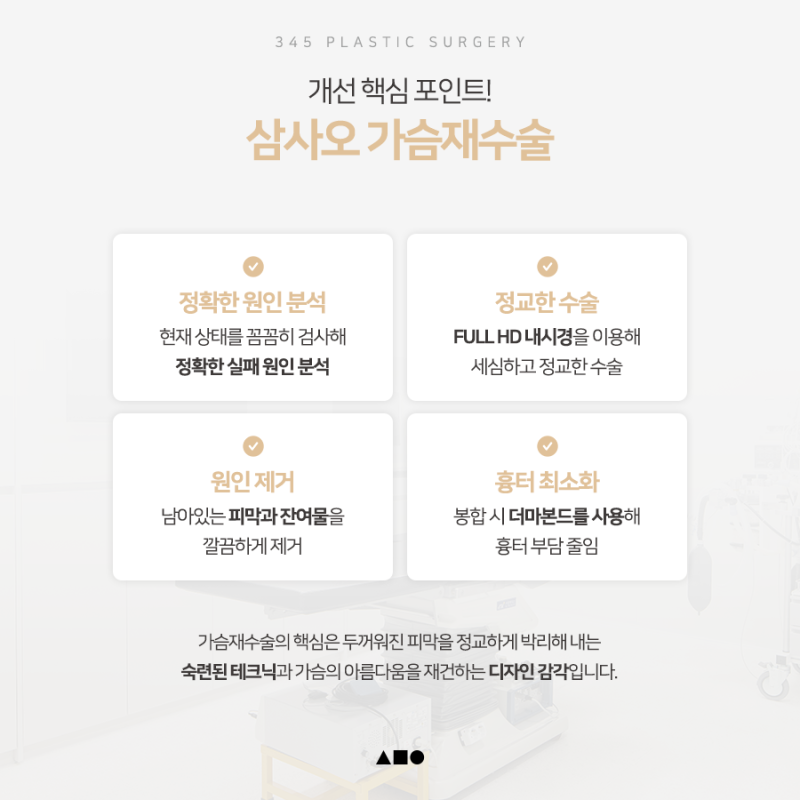
The success of breast revision surgery depends on the treatment of the existing capsule (the membrane surrounding the implant) and the minimization of tissue damage. At 345 Plastic Surgery, we perform surgeries using the following systematic approach:
- Utilization of FULL HD Endoscopy: By directly viewing areas that are difficult to see with the naked eye, we reduce blood vessel and nerve damage and enable precise dissection.
- Removal of Capsule and Residue: We meticulously remove any remaining capsule or implant debris to lower the risk of recurrence.
- Use of Dermabond: We alleviate the burden of scarring by reducing the hassle of stitch removal and ensuring a clean finish on the sutured area.
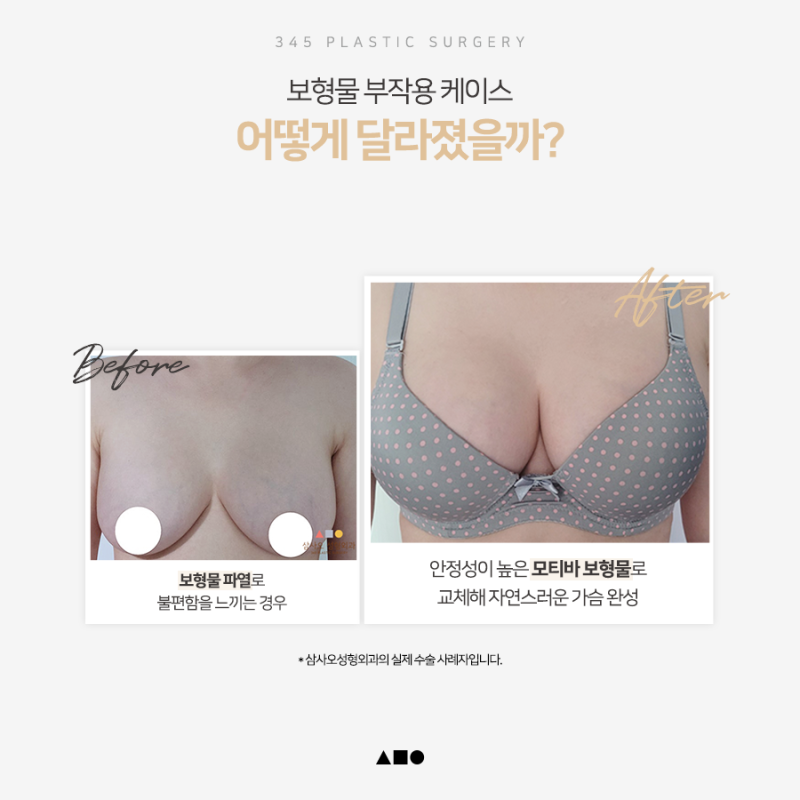
The case above is of a patient who visited us due to an implant rupture. We safely removed the existing implant and replaced it with a safety-verified Motiva implant, achieving a natural breast line.
Bottoming Out Phenomenon and Correction Methods
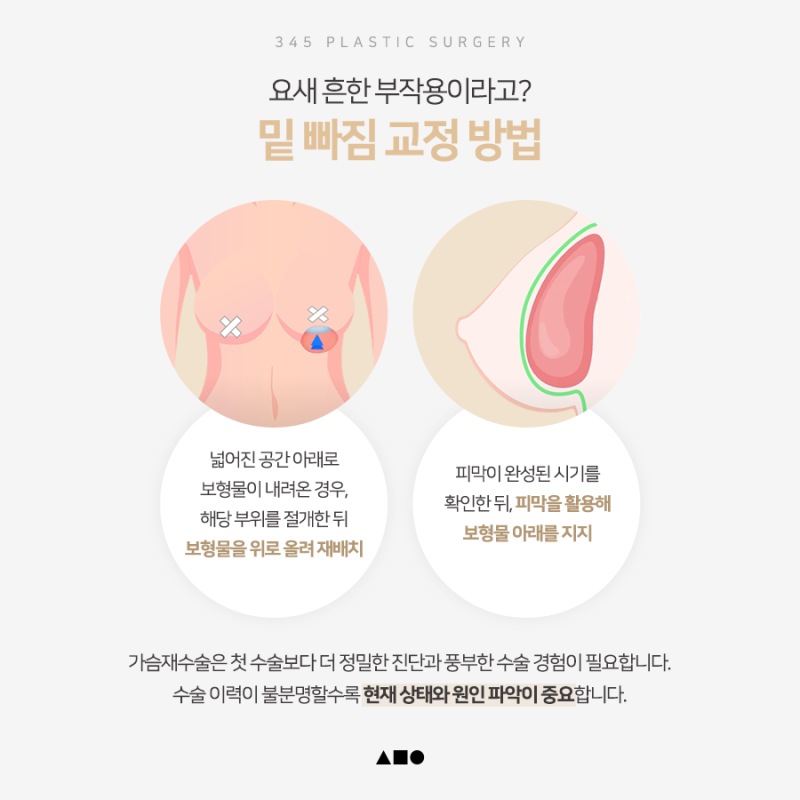
'Bottoming out,' where the inframammary fold drops excessively and the implant appears to sag, is one of the common reasons for revision surgery. This occurs when the tissue cannot support the weight of the implant or when the pocket dissection was excessive. In such cases, a highly advanced corrective surgery is required to firmly support the lower space again using the existing capsule and adjust the implant's position.
Criteria for Choosing a Trustworthy Clinic
Because revision surgery is more difficult than the initial surgery, it is essential to check the clinic's safety systems and the medical team's proficiency.
- Dedicated Anesthesia System: Ensure that a board-certified anesthesiologist is in-house to provide real-time monitoring.
- Emergency Preparedness System: The clinic should be equipped with a doctor-call system and university hospital-level collaborative infrastructure.
- Highly Experienced Medical Team: It is advisable to verify if the medical team has over 20 years of experience and academic expertise, such as being a Motiva KOL (Key Opinion Leader).
Based on the extensive clinical experience of Chief Director Dr. Han Kyu-nam, 345 Plastic Surgery establishes a revision surgery plan optimized for each patient's individual physical conditions. Rather than just worrying, we hope you regain your confident self through an accurate examination.
Frequently Asked Questions
When is the best time for breast revision surgery?
It is recommended to have breast revision surgery at least 6 months to 1 year after the initial surgery. This period allows the scar tissue in the surgical area to soften and the internal condition of the breast to stabilize. However, if there is implant rupture or severe inflammation, you should seek immediate medical diagnosis.
If an implant is ruptured, do I still need to wait for the recovery period?
No, you should decide whether to have revision surgery immediately. In exceptional situations where an implant is ruptured and its contents leak or severe inflammation symptoms are present, it is safe to receive an accurate diagnosis and treatment from medical staff immediately, regardless of the timing.
Why does breast ptosis occur and how is it corrected?
Breast ptosis primarily occurs when the breast cannot withstand the weight of the implant or when the pocket dissection is excessive. To correct this, a highly complex surgery is required to firmly support the lower space using the existing capsule and properly adjust the position of the implant.
Are there ways to reduce the burden of scars during revision surgery?
Yes, you can reduce the burden of scars by using Dermabond. Neatly finishing the incision site with Dermabond reduces the hassle of removing stitches and allows the sutured area to recover stably, thereby alleviating concerns about scars.
What are the criteria for choosing a safe hospital for breast revision surgery?
It is important to check for the presence of an anesthesiologist and an emergency preparedness system. You should choose a hospital with a dedicated anesthesia system capable of real-time monitoring, a university hospital-level collaborative infrastructure, and experienced medical staff with over 20 years of rich clinical experience.