2026-06-04
Breast Revision Surgery Timing and Implant Selection: A Core Checklist for Flawless Results
For breast revision surgery, it is crucial to meticulously analyze the cause of the initial failure and choose the appropriate timing. Based on the expertise of Chief Surgeon Dr. Han Kyu-nam at 345 Plastic Surgery, we provide essential information for a safe and highly satisfying revision, including the causes for revision, optimal timing (6 months), and the subfascial surgical method.

Breast Revision Surgery: Why Consider It Again?
Many patients feel heartbroken when the results of their initial breast augmentation do not meet their expectations. The reasons for deciding on Breast Revision Surgery vary from person to person, but the following are the most common cases:
- Dissatisfaction with Size: When the breasts are smaller or excessively larger than expected, failing to harmonize with your body shape.
- Asymmetry: When there is a noticeable difference in the size, inframammary fold, or shape between the two breasts.
- Capsular Contracture and Side Effects: When the capsule around the implant hardens (Capsular Contracture) or an implant rupture occurs.
- Dissatisfaction with Feel and Shape: When the implant can be felt (rippling effect) or the movement looks unnatural.
The Core of Breast Revision: 'Timing' and 'Precise Analysis'
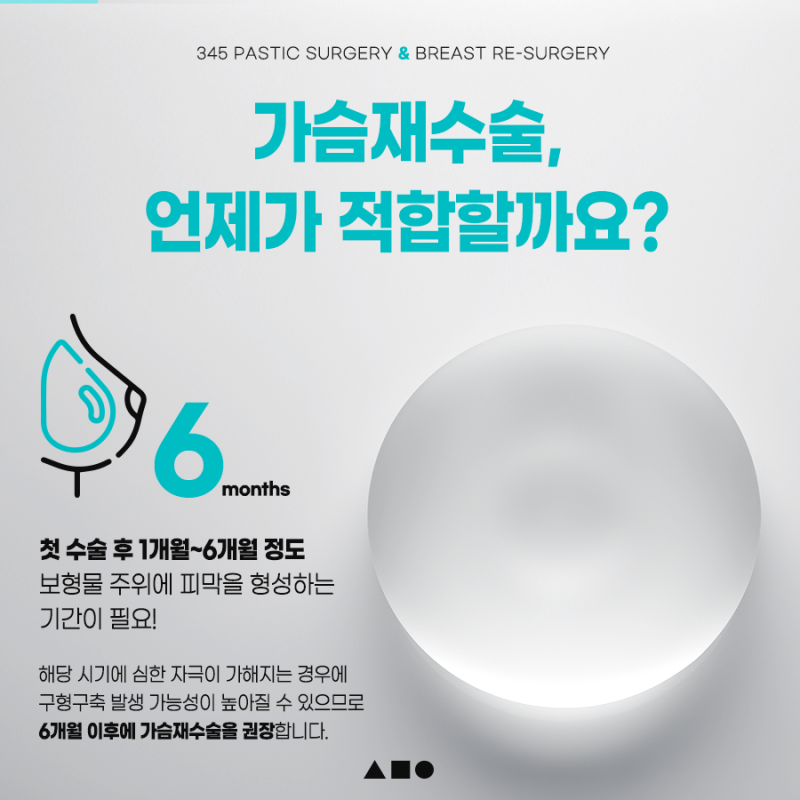
The most important factor in breast revision surgery is choosing the right surgical timing. Generally, it is recommended to wait at least 6 months after the initial surgery.
The period between 1 to 6 months post-surgery is when the capsule around the implant forms and stabilizes. Applying surgical stimulation again during this time can increase the likelihood of side effects like capsular contracture. However, in cases requiring urgent intervention, such as an implant rupture, the timing should be adjusted through a consultation with a specialist.
345 Plastic Surgery's Precise Revision Plan
Chief Surgeon Dr. Han Kyu-nam at 345 Plastic Surgery operates on a principle of 1:1 dedicated care, from the initial consultation to the surgery and progress check-ups. To ensure a successful revision, we follow this systematic process:
1. Meticulous Analysis of the Cause of Failure
We establish a customized surgical plan by deeply analyzing your anatomical structure and the condition of the implant to understand why the previous surgery was unsatisfactory.
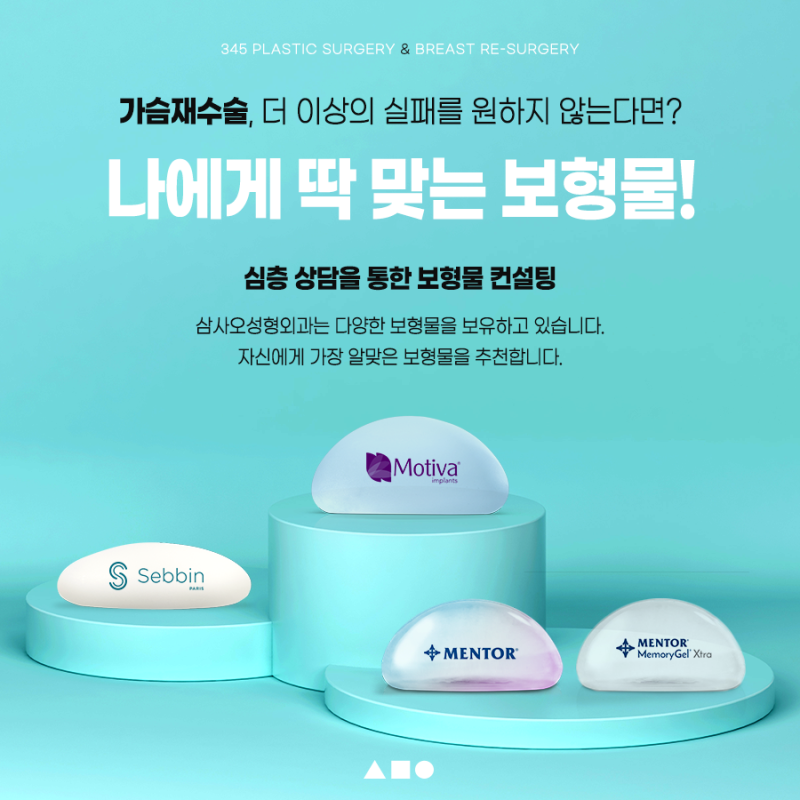
2. Personalized Implant Recommendations
We carry a variety of genuine implants, including Motiva, Mentor, and Sebbin, helping patients select the product best suited to their desired feel, size, and shape.
Less Pain and Faster Recovery: The Subfascial Method
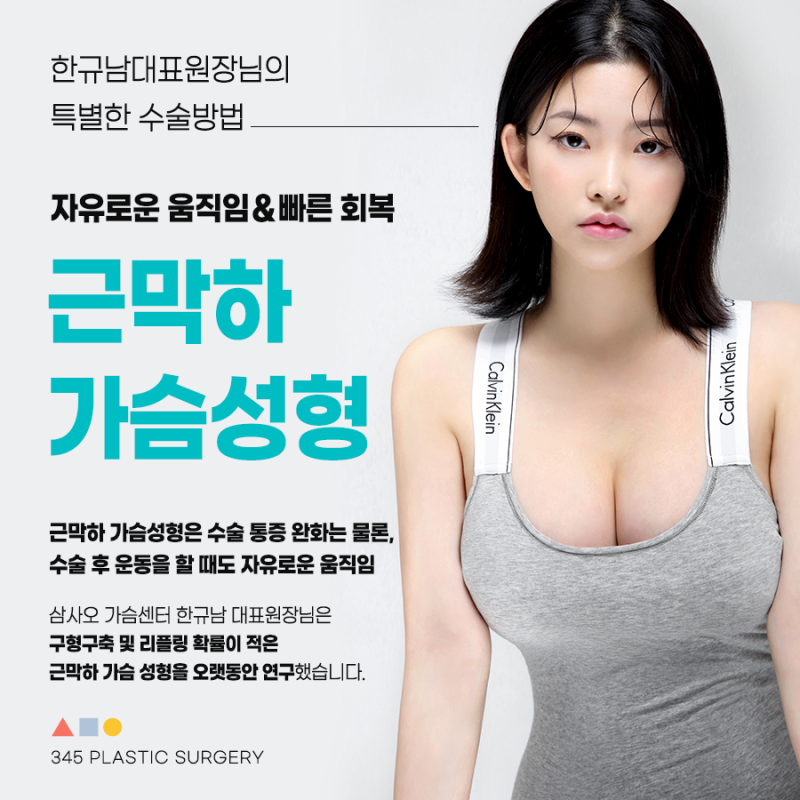
One of the main fears regarding breast revision surgery is the pain and recovery period. At 345 Plastic Surgery, we alleviate these concerns by utilizing the Subfascial surgical method.
- Pain Reduction: By minimizing muscle damage, post-operative pain is relatively low.
- Freedom of Movement: Placing the implant under the fascia rather than under the muscle reduces implant distortion caused by chest muscle movement during exercise.
- Side Effect Prevention: It lowers the probability of capsular contracture and rippling (implant visibility), allowing you to maintain natural results for a long time.
Advanced Systems and Aftercare for Your Safety
Because it is a revision surgery, we take extra precautions to ensure your safety.
- FULL HD Endoscope: Aids in recovery by reducing tissue damage and bleeding through precise dissection.
- Single-use Keller Funnel: Prevents infection by minimizing direct contact during implant insertion.
- Dermabond Usage: Aims for clean scar management without the hassle of stitch removal.
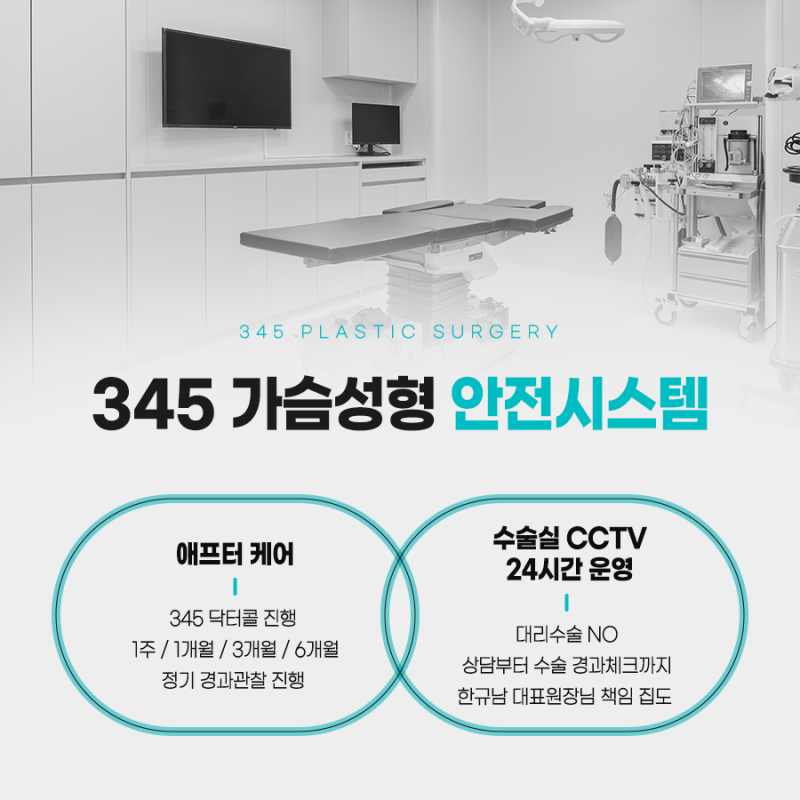
- 345 Doctor Call & CCTV: Adds trust with direct phone care from the head surgeon within 24 hours post-surgery and 24-hour CCTV operation, eliminating worries about ghost surgeries.
Frequently Asked Questions
When is the best time to undergo breast reoperation after the initial surgery?
It is recommended to perform breast reoperation at least 6 months after the initial surgery. The period between 1 and 6 months after surgery is when the capsule around the implant forms and stabilizes, so surgical stimulation during this time can increase the risk of complications such as capsular contracture. However, in urgent situations such as implant rupture, you should consult a specialist immediately.
Are there ways to reduce pain during breast reoperation?
Yes, pain after surgery can be reduced through the subfascial surgical method. By placing the implant under the fascia instead of under the muscle, muscle damage is reduced, resulting in relatively less pain, and implant deformation due to breast muscle movement during exercise can also be prevented.
Can capsular contracture or rippling be resolved with reoperation?
Yes, it can be resolved through precise cause analysis and appropriate surgical methods. After an in-depth anatomical analysis of the reasons for the failure of the previous surgery, methods such as subfascial surgery are applied to reduce the probability of capsular contracture and rippling where the implant is visible, helping to maintain natural results for a long time.
What types of implants can be chosen for reoperation?
You can choose from various genuine implants such as Motiva, Mentor, and Sebbin. Considering the individual's body type and anatomical structure, the most suitable product for the patient's desired feel, size, and shape will be decided in consultation with a specialist.
How are infection prevention and scar management carried out after surgery?
Infection is prevented and scars are managed using a single-use Keller Funnel and Dermabond. When inserting the implant, the Keller Funnel is used to minimize direct contact, reducing the risk of infection, and Dermabond allows for neat scar management without the hassle of stitch removal.