2026-06-04
Breast Revision Surgery Pain: Will It Hurt More Than the First Time? Causes, Solutions, and Precautions
One of the biggest concerns when considering breast revision surgery is "pain." For those hesitating out of fear of reliving the pain of their first surgery, we provide an expert overview of the medical causes of pain during revision, methods to reduce it, and safety guidelines for preventing capsular contracture.
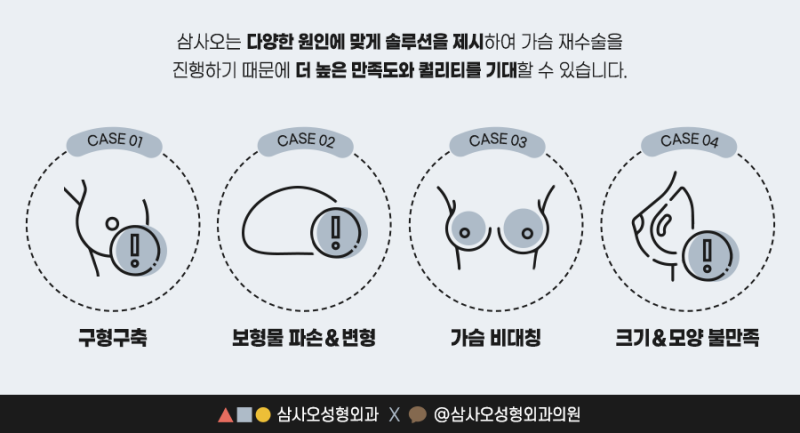
Breast Revision Surgery Pain: Does It Really Hurt as Much as the First Time?
When facing a second breast surgery—a procedure known for its high pain intensity among plastic surgeries—many patients worry, 'How can I endure that painful surgery again?' To get straight to the point, breast revision surgery is generally less painful than the initial surgery.
The intense pain experienced during the first surgery occurs as the breast muscles and skin tissues are stretched for the first time when the implant is inserted. However, in the case of revision surgery, the space (pocket) is already formed and the tissues are somewhat expanded, significantly reducing the irritation from this process. Therefore, rather than delaying a necessary surgery due to an excessive fear of pain, it is important to find a direction for improvement through an accurate diagnosis.
Main Types of Cases Requiring Breast Revision Surgery
The reason for considering revision surgery is not simply the presence or absence of pain, but rather aesthetic dissatisfaction or functional side effects that appeared after the first surgery. The main causes are as follows:
- Asymmetry and Sagging (Ptosis): Occurs as the implant shifts position over time or the skin tissue weakens.
- Size Dissatisfaction: When the volume differs from expectations or does not suit the body type.
- Capsular Contracture: A phenomenon where the capsule surrounding the implant hardens, altering the shape and feel.
- Implant Visibility (Rippling): When the skin is thin, causing the edges of the implant to stand out.
Customized Solutions for Higher Satisfaction in Breast Revision Surgery
Because revision surgery is more difficult than the initial procedure, the patient's skin elasticity, rib cage structure, and lifestyle must be comprehensively considered. This is why a consultation with a medical team that thoroughly understands tissue characteristics is essential.
1. Implant Fixation Based on Skin Elasticity
In cases where the skin is thin and lacks elasticity, causing it to sag under the weight of the implant, we select an implant that can be more firmly supported by the tissue. The key is to predict the degree to which the implant might shift downward after surgery and secure it in the optimal position.
2. Natural Lines with Concurrent Fat Grafting
For slim body types where signs of implant insertion are easily noticeable, Fat Grafting can be performed concurrently along the implant borders to achieve smooth curves and a natural feel.
3. Precise Size Recommendations
We propose the most harmonious size based on the patient's frame and rib cage dimensions. Rather than simply opting for a larger size, we predict potential post-operative changes in advance to help the patient make a careful and informed choice.
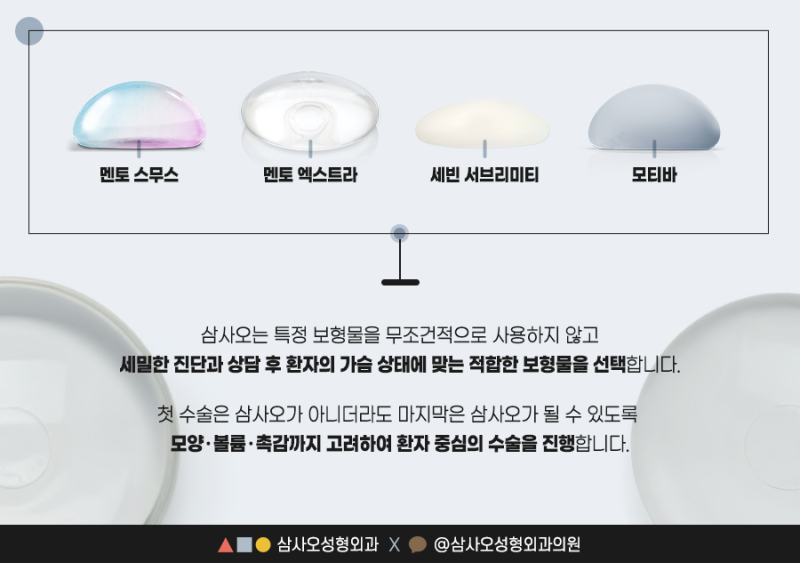
Strict Safety Principles to Prevent Capsular Contracture
Capsular contracture is one of the leading causes for breast revision surgery. To prevent this, the cleanliness of the surgical environment and the meticulousness of the medical team are of utmost importance.
- Safe Implant Selection: We must recommend products with lower risks to the patient based on the latest clinical data and research papers.
- Clean Surgical Environment: A disposable Keller Funnel is used to minimize contamination during implant insertion.
- Hygiene Management: We take every precaution to prevent infection, such as wearing double layers of gloves in case of microscopic damage during surgery.
In a facility equipped with such a thorough safety system, favorable outcomes can be expected even without the prescription of separate capsular contracture preventative medications.
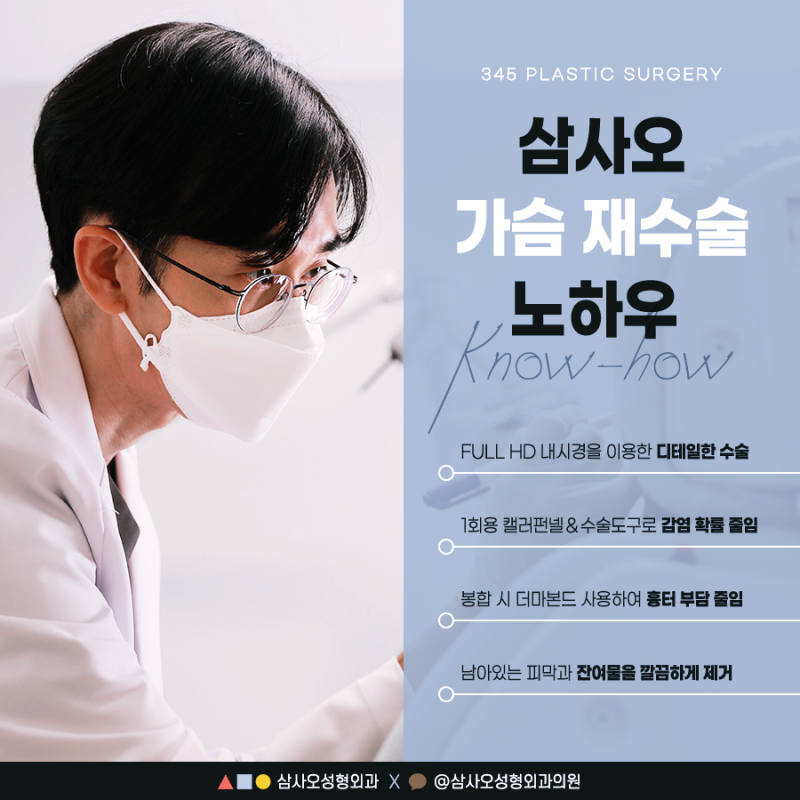
Revision surgery is a decision that carries a significant physical and psychological burden. We recommend accurately analyzing the cause of the previous surgery's failure and regaining your confidence once again through a medical team with a high level of anatomical understanding.
Frequently Asked Questions
Is breast revision surgery more painful than the first surgery?
No, it is generally less painful than the first surgery. During the first surgery, severe pain occurs as the breast muscles and skin tissues stretch for the first time, but in revision surgery, the space for the implant is already formed and the tissues are expanded, so irritation and pain are significantly reduced.
What are the main reasons for considering breast revision surgery?
Asymmetry and sagging, dissatisfaction with size, capsular contracture, and implant visibility are the main reasons. Over time, the implant position may change or capsular contracture may occur where the capsule hardens, and revision surgery is also performed if the skin is thin and the implant's edge is prominent.
I'm worried that the implant will be noticeable because I have a thin body type. Is there a solution?
Yes, you can create a natural line by combining fat grafting. For thin body types where implant insertion marks are easily noticeable, performing fat grafting along the implant's border can create a much smoother curve and feel.
What precautions should be taken during surgery to prevent capsular contracture?
Cleanliness of the surgical environment and thorough infection prevention management are most important. You should choose a hospital that takes utmost care in hygiene management, such as using a disposable Keller Funnel to minimize contamination during implant insertion and wearing two layers of gloves to prepare for glove damage during surgery.