2026-06-04
Advantages of Subfascial Breast Augmentation to Reduce Pain and Differences from the Dual Plane Method
Learn in detail about 'subfascial breast augmentation,' which reduces the burden of pain and recovery time associated with breast surgery. From an expert's perspective, we summarize the principles of subfascial insertion—which allows for a quick return to daily life by avoiding direct muscle manipulation—and the criteria for selecting the right surgical method for your body type.
Breast Augmentation Pain: Why Does It Occur and How Can It Be Relieved?
One of the biggest concerns for many people considering breast augmentation is postoperative pain. Breast augmentation involves dissecting internal tissues to insert the implant, and the intensity of pain and speed of recovery can vary greatly depending on which layer the implant is placed in.
In the past, the 'Dual Plane' method, which places the implant under the pectoralis major (chest muscle), was predominantly used to prevent side effects such as capsular contracture. However, this method has the characteristic of being accompanied by pain caused by muscle compression and movement during the process of dissecting the muscle and inserting the implant.
What is Subfascial Breast Augmentation?
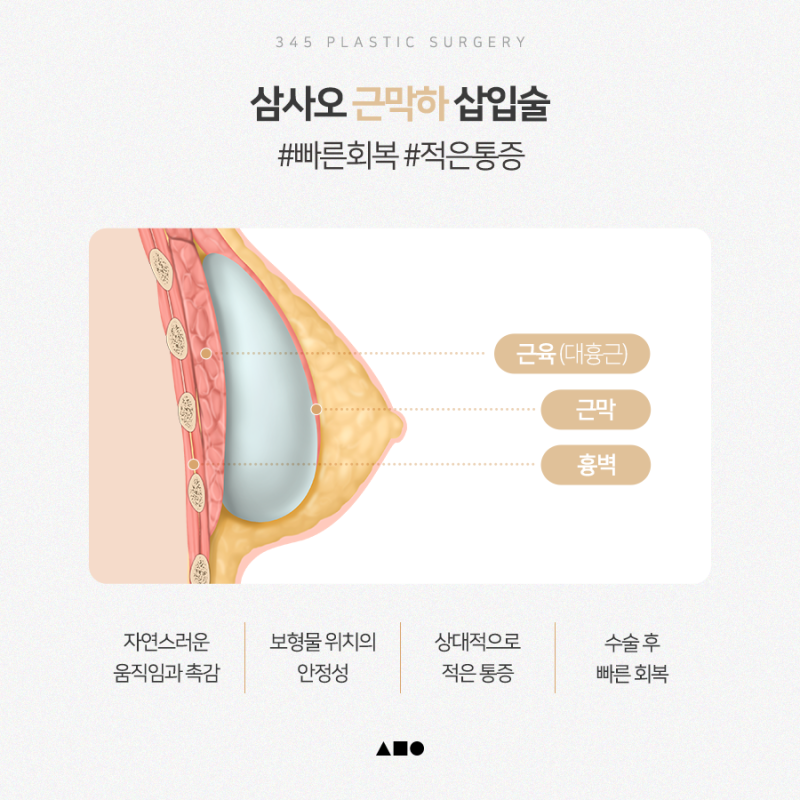
Recently, subfascial insertion has been proposed as an alternative for patients who want to reduce breast augmentation pain and achieve a quick recovery. This is a method of placing the implant under the 'fascia,' a thin and tough membrane that wraps around the muscle.
- Muscle Preservation: Since the muscle is not directly incised or manipulated, there is less feeling of tightness or pressure after surgery.
- Natural Movement: The implant is not directly affected by muscle movement, resulting in less discomfort when using your arms or exercising.
- Quick Return to Daily Life: With relatively less tissue damage, pain is alleviated, and the recovery period tends to be shortened.
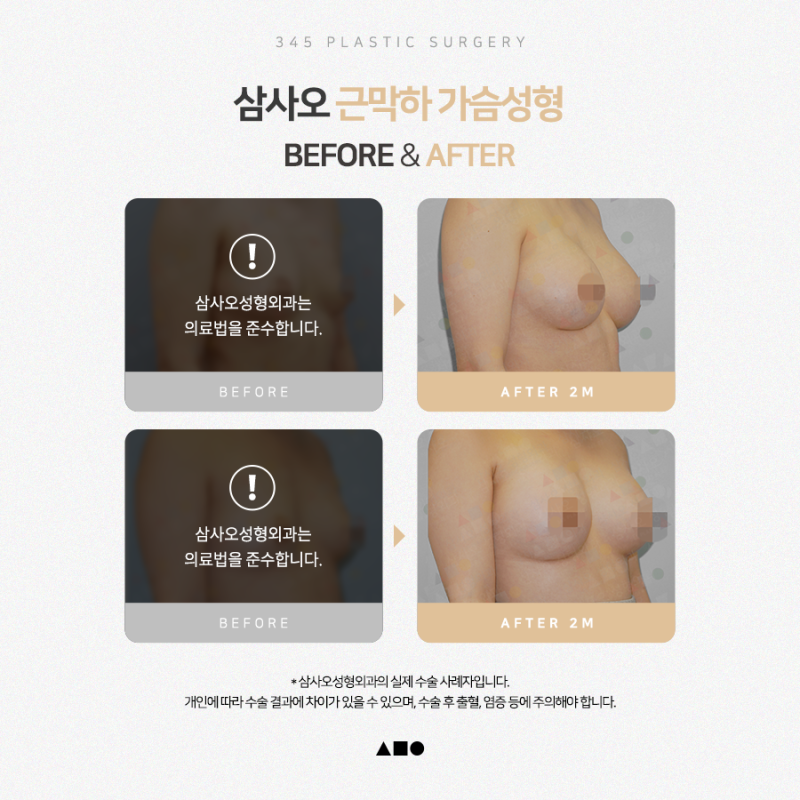
Subfascial Insertion vs. Dual Plane Method Comparison
The appropriate surgical method may vary depending on the patient's physical condition. Check the main differences between the two methods through the table below.
| Category | Subfascial Insertion | Dual Plane Method |
|---|---|---|
| Implant Placement | Above the muscle, under the fascia | Under the muscle (partially under the mammary gland) |
| Pain Level | Relatively low | Moderate to high |
| Recovery Speed | Fast | Moderate |
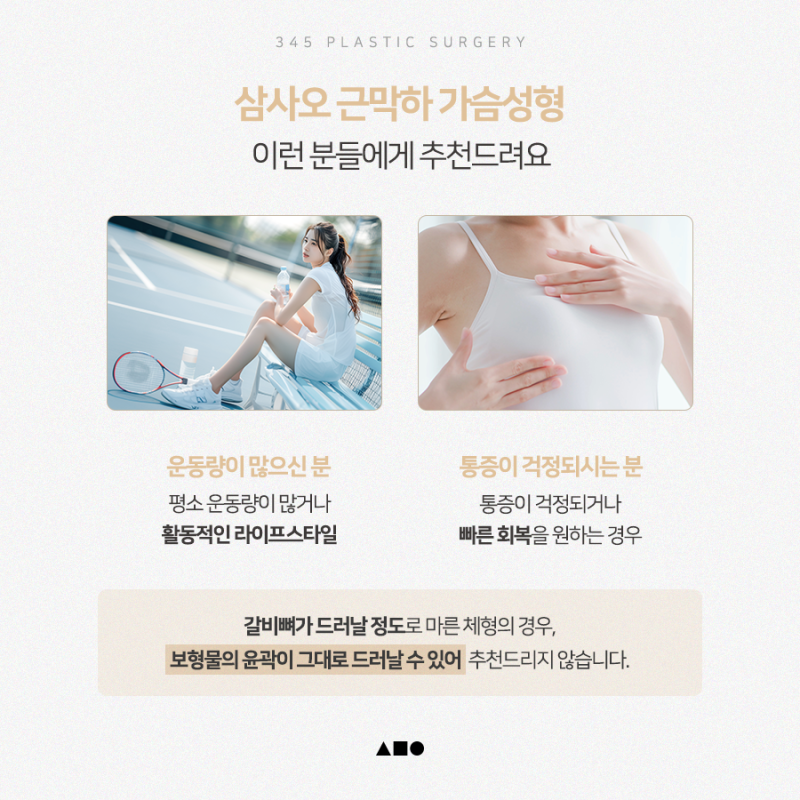
| Recommended For | Those who exercise frequently or have adequate skin thickness | Very slim body types, thin skin |
Choosing the Right Breast Augmentation Method for You
Although subfascial breast augmentation has many advantages, it is not the right answer in every case. For example, if a person with very little body fat and thin skin places an implant above the muscle, the edges of the implant may become visible or palpable. In such cases, using the dual plane method to cover the implant once more with the muscle can be aesthetically more natural.
Therefore, for highly satisfactory results, it is essential to receive a precise diagnosis of the amount of breast tissue, skin elasticity, and degree of muscle development through a 1:1 consultation with an experienced specialist.
Aftercare System for Safe Results
In breast augmentation, aftercare is just as important as the surgery itself. At 345 Plastic Surgery, our medical team, possessing extensive experience as a Motiva KOL (Key Opinion Leader) doctor, directly performs the entire process. In addition, we systematically manage postoperative swelling and provide meticulous care so that the implant can settle stably, helping patients feel psychologically at ease and recover smoothly.

Frequently Asked Questions
Why does pain occur after breast augmentation?
Yes, it mainly occurs during the process of dissecting internal tissues and muscles to insert implants. Especially in the dual-plane method, where implants are placed under the muscle, post-operative pain can be accompanied by muscle compression and movement.
What is the biggest advantage of subfascial breast augmentation?
The biggest advantage is less pain and faster recovery due to muscle preservation. Since the implant is placed under the fascia, a thin membrane covering the muscle, tissue damage is minimal, and there is less foreign body sensation when using arms or exercising, allowing for a quicker return to daily life.
Can slender individuals also undergo subfascial insertion?
No, it is not recommended for individuals with very low body fat and thin skin. If an implant is placed above the muscle with thin skin, the edges may be visible or palpable. In such cases, the dual-plane method, where the implant is covered by the muscle, provides a more natural result.
Which patients are recommended for the dual-plane method?
It is mainly recommended for patients with thin skin or very slender body types. By placing the implant under the pectoralis major muscle, the muscle covers the implant once more, preventing the implant from being visible or palpable externally after surgery and achieving aesthetically natural results.
How is post-operative care managed after breast augmentation?
After surgery, care is provided to systematically manage swelling and help the implant settle stably. At Samsaoh Plastic Surgery, experienced medical staff directly perform the entire process and provide a meticulous post-operative care system for the patient's psychological comfort and smooth recovery.