2026-06-04
5 Tips to Quickly Reduce Swelling After Facial Contouring: How to Shorten Your Recovery Time
We introduce effective ways to manage swelling, the biggest concern after facial contouring surgery. From the correct timing for cold and warm compresses to sleeping positions that alleviate swelling, and precautions that hinder recovery, we have summarized this guide from an expert's perspective. Check out our facial contouring swelling management guide for a safe and smooth recovery.
The Natural Reasons for Swelling After Facial Contouring Surgery
The swelling (edema) that occurs after facial contouring surgery is the result of a perfectly natural immune response as our body works to heal the wound. To repair damaged tissue at the surgical site, inflammatory cells and cytokines are secreted, increasing blood flow. During this process, the moisture content in the skin increases, causing the face to swell.

You may be worried because your face looks bulky immediately after surgery, but you can rest assured as this is simply the process of the wound healing. However, depending on how you manage it during this period, the speed of recovery and satisfaction with your final facial lines can vary.
Customized Compress Guide by Stage: Cold and Warm Compresses
When it comes to managing swelling after facial contouring, the key is to change your compress method according to the recovery stage.
1. Immediately After Surgery to Day 4: Cold Pack
For the first 2 to 3 days after surgery, and up to the 4th day, you should focus on applying cold compresses. This is similar to the first aid principle used when you sprain an ankle.
- Effects: It constricts blood vessels to reduce bleeding, alleviates pain, and prevents initial swelling from worsening.
- Method: Wrap the cold pack in a handkerchief or towel so it does not directly touch the skin, and gently press it around the surgical area.

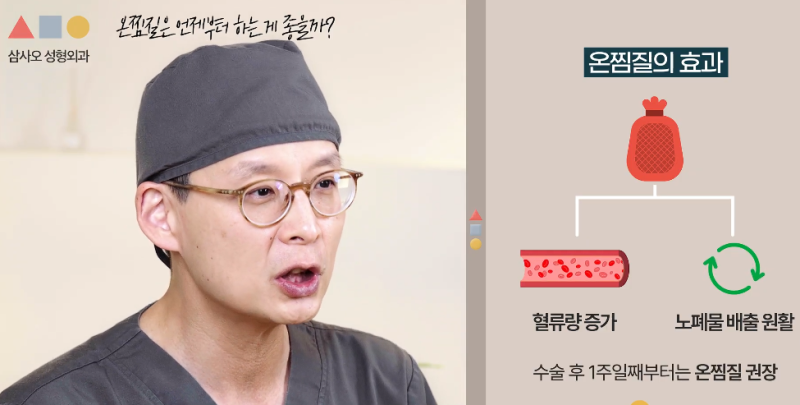
2. After Day 4: Hot Pack
After the initial acute phase has passed, it is recommended to switch to warm compresses to help with blood circulation.
- Effects: It increases blood flow to promote the elimination of waste from the surgical site and supports tissue recovery.
- Precautions: Sensation may be temporarily dulled after surgery. To avoid burns, we recommend checking the temperature on the back of your hand or another area first, ensuring it is only comfortably warm before applying the compress.
Proper Sleeping Posture to Help Alleviate Swelling
For at least one week after facial contouring surgery, your sleeping posture has a significant impact on swelling management. The key is to keep your face elevated above your heart.
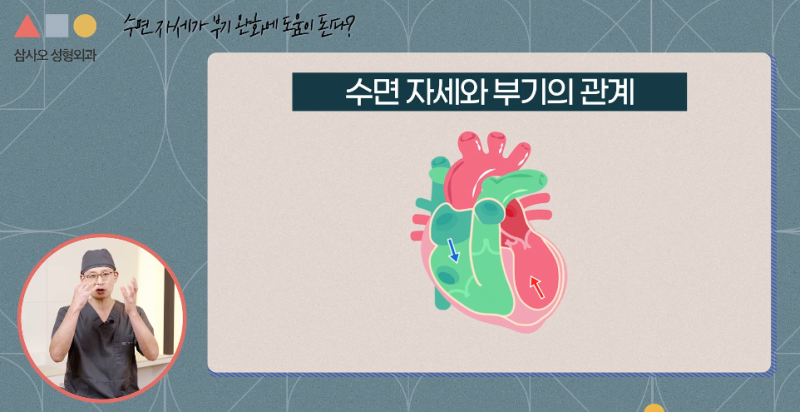
- Elevating the Upper Body: It is best to sleep with your entire upper body slightly elevated by using a high pillow or a backrest cushion. With the help of gravity, the venous blood flow concentrated in the face can drain smoothly, allowing the swelling to subside faster.
- Precautions: Avoid postures where only your neck is bent. If the blood vessels in the neck area are compressed, circulation is hindered, which can actually cause the face to swell more. Adjust your position so that your entire upper body is naturally elevated.
The Biggest Enemy of Recovery: Quitting Smoking and Blocking Nicotine
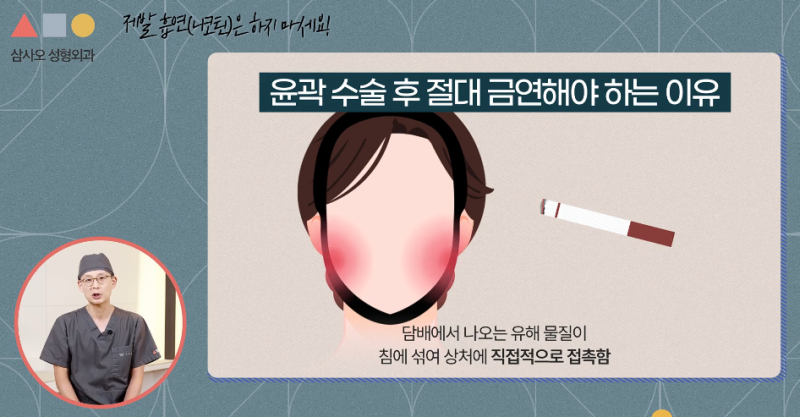
Facial contouring surgery often involves intraoral incisions, making infection management extremely important. Smoking, in particular, is one of the most dangerous factors that hinder recovery.
- Risk of Infection: If harmful substances from cigarettes mix with saliva and directly touch the surgical site, the likelihood of inflammation increases.
- Blood Flow Obstruction: Nicotine is a powerful vasoconstrictor. For about an hour after smoking, blood flow sharply decreases, cutting off the supply of oxygen and nutrients. This delays wound healing and, in the worst-case scenario, causes non-union, where the bones fail to fuse properly.
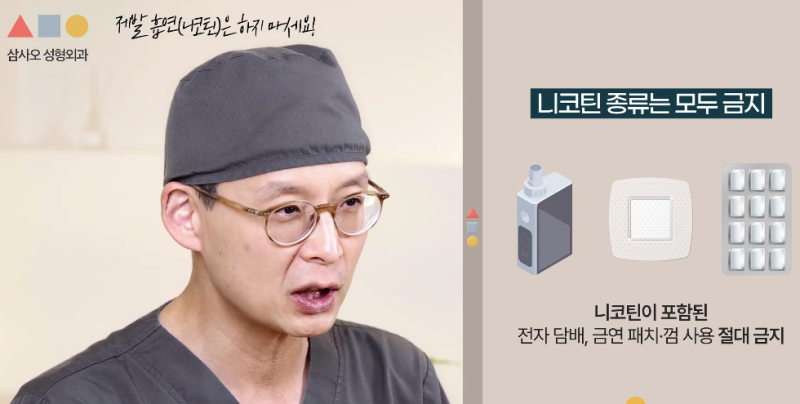
- Prohibited Items: You must stay away from all forms of nicotine products, including not only traditional cigarettes but also e-cigarettes, nicotine patches, and nicotine gum, for at least one month.
Meticulous post-operative care is just as important as the delicate surgery itself. We hope you carefully familiarize yourself with these precautions to achieve a more beautiful and healthy facial line.
Frequently Asked Questions
How should I apply compresses after facial contouring surgery?
It is recommended to apply cold compresses for the first 4 days after surgery, and then switch to warm compresses. Initial cold compresses constrict blood vessels, suppressing swelling and pain, while warm compresses after 4 days promote blood circulation, aiding in waste removal and tissue recovery.
What sleeping position is good for reducing swelling after surgery?
The best position is one that keeps your face elevated above your heart. Using pillows or cushions to slightly prop up your entire upper body while sleeping helps gravity facilitate venous blood flow, reducing swelling faster. However, avoid positions where only your neck is bent.
Is it okay to use e-cigarettes after surgery?
No, all nicotine products, including e-cigarettes, must be avoided for at least one month. Nicotine is a powerful vasoconstrictor that blocks oxygen and nutrient supply, delaying wound healing, and in severe cases, can cause non-union where bones fail to fuse properly.
Are there any special precautions for warm compresses?
Yes, you must be especially careful to avoid burns. After surgery, your sensation may be temporarily dulled, so it is recommended to check the temperature on the back of your hand or another body part before applying it to your face, ensuring it is only warm.