2026-06-04
Review of 3-Type Facial Contouring in Your 20s: Before & After Changes and Recovery Process for Cheekbone, Square Jaw, and Genioplasty
Introducing a 3-type facial contouring surgery case (cheekbone reduction, square jaw reduction, and genioplasty) to improve protruding cheekbones, a square jaw, and a receding chin for a woman in her 20s. This post details the recovery progress from pre-op diagnosis to 1, 3, and 6 months post-op, along with tips for managing swelling and sagging.
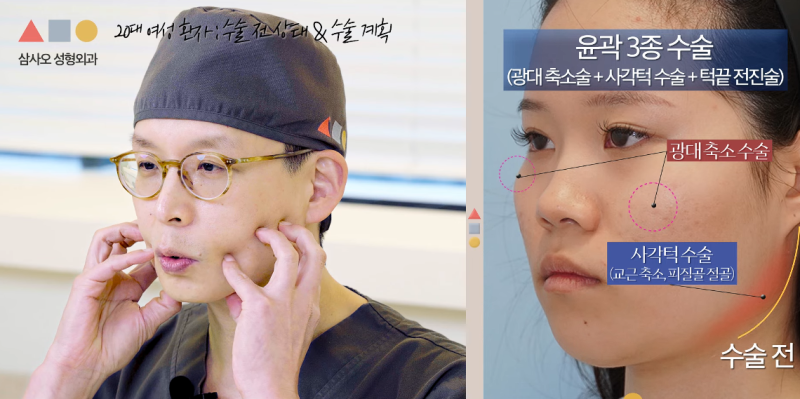
The Choice for a Three-Dimensional Facial Shape, 3-Type Facial Contouring Surgery
Many women in their 20s consider facial contouring surgery to improve bumpy facial lines and achieve a softer impression. The patient in this case study visited our clinic to simultaneously improve prominent cheekbones, an angular square jaw, and a receding chin that made her mouth appear relatively protruded.
Because balancing the overall face was more important than a single-area surgery, we established a surgical plan for the so-called '3-type contouring,' which combines cheekbone reduction, square jaw surgery, and genioplasty (chin advancement).
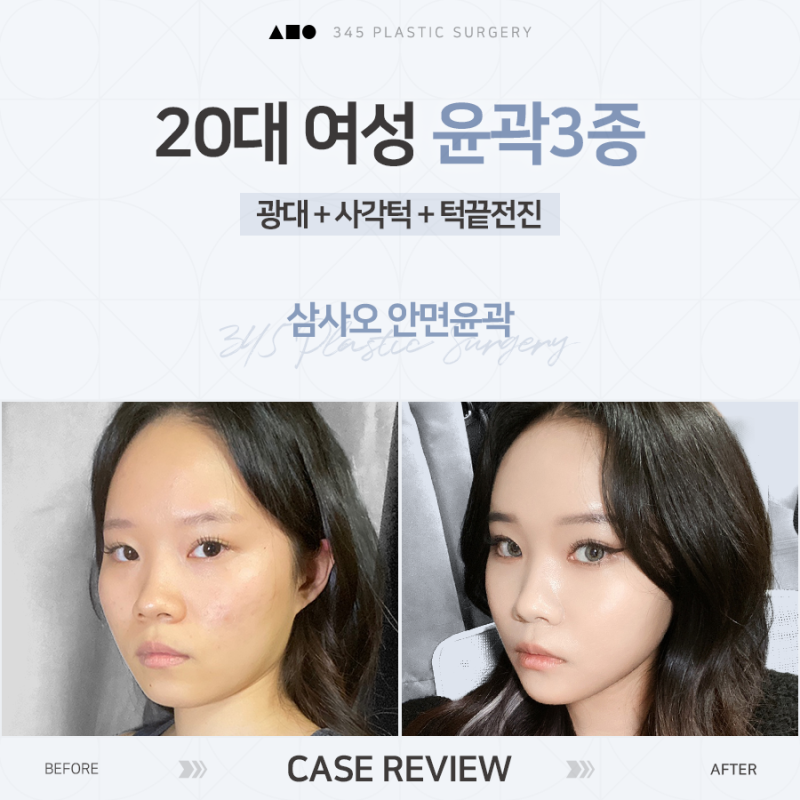
Pre-Operative Diagnosis: Complex Concerns of Cheekbones, Square Jaw, and Receding Chin
The patient had usually corrected her facial shape with makeup but wanted a fundamental skeletal improvement. As a result of a precise diagnosis, the following characteristics were observed:
- Protruding cheekbones: The face appeared wide due to the side cheekbones spreading broadly to the left and right.
- Developed square jaw: The developed mandibular angle gave a strong impression.
- Receding chin (micrognathia) aspect: The tip of the chin was pushed back, making it look like a protruding mouth and forming a double chin.
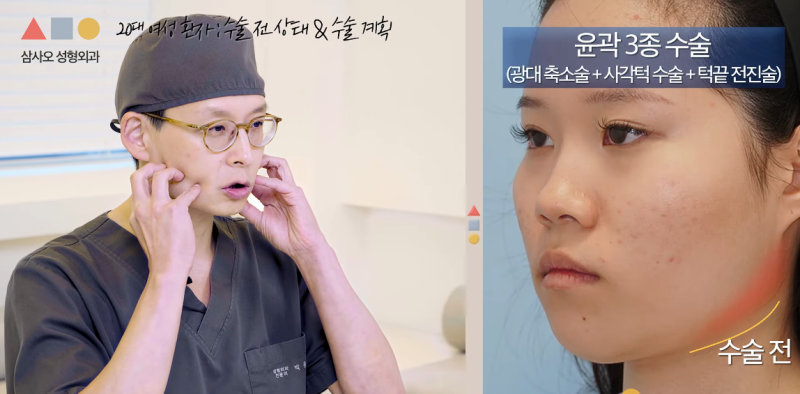
Personalized Surgical Plan and Process
Rather than simply shaving the bone, we proceeded with a complex surgery that considered the soft tissues and overall harmony.
- Cheekbone Reduction: Repositioning the protruding cheekbones to reduce the horizontal width of the face.
- Square Jaw Surgery (Cortical Ostectomy + Masseter Muscle Reduction): Maximizing the frontal effect by combining cortical ostectomy to reduce bone thickness and masseter reduction to decrease the volume of the chewing muscles.
- Genioplasty (Chin Advancement): Moving the receded chin bone forward to create a refined jawline and alleviate the appearance of a protruding mouth.
Recovery Process by Stage: Swelling Management and Tissue Stabilization
For facial contouring surgery, recovery period management determines the satisfaction of the results more than the immediate post-operative state.
1 Month Post-Op: The Period of Residual Swelling
At 1 month post-op, major swelling subsides, but residual swelling still remains, which may make the facial line appear somewhat round. This is a very natural phenomenon that occurs during the recovery process.

3 to 6 Months Post-Op: Line Settlement and Sagging Check
After 3 months, most of the major swelling disappears, and the originally intended contour begins to reveal itself. From this point on, we carefully check for any skin sagging due to tissue relaxation. Fortunately, for patients in their 20s, skin elasticity is excellent, so it often settles well without the need for additional lifting procedures.
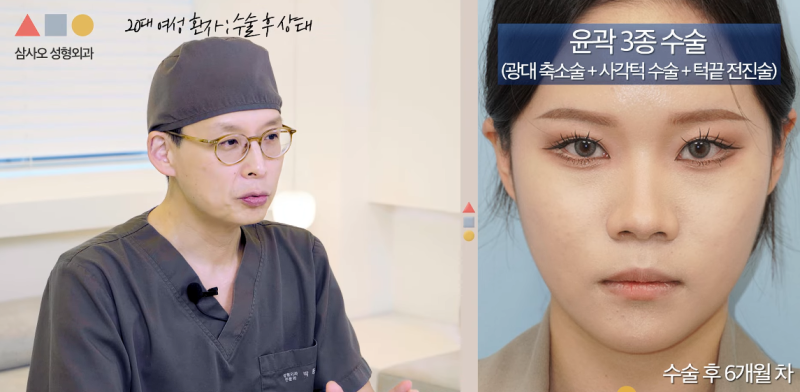
Conclusion: Everyday Changes Created by Precise Diagnosis
For the patient in this case study, the tissues fully stabilized 6 months after the surgery, and she was able to maintain a smooth V-line without any additional lifting procedures. With increased confidence in her appearance, she is also experiencing positive changes in her daily life.
As facial contouring is a highly difficult surgery that must consider bones, muscles, and fat layers all together, it is important to choose the right surgical method for yourself through sufficient consultation with a specialist.

Frequently Asked Questions
When should I consider a 3-in-1 facial contouring surgery?
3-in-1 facial contouring surgery can be considered when you want to simultaneously improve prominent cheekbones, an angular jaw, and a receding chin that makes your mouth appear protruded. It is effective in balancing the overall face.
What is the process of 3-in-1 facial contouring surgery?
3-in-1 facial contouring surgery involves a combination of cheekbone reduction, square jaw reduction, and genioplasty. It improves the facial line through cheekbone repositioning, cortical osteotomy and masseter muscle reduction, and chin bone advancement.
How long is the recovery period after 3-in-1 facial contouring surgery?
After 3-in-1 facial contouring surgery, major swelling begins to subside around 1 month, and most swelling resolves by 3 months, revealing the contour. Complete tissue stabilization takes about 6 months.
Is there any skin sagging after facial contouring surgery for patients in their 20s?
Patients in their 20s often have excellent skin elasticity, so they usually settle well without separate lifting procedures. We meticulously check for sagging due to tissue relaxation 3 to 6 months after surgery.
When can I see the final results after facial contouring surgery?
The final results of facial contouring surgery can be confirmed after 6 months when the tissues have completely stabilized. At this time, the intended contour, such as a smooth V-line, is completed.
What is the most important thing before facial contouring surgery?
Facial contouring surgery is a highly complex procedure that considers bone, muscle, and fat layers, so it is most important to choose the right surgical method for you through sufficient consultation with a specialist.