2026-06-04
How to Prevent Cheek Sagging After Zygoma Reduction: Creating a Smooth Line with Double-Adhesion Gwangfting
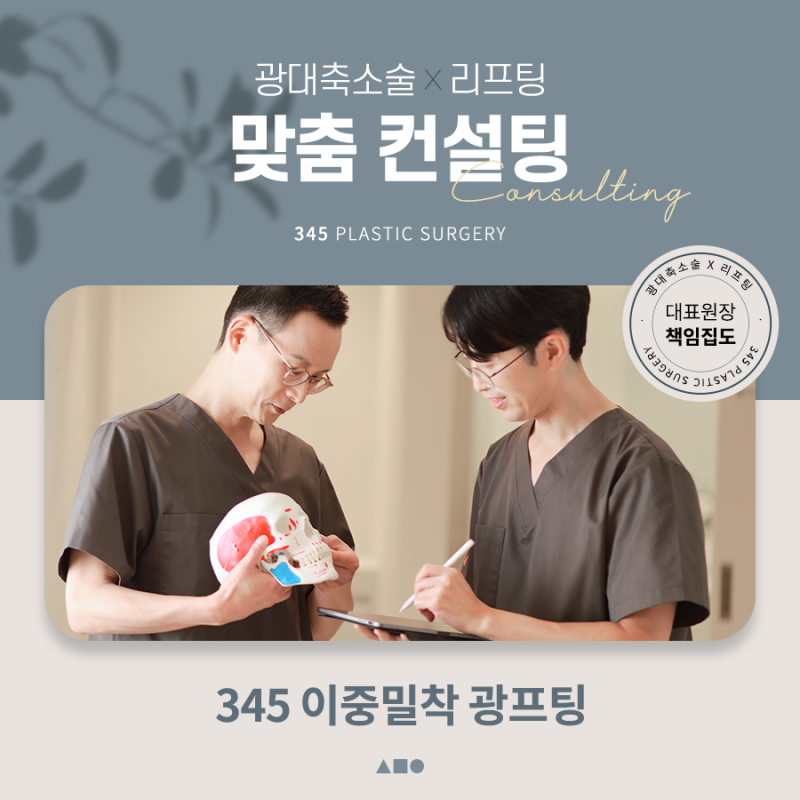
To address concerns about cheek sagging that can occur after cheekbone surgery, we explain in detail 'Double-Adhesion Gwangfting', which combines zygoma reduction and lifting. Discover the unique know-how of 345 Plastic Surgery, which considers both bone changes and soft tissue elasticity simultaneously to help you achieve a natural and smooth facial line.
What Causes Cheek Sagging After Cheekbone Surgery?
Cheek sagging is a natural phenomenon that occurs as skin elasticity decreases with aging. However, sagging that appears after facial contouring surgery, especially zygoma reduction, must be approached from a slightly different perspective.
If a large amount of bone is resected during surgery, or if the original facial fat layer is thick and heavy, there is a possibility that the remaining soft tissue will sag downward as much as the bone is reduced. This is not a side effect common to all patients, and it can appear differently depending on the individual's skin condition and skeletal structure.
'345 Double-Adhesion Gwangfting' Considering Both Bone and Soft Tissue
At 345 Plastic Surgery, to reduce the concern of sagging that may occur after zygoma reduction, we perform 'Double-Adhesion Gwangfting', a customized consulting solution that combines zygoma reduction and lifting.
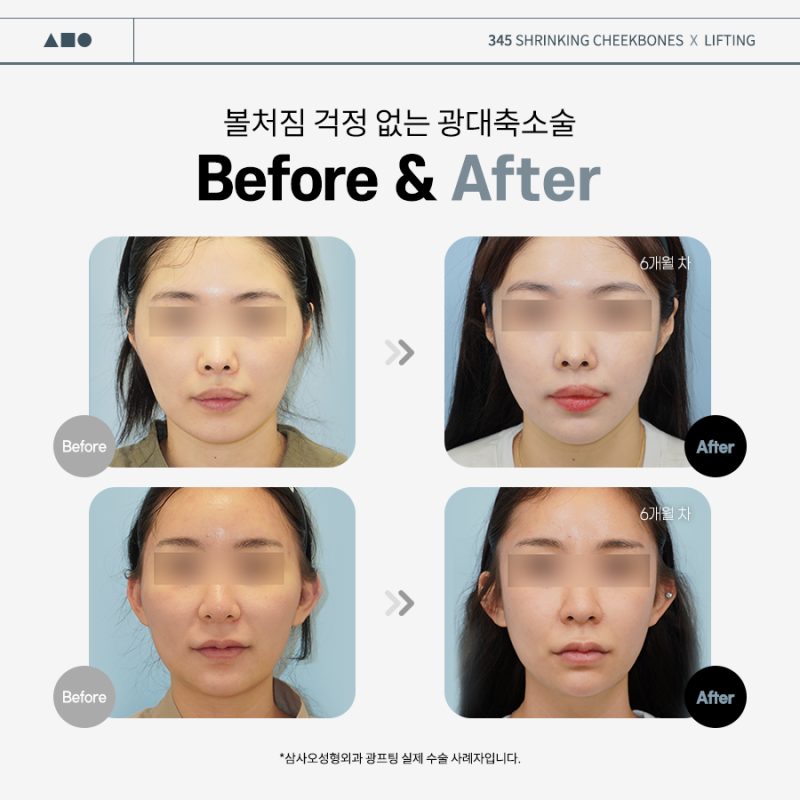
Gwangfting is performed simultaneously by predicting changes in the skin and fascial layers in accordance with the changes in the reduced cheekbones. Through this, you can expect both a three-dimensional cheekbone line and an elastic facial line.
Recommended Candidates for Double-Adhesion Gwangfting
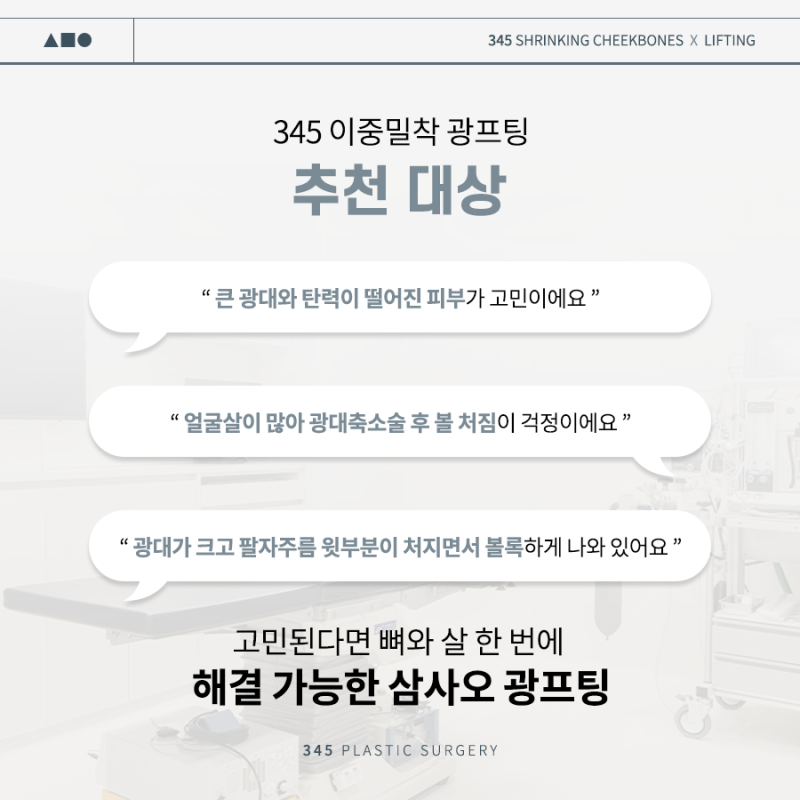
- Those who are concerned about both large cheekbones and decreased elasticity simultaneously
- Those with a lot of facial fat who are worried about cheek sagging after surgery
- Those with large cheekbones and a bulging, sagging appearance above the nasolabial folds
The Synergy Effect of Zygoma Reduction and Lifting
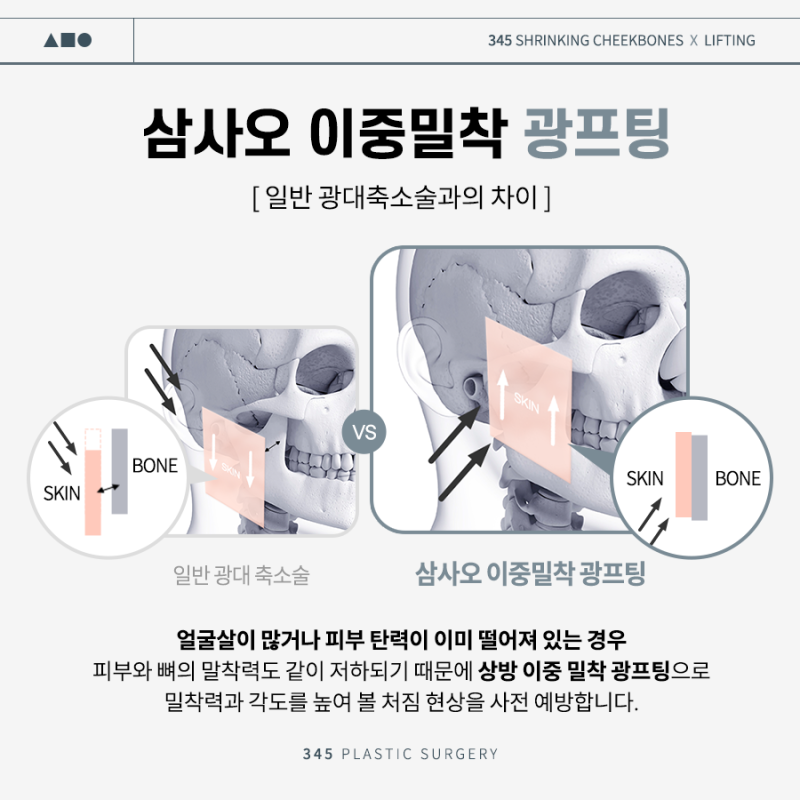
Unlike general zygoma reduction, Double-Adhesion Gwangfting goes through the following systematic process.
- FULL Zygoma Reduction: After osteotomy of a portion of the cheekbone, it is rotated and repositioned inward to three-dimensionally improve the front, side, and 45-degree cheekbones.
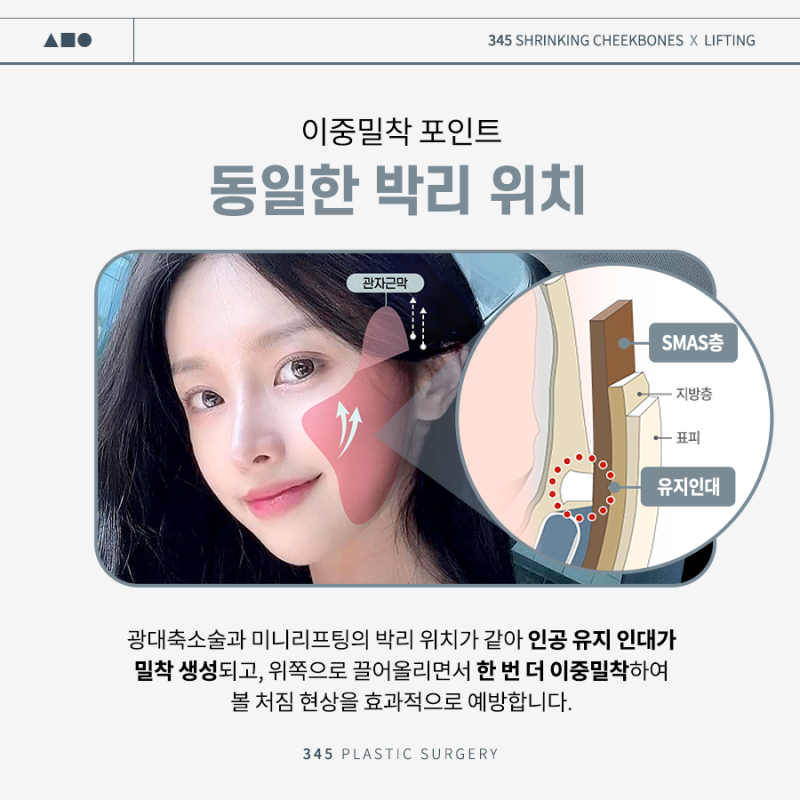
- Mini Lifting: The quadruple structure of the skin, SMAS (Superficial Musculoaponeurotic System) layer, retaining ligaments, and temporal fascia is pulled upward to promote a slender V-line.
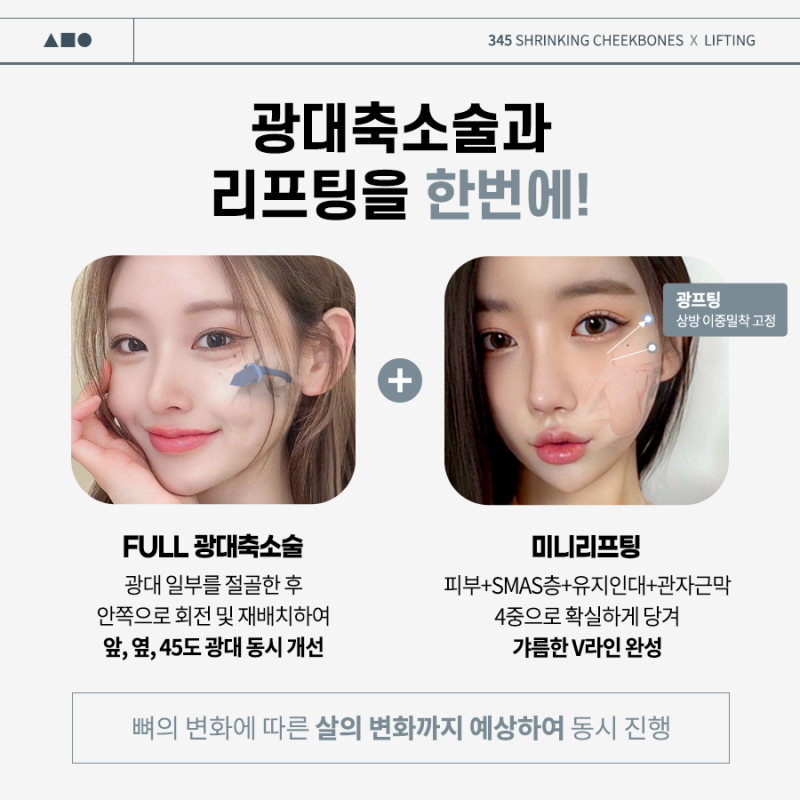
In particular, by setting the dissection location for both the zygoma reduction and lifting to be the same, it induces the close formation of artificial retaining ligaments. The double-adhesion method, which pulls upward one more time, helps prevent cheek sagging.
Composition of Personalized Lifting Solutions
345 Plastic Surgery selects the appropriate lifting method according to each patient's skin thickness and degree of sagging.
- Non-Incisional Lifting (Zygoma Plma Lifting): Suitable for those who want an elastic V-line without incisions.
- Incisional Lifting (Zygoma Mini Lifting): Performed when a more definitive pulling effect and quick recovery are desired.
- Zygoma SMAS Volume Lift: Sagging areas are pulled, and areas lacking volume are filled through fat grafting.
Collaborative Care and Responsible Surgery by Experienced Medical Staff
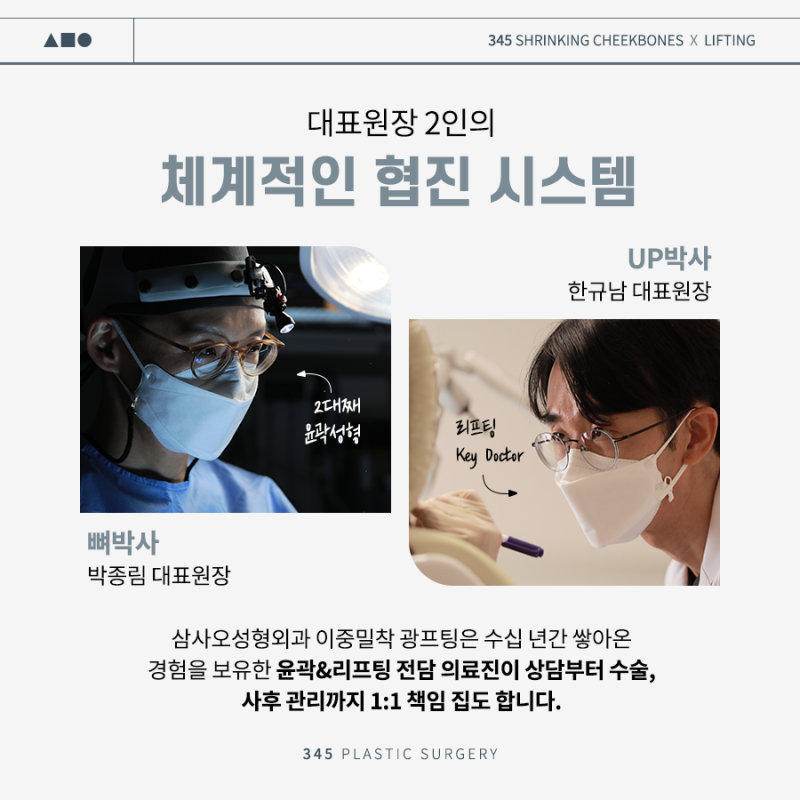
The core of Double-Adhesion Gwangfting is the collaboration of medical staff with abundant clinical experience in the fields of facial contouring and lifting. At 345 Plastic Surgery, Dr. Park Jong-lim, Chief Director in charge of facial contouring, and Dr. Han Kyu-nam, Chief Director in charge of lifting, provide 1:1 responsible care from consultation to surgery and aftercare.
'Gwangfting', an officially registered trademark, is a differentiated surgical method unique to 345 Plastic Surgery, increasing postoperative satisfaction by enhancing the adhesion between bone and soft tissue.



https://youtu.be/nGlG5TNSqUs?si=Kjph8paaJ3CFHkka
Frequently Asked Questions
What causes cheek sagging after zygoma reduction surgery?
Cheek sagging can occur if a large amount of bone is resected during surgery, or if the face originally has a thick and heavy fat layer. As the bone is reduced, the remaining soft tissues sag downwards, and this varies depending on an individual's skin condition and skeletal structure.
What kind of surgery is Double-Adhesion Kwang-Pting (Zygoma Reduction with Lifting)?
Double-Adhesion Kwang-Pting is a customized surgery that combines zygoma reduction with lifting to reduce concerns about cheek sagging. It simultaneously anticipates changes in the skin and fascial layers in response to the reduced cheekbones, increasing the adhesion between bone and soft tissue to create a three-dimensional and elastic facial line.
Who is recommended for Kwang-Pting surgery?
Kwang-Pting surgery is recommended for those who are concerned about both prominent cheekbones and decreased skin elasticity. It can also be a suitable solution for those with a lot of facial fat who are concerned about cheek sagging after surgery, or for those with large cheekbones where the area above the nasolabial folds appears to sag prominently.
Are different lifting methods applied to each patient?
Yes, it is customized according to each patient's skin thickness and degree of sagging. An appropriate method is chosen from non-incisional lifting to improve elasticity without incision, incisional mini-lifting for a definite pulling effect, or SMAS volume lift combined with fat grafting.
What synergistic effects are there when combining zygoma reduction and lifting?
By setting the dissection positions of the two surgeries to be the same, artificial retaining ligaments can be induced to form in close adhesion. This double-adhesion method, which pulls up the quadruple structure of the skin, SMAS layer, retaining ligaments, and temporal fascia once more, effectively prevents cheek sagging.