2026-06-04
'Gwang-fting' to Reduce Cheek Sagging Concerns After Zygoma Reduction: Principles and Effects
Introducing 345 Plastic Surgery's 'Gwang-fting', designed to prevent the cheek sagging that can occur after zygoma reduction. We have summarized the features and advantages of this surgical method, which performs zygoma reduction and lifting simultaneously to achieve a firm and three-dimensional facial contour.

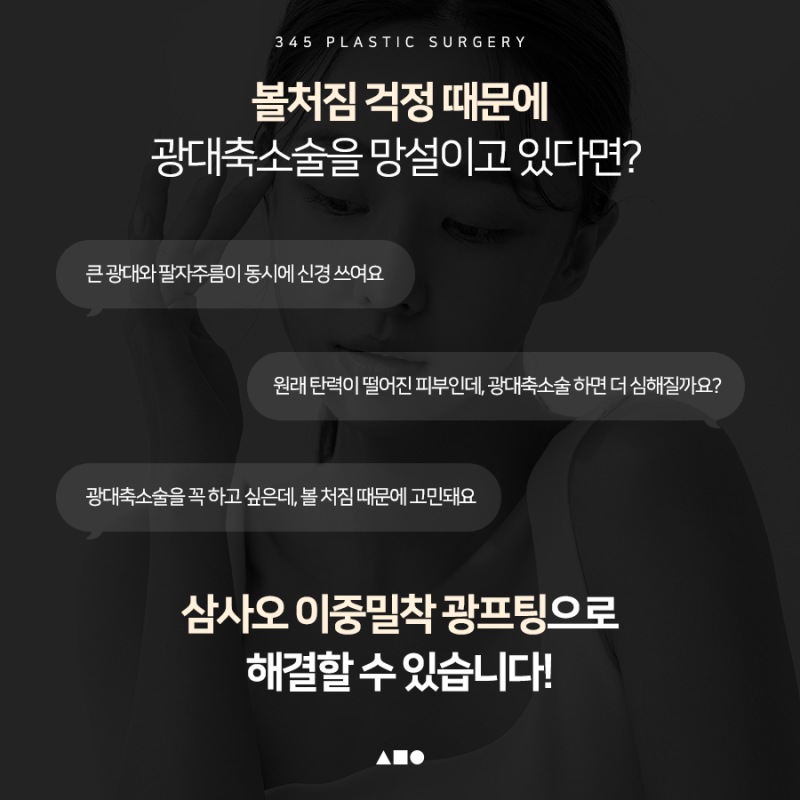
Why Does Cheek Sagging Occur After Zygoma Reduction?
Zygoma reduction is a surgery that repositions protruding cheekbones to reduce facial width and create a softer impression. However, the "cheek sagging" phenomenon, where the remaining soft tissues (skin and flesh) droop downwards as the bone volume decreases, is a major reason many patients hesitate to undergo the surgery. This concern can be especially significant if you have low skin elasticity or large cheekbones.
Core Principles of 345's 'Double-Adhesion Gwang-fting'
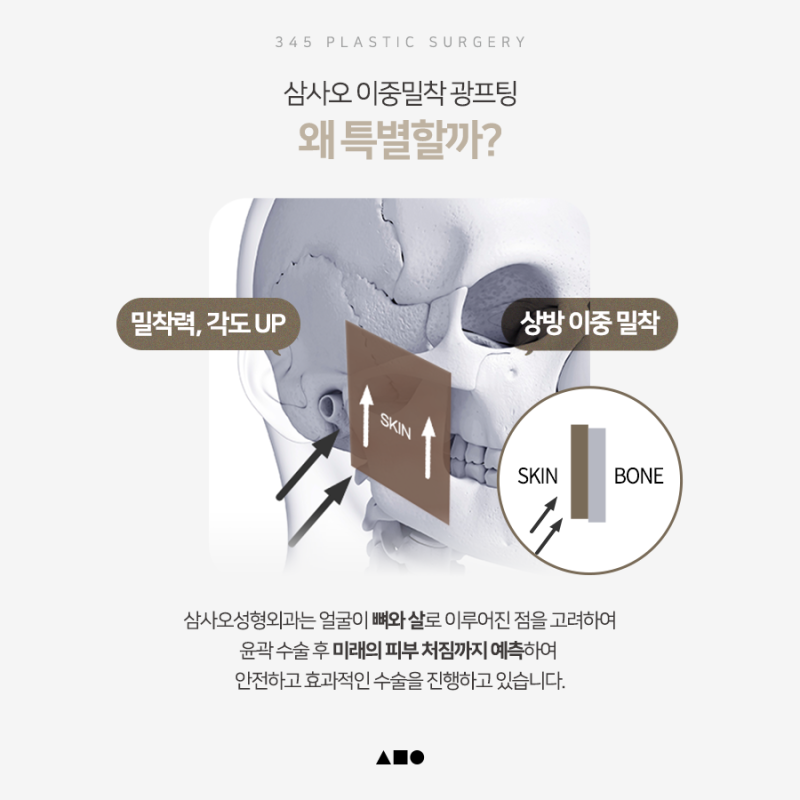
Independently developed by 345 Plastic Surgery, Gwang-fting is a specialized surgical method that combines zygoma reduction with lifting to proactively prevent sagging that may occur post-surgery. The core of this procedure is not just shaving the bone, but firmly anchoring the potentially sagging skin tissues upwards.
Adding Elasticity with Double Adhesion
After resecting and repositioning the cheekbone, Gwang-fting is performed in conjunction with a mini lifting, minimal incision lifting, or SMAS (Superficial Musculoaponeurotic System) volume lift, depending on the individual's skin condition and degree of sagging. Because the dissection planes for both the reduction and the lifting are the same, tissues that act as artificial retaining ligaments are formed during the surgical process, allowing you to expect a result where both bone and flesh are doubly adhered upwards.
We Recommend Gwang-fting for the Following Individuals:
- Those who are concerned about having large cheekbones and deep nasolabial folds simultaneously
- Those with pre-existing low skin elasticity who are worried about sagging after contouring surgery
- Those who want an overall facial lifting effect along with zygoma reduction
- Those who want to reduce bone size while maintaining a firm facial line
Specialist Collaboration and Safe Aftercare
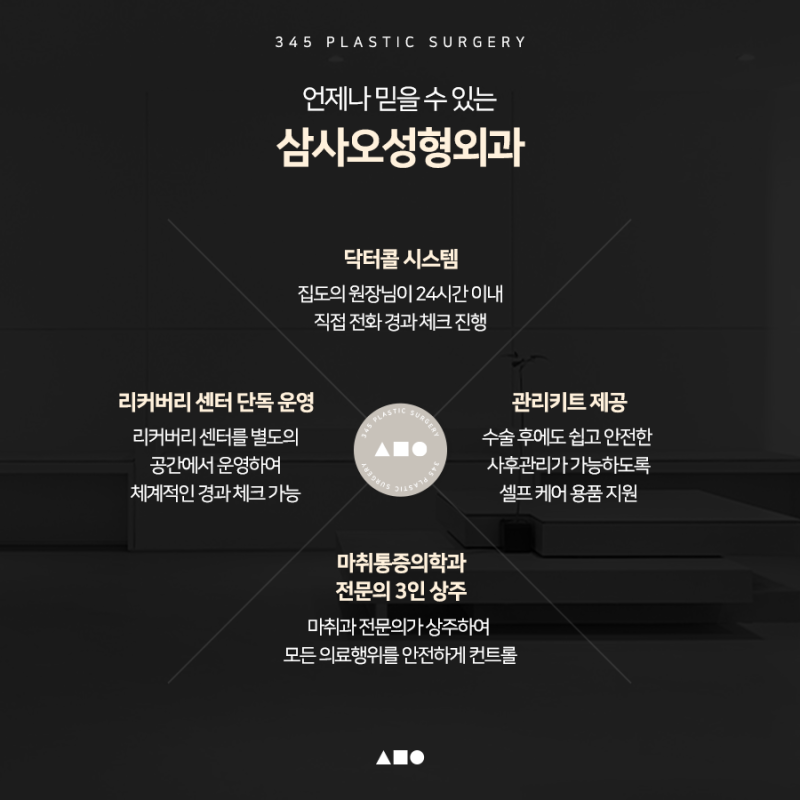
The structure of the face consists of a harmony between bone and soft tissue. 345 Plastic Surgery aims for more precise results through a collaborative system between Dr. Park Jong-lim, a bone specialist, and Dr. Han Kyu-nam, a flesh (soft tissue) specialist. In addition, we operate a systematic After Care program in a separate recovery center to help patients return to their daily lives quickly post-surgery.
Gwang-fting is a unique solution exclusive to 345 Plastic Surgery, with its technical prowess officially recognized through trademark registration. It is important to select the most suitable lifting method for yourself through a precise diagnosis before surgery.
Frequently Asked Questions
Why does cheek sagging occur after zygoma reduction surgery?
Cheek sagging occurs because the remaining soft tissue sags downwards as the bone volume decreases. When the cheekbones are repositioned to reduce facial area, the skin and flesh remain in excess of the reduced bone volume, which can lead to sagging due to gravity.
How is 'Kwang-Pting' different from general zygoma reduction surgery?
Yes, Kwang-Pting differs in that it performs bone reduction and lifting simultaneously. It is a dual-adhesion surgical method that not only shaves the bone but also strongly fixes the skin tissue upwards to prevent cheek sagging in advance.
What lifting procedures are performed concurrently with Kwang-Pting surgery?
Customized lifting procedures are performed concurrently depending on the patient's skin condition and degree of sagging. Specifically, mini-lifting, minimal incision lifting, or SMAS (Superficial Musculoaponeurotic System) volume lift are applied to help the bone and flesh adhere upwards in a dual manner.
Who is Kwang-Pting most suitable for?
Kwang-Pting is suitable for individuals with large cheekbones who have deep nasolabial folds or reduced skin elasticity. It is also recommended for those who desire overall facial lifting effects along with zygoma reduction, or who wish to maintain a firm facial line while reducing bone size.
How is post-operative care managed?
Post-operative care is provided through a systematic after-care program at a dedicated recovery center. This helps patients quickly return to their daily lives after surgery and is safely managed through a collaborative system involving bone specialists and soft tissue specialists.