2026-06-04
Double Eyelid Surgery Guide: Differences Between Natural Adhesion and Incision Methods & Recommended Candidates
The eyes are the most crucial factor in determining first impressions. Which double eyelid surgery method is right for you? We analyze the detailed characteristics of the natural adhesion and incision methods offered by 345 Plastic Surgery, along with the ideal surgical approach based on eyelid thickness and fat volume. Discover 1:1 customized eye surgery information backed by 22 years of clinical know-how.

Among all facial features, the eyes are where people's gaze naturally lands first. Because the size and shape of the eyes have a tremendous impact on your overall impression, many people seek a positive image transformation through double eyelid surgery.
Although double eyelid surgery is a widely popular procedure, the appropriate type of double eyelid surgery varies depending on each individual's eyelid fat volume, skin thickness, and muscle strength. Beyond subjective preferences like wanting a 'natural' or 'glamorous' look, it is crucial to find a 'Custom Fit' surgical method that best suits your unique anatomical structure.
1. Two Core Types of Double Eyelid Surgery: Natural Adhesion and Incision Methods
Double eyelid surgery methods are broadly divided into natural adhesion and incision methods, depending on whether an incision is made. Since both methods have distinct pros and cons, the decision should be made after accurately assessing your current eye condition.
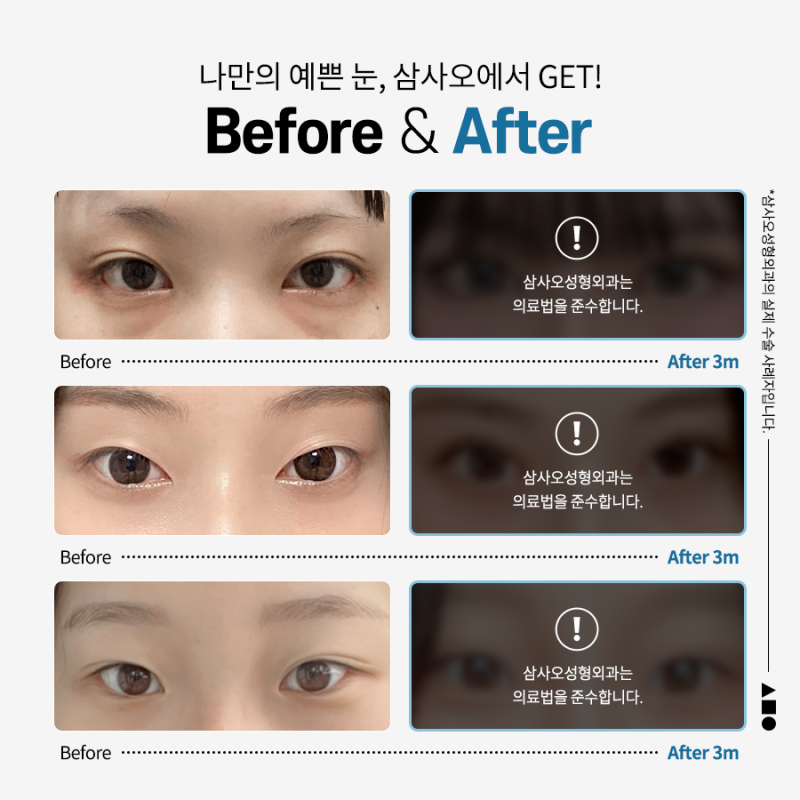
At 345 Plastic Surgery, we reflect the individual needs of the patient while comprehensively considering their original eye conditions (such as skin thickness and the presence of fat) to create the optimal design.
2. '345 Custom Fit Natural Adhesion' for Reduced Scarring
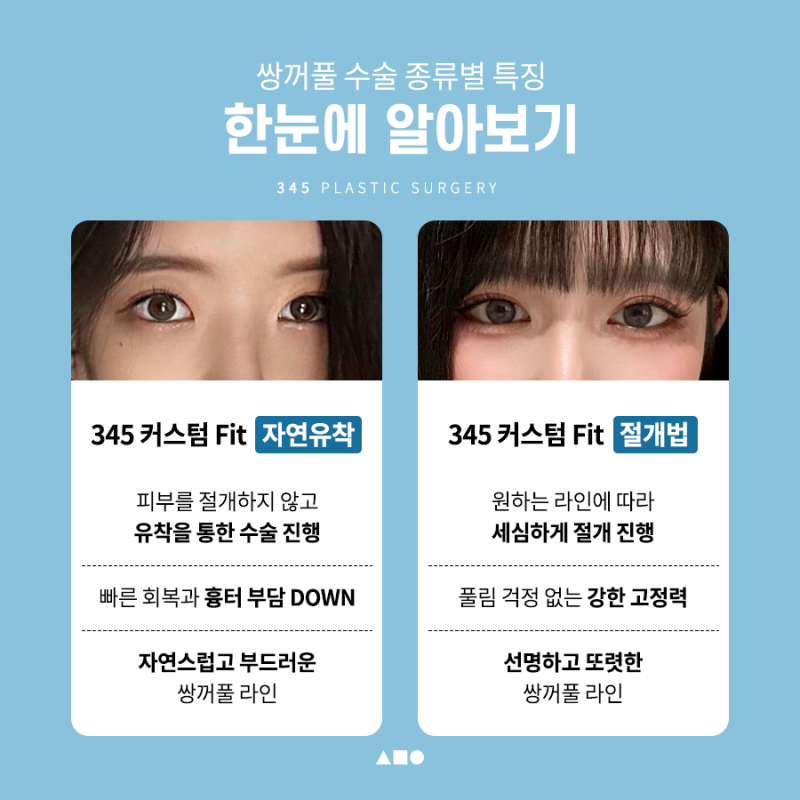
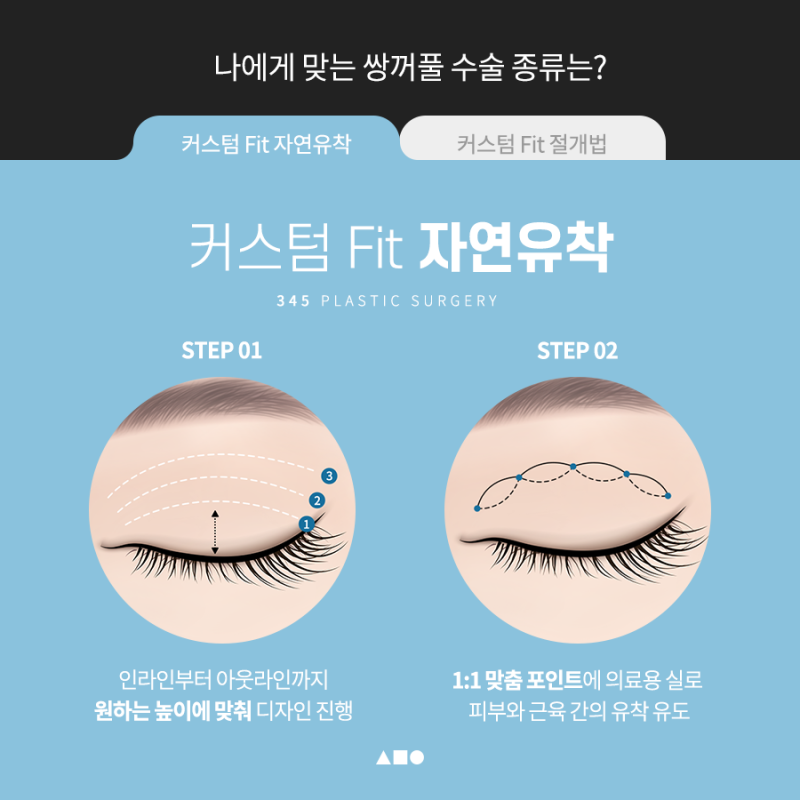
The natural adhesion method does not involve cutting the skin. Instead, threads are passed through microscopic slits to induce a natural adhesion between the skin and the levator muscle (the muscle that opens the eye).
- Characteristics: After designing the desired height—ranging from an in-line to an out-line—adhesion is induced at 1:1 customized points.
- Advantages: With relatively less bruising and swelling, recovery is fast. It is ideal for those who prefer a seamless, natural-looking line with minimal concern for scarring.
3. '345 Custom Fit Incision Method' for Clear and Defined Eyes
The incision method involves making an incision along the planned double eyelid line, removing unnecessary soft tissues such as excess fat and muscle, and then suturing it to create the crease.
- Characteristics: A precise incision is made along the desired line to enhance fixation strength.
- Advantages: There is relatively less worry about the line unraveling. Its strong fixation allows for the creation of clear, defined, and striking eyes.
4. Self-Diagnosis Checklist: Which Double Eyelid Surgery is Right for Me?
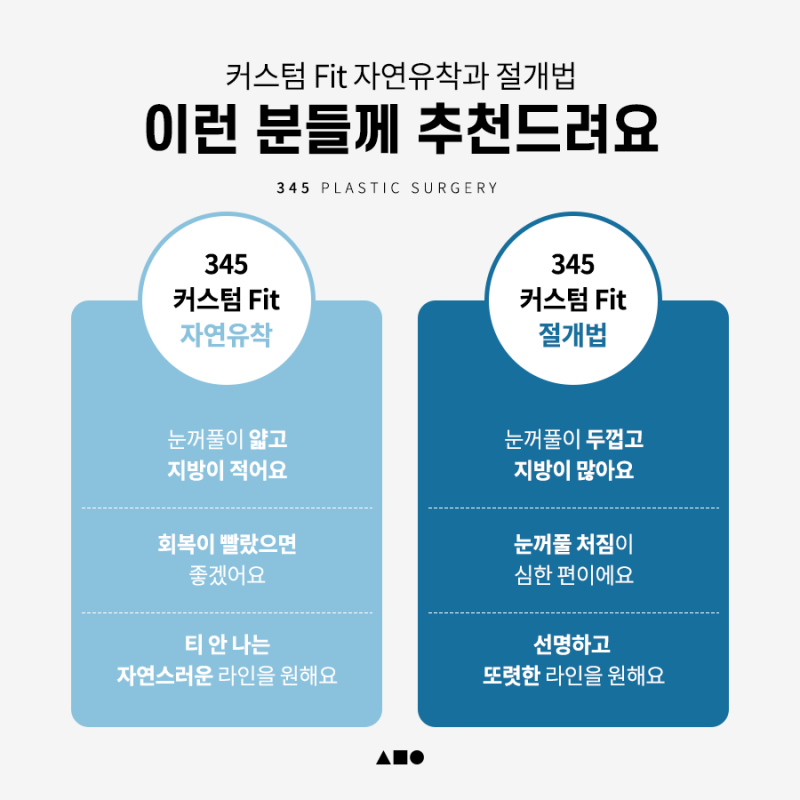
It is difficult to say that one surgical method is universally superior to the other. You can use the criteria below to gauge which approach might suit you better.
| Category | Recommended for Natural Adhesion | Recommended for Incision Method |
|---|---|---|
| Eyelid Condition | Thin skin with minimal fat | Thick skin with excess fat |
| Degree of Sagging | Little to no eyelid sagging | Presence of eyelid sagging (e.g., ptosis symptoms) |
| Recovery Period | Those wanting a quick return to daily life | Those who can afford a sufficient recovery period |
| Preferred Line | Natural and soft lines | Large, clear, and glamorous lines |
5. Expert Advice for Highly Satisfactory Results
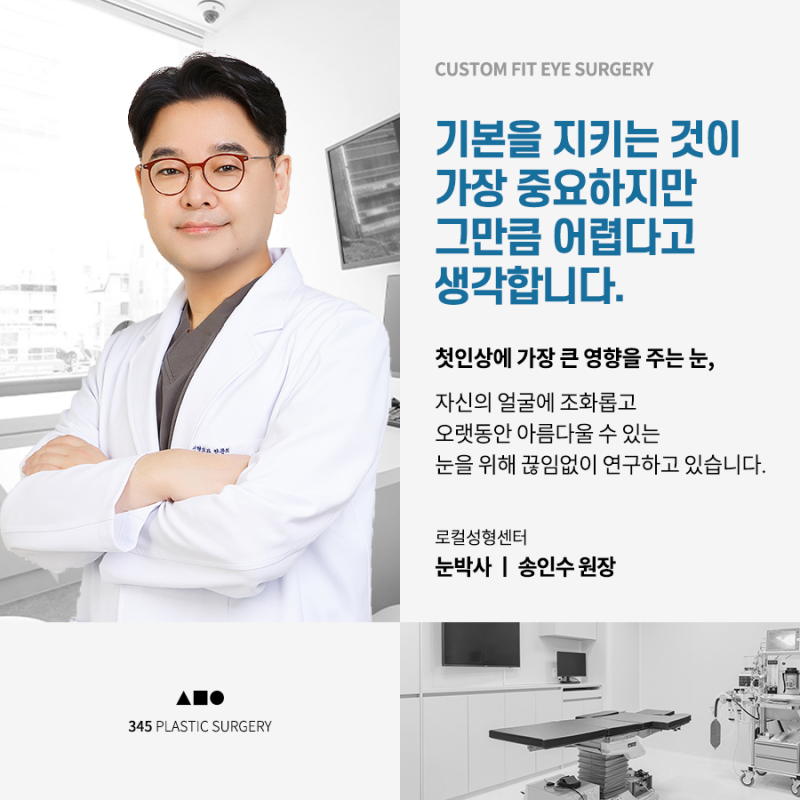
To achieve successful results in double eyelid surgery, it is essential to precisely analyze each individual's unique facial proportions and the degree of pupil exposure. At 345 Plastic Surgery, Dr. Song In-soo, who possesses over 22 years of rich clinical experience, personally conducts 1:1 customized consultations to help you find the line that best complements your features.
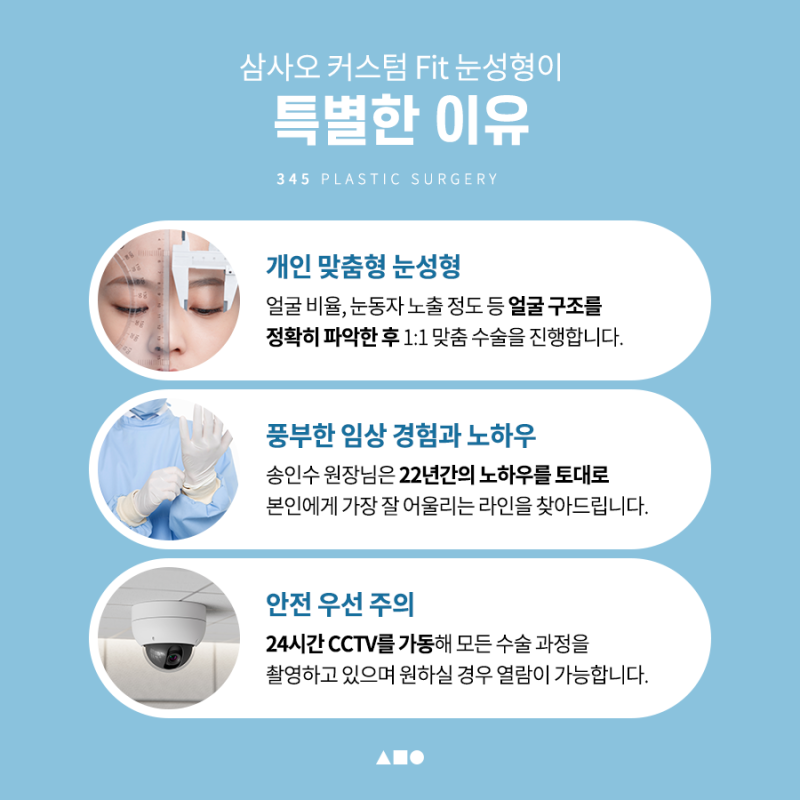
Since temporary swelling or bruising may occur after surgery depending on the individual, meticulous aftercare following the medical staff's instructions must accompany the procedure to ensure a stable recovery.
Frequently Asked Questions
What is the biggest difference between the natural adhesion method and the incisional method?
The biggest difference is whether the skin is incised or not. The natural adhesion method induces adhesion with a thread through a microscopic groove without incision, while the incisional method creates a double eyelid line by directly incising the skin, removing unnecessary fat and muscle, and then suturing.
My eyelid skin is thick and has a lot of fat, what surgical method is good for me?
The incisional method is recommended. If the eyelid skin is thick, has a lot of fat, or has eyelid ptosis, the soft tissue should be appropriately removed through incision and firmly fixed to create a clear and distinct double eyelid line without worrying about it coming loose.
What are the advantages of the natural adhesion method?
The biggest advantages are less burden of scars and faster recovery. Since the skin is not incised, there is relatively less bruising and swelling after surgery, and it is a very suitable surgical method for those who prefer an unnoticeable and natural double eyelid line.
How long does the recovery period take after double eyelid surgery?
The recovery period varies depending on the surgical method and individual constitution. The natural adhesion method has relatively less swelling and bruising, so daily life can be resumed quickly, but the incisional method requires a relatively longer recovery period because tissue is excised. Post-operative care according to the medical staff's guidance is important.
I'm worried that my double eyelid line might come loose, what should I do?
You can consider the incisional method, which has strong fixation. The incisional method precisely incises along the planned line and adjusts and fixes the tissue, so there is relatively less chance of the line coming loose compared to the natural adhesion method. Consultation with a specialist is recommended for an accurate diagnosis.