2026-06-04
Must-Read Before Square Jaw Reduction Reviews! Surgical Process and Terminology: Cortical Osteotomy & Masseter Reduction
Square jaw reduction is more than just shaving bone; it is a three-dimensional process that considers the overall harmony of the face. While checking before-and-after reviews is important, accurately understanding professional terms like cortical osteotomy, masseter reduction, and buccal fat removal tailored to your face shape is the first step toward highly satisfying results.

Square Jaw Reduction: A 3D Design Beyond Simple Resection
Many people visit plastic surgery clinics dreaming of a slimmer facial line after reading square jaw reduction reviews. However, achieving satisfactory results requires a sophisticated process that goes beyond simply cutting off the angular parts of the jawbone. Square jaw reduction is generally performed with the goal of creating changes along two main axes: the profile and the frontal view.

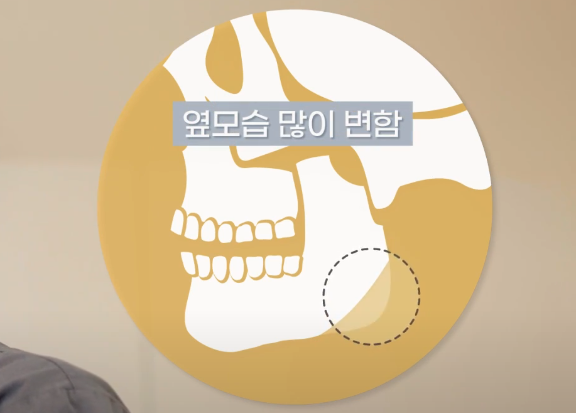
1. Changes in the Profile Line: Mandibular Angle Resection
The traditional method of square jaw surgery involves making an incision to trim the mandibular angle (the posterior angle of the jawbone), which is the angular bone below the ear. Through this, the steep angle seen from the side is softened, and as the jawline is raised, you can expect the neck to look longer and the overall impression to become more refined.

2. Width Improvement for the Frontal Effect
There are many cases where patients are satisfied with their profile but remain concerned because their facial width still appears wide from the front. For those whose jawbones do not flare outward, simple resection alone may yield an insufficient frontal effect. To compensate for this, a process of reducing the thickness of the tissues and bones in a vertical direction is performed simultaneously to narrow the overall facial width.
Explanation of Key Terms Frequently Seen in Square Jaw Reduction Reviews
During surgical consultations, you will encounter medical terms that are not commonly used in everyday life. Knowing what role each term plays will help you choose the surgical method that is right for you.
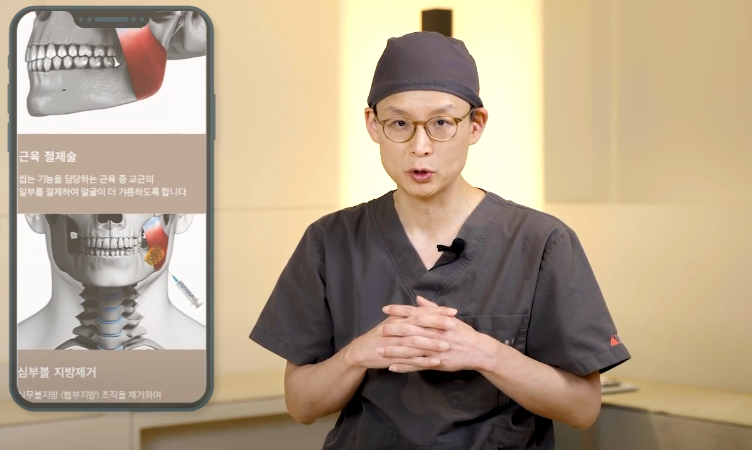
- Cortical Osteotomy: The jawbone consists of three layers, and this method involves thinly shaving off the outermost layer, the 'cortical bone.' While maintaining the structural function of the bone, it reduces the actual width of the face, providing a slimmer appearance when viewed from the front.
- Masseter Muscle Reduction: If the masseter muscle, which is used for chewing food, is overdeveloped, it is appropriately reduced to decrease the volume at the back of the jaw.
- Buccal Fat Removal: This involves removing the fat in the cheek area below the cheekbones, commonly referred to as 'deep cheek fat.' By adjusting the volume of the soft tissues as well as the bone, a smoother facial line is achieved.

A Complex Solution for Harmonious Results
A successful square jaw reduction is not simply about shaving off a large amount from one area, but rather meticulously adjusting the volume of the cortical bone, masseter muscle, and fat down to the millimeter. The key is to consider facial asymmetry on both sides and create a natural curve that matches the overall proportions.
The results of this process can vary depending on the operating surgeon's extensive clinical experience and anatomical knowledge. Establishing a surgical plan after receiving a comprehensive diagnosis of your skeletal structure, skin elasticity, and muscle mass is the path to a smooth recovery and satisfactory results.

Frequently Asked Questions
Is square jaw surgery only about shaving off bone?
No, in addition to mandibular angle reduction surgery that shaves off bone, soft tissues must also be adjusted. To enhance the frontal effect, a cortical osteotomy to reduce bone thickness, masseter muscle reduction to shrink developed jaw muscles, and buccal fat removal to eliminate deep cheek fat are performed concurrently to create a three-dimensional change.
What is cortical osteotomy?
Cortical osteotomy is a surgical method that shaves off the outermost layer of the three layers that make up the jawbone, called the cortical bone. It maintains the function of the bone structure while reducing the actual width of the face, so you can expect a more slender frontal effect when viewed from the front.
Why is masseter muscle reduction necessary during square jaw surgery?
It is necessary to reduce the volume of the masseter muscle when it is excessively developed and makes the jaw appear wide. When bone resection alone has limitations, appropriate muscle reduction can decrease the volume in the back of the jaw, creating a smoother and more slender jawline.
How can I reduce my face width when viewed from the front?
Simple mandibular angle reduction alone may not be enough, so cortical osteotomy, masseter muscle reduction, and buccal fat removal should be performed concurrently. By thinning the bone, and reducing the volume of unnecessary muscles and deep cheek fat, the thickness of the tissue and bone in the vertical direction decreases, narrowing the overall face width.
What is most important for successful square jaw surgery?
It is important to receive a comprehensive diagnosis of your bone structure, skin elasticity, muscle mass, etc., and to establish a customized surgical plan. It's not simply about shaving off a lot of bone, but meticulously adjusting the amount of cortical bone, masseter muscle, and fat in millimeter units to improve asymmetry on both sides of the face and create a natural curve.