2026-06-04
Facelift vs. SMAS Volume Lift: What's the Difference? 3D Lifting Achieved with Minimal Incisions
This post compares the characteristics of a traditional facelift and the SMAS Volume Lift, designed to improve sagging skin and collapsed facial contours caused by aging. Going beyond simple skin pulling, it professionally discusses how SMAS dissection and fat repositioning can achieve a voluminous, youthful appearance, highlighting the importance of selecting customized surgical stages for each patient.

Skin Sagging Over Time: Which Lifting Procedure is Right for Me?
The aging process that occurs as time passes comes naturally to everyone. As skin elasticity decreases, sagging occurs, and wrinkles deepen, the facial lines often lose their smoothness. If these changes are a concern, you can expect positive improvements through medical assistance. Today, among various lifting surgeries, we will take a closer look at the representative Facelift and the 'SMAS Volume Lift', which creates a three-dimensional effect by dissecting down to the SMAS layer with relatively minimal incisions.

What is a SMAS Volume Lift?
The SMAS Volume Lift is a lifting method whose name reflects the core process of the surgery. Here, 'SMAS' stands for the Superficial Musculo-Aponeurotic System, which is a thin membrane enveloping the muscles beneath the skin. Only by precisely dissecting and pulling this layer can you truly experience the longevity and transformative results of the lift.
- SMAS (Fascia Layer) Lifting: It firmly secures the loosened fascia layer, providing a solid improvement from the foundation.
- Volume Optimization: Rather than simply pulling, it removes unnecessary fat and fills in areas lacking volume to create a balanced fullness across the entire face.
- Lifting: It pulls up sagging areas to complete a firm and elastic facial contour.
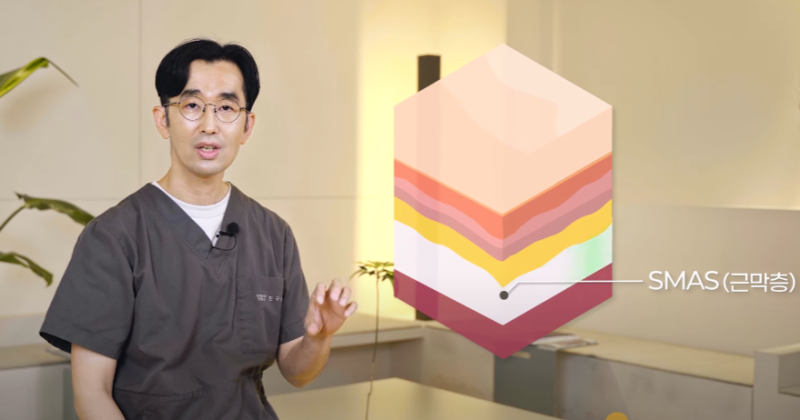
Differences Between a Facelift and SMAS Volume Lift
The traditional Facelift and the SMAS Volume Lift differ in their dissection scope and purpose. A general facelift focuses on extensively dissecting the SMAS layer to powerfully improve deep wrinkles and severe sagging. On the other hand, the SMAS Volume Lift aims for natural volume changes by combining fascia layer lifting and fat repositioning while relatively reducing the incision size.

Currently, in the academic field of plastic surgery, methods that definitively manipulate the SMAS layer are classified as meaningful facelifts. The SMAS Volume Lift maintains this principle but serves as a customized solution that reduces the physical burden according to the patient's stage of aging.

Strategic Choices Based on Your Stage of Aging
Aging is an ongoing process that does not stop with a single surgery. Therefore, rather than opting for the most extensive surgery from the beginning, it is important to accurately assess your current degree of sagging.
- Sagging Due to Volume: If you have a lot of facial fat that gives a strong downward-pulling sensation, refining your contours through a SMAS Volume Lift can be effective.
- Severe Skin Laxity: If overall skin sagging is profound, a traditional facelift that dissects a wider area may be more appropriate.
- Step-by-Step Approach: Performing the most necessary surgery first and considering the next stage of surgery years later when aging has progressed further is the way to achieve reliable results.
Advice for a Successful Lift
While lifting surgeries tend to yield more significant changes the wider the incision and dissection scope, the recovery period and individual anatomical characteristics must be thoroughly considered. Rather than unconditionally insisting on a major surgery, it is crucial to find the most suitable method for your face shape, skin thickness, and degree of aging through a 1:1 consultation with a specialist.

Temporary swelling or bruising may occur after lifting surgery, and strict adherence to the medical team's aftercare instructions is necessary to expect a smooth recovery. If you have any questions, be sure to consult with a board-certified plastic surgeon.
Frequently Asked Questions
What kind of surgery is SMAS Volume Lift?
SMAS Volume Lift is a surgery that involves pulling the SMAS layer (fascia layer beneath the skin) with relatively small incisions, while simultaneously performing fat redistribution. It is characterized by removing unnecessary fat and filling in deficient areas to create a balanced, three-dimensional volume across the entire face.
What is the difference between a traditional facelift and a SMAS Volume Lift?
There is a difference in the scope of dissection and the main purpose. A traditional facelift widely dissects the SMAS layer to strongly improve deep wrinkles and severe sagging. In contrast, SMAS Volume Lift focuses on reducing incisions and achieving natural volume changes and contour refinement.
Which surgery is suitable if my face has a lot of fat and is sagging?
If you have a lot of fat and a strong feeling of it pulling downwards, SMAS Volume Lift may be more effective. This is because it goes beyond simply pulling the skin, redistributing fat to smoothly refine the facial contour and enhance three-dimensionality.
My skin sagging is very severe; will SMAS Volume Lift be sufficient?
No, if overall skin sagging and wrinkles are deep and severe, a traditional facelift may be more appropriate. When sagging is severe, a more extensive dissection of the SMAS layer over a wider area is needed to achieve significant improvement.
What is the most important consideration when deciding on a lifting surgery?
Accurately understanding your current stage of aging and the degree of sagging is the most important consideration. Rather than insisting on a surgery with a large incision, you should consult with a plastic surgeon to choose a customized surgical method that suits your face shape and skin thickness.