2026-06-04
Rib Cartilage Rhinoplasty: Why Choose It Over Implants? Advantages and Safe Surgery Guide
Discover rib cartilage rhinoplasty, a procedure that reduces the burden of artificial implants while creating a natural nose line. From the strong support of autologous rib cartilage and the benefits of non-implant rhinoplasty to the essential pre-operative Rib Series examination, we break it down from an expert's perspective.

Rhinoplasty Trends: Why Go 'Non-Implant'?
When considering rhinoplasty, one of the biggest concerns is the potential for side effects from artificial implants like silicone. Recently, non-implant rhinoplasty using autologous tissue has become highly preferred, prioritizing not only harmony with the entire face but also long-term stability.
Non-implant rhinoplasty uses your own cartilage or dermis to correct the nasal bridge and tip. This offers the advantage of minimizing any foreign body sensation and lowering the likelihood of side effects such as inflammation or capsular contracture (shrinking of the skin).
Types and Characteristics of Autologous Cartilage Used in Rhinoplasty
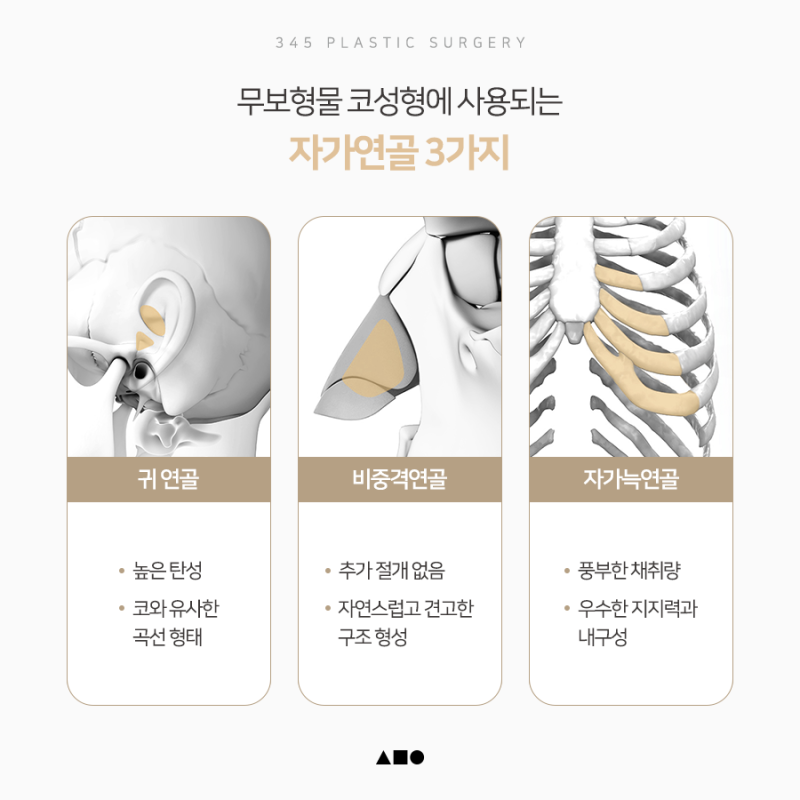
The type of autologous cartilage used varies depending on the individual's nasal condition and desired design. The three most commonly utilized types of cartilage are as follows:
- Septal Cartilage: The partition wall inside the nose, primarily used to build the columellar strut and extend the length of the nasal tip.
- Ear Cartilage: Soft and highly elastic, making it ideal for naturally reinforcing the shape of the nasal tip.
- Autologous Rib Cartilage: Located at the end of the ribs, it provides an abundant supply and exceptionally strong support, making it the preferred choice for revision rhinoplasty or when a more dramatic, glamorous line is desired.
Autologous vs. Donated Rib Cartilage: What is the Difference?
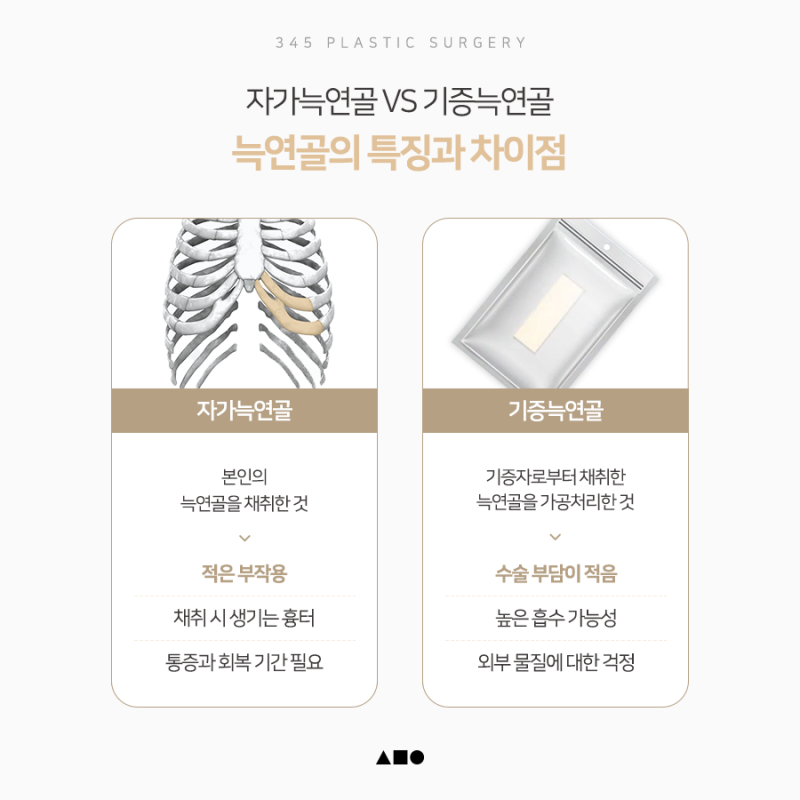
Rib cartilage is broadly divided into 'autologous rib cartilage,' which is harvested directly from your own body, and 'donated rib cartilage,' which is sterilized cartilage from a donor.
Since autologous rib cartilage is your own tissue, there is virtually no immune rejection, and the engraftment rate is excellent. However, it may leave a minor scar or cause temporary pain at the harvest site. On the other hand, donated rib cartilage requires no harvesting process, resulting in shorter surgery times and faster recovery. Yet, because there can be differences in absorption rates or the potential for warping compared to autologous tissue, a thorough consultation with a specialist is necessary.
An Essential Step for Safe Surgery: The Rib Series Examination
If you have decided on rib cartilage rhinoplasty, it is crucial to check for 'ossification' (the process where cartilage hardens into bone) of the rib cartilage before surgery. Ossified cartilage is difficult to carve and may have reduced structural support.
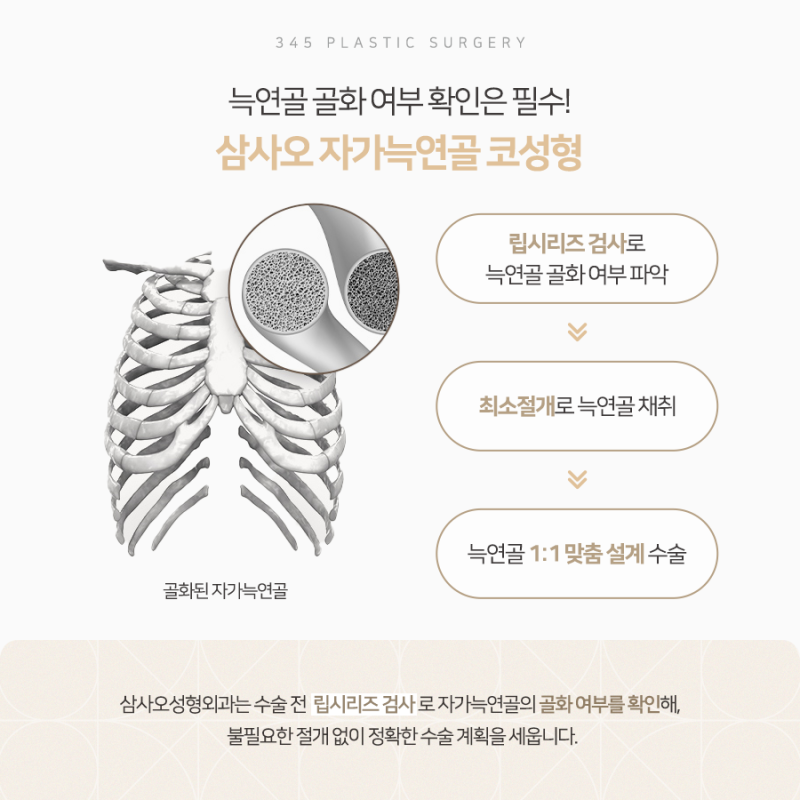
At 345 Plastic Surgery, we precisely analyze the patient's rib cartilage condition through a pre-operative Rib Series examination. This prevents unnecessary incisions and allows us to establish the most suitable surgical plan for the individual, ensuring safe results.
Cases That Require Rib Cartilage Rhinoplasty
For those with the following concerns, rhinoplasty using rib cartilage can be an effective alternative:
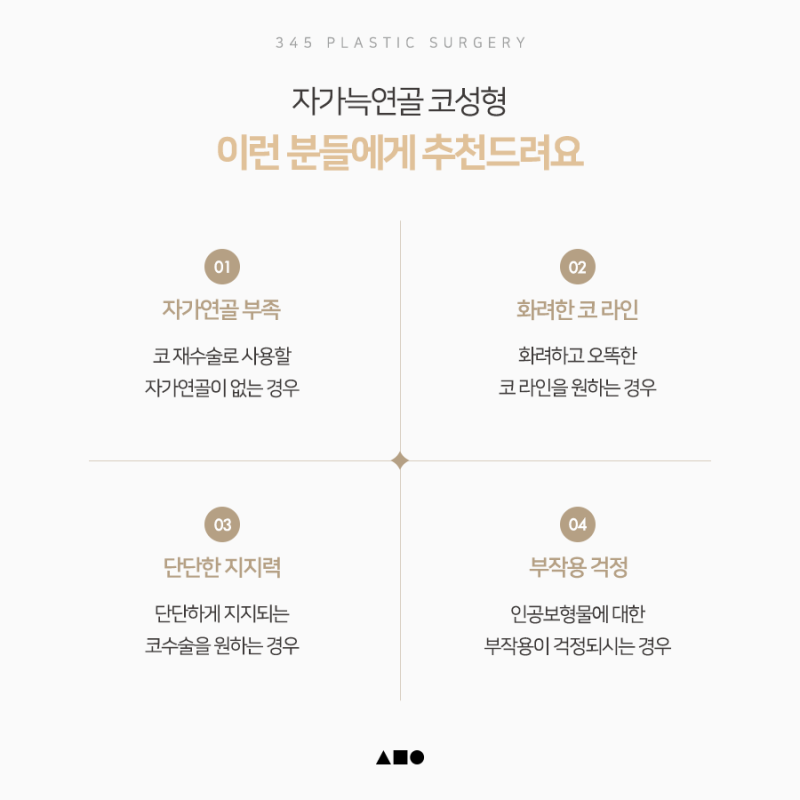
- When there is a lack of usable septal or ear cartilage
- When you want to significantly elevate the nasal tip or prefer a highly defined line
- When nasal tissues have been damaged by previous surgeries and require strong structural support
- When you have psychological reluctance or concerns about side effects from using artificial implants
Advice for Successful Rhinoplasty
Because rib cartilage rhinoplasty is a highly difficult procedure, you should not make a decision based solely on cost or reviews. Instead, verify whether the clinic has a systematic safety system and resident medical staff with abundant clinical experience. The most satisfying and safe results can be expected when a customized plan is designed considering your individual anatomical structure.

Frequently Asked Questions
What is the biggest advantage of non-implant rhinoplasty?
The biggest advantage is that there is less foreign body sensation from artificial implants and the possibility of side effects like inflammation or contracture can be reduced. Since the bridge and tip of the nose are corrected using autologous tissues such as one's own cartilage or dermis, long-term stability is excellent.
What types of autologous cartilage are mainly used in rhinoplasty?
Mainly three types are used: septal cartilage, ear cartilage, and autologous costal cartilage. Septal cartilage is used to build the nasal tip column, ear cartilage is used to naturally reinforce the shape of the nasal tip, and autologous costal cartilage is used when strong support is needed or when a glamorous line is desired, each according to its characteristics.
What is the difference between autologous costal cartilage and donated costal cartilage?
The difference lies in the presence of the harvesting process and the engraftment rate. Autologous costal cartilage is harvested directly from one's own body, so there is no immune rejection and the engraftment rate is good, but it can leave a scar. On the other hand, donated costal cartilage uses cartilage from another person, which shortens surgery time, but there may be a possibility of absorption or deformation.
Why is a rib series examination necessary before costal cartilage rhinoplasty?
It is absolutely necessary to check for ossification of the costal cartilage. If the cartilage hardens like bone due to ossification, it can be difficult to sculpt and its supportive power may decrease. Therefore, a precise examination before surgery is needed to prevent unnecessary incisions and establish the most appropriate surgical plan.
In what cases is rhinoplasty using costal cartilage suitable?
It is very suitable for revision cases where septal or ear cartilage is insufficient or strong support is needed. It can also be an effective alternative for those who want to raise the nasal tip high or have psychological aversion to artificial implants and concerns about side effects.