2026-06-04
Deep Nasolabial Folds? Achieve Natural Volume with Autologous Bone Graft Paranasal Augmentation
When the area next to the nose is sunken, making nasolabial folds look deeper, it can easily give an aged or tired impression. At 345 Plastic Surgery, we use autologous tissue obtained during facial contouring surgery for our 'Autologous Bone Graft Paranasal Augmentation' to reduce concerns about foreign body sensation and create natural dimensionality. Discover the customized surgical plan by Dr. Park Jong-rim, who has 28 years of experience.

Worried About Nasolabial Folds? What is Paranasal Augmentation?
If the alar base, the area next to the nose, is sunken, nasolabial folds can appear deeper, which can give the impression of a relatively protruding mouth. Medically, the procedure to correct this is called Paranasal Augmentation. It is a surgery that adds volume to the sunken areas to elevate and enhance the mid-face.
At 345 Plastic Surgery, we do not simply stop at filling volume; we focus on creating a natural dimensionality that harmonizes with each patient's individual skeletal structure.
Advantages and Differentiators of Autologous Bone Graft Paranasal Augmentation
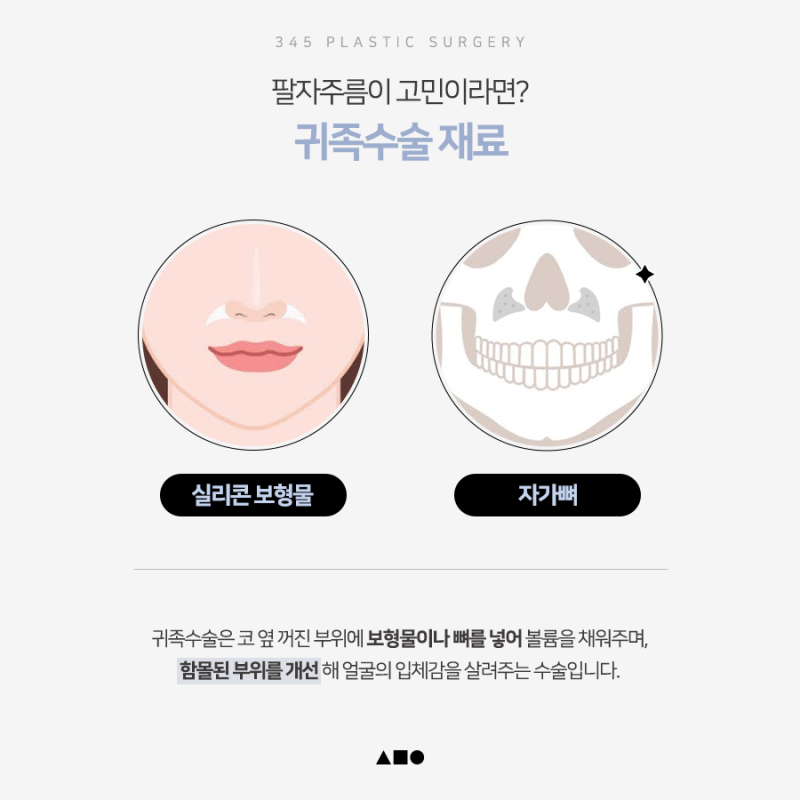
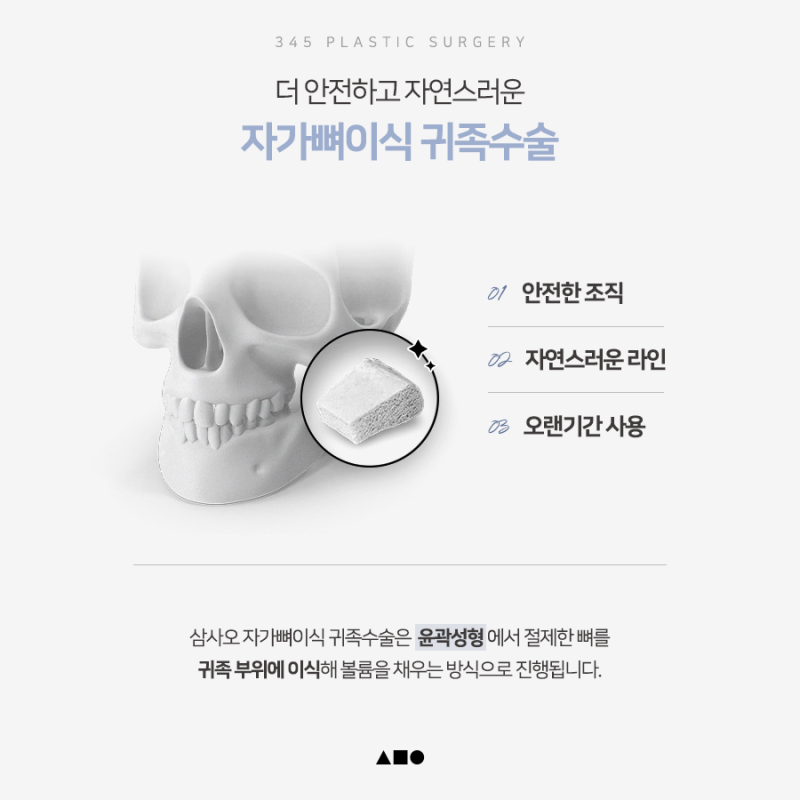
The characteristics of paranasal augmentation vary depending on the materials used. While implants like silicone are commonly used, 345 Plastic Surgery prefers the autologous bone graft method, which utilizes your own bone resected during facial contouring surgery.
- Enhanced Safety: Because autologous tissue is used, the risk of foreign body reactions or rejection associated with implants is significantly reduced.
- Natural Results: Since the grafted bone was originally part of your own facial structure, the borders do not stand out, blending naturally.
- Strong Fixation: Fixation pins are used to secure the graft firmly, eliminating concerns about the graft shifting out of place.
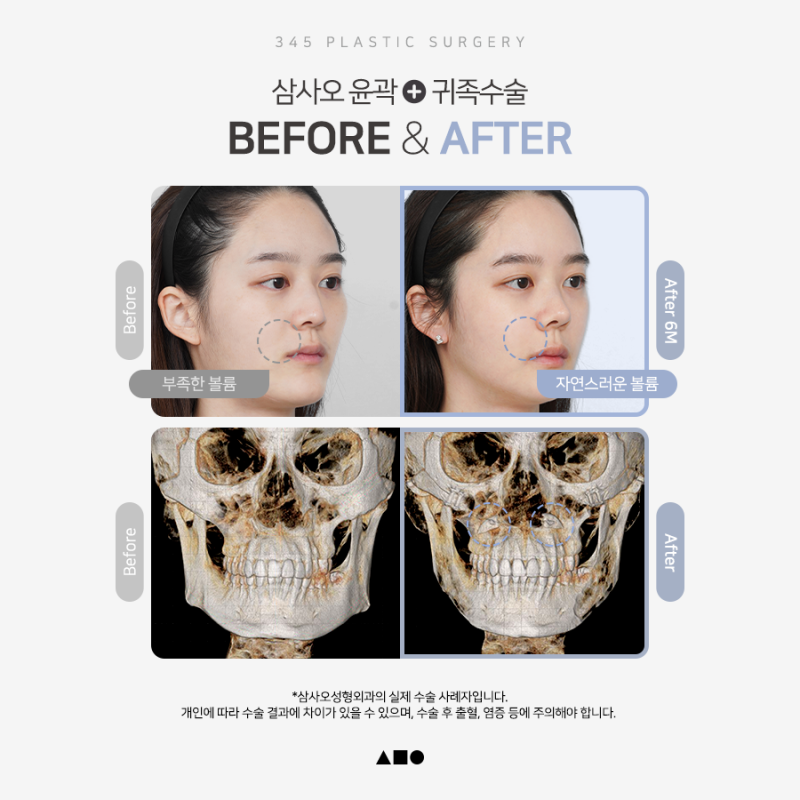
Changes Seen in Real Cases: Volume Improvement in the Nasolabial Area
Looking at cases where facial contouring and paranasal augmentation were performed together, the areas next to the nose and the nasolabial folds appeared relatively sunken before surgery. However, post-surgery, you can see these areas are filled, bringing the overall facial dimensionality to life. This is not just about smoothing out wrinkles; it improves the foundational skeletal structure of the face, offering the effect of fundamentally softening one's impression.
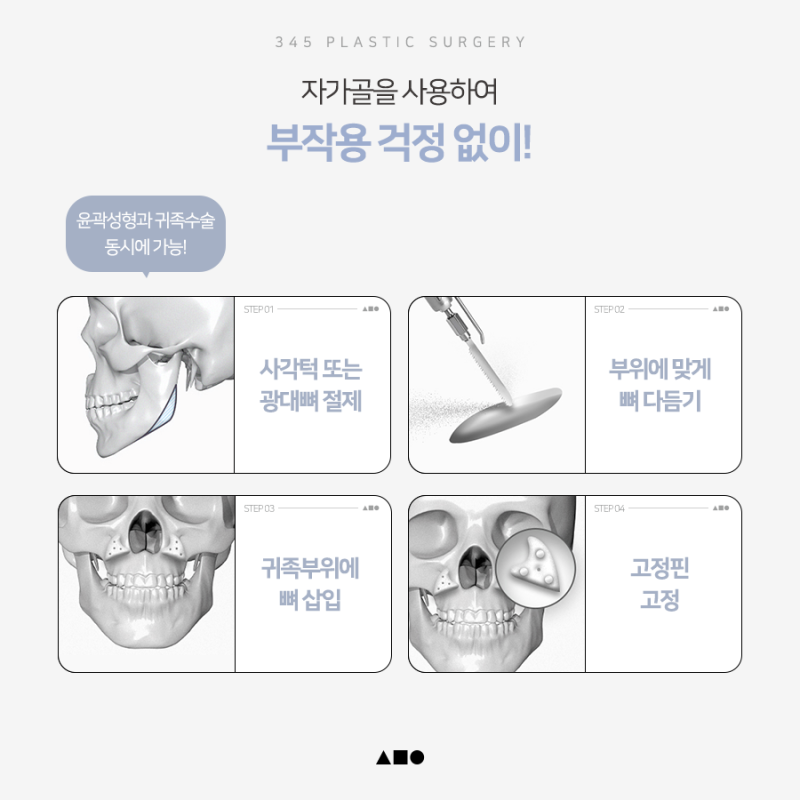
Step-by-Step Process of 345's Autologous Bone Graft Paranasal Augmentation
Systematic surgical planning and execution are the keys to satisfactory results. 345's paranasal augmentation goes through the following precise steps:
- Bone Resection: The required amount of autologous bone is safely harvested during square jaw or cheekbone reduction surgery.
- Detailed Contouring: The harvested bone is meticulously shaped to fit the space and contour of the paranasal area where it will be grafted.
- Precise Insertion: The contoured autologous bone is inserted into the sunken area next to the nose.
- Firm Fixation: Medical fixation pins are used to secure the grafted bone so that it can engraft stably.
Who Needs Paranasal Augmentation?
If you have the following concerns, paranasal augmentation can be an effective solution:
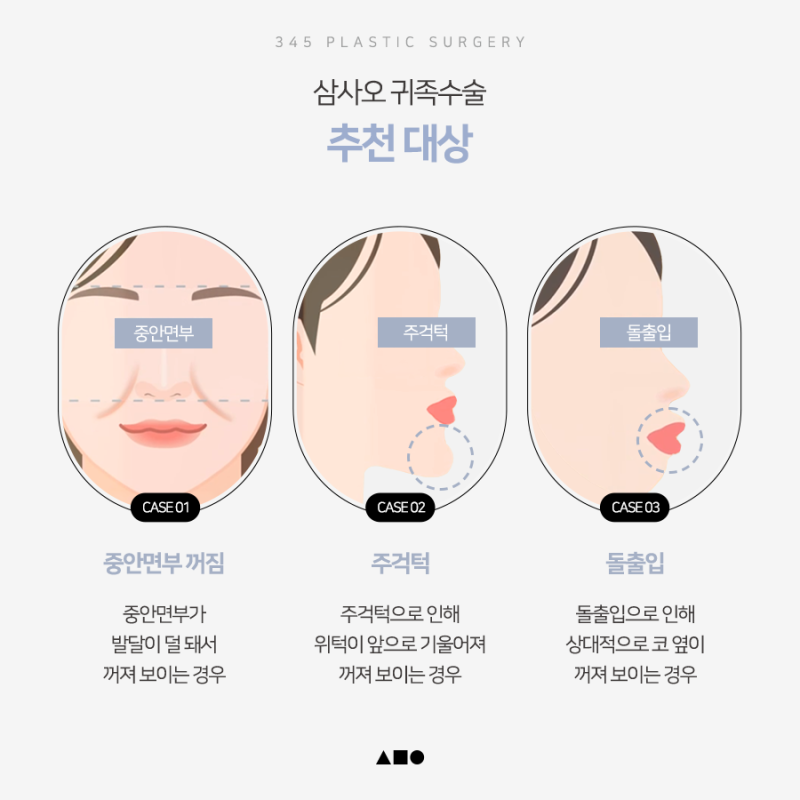
- Those whose mid-face appears sunken overall, lacking vitality.
- Those whose paranasal area looks relatively more sunken due to a lantern jaw (protruding chin) tendency.
- Those who want to complement the structure around the mouth because their mouth appears to protrude.
- Those who look older than their actual age due to deep nasolabial folds.
A Trustworthy Surgical Environment: 28 Years of Expertise
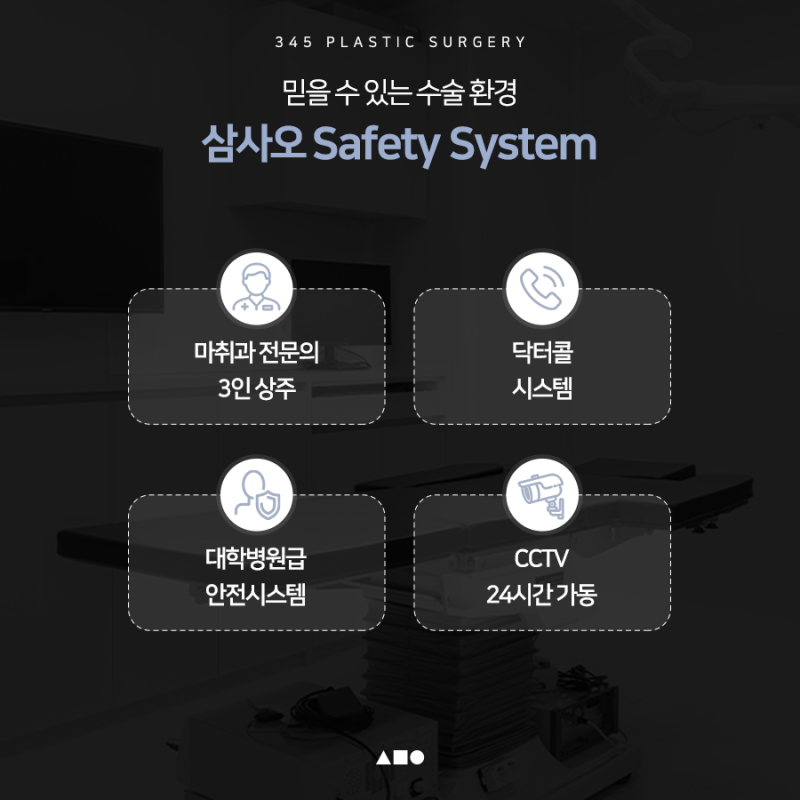
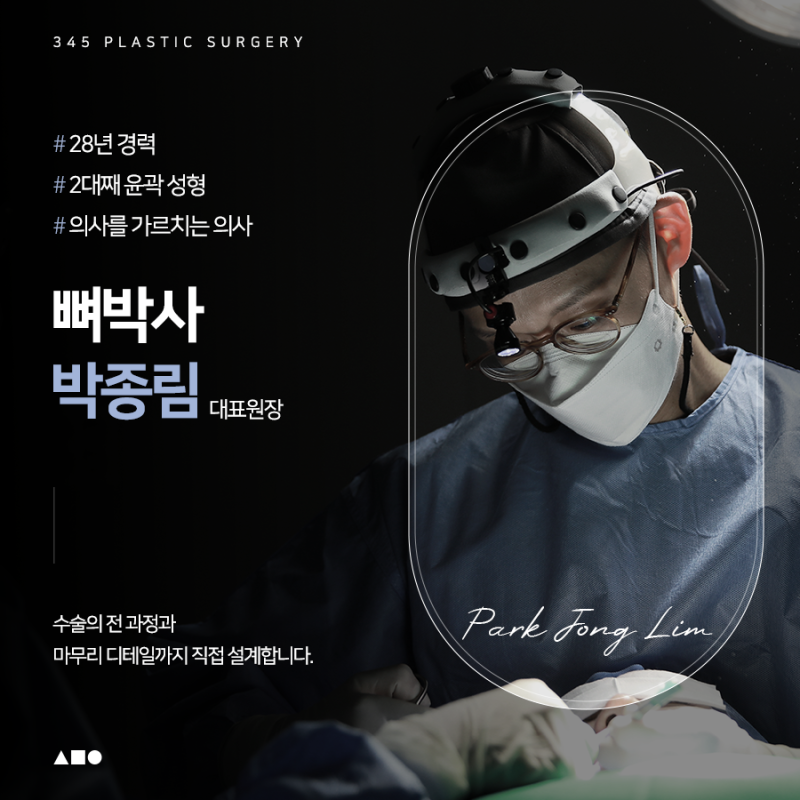
At 345 Plastic Surgery, Chief Director Dr. Park Jong-rim, who has over 28 years of surgical experience, personally designs the entire surgical process. Furthermore, prioritizing patient safety above all, we operate a university hospital-level safety system.
- In-house anesthesiologist and real-time monitoring.
- Doctor Call system to reassure guardians during surgery.
- 24-hour operating room CCTV.
If you desire a paranasal augmentation that considers the fundamental harmony of your facial structure rather than just simple volume filling, we recommend making your decision through an in-depth consultation with an experienced specialist.
Frequently Asked Questions
Where is the bone used for autologous bone graft nasolabial fold augmentation (Gwijeok surgery) harvested from?
We utilize the patient's own bone resected during facial contouring surgery. A necessary amount of autologous bone is safely harvested during jaw or cheekbone surgery, then meticulously shaped to fit the space and form of the implantation site.
What are the advantages of using autologous bone instead of implants?
It significantly reduces the risk of foreign body reactions or rejection. The biggest advantage is that it uses the patient's own tissue, which was originally part of their facial structure, so the boundaries are not prominent and it blends naturally with the existing bone structure.
Will the grafted bone move or change position?
No, you can alleviate concerns about positional shifts. After inserting the shaped autologous bone into the sunken area next to the nose, it is firmly secured with medical fixation pins to ensure stable engraftment.
Who is Gwijeok surgery effective for?
Gwijeok surgery is effective for individuals with a sunken midface or deep nasolabial folds. It can also be a good alternative for those whose nose sides appear sunken due to a tendency towards a prognathic jaw, or whose mouth appears relatively protruded, and they wish to supplement the perioral structure.
What safety systems are in place during surgery?
An anesthesiologist is always present to conduct real-time monitoring. Additionally, 24-hour CCTV operates in the operating room, and we run a 'Doctor Call' system to reassure guardians during surgery, providing university hospital-level safety systems.