2026-06-04
Types and Characteristics of No-Implant Rhinoplasty: Achieving a Natural Nose Line with Autologous Tissue
No-implant rhinoplasty, which utilizes your own tissues such as ear cartilage, septal cartilage, and autologous costal cartilage instead of artificial implants, is a surgical method that minimizes foreign body sensation and yields natural results. We provide a detailed guide on how to achieve a smooth nose line while lowering the risk of side effects through 345 Plastic Surgery's 'Yeonye Nose'.

What is No-Implant Rhinoplasty?
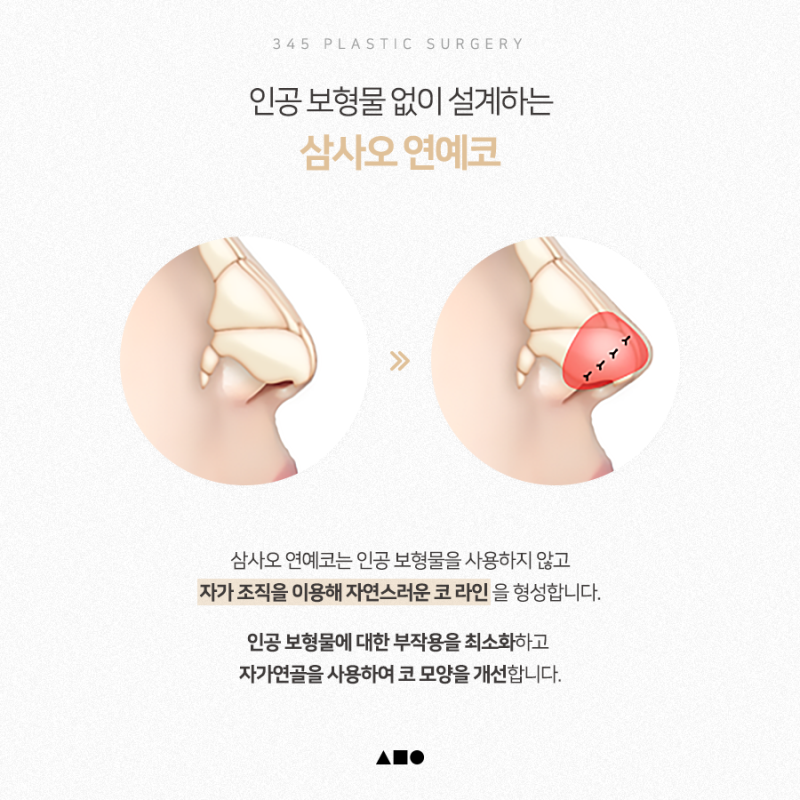
No-implant rhinoplasty is a surgery that improves the shape of the nose using only autologous tissue harvested from the patient's own body, instead of artificial implants like silicone or Gore-Tex. It is an ideal alternative for those who desire a more natural and stable nose line, as it reduces the risk of rejection or implant visibility associated with artificial materials.
345 Plastic Surgery's 'Yeonye Nose' maximizes the advantages of such autologous tissues, focusing on creating a sophisticated nasal tip and bridge that do not look artificial.
Before and After Changes of No-Implant Rhinoplasty Using Autologous Cartilage
There may be a misconception that no-implant surgery yields minimal correction, but actual cases demonstrate significant improvement effects.
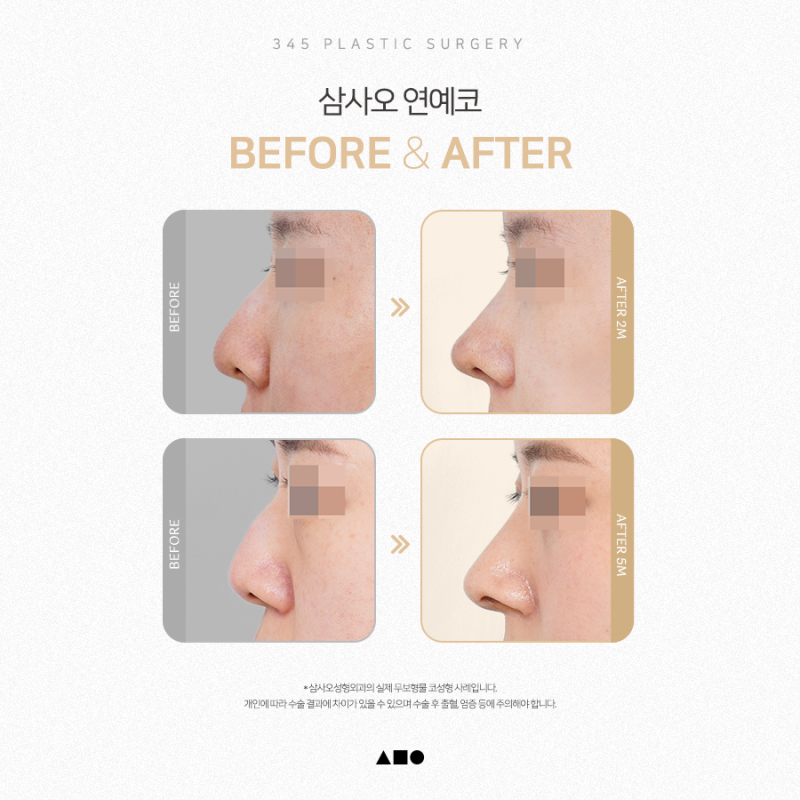
The photos above show the results at 2 months and 5 months post-surgery. You can see that the nasal tip is neatly refined, forming a smooth line that harmonizes with the overall facial proportions. A key characteristic of autologous tissue is that it adheres to the surrounding tissues over time, settling into a more stable position.
3 Main Types of Autologous Tissues Used in No-Implant Rhinoplasty
The appropriate material varies depending on the patient's nasal condition and desired height. It is important to understand the anatomical characteristics of each tissue.
| Material | Key Characteristics | Suitable Cases |
|---|---|---|
| Ear Cartilage | Highly elastic with a shape similar to the nose | Natural nasal tip shape correction |
| Septal Cartilage | Harvested from inside the nose, excellent support | When performing rhinoplasty concurrently with rhinitis improvement |
| Autologous Costal Cartilage | Abundant harvest amount and very strong support | For robust nasal tip maintenance or revision rhinoplasty |
1. Ear Cartilage
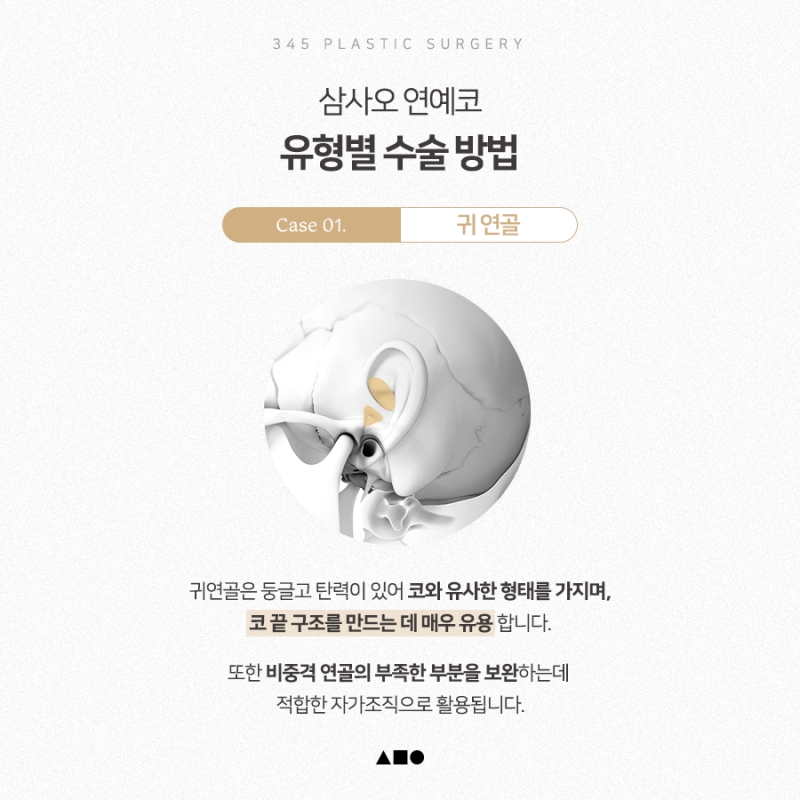
Ear cartilage is soft and elastic, making it useful for naturally expressing the structure of the nasal tip. It is also widely used as a supplementary material to compensate when there is a shortage of septal cartilage.
2. Septal Cartilage
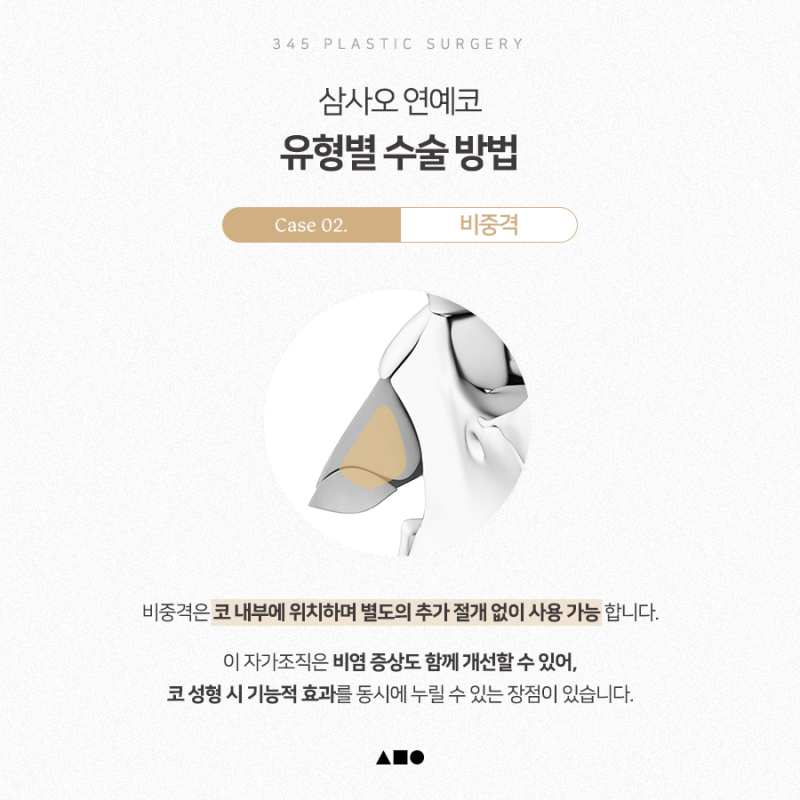
Since it is harvested from the septum, the partition bone inside the nose, no separate external incision is required. It is suitable for building a supportive structure and can enhance results when combined with the treatment of functional nasal diseases (such as rhinitis).
3. Autologous Costal Cartilage
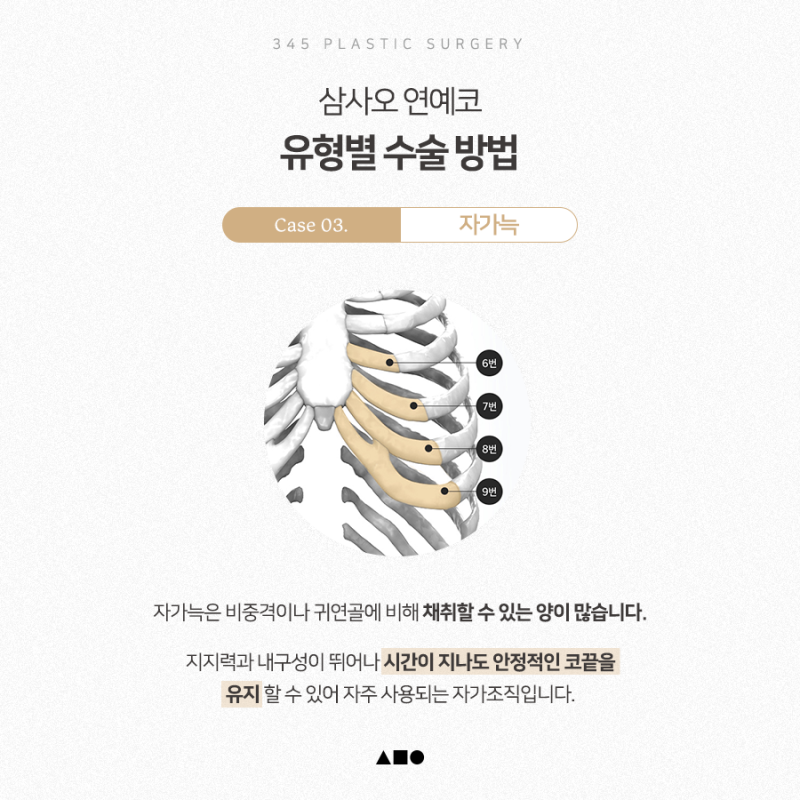
This is the rib cartilage from the chest area, offering the most outstanding support and durability. Positive outcomes can be expected when a strong support structure is needed, such as for a low nasal tip or in revision rhinoplasty.
345 Yeonye Nose is Recommended for These Individuals
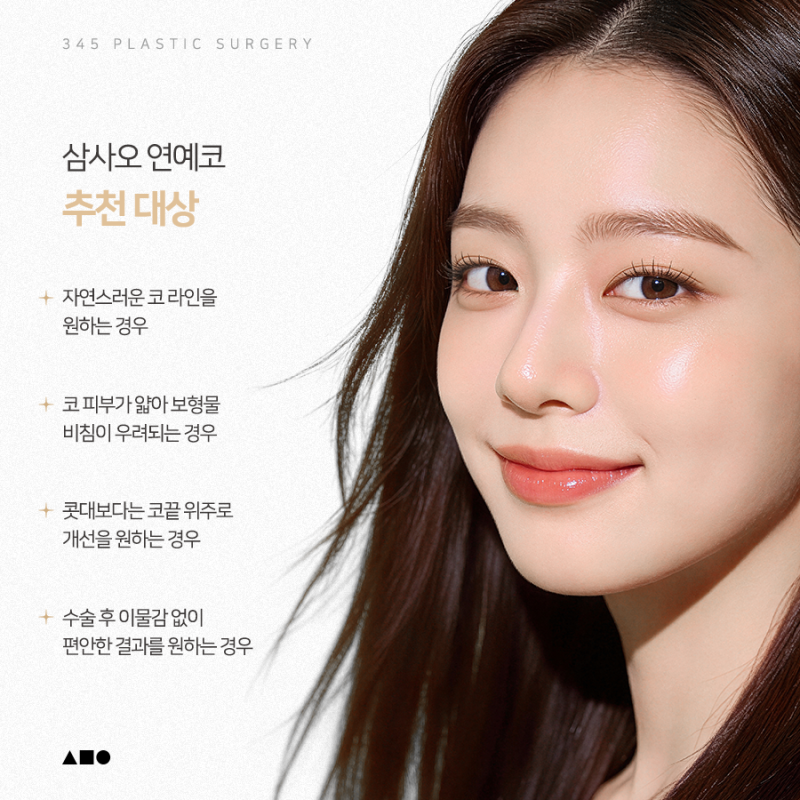
- Those who want to lower the risk of side effects such as implant visibility or inflammation
- Those who are hesitant to use silicone due to thin skin
- Those who want to improve the nasal tip to be high and sophisticated rather than focusing on the nasal bridge
- Those who want a comfortable result that feels like their own nose without any foreign body sensation
A Surgical System that Prioritizes Safety
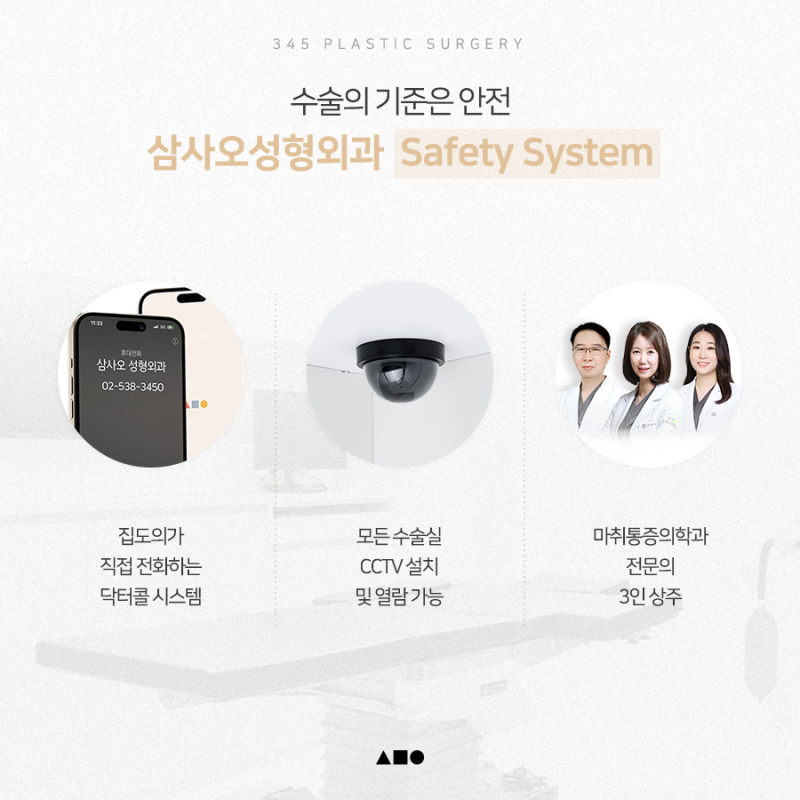
For successful results, an accurate diagnosis and a safe surgical environment are essential. 345 Plastic Surgery adheres to the following principles.
- Doctor Call System: Seamless communication with the attending medical staff and responsible care.
- CCTV Installation: Transparent operations to prevent ghost surgeries and secure patient trust.
- Resident Anesthesiologists: Three specialists monitor the patient's condition in real-time during surgery to provide a safe anesthesia environment.
Achieve a healthy and beautiful nose line in the way that suits you best, even without artificial implants.



Frequently Asked Questions
What is non-implant rhinoplasty?
Non-implant rhinoplasty is a surgical procedure that improves the shape of the nose using only the patient's own autologous tissue instead of artificial implants. This can reduce rejection reactions or transparency phenomena associated with artificial materials, creating a natural and stable nose line.
What autologous tissues are used in non-implant rhinoplasty?
Mainly three types are used: ear cartilage, septal cartilage, and autologous costal cartilage. Ear cartilage is suitable for natural tip expression, septal cartilage for support, and autologous costal cartilage for strong support and abundant harvest.
What are the advantages of non-implant rhinoplasty?
The biggest advantage is that it can lower the risk of side effects such as transparency and inflammation caused by artificial implants. Additionally, you can achieve comfortable and natural results that feel like your own nose without a foreign body sensation.
Who is recommended for non-implant rhinoplasty?
It is recommended for those who are concerned about artificial implant side effects, those with thin skin who find silicone use burdensome, those who want to improve their nose tip more prominently than their bridge, and those who desire comfortable results without a foreign body sensation.
Is non-implant rhinoplasty performed safely?
Yes, for safe surgery, it is performed in facilities equipped with safety systems such as precise diagnosis, a doctor call system, CCTV installation, and a resident anesthesiologist. The patient's condition is monitored in real-time to provide a safe anesthesia environment.