2026-06-04
A Complete Guide to the Differences Between Muscle Botox vs. Skin Botox: Effects and Types
Muscle Botox and Skin Botox (Dermotoxin) both utilize botulinum toxin, but they deliver distinctly different results depending on the injection layer and purpose. We provide a detailed comparative analysis of the characteristics and precautions of Muscle Botox, used for reducing square jaws and deep wrinkles, and Skin Botox, which is highly effective for improving fine lines, pores, and skin elasticity.
1. What is Botox (Botulinum Toxin)?
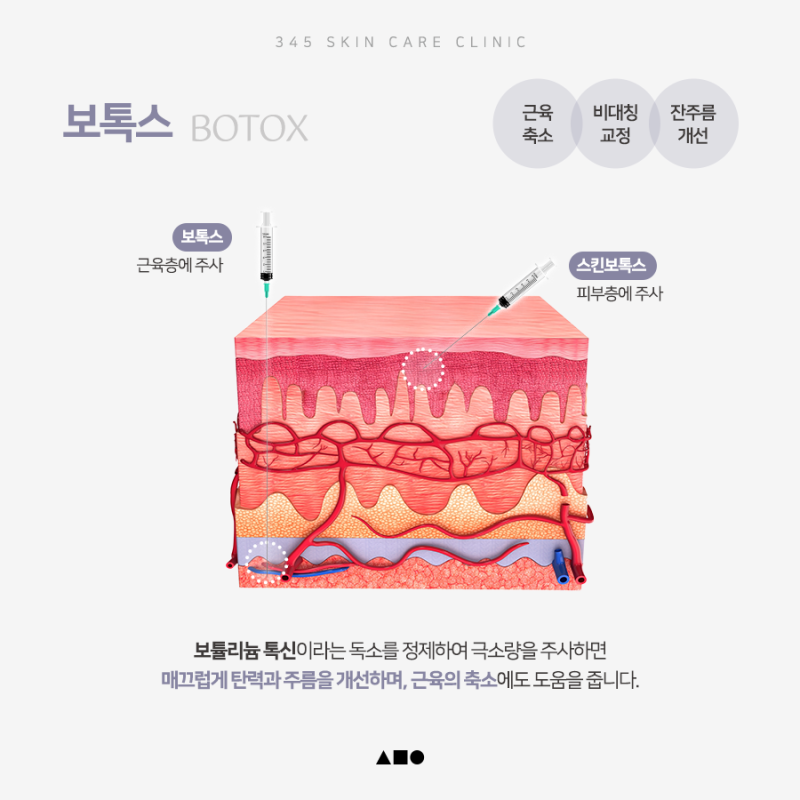
Botox is a procedure in which a purified substance called Botulinum Toxin is injected into the muscle or the superficial layers of the skin. It works by temporarily restricting muscle movement to reduce the volume of overdeveloped muscles or alleviate expression lines. Recently, the procedure has been subdivided into Muscle Botox and Skin Botox depending on the injection method.
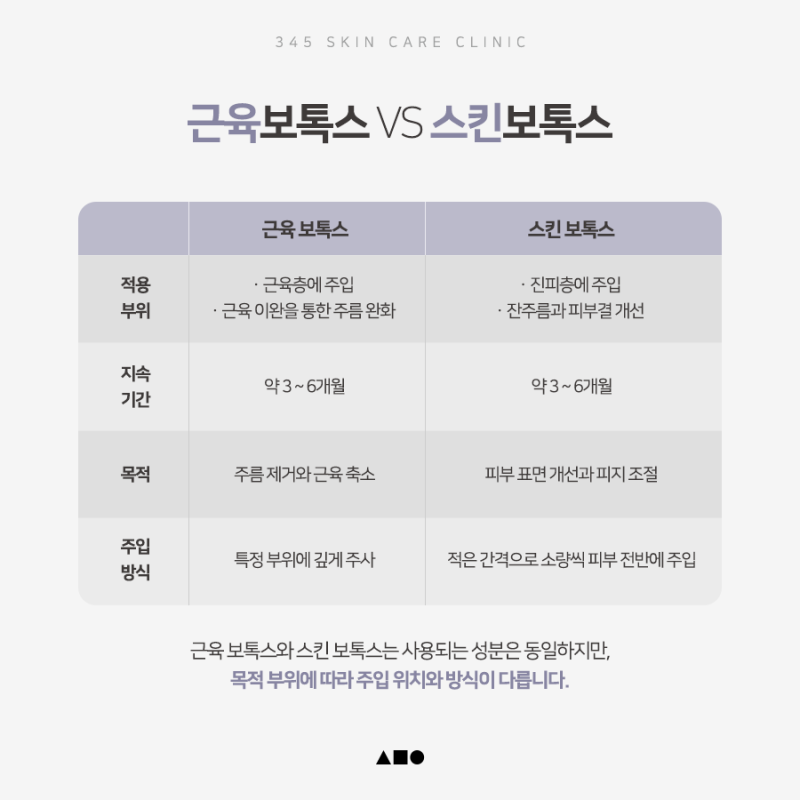
2. Muscle Botox vs. Skin Botox (Dermotoxin) Comparison
Although both procedures use the same ingredient, the expected changes differ depending on 'where and how' it is injected.
| Category | Muscle Botox | Skin Botox (Dermotoxin) |
|---|---|---|
| Injection Site | Muscle layer (Deep layer) | Dermis (Superficial skin layer) |
| Main Purpose | Square jaw reduction, trapezius/calf line contouring, deep expression line relief | Fine line improvement, pore reduction, sebum control, skin elasticity enhancement |
| Procedure Method | Concentrated injections into the targeted muscle areas | Small amounts injected broadly across the entire skin surface |
3. Characteristics by Botox Type: Xeomin and WonderTox
It is important to select a product that suits your individual condition and goals for the procedure.
- Xeomin: A pure toxin with complex proteins removed, lowering the risk of resistance that can occur with repeated treatments.
- WonderTox: A domestic product approved by the Ministry of Food and Drug Safety (MFDS), showing excellent results in improving expression lines such as frown lines.
4. From Face to Body Lines: Various Treatment Areas
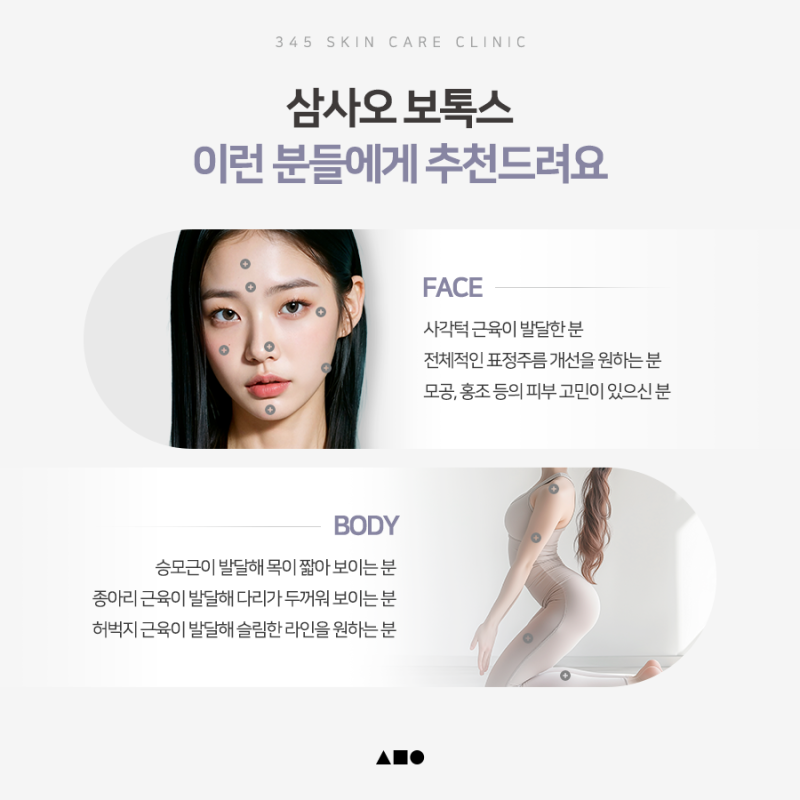
Botox is widely used not only for the face but also for body line management.
- Face: Square jaw, forehead, glabella (frown lines), crow's feet, nose bridge, pebbly chin (mentalis)
- Body: Trapezius (shoulder line), calf muscles, thigh lines
- Special Areas: Facial line improvement due to enlarged salivary glands (parotid/submandibular glands)
5. Post-Procedure Recovery and Precautions
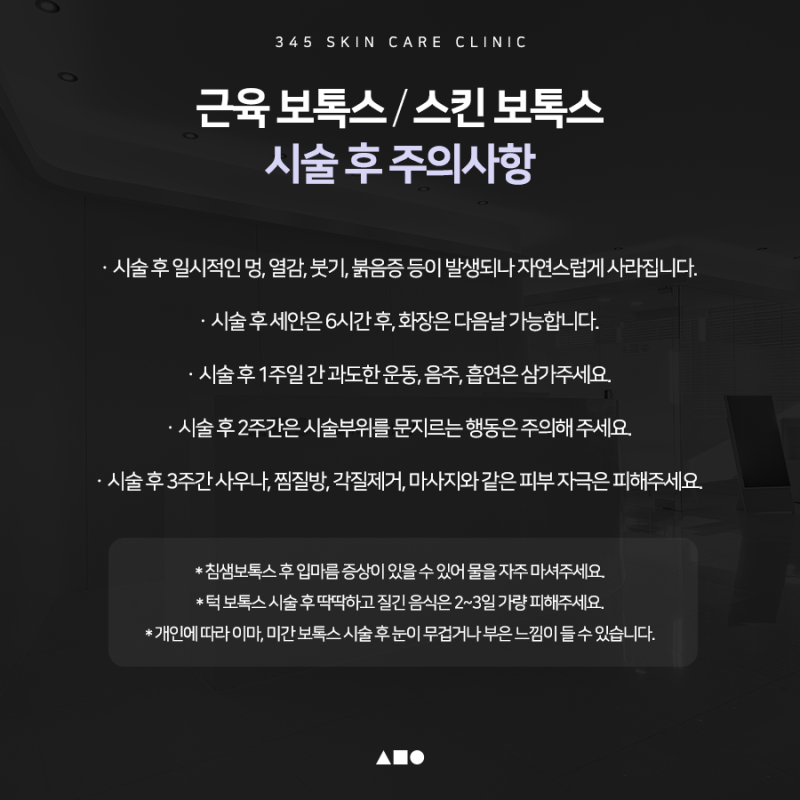
Immediately after the procedure, you may experience temporary dryness, heat, redness, or swelling, but these symptoms will naturally improve within a few days.
- Jaw Botox: It is recommended to avoid eating hard or chewy foods for 2 to 3 days after the procedure.
- Salivary Gland Botox: You may experience temporary dry mouth, so be sure to drink plenty of fluids.
- Common: Avoid excessively rubbing the treated area or receiving meridian massages.
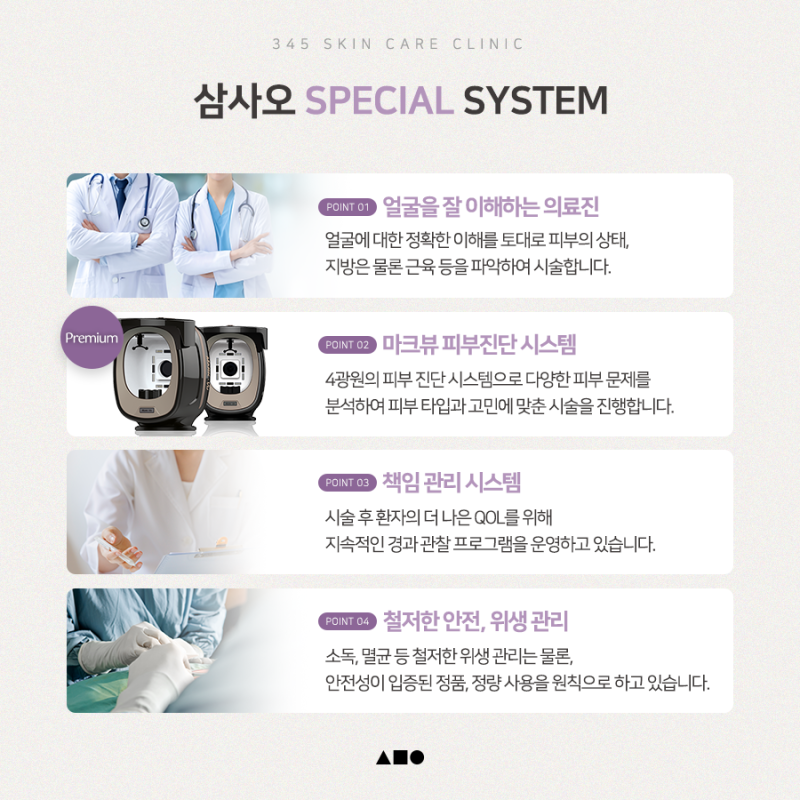
At 345 Skin Clinic, we perform customized procedures by closely analyzing the patient's muscle distribution and skin thickness, based on the principle of using genuine products in exact dosages. For natural-looking results, we recommend proceeding after a thorough consultation with our experienced medical staff.

Frequently Asked Questions
What is the biggest difference between muscle Botox and skin Botox?
The injection site and purpose are different. Muscle Botox is injected into deep muscle layers to reduce square jaws or alleviate deep wrinkles, while skin Botox is widely injected into the shallow dermis of the skin to improve fine wrinkles, reduce pores, and enhance elasticity.
I'm concerned about Botox resistance, what product should I choose?
We recommend Xeomin, a pure toxin product with complex proteins removed. Xeomin is a product that reduces the concern of resistance that can occur with repeated treatments, making it a suitable choice for those who receive regular treatments.
Are there any precautions after jaw Botox treatment?
Yes, you should avoid eating hard or chewy foods for 2-3 days after the procedure. Also, avoiding excessive rubbing of the treated area or receiving strong pressure massages (like 경락 massage) will help with natural recovery.
Is dry mouth a normal symptom after salivary gland Botox treatment?
Yes, temporary dry mouth symptoms may occur and this is a natural phenomenon. It can occur after treatment to improve parotid or submandibular gland hypertrophy, so it is recommended to drink more water than usual.
Can Botox be administered to the body in addition to the face?
Yes, it is widely used for body line management. It can be administered in various ways to reduce muscle volume in overly developed body areas, from trapezius Botox to refine shoulder lines, to calf muscles and thigh lines.