2026-06-04
Minimal Incision Lifting for Your 30s and 40s: A Customized Anti-Aging Solution for Sagging Cheeks and Nasolabial Folds
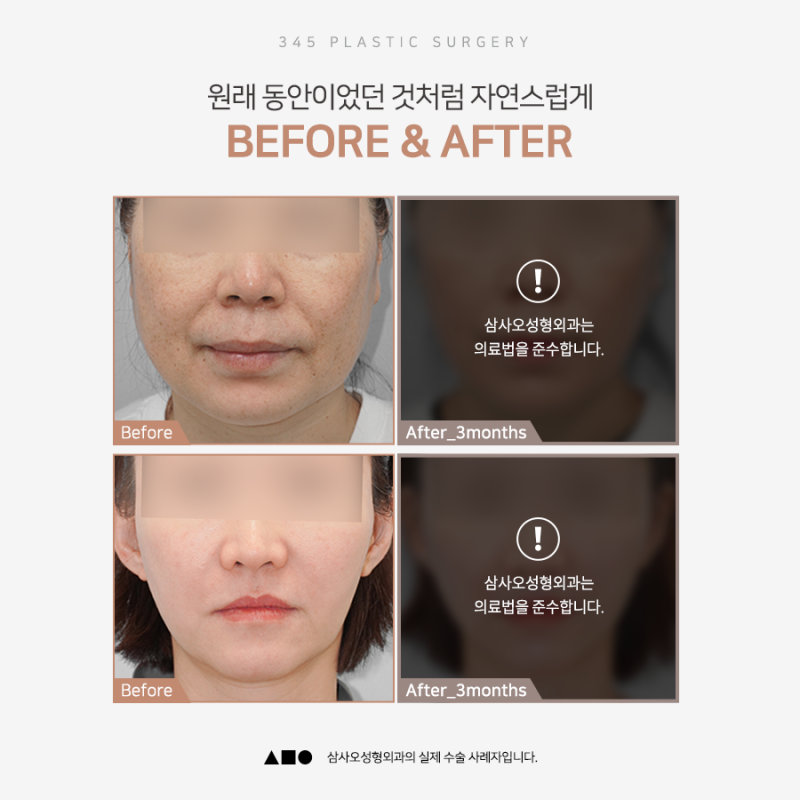
Minimal incision lifting is an effective alternative for improving sagging skin and deep wrinkles for those in their 30s and 40s, when skin aging accelerates. We detail the principles of the hidden incision method to conceal scars, the quadruple fixation lifting including the SMAS layer, and customized procedures by age.

Skin Aging in Your 30s and 40s: Why is Minimal Incision Lifting Necessary?
Skin aging typically begins in the mid-to-late 20s, but as you enter your 30s, the loss of elasticity noticeably accelerates. Once nasolabial folds deepen or the jawline begins to sag, there is a limit to how much simple home care can reverse the process. For this reason, individuals in their 30s and 40s increasingly prefer Minimal Incision Lifting, which is more powerful than a mini-lift but less burdensome than a full facelift.
The aging of fat cells and muscles can cause a double chin or sagging cheeks, which may create a negative impression. Minimal incision lifting precisely targets these areas of concern, aiming for natural yet distinct improvements.
Customized Incisions by Area and 'Hidden Incisions' to Alleviate Scarring Concerns
One of the biggest concerns during lifting surgery is the incision scar. 345 Plastic Surgery's 'Hidden Incision' method is designed with these concerns in mind.
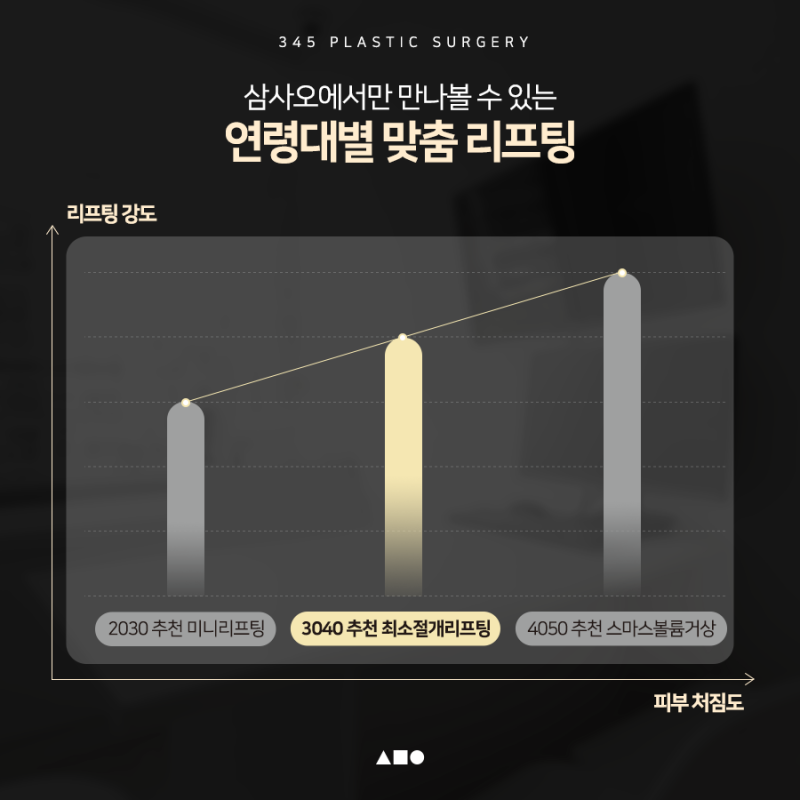
- Concerns about nasolabial folds and marionette lines: Incisions are made inside the scalp and along the upper ear line so that scars are hidden within the hair.
- Concerns about the jawline and jowls: Incisions behind the ear allow for control over the dissection area to correct a collapsed jawline.
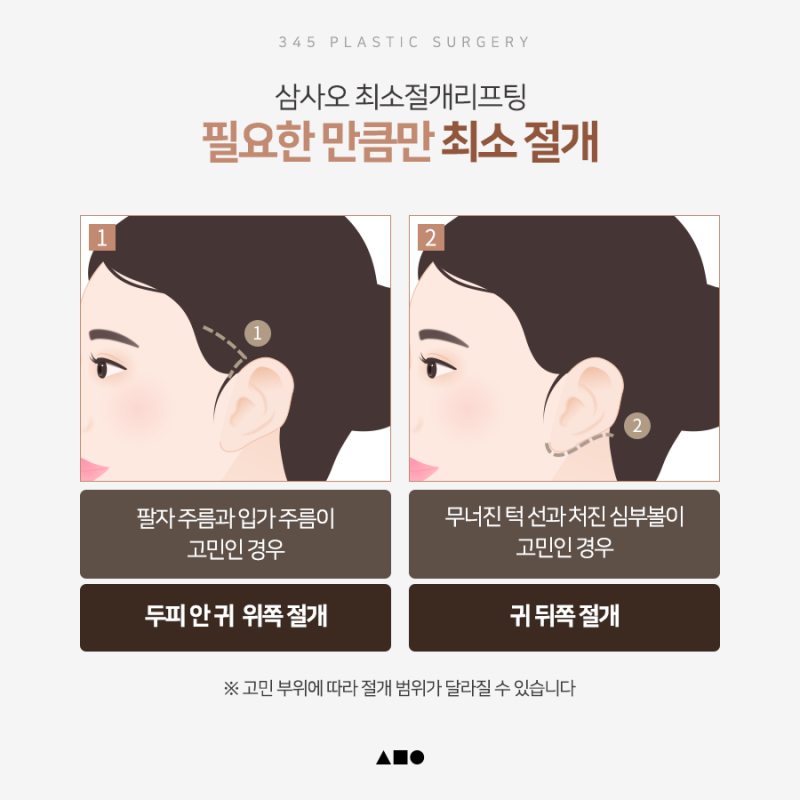
Because this method involves precise incisions between the hair follicles, it offers the advantage of being relatively free from concerns about both scarring and potential post-operative hair loss.
The Principle of Vertical Lifting Without Cheekbone Prominence and Quadruple SMAS Fixation
If the skin is simply pulled sideways during a lift, the cheekbones can become prominent, making the face appear wider. To prevent this, the technique of pulling in a Vertical Lift direction is crucial.
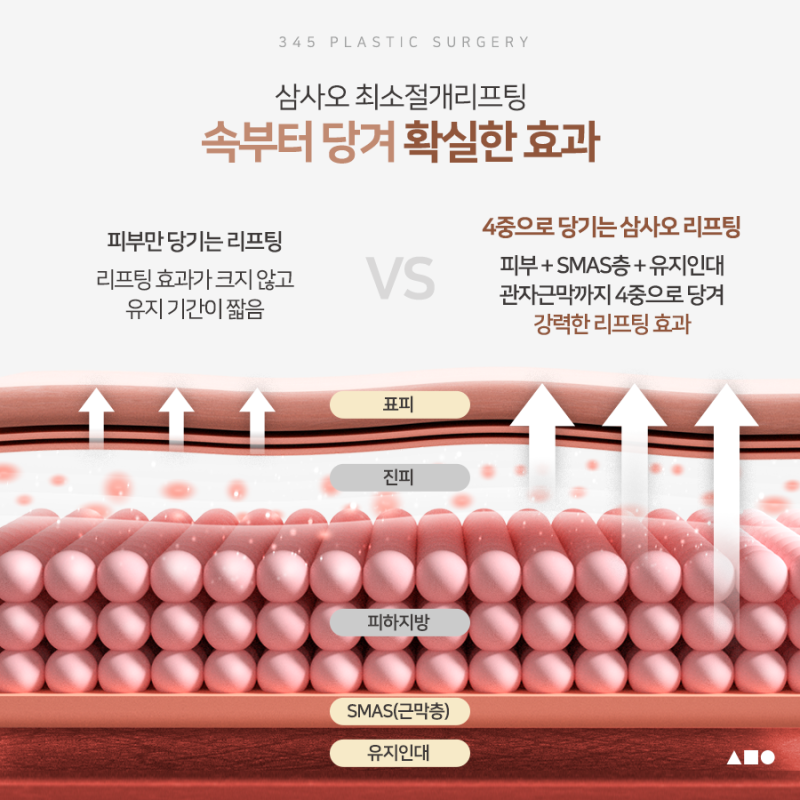
Furthermore, rather than just pulling the surface of the skin, the deep tissues—including the SMAS (Superficial Musculoaponeurotic System) layer, retaining ligaments, and temporal fascia—are firmly pulled and fixed in four layers. This method of lifting from the inside out results in less awkwardness during various facial expressions and allows for a favorable prognosis in terms of longevity.
Customized Lifting Solutions Based on Individual Aging Degrees
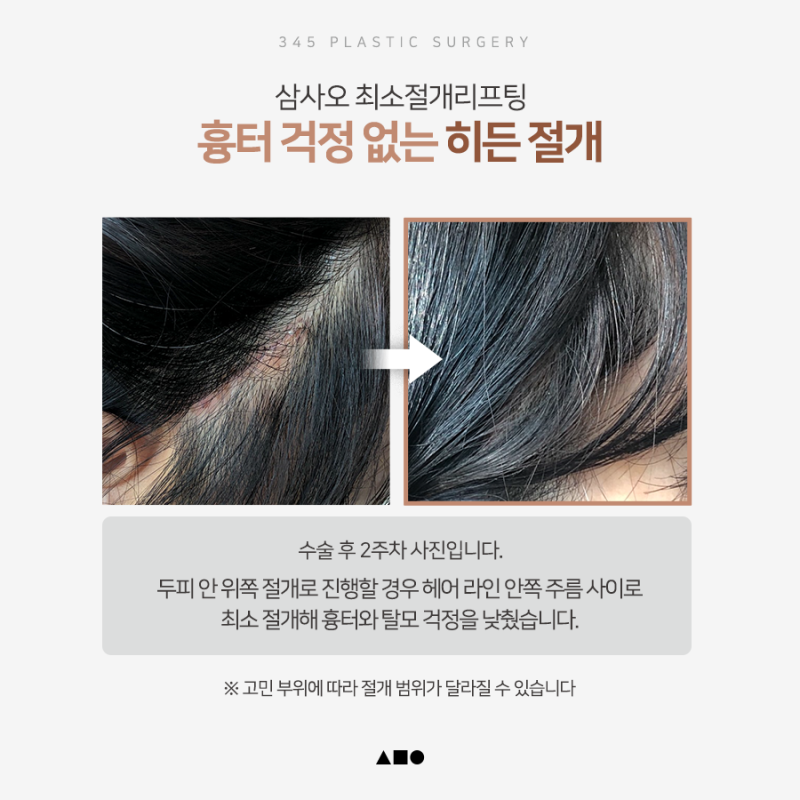
The type of lifting required varies depending on skin condition and age. At 345 Plastic Surgery, we propose the optimal method through 1:1 consultations.
| Target Age | Recommended Lifting Type | Features |
|---|---|---|
| Late 20s to Early 30s | Mini Lifting | Micro-incision of around 2cm, quick recovery |
| Mid 30s to 40s | Minimal Incision Lifting | Expanded dissection area, improvement of nasolabial folds/jowls |
| Late 40s to 50s+ | SMAS Volume Facelift | Combination of powerful lifting and volume restoration |
In addition, non-incisional methods such as thread lifting or laser lifting can be combined for even more precise contour correction. Highly satisfying results can be achieved when the medical staff's skilled techniques and aesthetic sense are in harmony.
Post-Procedure Care and Precautions
Adhering to precautions is essential for a smooth recovery after surgery. Swelling and bruising at the surgical site vary by individual but generally subside gradually within 1 to 2 weeks. It is advisable to avoid opening your mouth excessively or eating hard foods immediately after surgery, and properly alternating between cold and warm compresses as guided by the medical staff will be helpful.
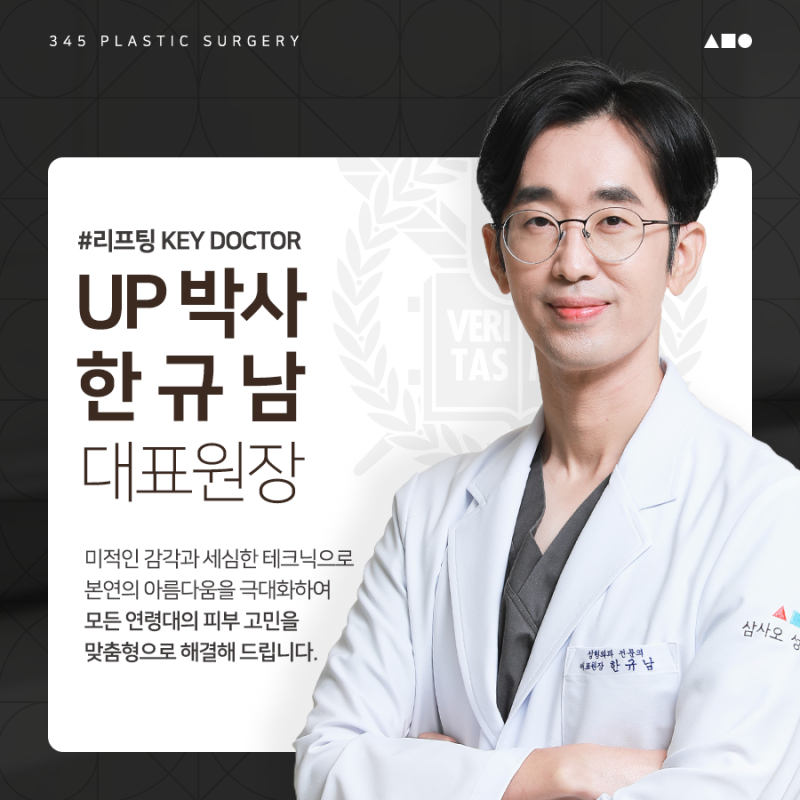
For a successful lift, it is important to consult with a board-certified plastic surgeon who has extensive anatomical knowledge to receive an accurate diagnosis of your skin thickness and degree of sagging.



Frequently Asked Questions
Why is minimal incision lifting necessary for people in their 30s and 40s?
As you enter your 30s, skin elasticity loss accelerates, and smile lines or a sagging jawline become difficult to improve with home care alone. Minimal incision lifting is more powerful than mini-lifting and less burdensome than a full facelift, making it suitable for this age group.
Are there concerns about scars with minimal incision lifting?
No, a 'hidden incision' method is applied to alleviate scar concerns. For smile lines, the incision is made inside the scalp, along the upper ear line, and is covered by hair; for jawline concerns, the incision behind the ear ensures the scar is not noticeable.
Can cheekbones become more prominent after lifting?
No, to prevent prominent cheekbones, we use a technique that pulls the skin not just horizontally, but also vertically. This method prevents the face from looking wider.
How long does minimal incision lifting last?
We use a method that firmly fixes not only the surface of the skin but also the SMAS layer, retaining ligaments, and temporal fascia in four layers. This deep-filling method results in less awkwardness with various facial expressions and allows for a good prognosis in terms of duration.
How long is the recovery period after surgery?
Swelling or bruising at the surgical site varies by individual, but generally subsides gradually within 1-2 weeks. During this period, it is advisable to avoid excessive mouth opening or consuming hard foods, and to alternate between cold and warm compresses.
Can people in their late 20s also get minimal incision lifting?
No, for people in their late 20s to early 30s, a mini-lifting, which allows for quick recovery with a micro-incision of about 2cm, is usually recommended. Minimal incision lifting is primarily suitable for those in their mid-30s to 40s.