2026-06-04
Male Rhinoplasty Before and After Comparison: 3 Key Points of Straight-Line Aesthetics Different from Women's
Male and female rhinoplasty have completely different target images and design standards. From the secret of the nasolabial angle that enhances the masculine straight line to improvement methods by type such as low noses and dorsal humps, 345 Plastic Surgery explains in detail with actual before-and-after cases.
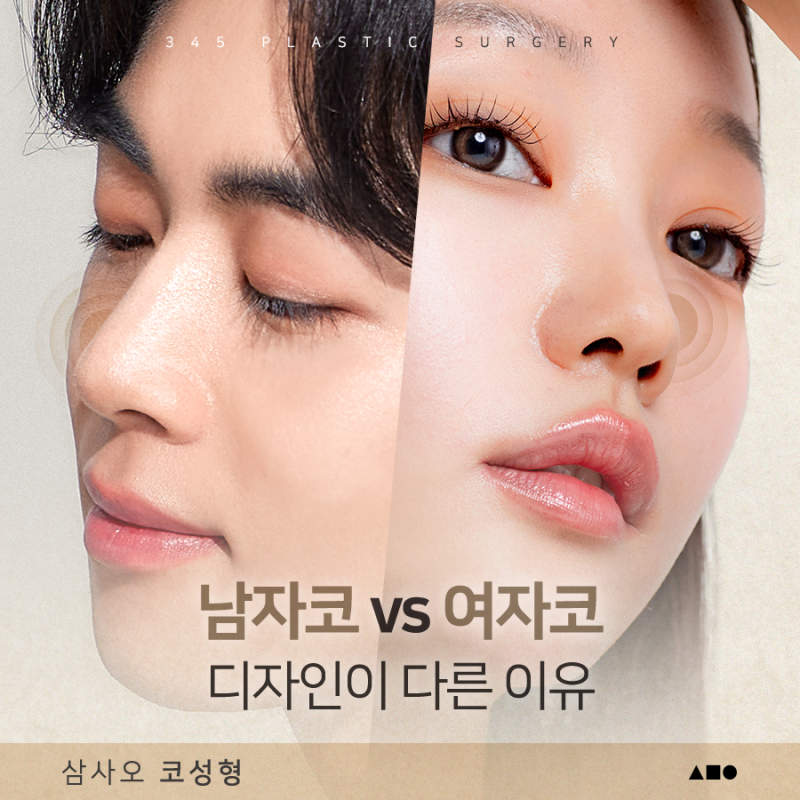
Hello. This is 345 Plastic Surgery. During rhinoplasty consultations, there is a common concern that male patients worry about the most. These are anxious questions like, "Wouldn't a male nose look unnatural if it's raised too high?" or "I'm worried the nasal tip will look too upturned like a woman's nose."
To get straight to the point, even though they are both rhinoplasty procedures, male and female rhinoplasty have completely different aesthetic standards and design directions. Because the nose is a core structure that determines the three-dimensional effect at the center of the face, even a minute difference in angle can dictate the overall impression.
1. Why Male and Female Rhinoplasty Differ from the Initial Design Stage
Men and women show significant differences in skeletal structure, skin thickness, and preferred image. Therefore, right from the pre-operative design stage, it must be decided whether to emphasize the 'power of a straight line' or the 'softness of a curve.'
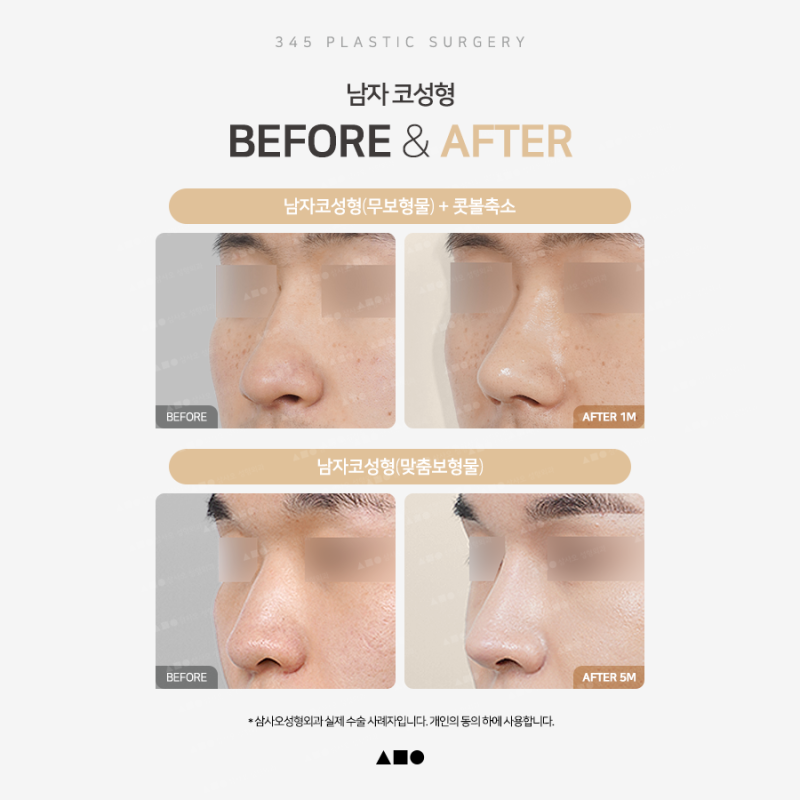
Looking at the actual case from 345 Plastic Surgery above, you can see that the design maintains a masculine straight line rather than excessively raising the nasal tip, matching the balance of the facial features. This suggests that harmonizing with the natural facial contours is more important than simply focusing on increasing the height.
2. Differences in Numbers: The Nasolabial Angle and the Aesthetics of the Line
One of the most important measurements determining the refinement of the nose is the nasolabial angle (the angle between the columella and the philtrum).
Female Rhinoplasty Emphasizing Soft Lines
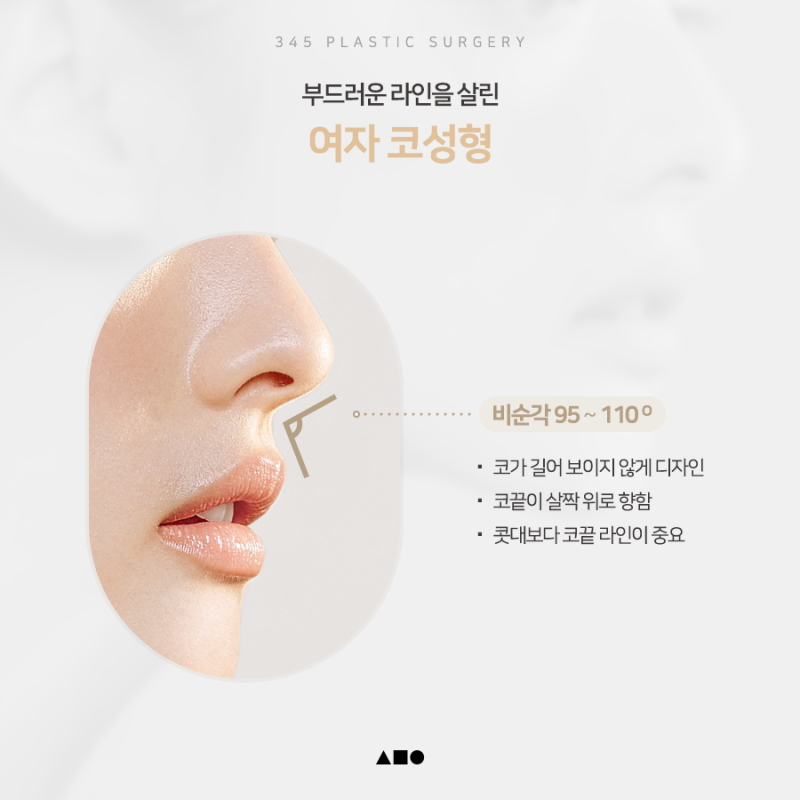
- Nasolabial Angle: Approximately 95~110 degrees
- Characteristics: Prefers a slight curve or a straight-to-slight curve line where the nasal tip points slightly upward
- Enhances the delicate curve of the nasal tip rather than the nasal bridge to create an overall soft and three-dimensional image.
Male Rhinoplasty Emphasizing the Power of Straight Lines
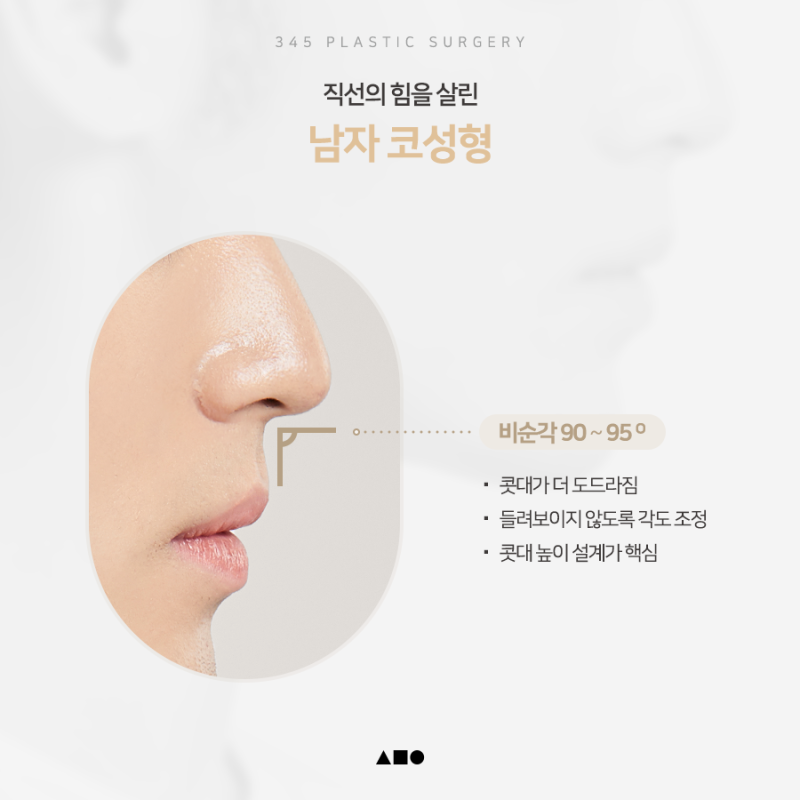
- Nasolabial Angle: Approximately 90~95 degrees
- Characteristics: Emphasizes a distinct straight line extending from the glabella to the nasal tip
- If the angle of the nasal tip is too high, masculine charisma can be weakened, so a straight-line-centric design that highlights the presence of the nasal bridge is key.

3. Male Rhinoplasty Improvement Cases by Type: From Low Noses to Dorsal Humps
Men's nose concerns are largely divided into three types. The surgical approach varies depending on each type.
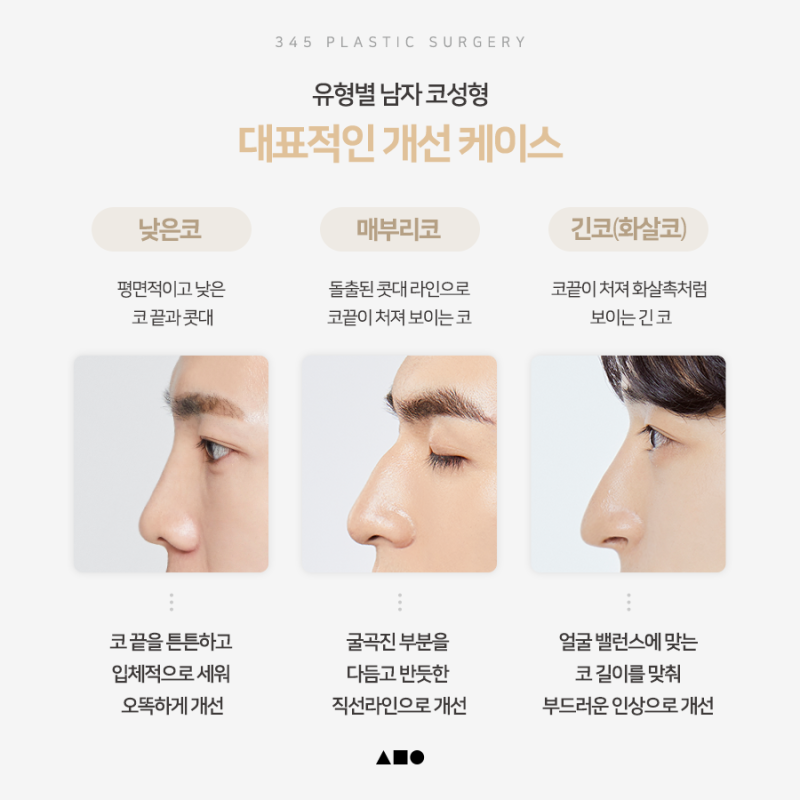
- ① Low Nose: This is when the face looks flat and lacks a three-dimensional effect. By building a firm support structure centered on the nasal bridge, you can expect a prominent and distinct image.
- ② Dorsal Hump (Maeburi Nose): A protruding nasal dorsum can give a stubborn impression. The bumpy areas are smoothly refined and organized into a straight line to improve into a sophisticated impression.
- ③ Long Nose (Arrow Nose): A drooping nasal tip can make you look older. The length of the nose is adjusted and the nasolabial angle is corrected to find the optimal balance that fits the facial proportions.
4. Checklist for a Successful Male Rhinoplasty

Rather than simply focusing on height, it is advisable to consult with a specialist if you have the following concerns.
- Those whose overall facial impression looks plain due to a low nasal bridge
- Those whose impression looks heavy or dark due to a drooping nasal tip
- Those who want a sophisticated and distinct straight-line masculine image
- Those whose facial balance is disrupted due to a long or asymmetrical nose
Ultimately, while the design direction differs by gender, the essence remains the same: 'it must suit your own facial structure and proportions.' For highly satisfying male rhinoplasty before-and-after results, the process of accurately understanding your anatomical characteristics must come first. If you are considering rhinoplasty, we recommend checking the line that best suits you through a thorough consultation.
Frequently Asked Questions
What is the biggest difference between male and female nose surgery?
Yes, the biggest difference lies in the desired line and the nasolabial angle. Women prefer a soft, curved line with a slightly upturned tip (95-110 degrees), while men emphasize a straight line extending from the glabella to the nasal tip (90-95 degrees) to enhance masculine charisma.
What is the ideal nasolabial angle for male nose surgery?
Approximately 90-95 degrees is the most ideal nasolabial angle for men. If the angle of the nasal tip is too high, it can weaken the masculine impression, so it's important to design a straight line that emphasizes the presence of the nasal bridge.
Can men with a hooked nose also improve it with nose surgery?
Yes, it can be significantly improved. In the case of a hooked nose with a protruding nasal bridge that makes one look stubborn, surgical approaches can smooth out the curved parts and refine them into a straight line, transforming the impression into a more sophisticated and gentle one.
How is surgery performed for a droopy (long) nose with a sagging tip?
Surgery is performed by adjusting the length of the nose and correcting the nasolabial angle. Lifting the drooping nasal tip improves the aged impression and adds masculine charm by finding the optimal balance that suits the overall facial proportions.
Is it always good to raise the nasal bridge high during male nose surgery?
No, simply raising the height can cause an unnatural look. The key to successful surgery is to apply a customized design that harmonizes with the facial features, considering the natural facial contours, bone structure, and skin thickness.