2026-06-04
Guide to the Effects and Precautions of 'Gwang-fting' to Reduce Worries About Cheek Sagging After Malar Reduction
Introducing the 'Double-Adhesion Gwang-fting' solution to prevent cheek sagging (skin ptosis) that can occur after malar reduction surgery. We detail the surgical method and safety considerations that improve skin elasticity and achieve a smooth facial contour line through the collaborative approach of malar reduction and mini-lifting.

Cheek Sagging After Malar Reduction: Why Does It Happen and How Can It Be Prevented?
When considering malar reduction, a type of facial contouring surgery, a common side effect many people worry about is cheek sagging (ptosis). This is because when the cheekbone is reduced, the skin and soft tissues that once covered the bone remain and can potentially sag downwards.
At 345 Plastic Surgery, we focus on minimizing these concerns by meticulously manipulating the retaining ligaments and using a double-fixation method to securely anchor the bone, thereby preventing cheek sagging. However, if skin elasticity is already compromised, an additional alternative is required.
The Synergy of Malar Reduction and Mini-Lifting: What is 'Gwang-fting'?
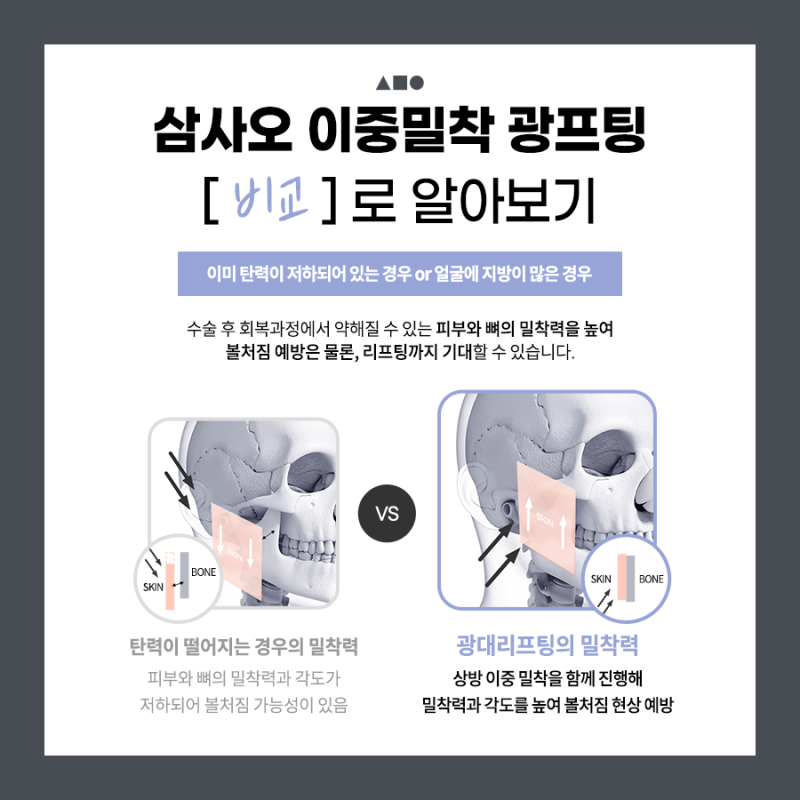
If your skin elasticity is already low or significant sagging is expected after surgery, 'Double-Adhesion Gwang-fting', which combines malar reduction and mini-lifting, can be an effective alternative.
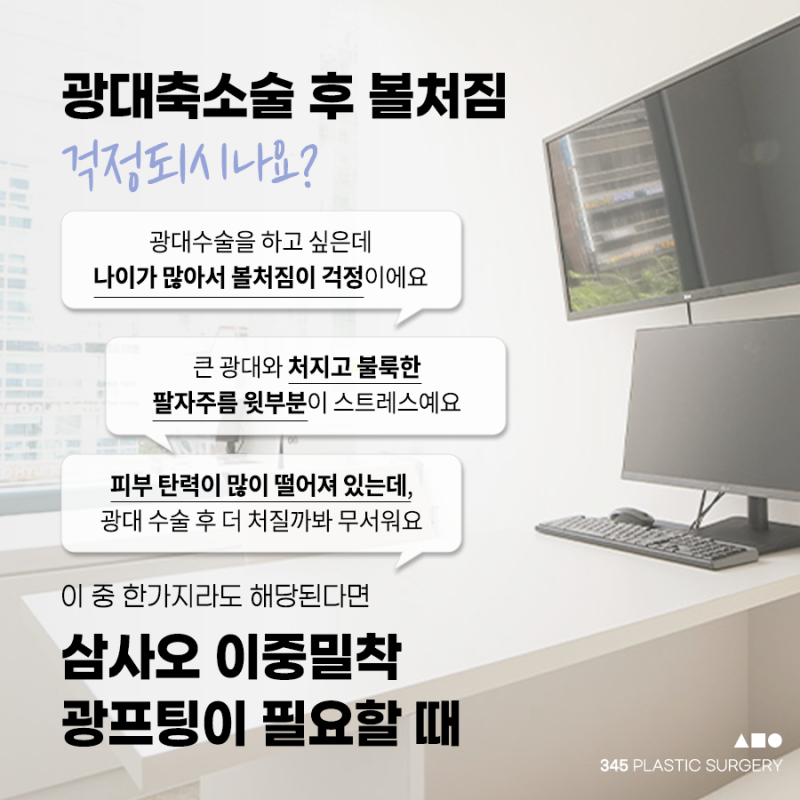
Highly Recommended For:
- Those who want malar reduction but are worried about cheek sagging due to their age
- Those concerned about prominent cheekbones along with bulging fat above the nasolabial folds
- Those with naturally low skin elasticity who fear additional sagging after contouring surgery
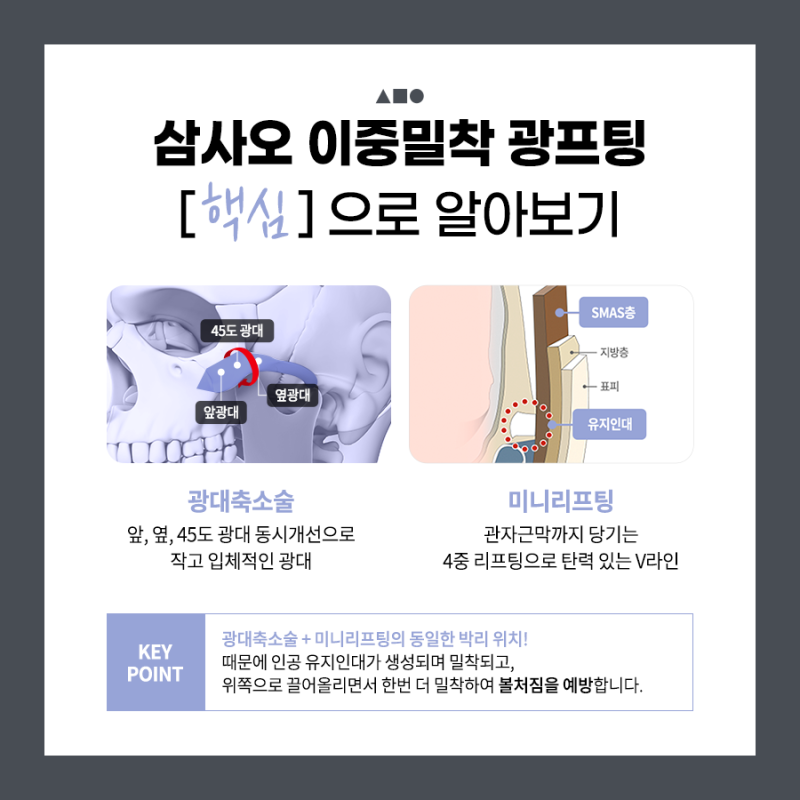
Key Points of Double-Adhesion Gwang-fting
The core of Gwang-fting lies in utilizing the same dissection plane to increase surgical efficiency and maximize skin adhesion.
- Malar Reduction: Simultaneously improves the front, side, and 45-degree cheekbones while correcting asymmetry. The double-fixation method prevents the bones from separating.
- Mini-Lifting: Induces a firm V-line through a quadruple lifting technique that pulls up to the temporal fascia. A 'hidden incision' between the hair follicles reduces the burden of scarring and hair loss.
- Upward Double Adhesion: During the formation of artificial retaining ligaments, the skin is pulled upwards to act as a strong support structure.
The Importance of a Specialist Collaborative System
Performing malar reduction and lifting simultaneously requires a high level of technical skill. 345 Plastic Surgery operates a collaborative system of experienced medical professionals in each field to simultaneously consider structural bone changes and soft tissue alterations.
- Dedicated Contouring Specialist: Precisely designs the movement and fixation of the bones.
- Dedicated Lifting Specialist: Performs the lift considering skin tension and the angle of sagging.

Care System for a Safe Recovery
Safety and recovery are just as important as the surgical results. Systematic care before and after surgery must be accompanied to achieve satisfactory outcomes.
- In-House Anesthesiologists: Three board-certified anesthesiologists are on-site to control anesthesia safety throughout the entire surgical process.
- Recovery Center Operation: We closely monitor the patient's recovery progress in a separate, dedicated space.

If you are considering malar reduction surgery, it is wise to establish a customized plan that considers the post-operative changes in skin elasticity, rather than focusing solely on shaving the bone.



Frequently Asked Questions
Why does cheek sagging occur after zygoma reduction surgery?
Cheek sagging occurs because the skin and soft tissues that covered the cheekbones remain after the bone is reduced, causing them to sag downwards. As the bone size decreases, the relatively excess tissue is affected by gravity, leading to the possibility of cheek sagging.
Are there surgical methods to prevent cheek sagging?
Yes, there are methods that involve meticulously manipulating the retaining ligaments and using a dual fixation technique. This helps to stably fix the bone, thereby preventing potential cheek sagging after surgery.
Who is recommended for Kwangfting surgery?
Kwangfting surgery is recommended for individuals who are concerned about cheek sagging due to older age or who inherently have low skin elasticity. Additionally, Kwangfting, which combines zygoma reduction with mini-lifting, is effective for those concerned about prominent cheekbones along with bulging skin above the nasolabial folds.
Are there concerns about scars or hair loss during mini-lifting?
No, concerns about scars and hair loss are minimized by using a hidden incision method that proceeds between hair follicles. It features a 4-layer lifting that pulls up to the temporal fascia, while hiding the incision site to minimize post-surgical marks.
Is anesthesia safely administered during Kwangfting surgery?
Yes, three anesthesiologists are always present to directly control anesthesia safety throughout the entire surgical process. Additionally, a separate recovery center is operated to meticulously monitor the patient's recovery progress after surgery, ensuring a safe recovery.